
Translated material
Vaccination from aggression
Svetlana Gannushkina-about the eviction of the center of education and adaptation of refugee children
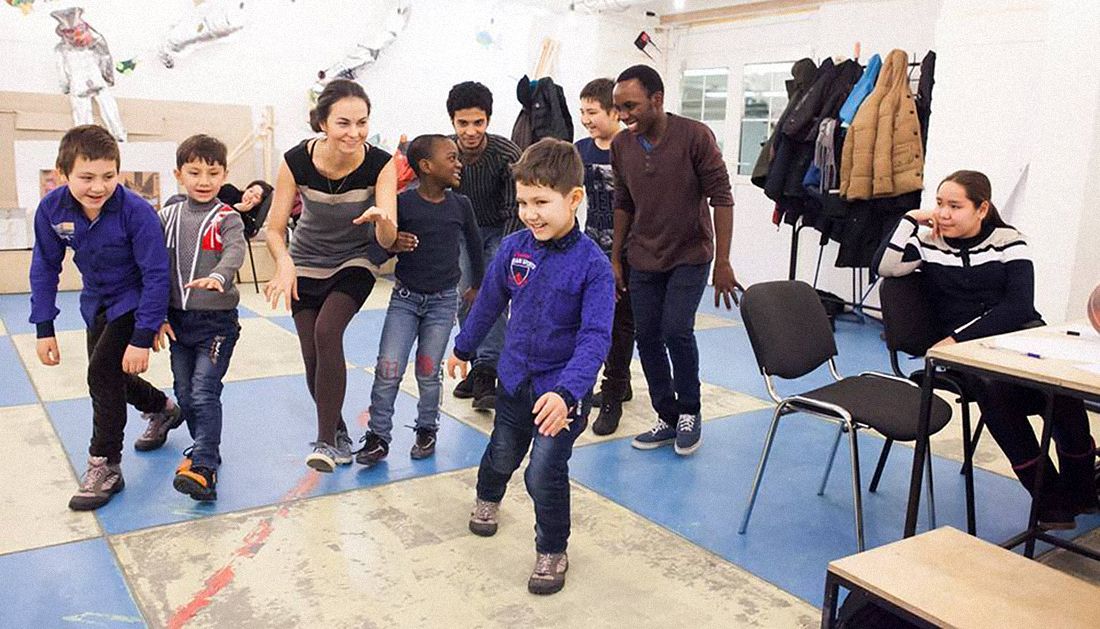
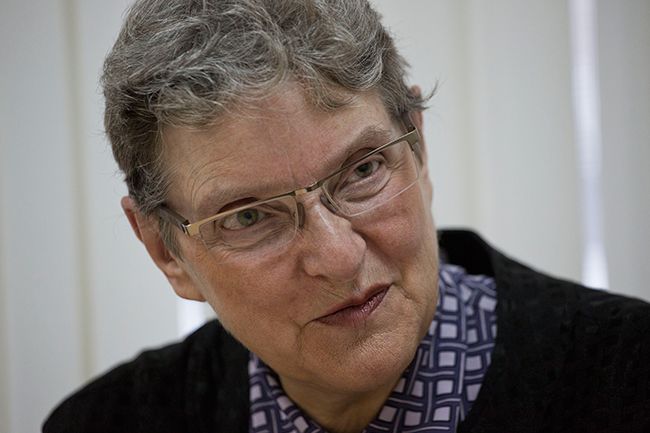
On Thursday, February 18, in the basement on Novoslobodskaya, where 17 years old was the Center for Adaptation and Education Children, representatives of the city property department replaced the castles and set the alarm. Thus, after almost a year of struggle, the center was left without a premises. The head of the Civil Assistance Committee Svetlana Gannushkina told Medusa about how it happened and what will now be with the center.
The Center for Adaptation and Education of Children appeared in 1996. For two years he lived without any room-then in one place, then in another there were some rooms or classes. Or even at home, one of our guys. Our volunteers organized it.
Then, according to Luzhkovsky rules, it was forbidden to take children to Moscow schools if their parents do not have registration. And, first of all, this children's center was organized for children from Chechnya. And in 1998, Grigory Yavlinsky, who was traveling to a meeting with Luzhkov, handed over our request to provide the Committee for the Committee of the Premises, and Luzhkov signed without looking. He did not know that at that time we were judged by the rules of registration. So we received both the premises and the victory in court.
We decided that the center does not need to be destroyed, because children, although they can now study in schools, are most often not ready for it. To prepare children for school so that they can work normally is the first task. And adults who just missed a lot, too. And the second task, maybe even more important, is the adaptation of these children. Therefore, it is called the center of adaptation and training.
At first, these were mostly children from Chechnya. Some of them, schoolchildren, sat in the basements for two years - they did not understand anything, everyone forgot. Our task was to train and adapt them so that they could learn and rather integrate. Now there are many children from Africa and Central Asia. We are now studying 70 children.
We had a Chechen boy, a real future action movie, he did not communicate with anyone and did not want to get acquainted with anyone, but he came to study. He said: “The Chechen must be educated”-and at the same time he hated everything around, he was truly embittered. He saw the Russian military, they killed his relatives. And he did not know the nickname. And when we had a trip to St. Petersburg, he was settled in a room with the Armenian boy Adam. And they lived together for a week, and he did not even remember his name. If necessary, he said: "Boy, give me a teapot." And so Ilya Kolmanovsky, then the head teacher of our center, led them on an excursion to the Hermitage. And at some point he saw that he was standing in the middle of the hall and crying, he said: “I never thought in my filthy life that I would see such beauty.” And from that moment on everything has changed, he learned the name of his neighbor. Here's what we are doing, here is what is Russian culture.
Our society is no less interested in this than these children. They already live in Russia - in any case. We do not invite them on purpose. They learn our culture, they receive an education, a society in which they feel good, comfortable, appropriate. They form an idea of Russia through this center, through these teachers. Through those children next to whom they find themselves in our summer refugee camp. There are mandatory Moscow children too. Russian children. It is clear that this is very useful for the country. Among other things, even if they simply grow up and continue to go somewhere, they will be carriers of Russian culture. This is Russia's influence on the world community. We still say that Russia is losing influence. This is one of the sources of influence - very important. Because influence is not the seizure of foreign territories, but the spread of culture.
Several thousand children passed through us. We already have people who have completed higher educational institutions. One graduate school recently finished.
In 2010, we received the second room. Actually, this was facilitated by the support of the Council under the President and personally Dmitry Anatolyevich Medvedev. And we left the basement on Novoslobodskaya. Then a cheerful life began there, they painted all the walls with pictures, the children already felt like the masters. In addition, they began to conduct free courses for the preparation of labor migrants for a compulsory exam in the Russian language, law, Russian history. And back in 2009, we received paper from the property department that we did not need to renew the rent for every next 5 years, because it became unlimited. We paid a preferential rent all the time. And we were financially supported by the Committee of Public Relations, by the way, of the same government of Moscow.
In April 2015, the Civil Proposal Committee was recognized by foreign agents, and in May we received a letter from the property department with a request to free the premises within a month. We wrote a very warm letter with a request to explain the reason, we were answered in the sense that they have the right and all. Yes, we did not leave, we wrote letters, the head of the Council under the President of the Russian Federation to promote the development of civil society institutions and human rights Mikhail Fedotov, Ella Pamfilova addressed the department. We were ready for the fact that we would have to meet with the Department in court, but we did not expect that they would just come and cut out the locks. How can they treat us like that? After all, they have no right to such arbitrariness. They are not entitled to such arbitrariness. You cannot throw someone out of the apartment yourself, even if it is your apartment. Violence is unacceptable. The state of violence delegates only to law enforcement agencies. The bailiff, the police officer - yes, if there are relevant documents and relevant powers. But not the state organization itself. They do not have the provisions in the regulations that they have the right to break somewhere, somewhere to rearrange the castle and seal something themselves. This should be done legally. But now we can only be surprised and once again turn to the public and to our official human rights activists with a request to support us, to prevent our center.
Classes with children, of course, will not be interrupted, because there are always kind people who will let us in. The same "memorial" or the center of Sakharov, and various other places. But one thing is your house, and another thing is when you come to someone and borrow everything. These are different things. This is very sad. And most importantly, what do they keep in the department for this basement? This is the richest department.
I want to once again explain that it is very important that the children of refugees who already live in Russia see in our country at least one place where they are good, where they are kindly with them [communicate]. This is a powerful vaccination against xenophobia, from aggression for them. This is in our interests, in the interests of society. These children should feel that they are important to this society. We had a Chechen girl, she went to school, and when an explosion occurred in Moscow, the teacher pulled a third -grader in front of the class and said: “I want everyone to know that Esita is Chechenka.” Now, understand how the child should feel? A child who could well be where there was an explosion. What should he think about Russia, what will he feel for the Russians?