
Translated material
Saditic discomfort of the 1930s
Memories and essays about the worst times. Overview of Galina Yuzefovich
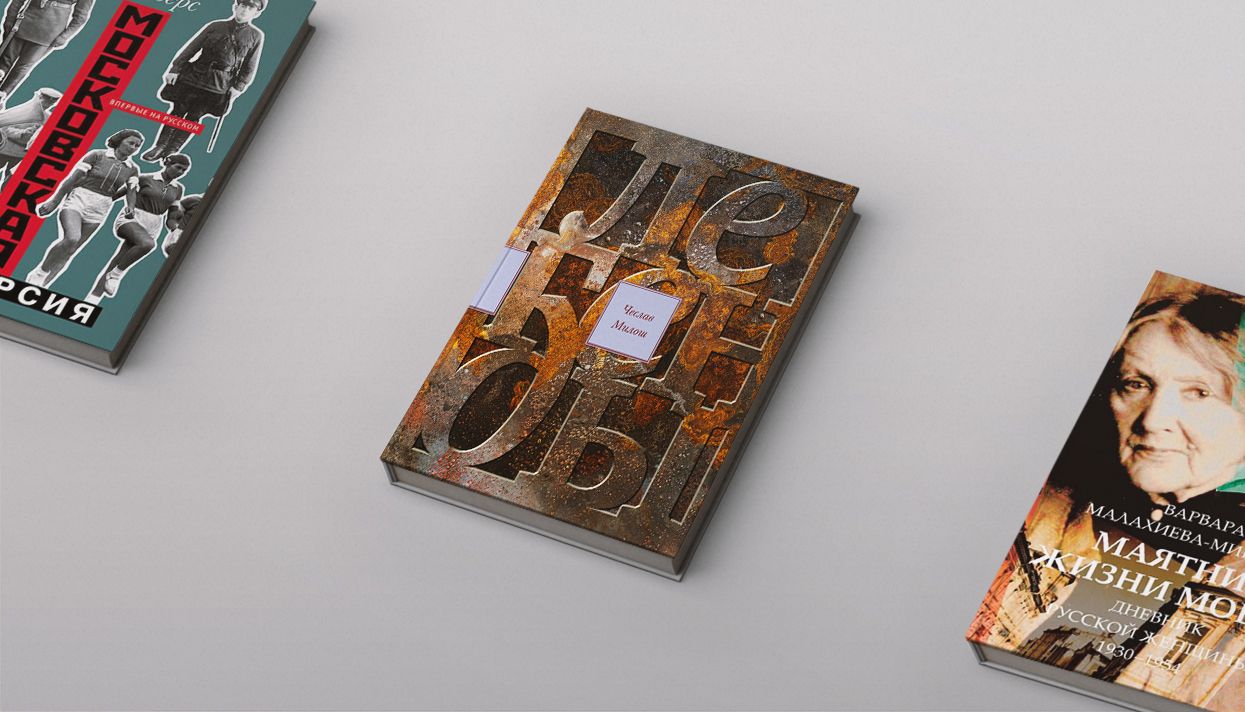
A weekly literary critic Galina Yuzefovich tells at Medusa about the most interesting and important books published in Russia. In the current review, there are three books about difficult time: “Moscow excursion” Pamela Lyndon Travex, “Legends of modernity: occupation essays” Cheslova Milos and “The pendulum of my life” Barbara Malakhieva-Mirovich.
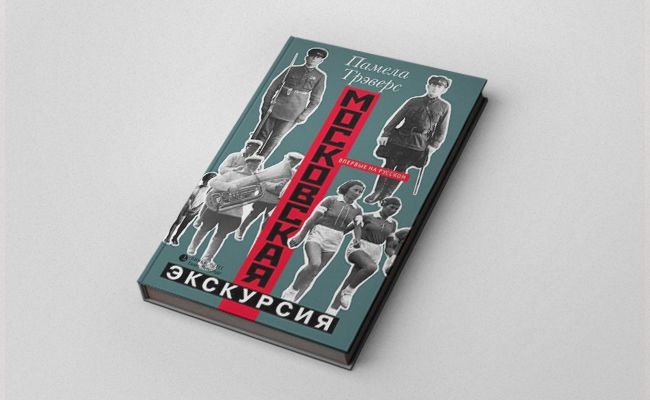
Pamela Lyndon Travex. Moscow excursion. M.: Limbus Press, 2016. Translation of Olga Myeots
Western writers of left-wing beliefs regularly visited the Soviet Union in the 1920s and 1930s, met with Stalin and for the most part came from the Red Empire. Herbert Wells, Romain Rollan, Bernard Show, Andre Jew, Lyon Feihtvanger - returning home, all these titans of the Spirit sympathetically discussed the joy of liberated labor, universal enthusiasm, about the equality of women, about new life, about proletarian art, the wisdom of the father of the peoples and the like.
In this series, Pamela Travex, known to the world mainly by books about Mary Poppins, looks egregingly inappropriate. Not the titanium of the spirit and not at all a famous writer, a little actress, a little journalist, a little loafer, partly a fool (well, in any case, the carrier of the corresponding mask) and certainly not a communist - in 1932, Pamela Travex went to Soviet Russia out of pure curiosity, and not according to an official invitation, but on a stamping of an intorer. Unlike her much more eminent (and biased) colleagues, she had little imagined where she was going, and perhaps that is why the written book, the book written today leaves the impression of a more clear and alive than the compulsed, abundant, abundant and self -hypnosis of the memories of Rollan or the show.
The first and, definitely, the main feeling that the traverses captures in his notes on the journey is total, almost sadistic discomfort. Obtaining a Soviet visa is organized in the most inconvenient way, a motor ship caring is inconvenient in Leningrad, a hotel is uncomfortable, from a tap in which water does not come (neither hot nor cold), the clothes are inconvenient in which people around, the program is made up so that the tourists are now cold, then hungry ... unlike their comrades in the tourist group (for the most part of the British British Left), Travex refuses to put on pink glasses and recognize temporality, inevitability and even the usefulness of such hard self -restraint: it grumbles and longs for good tea, milk, cupcakes, and most importantly - a normal conversation, without slogans and speechwriters. Is it too surprised that the “Moscow excursion” that received from her seem to the Soviet authorities slanderous and offended so much that the writer will ban the second entry into the USSR, and even her completely innocent children's books will be transferred into Russian with almost half a century of delay.
Children in the Soviet kindergarten are dirty and groomed, the eggs for breakfast are rotten, the winter palace is ugly in its barbaric splendor, the mausoleum is scarecrow and looks like a giant press-fad, women are rude and ugly, men of bolt, the cathedral of Blessed Vasily-this is not even an example of a bad taste, “the taste here is missing. architectural nightmare on another ”, the total control of the“ organs ”is burdensome, the Soviet cinema is capable of turning the most stable nervous system into a bloody chop ... Trevex does not like the traverses evenly, but its sincere indignation does not look offensive-firstly, it knows how to clothe it in a charming ironic form, secondly, due to its unexplored: shafts The British from the British embassy, turning his nose from the Hamlet Akimov (this avant -garde performance is almost the strongest experience of the writer on the Soviet land) or she does not like the stupid European left -handed ones, if not more.
A spoiled and curious girl, forever dissatisfied, whimpering lips, requiring amenities and most interested in where the only ruble left in the Russian treasury after the death of Empress Elizabeth has gone (it is such an amp that is that the traversal is trying on the “Moscow excursion”), the observer is much more vigor and attentive than most of her contemporaries. Where the enthusiastic European left sees the novelty and breakthrough, the traverse observes wilting: Soviet Russia seems to her not young and energetic, but living overwhelming, exhausted, gray, decrepit, absurd and - scary to say - disappointing bourgeois. If this is the front facade, which is shown to foreign tourists, then it’s scary to even imagine what can be hidden behind it. We just know the answer to this last question-and, perhaps, it is good that an impressive traversion did not have a chance to get to know the Soviet wrong side. And then, you see, the world would lose bright and magical stories about Mary Poppins.
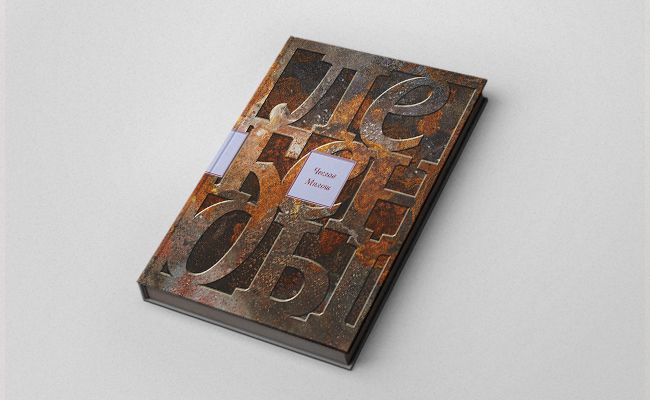
Cheslav Milos. Legends of our time: occupation essays. St. Petersburg: Publishing House of Ivan Limbakha, 2016. Translation of Anatoly Roitman
The essays of the Polish poet and thinker Cheslav Milos written in 1942-1943 in 1942-1943 are most reminiscent of the “apology of history” by the French historian Mark Blok. However, if the block tries to comprehend how humanity has wandered into the terrible dead end of the Second World War, using historical science as a navigation device, Milos is looking for an answer to the same question in the field of literature. He himself declares that his task is the debunking of stable cultural myths, but in reality his role is more similar to the role of a ranger: according to the smallest signs in the main literary texts of the European tradition, he restores the milestones of the path that turned out to be so disastrous.
Daniel Defoe - the hero of the first essay Milos - dreams of an island where a person who has retired from society receives a chance to develop dignity and virtues, the formation of which society prevents. However, this great dream of solitude acquires sinister features in the interpretation of Milos: the escape turns into a recreation of the same familiar reality (in the case of Robinson Cruisor is very philistine and limited), only on a smaller scale. Anyway, the flight formula “start life again” is fraught with a considerable danger: “From the moment when the masses are consciously or unconsciously begin to repeat it, it can be highly likely to say that the public barometer shows critically high pressure.”
The second trace leading in a dangerous direction, Milos finds in the work of Balzac - a writer who was the first to come up with a look at the human community as biogeocenosis, existing according to the same laws as an anthill in the forest or, say, a colony of corals. From such a position, Milosh, only a couple of steps to stick a blade of grass in the human anthill (or splash with boiling water), and with the cold curiosity of the researcher to analyze the results of the experiment in the human anthill.
Further, the trace is interrupted for a while, but is again detected by Stendhal in Red and Black. The hero of this novel Julien Sorrel is convinced that social morality is not a gift sent to us from above, but the product of a sinful human nature, which means a society based on this morality, is bad and any riot against it is fair and permissible. A single hero, a gloomy rebel, a sorcerer becomes a distant forerunner of the Nitsshevsky Zarathustra, from whom the ideas of a superman is already a day of the fascist ... step by step, through the texts of William James, Andre Jew, the publicist Marian of the Zdzekhov and Polish poet, the Milos leads his reader along the road of thought, which ultimately brought humanity to humanity. The terrible winter of 1942.
However, literary essays are only the first part of the book. The second part of it is the correspondence of the writer with his friend Jerzy Andzheevsky (in Russia, Andzheevsky is known mainly thanks to the film “Pepel and Almaz”, shot from his story by Andgea Weida). The ardent Catholic of Andzheevsky is trying to convince Milos of the truth of faith as an instrument of cognition of the world, a cautious skeptic Milos is looking for a compromise between rationality and religious feeling. Their dispute does not have the final within the framework of the book, but for the modern reader, its outcome is obvious and predictable: the Christian Andzheevsky successfully shifts into the communist - for this he will only have to change the shell of his fiery faith. The skeptic of Milos, his inability to a thoughtless faith will take into the expulsion and a deaf opposition to the post -expert Polish regime.
Formally finished and even elegantly rounded, the book of Milos, nevertheless, leaves the impression of a strange incompleteness (in fact, like the “apology of the history” of Blok). Written in the “Eye of the Bury”, at the most historical crossroads, it contains not so much the final conclusions as notes, zaruses for memory, questions with preliminary answers. And this property - some shame, non -contrast, fluidity - is almost the main charm of the “occupation essays”. The thought that is happening, and not what happened, sounding, and not responding - in a word, no matter how you look, the most exciting and charming book of one of the most important thinkers of the twentieth century.
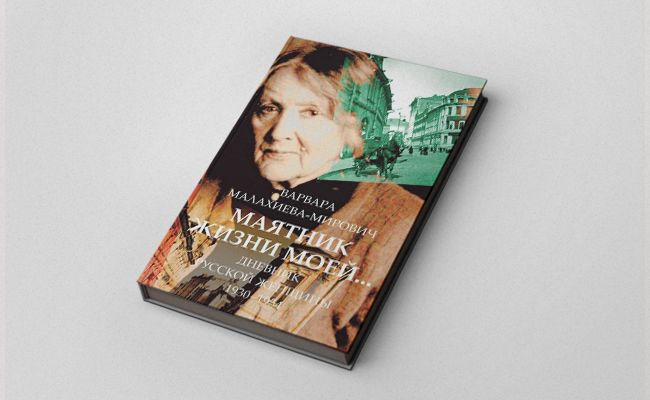
Varvara Malakhieva-Mirovich. The pendulum of my life. M.: AST: Editor Elena Shubina, 2016
The publishing abstract emphasizes that Varvara Malakhieva-Mirovich lived a long and inexperienced life, for which, nevertheless, she managed to get acquainted with many great people of her generation-from the philosopher Shestov to the actor Ilyinsky, from the People's Commissar of Lunacharsky to the artist of Favorsky, from the writer Daniil Andreev to the Mkhatov Prima Tarasova. Probably, by virtue of such a foregoing from the memories (although it will be more accurately to say diaries), Malakhieva await primarily a description of meetings with great people - entertaining and little -known details, bright sketches and the like memoir financials. But what the reader turns out to be completely not ready for is that the figure of the Malakhieva herself is completely self -charged: the quiet, non -public, who left the modest literary heritage of Varvara Grigoryevna easily overshadows her famous and outstanding acquaintances, if not brightness, then depth and sincere complexity. The most interesting, contradictory, causing a diverse gamut of feelings, from irritation to compassion, the character of its ethnic memoirs - this is itself.
In her youth, in her youth, she managed to get sick of populism, collaborate with St. Petersburg literary magazines, to survive the incredible intensity of the Platonic romance with the philosopher Leo Shestov (whom she could not divide with her sister), bury all relatives, reduce friendship with the Russian bohemian of several generations, grow her children and grandchildren (most of her life Malakhieva spent in status “Removal”-a homeless and non-trendy relative or girlfriend, educators of other people's children and witnesses of other people's dramas) ... It seems that not a single important trend that swept over our country from the 80s of the XIX century to the middle of the 20th century, did not leave Varvar Grigoryevna-perhaps, perhaps, of Stalin's repressions, which pledged all her nearby. a circle, but in an amazingly spared itself.
If at this moment you recalled the bestseller Lilianna Lungina, the “Setter”, which is also characterized by the exceptional inclusion of the storyteller in the slightest movements of Russian history, then with a certain external similarity, this association is still incorrect. Unlike the secular, bright, turned outside, Lungina Barbar Malakhieva lived all her life mainly within herself, and her story is the story of a “internal”, closed person, which is primarily absorbed in reflection.
Starting to write his diary notes in 1930, at the age of sixty-one years, Malakhieva-Mirovich led them until his death in 1954. Memories of the old past are adjacent to a description of the events taking place here and now. The amazing, piercing, almost awkward sincerity is adjacent to them with rigid self -censorship - for example, nowhere, neither in a word nor a hint, she does not criticize the actions of the authorities, but about people executed or in the camps, she speaks as they speak of patients with sufferers - impersonally and without internal protest. To observe how the past in the head of Varvara Grigoryevna flows into the future, and the optics, painfully clear in some places, is deliberately closed in others - an attraction, which, by fascinity, will not be remembered so much.
Perhaps it will not be an exaggeration to say that the “pendulum of my life” is one of the most important publications of recent years. The Russian Sei-Senagon, the female version of the “records and extracts” of Mikhail Gasparov, “The History of my contemporary” by Korolenko in a new way-each of these epithets (you can come up with a dozen others) is fair and not full. "Pendulum" Barbara Malakhieva-Mirovich from the breed of books that are destined for long life and multiple interpretations. And, of course, now the conversation about her is just beginning.
Galina Yuzefovich
Moscow