
Translated material
"The curse of the past does not leave the Balkans"
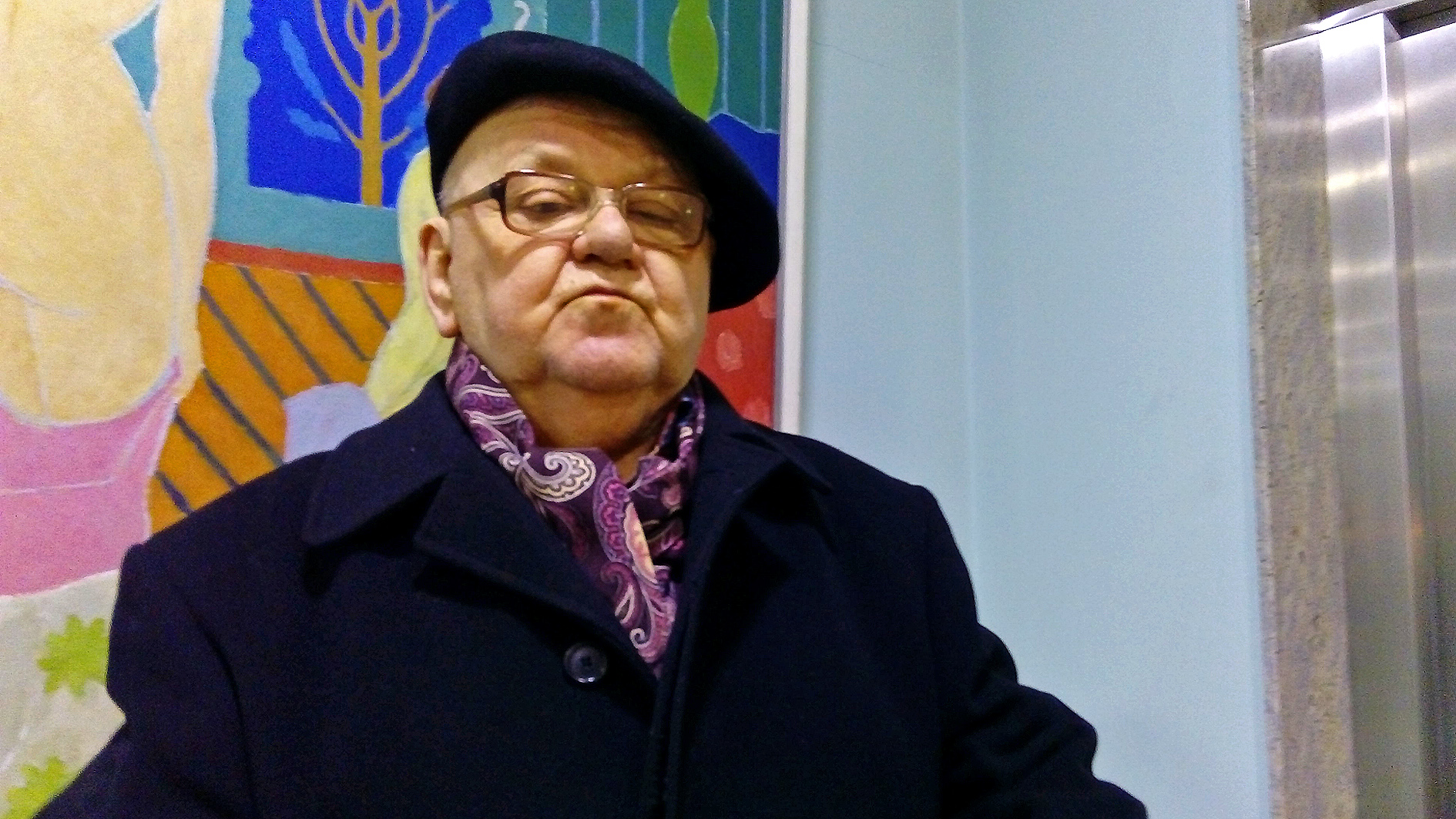
The Caraevsky writer, screenwriter of the early films of Emir Kusturitsa Abdul Sidran fears that his country will disappear from the map of Europe
Twenty years after the end of the war, Bosnia and Herzegovin - the last of the republics of the former Yugoslavia - applied for joining the European Union.
The Sarajevsky writer and poet, a generation of the Yugoslav "sixties", academician Abdula Sidran tells Radio Liberty about his vision of the post -war situation in the country, the failure of the ethno -confessional model of Bosnia, the problems of nationalism and corruption, the southern -stic and collaboration on films with the emir Kusturitsa.
Sidran was born on September 9, 1944 in Sarayev, graduated from the Faculty of Philosophy of the University of Sarajev. The most famous works of Sidran are the novels of Shakhbaz (1970), Bone and Meat (1976), the poetry collection "Sarayevsky Combat" (1993), awarded the Awards of the International Pen-Club. His poems are translated into several European languages. Sidran is one of the most famous scriptwriters of the Yugoslav cinema. Films shot according to his script - "Do you remember Dolly Bell?" (1981) and "Dad on a business trip" (1985) - glorified the young director Emir Kusturitsa.
-The pre-war 1970-80s are considered a period of the highest achievements in the field of culture of the South Slavic peoples. In this regard, they usually recall the Sarajevsky rock school, and literature, and cinema, your joint work with Emir Kusturitsa-the films "Do you remember Dolly Bell?" And "Dad on a business trip." How did you work with Kusturitsa? Why failed to maintain a creative union?
- I am a screenwriter who usually does not interfere in the process of shooting a film. So I did not intervene, and especially friendly relations could not develop between us. We collaborated more while the script was written, and not during the production of the film. But this cooperation took place mainly in the form of a rigid controversy, following which we achieved the result. Kusturitsa is a very smart person, and I am sorry that we could not continue cooperation.
They wrote that then, they say, Miloshevich found a double that is very similar to the emir, and he began to play the role of Kusturitsa, that his name is actually Pantelei Milisavlevich
The fact is that I had already known in Yugoslavia as a poet before. Therefore, film critics and his colleagues-director often said, "they say," it is easy to make a film according to the script of Sidrin when you get his script, consider that the work is half done. " They said so out of envy, and this did harm to the films and me and Emir. He had to prove his subsequent films that he was a good director and without a sider. And I understand that. Then the year 1992 came, and Kusturitsa (as I think, at some pressure) sided with Belgrade and Serbia and stopped being the way we loved him here.
- What is this story about Pantelia Milisalevich, who, as some newspapers wrote, is the double of Emir Kusturitsa, allegedly killed during the defense of Saraev? Was it your idea to declare the Kusturitsa dead?
- Here the newspapers published the following version: Kusturitsa fought, was the commander of one sabotage group and died in 1994 on Mount Trebevich. I will not unrest those who believe in it. Let there be parallel versions. We do not want to lose Kusturitsa as part of our cultural tradition. All these are Bosnian topics, and Kusturitsa from Saraev. They wrote that then, they say, Miloshevich found a double that is very similar to the emir, and he began to play the role of Kusturitsa, that his name is actually Pantelei Milisavlevich and that he is from Schumadia. This is such a legend, most likely, invention. Is it possible to prove it? And Kusturitsa, of course, is very angry when he is called Pantelea. But in any case, I want after 50 or a hundred years we had the opportunity to write that the great director, citizen of Saraev Emir Kusturika, under unclear circumstances in 1994, went over to the side of the aggressor. Maybe the story will show that he did not act voluntarily.
-You once said that in the Balkans "the past does not pass", that it is stronger than the present. What does it mean?
- In the Balkan conditions, the past is slower than in other societies. Patriarchal duties, the cargo, the cross that we carry on our shoulders, we get from previous generations, from our fathers. And this is what could be called a curse of the Balkans. Nowhere in the world such a connection with previous generations is not visible as ours. In my book, I cited a dozen examples of how my son carries the cross of my father. So, the father is glad of Karadzhich was a Chetnik (i.e., a supporter of Serbian nationalism. - RS) . In other words, we transfer suffering from generation to generation.
- The Russian authorities and propaganda in recent years have been trying to create a positive picture of the Soviet past, despite the scale of crimes of the communist system, and Russian society, it seems, is quite with this. Why do many societies do not want to accept their past as it is, and want to see it lighter?
- Similar processes also occur in the post -yugoslav space. Here is a paradox for you. My family’s life in Yugoslavia was quite difficult. My father was exiled to a naked island, to a concentration camp, where everyone who supported Stalin, not Tito in 1948. We suffered very much from that regime - both my father, and my mother, and me. But, despite this, I am the author of such an aphorism: "Even if Yugoslavia was a hundred times worse than it was, it would still be a hundred times best that arose in its space."
There is a huge difference between the historical role of Josip Broz Tito in Yugoslavia and Joseph Vissarionovich Stalin in the Soviet Union
The origins of our nostalgia are not necessarily in the past. Our reality gives new reasons daily in order to love what happened before. People remember their youth, which-despite all the difficulties-pops up in memory as something good. Objectively speaking, the authorities that rule the last 25 years cannot indicate: this is better than what was done during Tito. And until such a situation remains, until the authorities undergo a complete transformation, the one who praises the past will be rights. He feels better in that time, regardless of the false statistics that he is trying to present to him from the TV screen.
On the other hand, there is a huge difference between the historical role of Josip Broz Tito in Yugoslavia and Joseph Vissarionovich Stalin in the Soviet Union. Maybe I'm mistaken and in fact the difference is only in the degree of dictatorship. But it is impossible to deny the fact that for 40 years of Yugoslavia in all countries of the socialist camp was perceived like America.
- What do you think, what can the conflict of Russia with the West and Turkey lead to?
- It is very important for world leaders to protect the nerves and remain calm. People who rule large countries and at their disposal are powerful armed forces, are responsible for the fate of the planet. We can only pray that God gives them patience. All issues can be solved at the negotiating table without resorting to the use of military force.
- How do you assess the situation in Bosnia and Herzegovin, taking into account the European perspective and various views of Bosnian Muslims, Serbs and Croats for the future of the country, surviving a bloody conflict 20 years ago?
- I believe that the war then ended only formally. Its visible, armed phase ended - the destruction of people, air bombing, shelling, but the real war did not really stop. The ideology opposed to each other did not abandon their strategic goals, only ways to struggle for them have changed. This is the political problem that world powers tried to solve - to find a way to settle relations and the structure of Bosnia and Herzegovina, but it was not possible to solve the problem. And over time, there are more and more signs that the world forces had no intention of doing this.
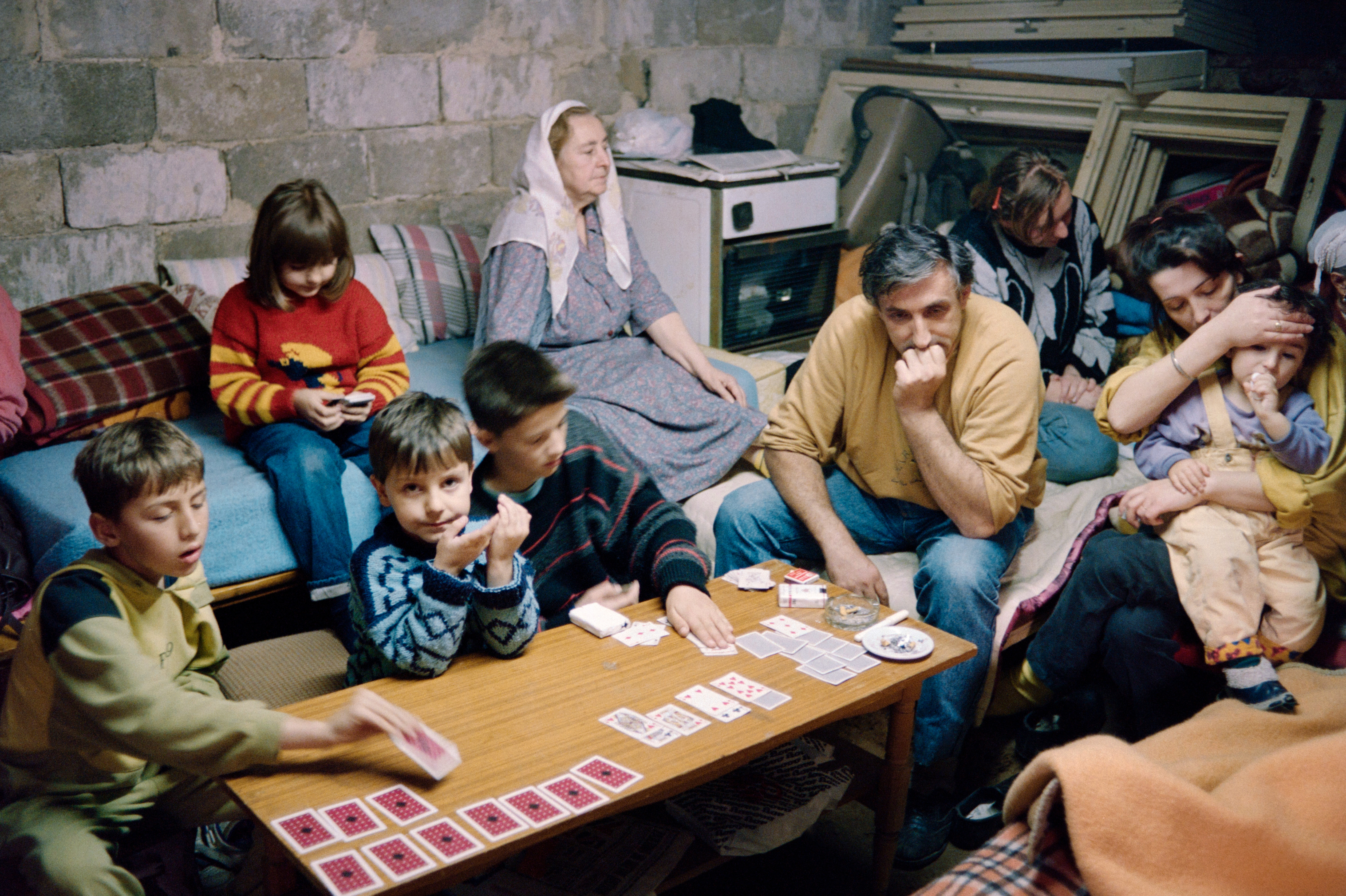
The Deuton World of the Bosnian War
- You often criticize the Deyton Peace Agreement and the International Administration. Please explain your position.
- In accordance with the Agreement, we received the Supreme Representative (International Administrator), who has been behaving as an ordinary observer for the past ten years. But we do not need an observer, especially if this official is so expensive.
We demand that Bosnia apply to the standards that are adopted in Europe. If fascism is not allowed in Europe, then here it cannot be tolerated
The war began in ideological positions, and no one touched these ideological positions. In power - in Serbia, and in Croatia, and partly in Bosnia and Herzegovin - there are people who rehabilitated the fascist forces who were defeated in the Second World War. Thus, we need an arbiter who would eliminate everyone who relies on fascism and Nazism from the political scene. We demand that Bosnia apply to the standards that are adopted in Europe. If fascism is not allowed in Europe, then here it cannot be tolerated. In Bosnia, supporters of war criminals are openly gathering in columns, shooting and arranging processions.
The Serbian side began the war, claiming that life together in my country is impossible. The partners of the Serbs in Zagreb also held the same opinion. A huge mistake lies in the fact that the peace agreement proclaimed legitimate forces that were not such-Serbian rebels from Palais (where the Headquarters was pleased with Karadzhich.-RS) under the leadership of Milosevich and those who, under the leadership of Tudzhman, built the puppet state of Herceg-Bosna. The peace agreement should not legitimize the military followers of these groups.
- The international community expects the Bosnian elites to take the fate of the country into their own hands and begin to more actively agree on all internal problems. Is it possible, in your opinion?
- It is hypocritical to tell us for years that the international community will accept everything that the opposing parties, the so -called "representatives of the people", that is, political elites who have nothing to do with the people, will agree on. They can only agree on theft. Official representatives of Europe and the international community believe that these are normal elites. But in fact, many of their representatives are not a place for free, but in prison. Foreign observers are mistaken, believing that it is possible to achieve something from the coalition of three nationalisms, three chauvinisms, three ethnic groups, the elites of which exist through the creation of an atmosphere of fear.
- Is the fact that even 20 years after the war, people, especially young people, leave Bosnia to the West?
- The departure of young people is primarily associated with the absolute hopelessness of the concept of a political structure, management, and in general all that is a consequence of Deuton. The current ethnic concept is too far from any traditions that are proud of in Europe, including freedom, equality and brotherhood.
A healthy state cannot be built on sick justice. Corruption as an ulcer is corroding our society and the state, and the corruption nest is in the judicial system that is full of incompetent people and their relatives
Such a concept leads to the disappearance of Bosnia and Herzegovina as a state and to the disappearance of Bosnian Muslims, who, percentagely, turned out to be the most resettled people - now more Boshnyaks live outside the country than in Bosnia itself. The atmosphere of intimacy, which was between neighbors, peoples and faiths in Bosnia and Herzegovina, destroyed the project by the pleasantly Karadzhich, of course, created in Belgrade. And this is the biggest tragedy. Whether our children will once be able to recreate what is lost-I do not know.
- In your opinion, are serious reforms possible that will lead to a change in the ethno -confessional structure of Bosnia and Herzegovina?
-The international community should have initiated “Deuton-2”, but it should be found another name, because “Deuton” has compromised itself as a term, because this is a synonym for a realized shirt. A new international conference should be convened, at which the state Bosnia and Herzegovina will receive a more healthy regulatory basis: the Constitution, the Law on the Political Organization, the Electoral Law. That is, radical reform is needed. You cannot imagine to what extent the justice is destroyed here. A healthy state cannot be built on sick justice. Corruption as an ulcer is corroding our society and the state, and the corruption nest is in the judicial system, which is full of incompetent people and their relatives. Increased intervention of the international community is necessary, which means that legal experts should be directed to the Balkans with broad powers who could put things in order in key segments.