
Translated material
Inborn vice
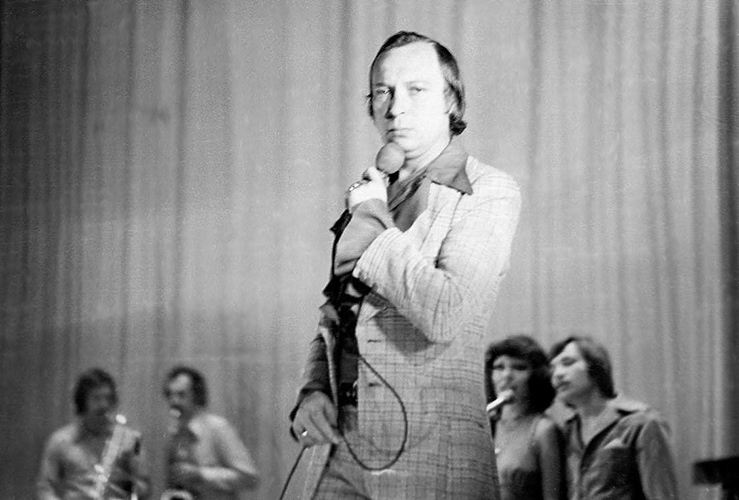
In the biography of Valery Okodzinsky, “Railed Song” there is an episode in which, during a tour in Ashgabat (the capital of the Turkmen SSR), the favorite pop tenor of the Soviet Union tries a poppy infusion. From the hands of a beauty-tajiki! The book, published by AST publishing house, was written not by the impudent copyist of Hunter Thompson, but the writer Varlen Strongin, a member of the Writers Union, which was killed by gray, since 1987, formerly a comedian-satirist, once intersected with Obdinsky on tour. This hallucinatory scene is a sudden spasm of fantasy in an inconsistent biography, which is lost in Avtomemoire eaten by Molyya. Perhaps the singer was expended by censors in a desperate fit of frankness and could tell about his drug experience the counterclaim (who was 10 years older than him), but with difficulty believed. Rather, Barlen Strongin put another bike on Obodinsky in the line in order to aggravate his image of Orpheus, who was lost in hell, looking for oblivion not only in alcohol and tranquilizers.
The life of Valery Obodzinsky is a tight plexus of legends and tanks that cannot be verified. The total circuit is distinct. A somoroko young man sang on Odessa streets, while his roots were cleaned with the pockets of onlookers, and dreamed of glory like Leonid Utesov’s. A series of different levels of ensembles, talent, perseverance plus the smile of a favorable fate - and now the street singer, who did not know the notes, fell into the best jazz orchestra of the USSR - the Oleg Lundstrem orchestra, where he went through magnificent professional training. In the late 1960s, Obodzinsky took off to all-Union glory. The natural flair on the hits, the desire to “catch up and overtake the West” and the unique image of the singer, singing only about love, led to the millionth circulation of the first records. The popular popularity in the early 1970s is the fans of the “okodzinki” who pursued the soloist with a dim appearance of the house and on the tour, the passion for beautiful life, frantic concerts (several a day), huge loads, envy of colleagues, lumberries and headphones, an unspoken ban on the showing of the “non-Soviet” repertoire. In the fateful 1976: alcohol breakdown, binges, failure to appear on their own concerts, which were saved by musicians from the accompanying ensemble "Faithful Friends". Gradual degradation-disappearance from the stage in the 1980s. The life of a “normal person” at the bottom is a warehouse watchman with a salary of 120 rubles, a bottle of vodka for three-and again a wonderful turn of fate: the appearance of a rescue music in the face of a long-standing fan, a return from the barn’s barn and on the stage, new concerts and new notes. The biography of Obodzinsky, rhyming with the fate of all the dissent geniuses, from Charlie Parker to Vladimir Vysotsky, is an excellent material for the adaptation also because there are spectacular contour, but there are no exact details. But there are conflicting memories of ex -wives, former administrators and former colleagues. In each line there is only a point, and between them there is a large space for fantasy.
In the Middle Ages, he would be burned in the square, because it is witchcraft.
In the series that was just shown on the First Channel about Valery Obodzinsky , “these eyes are opposite” the free space is filled though carefully, but lapidarously. The shadow forces of the Soviet system, which was resolved by a non-standard singer, are personified in a banal antihero-a cadialist, an exemplary scake with transparent eyes, a revenge for a long-standing humiliation. But the scenes of moral fall were reconstructed with the deserves respect for the details of the Soviet life. For great drama, fragments from other people's biographies are inserted into the series - for example, the imprisonment of Obodzinsky in the isolator for illegal concerts. Only the daily interrogation of the singer in the KGB is missing due to a cooperative apartment (which was in reality) and a beautiful Tajichka with a poppy infusion.
The only thing that is not in the series “These Eyes is in advance” is the great voice of Valery Obodzinsky. Due to the lawsuit of his wives around the copyright in the series, there are copies of songs performed by a modern singer with a similar timbre of voice. The Okodzinskiy flatfreed and pale - he lacks sincerity and sensuality in intonations. While in the Soviet Union the singers were jamming the audience with opera power, Valery Obodzinsky freely sang in an open voice. Where the upper button of the shirt was stuck in the neck of the other singers in the neck, a fashionable collar was freely opened.
More than half a century has passed, but magic still illuminates in the songs of Okodzinsky. This is certainly dark, dangerous magic. In the voice of the best cruer of the Soviet Union was an innate vice. In his songs, something opium is still felt-a stupefying, knocking down from the true path, dangerous to the cores, like the juice of Oleandra sung by him. The songs performed by Obdinsky immediately became the carriers of the virus of unknown sin. The most innocent lyrics in his interpretation turned into love messages, casting the vague shadows of eroticism. Even the Susal-patriotic “I look at the Blue Lakes” , which the singer ended his concerts. Listen to Soviet pop standards in Okodzinsky versions and compare with the performance of other singers. Take, for example, the abstract “vocalise (I return home)”: where Muslim Magomaev gaduls through the stained sun with socialist construction , and Edward Hil with a comedy rally walks through theatrical stage , Obdzinsky head runs through the spring gardens , jumping through other people's fences. The sterilized verses of Soviet poets, voiced by his spoiled tenor, turned almost into the satanic virs, who scared the unknown. “It’s better late than never, to hear“ yes ”from you,” Obodzinsky sang penetratively, and something obscene seemed to the Soviet Hanjam. Probably, they were not so wrong.
If Obodzinsky was not born for an iron curtain, he could become the second Elvis Presley or Tom Jones, with whom he was inner rivalry, the girls at the concerts would throw under his underwear. If he was born in Russia forty years earlier, he would be a neighbor in the Gulag bunk Vadim Kozin, to whom, according to legend, he went bow during the Magadan tour. In the Middle Ages, he would be burned in the square, because it is witchcraft.