
Translated material
Two years of freedom
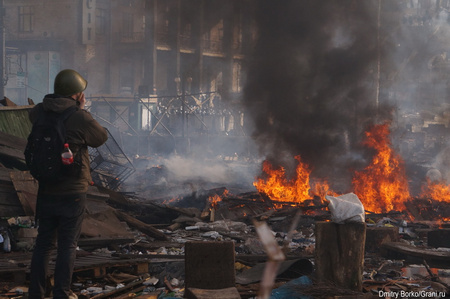
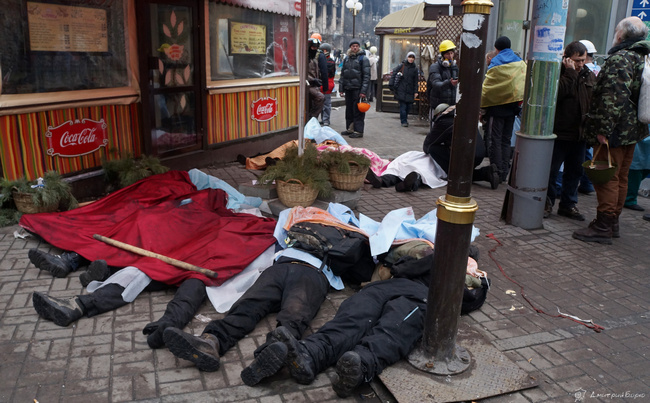
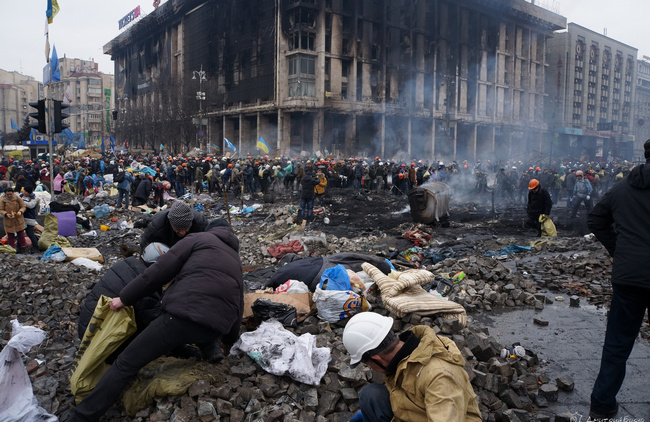
Photo by Dmitry Borko
Two years after the victory of the revolution of dignity, its participants talk about what they did then and what they are doing now, about hopes and lessons, about the tasks facing the country. We talked with Kyiv and Donetsk volunteers, Ukrainian intellectuals, as well as with several Russians, whose life was forever changed by the Maidan.
Dmitry Shandra , entrepreneur:
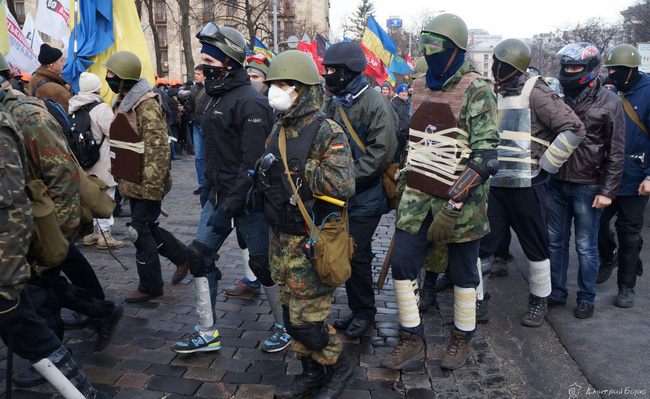
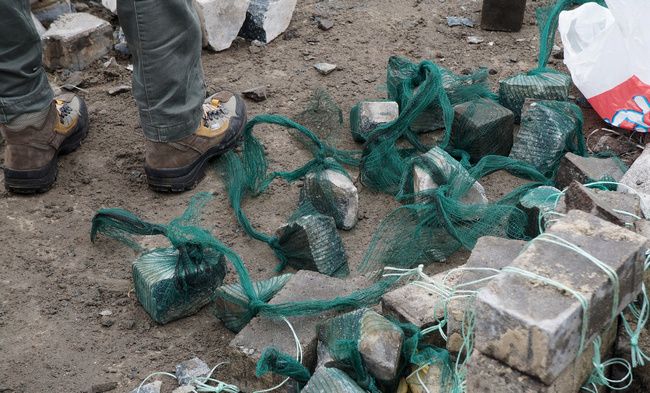
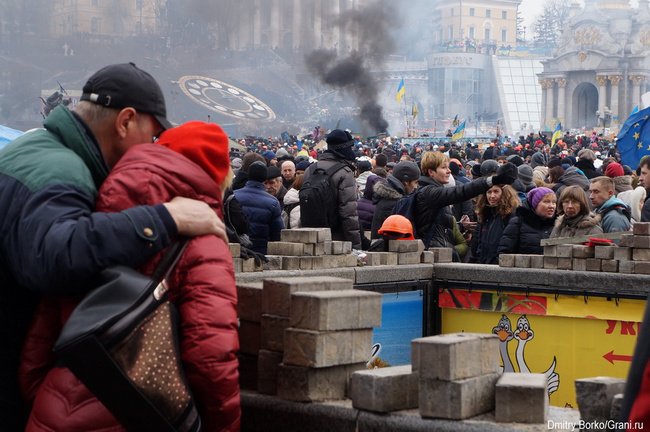
During the Maidan, I participated in it to the best of capabilities, but for a very long time I did it in fits. I saw anxious news - went to the Maidan. If everything was calm, I tried to deal with the current business and family. When the battles on Grushevsky began, I realized that there will definitely be a war and a massacre, and such a “lonely partisan” can not be done much. Therefore, he went to the 9th hundreds of self-defense of the Maidan. On February 18, our hundreds were partially defeated in the Mariinsky Park, and then I just organized with the survivors, and we did the 18th-20th on the Maidan what we were doing: fought off the police, built barricades.
After the flight of Yanukovych, he went to Mezhigorye, admired this whole pathos and on the same day fell ill with a severe cold. On this, the story of my Maidan essentially ended and began the story related to the occupation of Crimea and Donbass.
In part, life and business returned to the usual track, partly connected with the war in the Donbass and our military help. I try to carefully monitor the political life of the country and support those initiatives and projects that seem to me correct, which I never did before the Maidan. I rethought many basic values and principles. For example, I stopped believing in a “good ruler” and probably never can trust police structures, but I began to believe in my fellow citizens and my fellow citizens, which is much more valuable.
Ukraine is now one task - to reflect Russian aggression, and then restore its historical boundaries. All other tasks, such as European integration, economic growth and others, are impossible, and is not particularly needed without it.
Lilia Volotskaya , employee:
There were two feelings: hope and fear that it would not be possible to get rid of the soviet heritage. I hate a scoop and everything that personifies him. Therefore, they did what they could: they drove food to the Maidan, followed the news, bought medicines, firewood, dripped tires, donated blood, cooked broths ... They sang, danced, rode with tambourines. They gave there almost all of their equipment - helmets, glasses, gloves, warm clothes.
Now we are doing even more: we are engaged in volunteering, helping immigrants, families of the dead, wounded, collect programs to the ATO. We are trying to fight in the information war, while we are losing. One hope is that behind the manic stage the society will come depressed and then populism will be useless.
Now the task is to dismiss the "older brothers" and finally deal with your problems. And then washing the floors in your apartment when a drunken neighbor breaks down at the door is very inconvenient. It is necessary to defeat the information war with the Soviet past: to open the KGB archives, bring the Soviet presentation of history into line with reality, as well as to carry out all the necessary international courts (not only on the fact of aggression in the Crimea and Donbass, but also in Chechnya, the Transnistribution, shot down by Boeing, the deaths of Kacinsky). The second task: informationally maintain reforms in your country. Try to do it at the same time and not lose it.
Zoryan Kis , human rights activist:
Before the start of Euromaidan, we decided that we will leave the country if Ukraine refuses the association with the EU. Therefore, for me the Maidan - it has always been about the civilization choice. I still remember the days and nights spent in the square with trepidation, because I sincerely believed in our struggle. And I still believe that we will win.
I am very glad that I stayed in my country and support it as I can. Only here I feel myself.
There are many tasks today. The main thing is to take control of corruption, change the ruling class, which, it seems to me, continues to mock society, and most importantly - to resume control over the borders. My main task is not to give up and continue to work. It is very painful and unpleasant for me to observe the struggle for power, hypocrisy and narcissism of politicians. It is a pity that so far we have no critical mass of new, high -quality leaders. But they will certainly appear.
Boris Kherson , psychiatrist, poet:
At that time I worked at Odessa National University, headed the department of clinical psychology, and besides this, I wrote a lot. Outwardly, my life has not changed very much. But I survived a serious internal coup: violence against students, the death of the "heavenly hundred", the annexation of Crimea - all this strengthened my position as an uncompromising supporter of the Maidan and an equally tough opponent of the Putin regime. The theme of the war, the theme of the Maidan has become the main for my articles, interviews, poems. By the way, the book of my anti -war verses was published in Russia.
Several times I visited Kyiv during this period - and felt the atmosphere of the Maidan with the heart, otherwise it is impossible. Although to the call of the Blok to "listen to the revolution" used to be ironically.
Today I left the university, teach in Kyiv and at the Psychotherapeutic Institute in Odessa. I continue to write a lot. I actively study the Ukrainian language. A month or two, my first book in Ukrainian will be released - most poems have been translated from Russian Maryana Kiyanovskaya, but quite a lot of my auto -items and texts written in Ukrainian. I can say the same about the book of the essay prepared by the Kiev publishing house - half of the texts are written in Ukrainian. This work is a significant part of my life.
It seems to me that the main task of Ukraine is the formation of civil society, the fight against corruption and extreme views on both sides. Ukraine should continue political, and in cases where it is inevitable, and an armed struggle. Although the economic situation of ordinary citizens worsens - this applies to me - we must continue the course of reforms, the course on European integration. Refusing this course would mean to say that all the victims were brought in vain.
Nina Potherskaya , director of the Center for Social and Labor Research:
During the Maidan, I organized film screenings, lectures, discussions, self -defense classes for women, helped to deliver the wounded into hospitals. Now I continue to work at the Center for Social and Labor Research and deal with employment issues. I spent a lot of time in the east, making research, collecting material. The tasks have not changed much, but became more complex and difficult to implement. As before 2013, in Ukraine, an economic decline and social stress, excessive and unfair external debts, corruption. To everything, destruction in the east and the reluctance of politicians were added to change something significantly. In addition to the struggle against a totalitarian heritage in the form of an idiotic "decommunization", there is nothing special to boast.
Maria Tomak , Civil Free Center:

It so happened that I, a journalist by education, came to the human rights sphere just a few months before the Maidan began. I remember our desperation with new fellow colleagues after the decision of the then political leadership of the country not to sign an association agreement with the EU, a feverish search for decisions: what to do and how to work in this country now, where nuts will surely spin? At that moment, I did not feel that a large -scale civil protest was possible, but it turned out to be real.
I can say that since the beginning of the Maidan in November 2013, I lived a separate rich life that irrevocably changed me, people surrounding me and the country.
First of all, she taught to react to crises not by emotions, but by action. For example, when the first acceleration of the Maidan occurred on November 30, 2013, my colleague created a civilian initiative єvromaidansos, part of which I became. This was a rational answer to the fierce actions of the security forces. And it was important.
I remember this day, February 20, two years ago: I once again went to court, where they had to bring the restraints for the election of a preventive measure for the election. Seeing the lists of the detainees, I was stunned: dozens and dozens of people. We had already hardly coped with the monitoring of all court hearings on protesters, and now it seemed completely impossible. But the detainees were never brought, but the Maidanists began to call me, screaming in the phone about snipers, about the execution ... It was difficult to understand what was happening and when this nightmare was over. What actually happened at that moment - I realized later.
Over these two years, I saw a lot of amazing changes in people (for example, my parents brought up in the Soviet spirit are now crying at the sight of the Ukrainian flag brought from the advanced Ukrainian flag); I was convinced that for most the Ukrainian post -Soviet political class there is no concept "too cynical"; She became a witness to how very valuable phenomena become expenditure material for political one-day projects. She also watched how painful for the European Union the realization of what Putin is. And in the end, despite the general spiritual mood, it also found its own more realistic view of what is happening in Ukraine, which I wish all my fellow citizens.
Today, my main task with which I work daily is the liberation of Ukrainian citizens who are in prison for political reasons in Russia and in the occupied Crimea. Our #letmypeoplego campaign is also an attempt to respond correctly to egregious legal arbitrariness. But this is a tactical task, not strategic. And it is strategically obvious that the main goal of Ukrainian civil society is to reform the country. This is extremely difficult, there are no simple answers and easy ways.
I am scared, for example, when Ukrainian experts talk about territories controlled by Ukraine in Donetsk and Lugansk regions as a "window of Ukraine". So far, this window looks very bad. And the point here is not only in the consequences of hostilities, but primarily in former representatives of the Party of Regions, who never lost control of their "feudal possessions". And in the perfect unwillingness to seriously engage in this region - a mistake that in many ways caused the outbreak of war in the Donbass ... So, with such a window, I am afraid, Ukraine is not as attractive as we would like. And the liberated territories themselves are largely a marker of a general situation, they seem to expose the truth that they manage to hide here in the center of the country.
From a strategic point of view, it is certainly very important to support liberal Russia. Recently, the flow of political refugees from Russia to Ukraine has become quite impressive. But it is more important, as it seems to me, to maintain hope for democratic changes in Russia itself - otherwise this hope is weakening every day. And with every person who leaves Russia, a man of liberal views.
The voltage increases. This applies primarily to Russia itself, where the situation is heating up. In the post -Soviet space, Russia created two more with military equipment, weapons and militants "gray zones" - Crimea and the so -called DPR and LPR. The tension also increases in the EU, which they persistently try to shake from the inside with simple tricks with “raped girls”, which are too reminiscent of “crucified boys”. The tension also increases within Ukraine, where one after another, the managers of the new generation resigned, which had high hopes, and there is a danger of new challenges for Ukrainian statehood. What is the total effect of these stresses? One thing can be argued with confidence: the stability that those who called Putin and the “Russian world” were so striving for the stability to Ukraine so much.
Natalya Ivanovskaya (pseudonym) , IT specialist:
I'm from Donbass. In those days, everything was just beginning with us. Despite the fact that most of my fellow countrymen were then opponents of the Maidan, since 2004 I have been "for". If I could be in Kyiv at that time, I would also be on the Maidan. And so our little Maidan in the Luhansk region consisted every day in conversations with fellow countrymen. I tried to explain to everyone who could only, that people in Kyiv went against the thieves in power, that the “first-second-third variety of Ukrainians” and “Bandera fascists”, which our newspapers write about, does not exist, that we are all Ukrainians and our task-to build that Ukraine in which our children can adequately live. Unfortunately, few people heard this - how few people later heard that we did not need federalization and that the word "federalization" was not in the form of the hundredthold of the hundredth of May 11, 2014.
Since then, there have been a lot: rallies "For federalization", the installation of Russian flags, two months in the "gray zone" on the front line, the liberation of the city, assistance to immigrants and my work. Now I work the same way as then. We have lost a lot economically. It became harder to live and help someone else - exactly as much as our currency fell.
Tasks - to build mature civilian institutions that will control the power. To adopt laws aimed at the good of the country, and to ensure the rule of law in order to force the power to fulfill these laws. To end the war and achieve de -Ukrainian discovery.
Alexey Panich , philosopher, translator:
I moved from Donetsk to Kyiv a few months before the Maidan. The Maidan was from the first day (literally) and as much as health allowed (he constantly caught a cold and lay down in the cold). First, he offered his services as a translator, then gradually got involved in the role of a "public intellectual": he began to write articles and appear on television, plus he actively actively on Facebook, where the number of my readers grew like yeast. Then the people very different and completely unfamiliar to me said that my reasoning and comments at this troubled time gave them calm and helped to soberly evaluate what was happening. When I summarize my life, this item in my self -report will be one of the first; Such a chance to serve your country at its hottest point happens once in my life, and I am happy that I could at least partially use it.
Now I’m doing the same as before the Maidan: I translate (philosophical and theological literature) and teach (the history of philosophy in the Gospel seminary), I write articles and appear on different television channels with comments. In addition, I almost accidentally got into one of the post -Maidan "social elevators": I was nominated as a candidate, and then elected to the Supervisory Board of the National Public Television and Radio Company of Ukraine. This company is not yet, but it is now being created on the basis of state TV, radio and regional shopping center; There are every chance that this will not be a "Ukrainian ORT", but a real public broadcasting of a European format.
There are two main tasks: to survive before pressure from the Russian Empire (what remains of it in the form of the Russian Federation) and carry out truly European reforms of public life and the state system. To solve the second problem, it is necessary to develop and strengthen the Ukrainian civil society, which after the Maidan certainly reached a qualitatively new level. The resistance of fierce (against the second task is the interconnected forces of corrupt officials, populists and paternalists of the “soviet” type), but so far it is possible to live on the principle of “step back - two steps forward”.
Irina Soloshenko , volunteer:
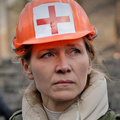
She came to the Maidan on December 1, 2013, after the beating of students. She came with the younger seven -year -old daughter. At that time she was a completely successful person - she worked as a commercial director with a good salary. As a Maidan physician came out on January 22, after the first murders. I was on duty in the trade unions (House of Trade Unions. - Ed.) And in the Ukrainian house. February 18 went to mobile brigades. Grushevsky, Institutskaya, Maidan. On the 20th, she carried the wounded from the October. After the Maidan, when the Crimea was selected, she went to the military enlistment office and wrote a statement. When they did not take, she came in early June to the Kyiv military hospital. At first, it was like a nurse, a nanny, then she began, like other volunteers, to improve the hospital. I was supported - they helped to glaze in the department of emergency surgery (there were old windows with holes). She began to write about the wounded, help to deal with prosthetics. In the fall, I went to the ATO zone. Hospitals of the first edge: Selidovo, Demidovo, Krasnoarmeysk, Artemovsk. Orphanages, the evacuation of people from Vodyanoy, Maryinka after shelling, Avdeevka, Popasnaya, Mironovskoye ... So two years. In recent months, they took part in the certification of the police in the Kyiv region.
Now it is important to direct all the forces of volunteers in a quality direction. I connect my life with the help of people. With the help of building a normal country. I lost my job this fall due to the crisis. I'm looking for a job now. From the good - I met with my husband thanks to the war.
Yana Goncharova , Civil activist (Russia):

During the events on the Maidan, I calmly lived in my city and did not think about Ukraine or the revolution in a neighboring country. I had my own life, completely ordinary and boring - work, house, meeting with friends. She worked in a small company, was going to build a career, not really understanding why I needed it all. I saw what was happening in Kyiv on TV and was horrified. Картинки разрушений, горящих покрышек, Майдана в огне меня по-настоящему пугали - ведь я видела эти красивые места своими глазами, а теперь там хаос. Я не понимала, зачем это все. Люди борются за евроинтеграцию? Мне было неясно, зачем такая страшная борьба. Не могу сказать, что была под влиянием пропаганды российских СМИ - скорее меня просто не особо интересовали подробности. Я думала, это их страна, сами разберутся.
Сейчас моя жизнь очень сильно изменилась. Даже не просто изменилась, а наполнилась - действиями, событиями и смыслом. После убийства Немцова я больше погрузилась в протестное движение. Конечно, в Ростове оно небольшое, но все же есть. Мы готовили акции, выходили с плакатами в поддержку Украины, с требованием освободить политзаключенных. Я стала больше узнавать о том, что происходит в Украине, в Крыму, Донбассе. Потом я начала заниматься "РосУзником" - пересылкой писем политзаключенным. Вышло так, что переписываться мы начали с Олегом Сенцовым и Сашей Кольченко, так что тема Украины меня сильно увлекла. Сейчас я курирую всех украинцев, заключенных в России, особенно активно переписываемся с Надеждой Савченко, с Геной Афанасьевым. Недавно пришел ответ от Юрия Солошенко. Пока в Ростове сидели Сенцов с Кольченко, носила им передачки, потому что семьи у них далеко. Я уже настолько привыкла проводить воскресенья в СИЗО, что перестроиться было трудновато. Кроме того, пишу репортажи с суда над Надеждой Савченко. Своими глазами вижу, что такое в России правосудие - точнее, его отсутствие. У меня теперь намного больше связей с Украиной, я знаю намного больше о том, за что люди выходили на Майдан и к чему они пришли сейчас. Очень хочу, чтобы у них все получилось.
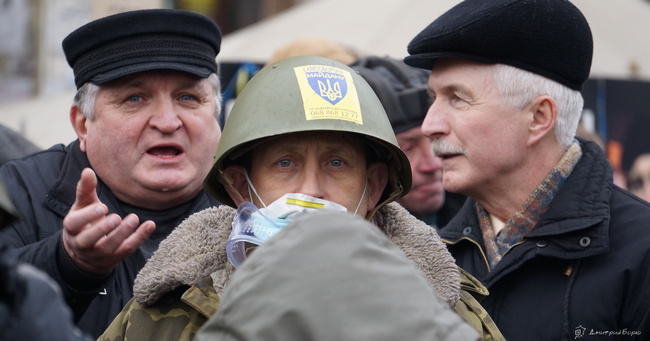
Анастасия Бубеева , жена политзаключенного (Россия):
Во время Майдана мы жили дома, в Твери, стали активно мониторить международные СМИ, следили за онлайн-трансляцией, поддерживали постоянную связь с родственниками из Киева. Старались делиться важной информацией в соцсетях, чтобы донести факты до друзей и знакомых.
В связи с событиями на Майдане и нашей с мужем поддержкой украинского народа резко обострились отношения с соотечественниками, включая родственников. За свои слова в интернете, в том числе и за поддержку Украины, мой муж сейчас оказался в тюрьме . Зато были найдены контакты людей, которые так же неравнодушны к политической ситуации и угнетены все более агрессивным режимом в России. Сейчас жизнь течет в постоянной борьбе за сохранение своих прав и свобод.
Среди задач, которые должна поставить перед собой Россия, - снизить обороты своей политики империи-агрессора. Вернуть захваченные чужие территории. Перестать участвовать в войнах, посягать на чужое. И вместо этого наводить порядок внутри страны. Восстановить сельское хозяйство, сделать первоочередной задачей борьбу с коррупцией, обратить внимание на чрезвычайно низкий уровень жизни в регионах и разобраться в причинах.
Маруся Шанаурина , педагог (Россия):

На самом деле февраль 2014 года - это не только переломный момент в жизни Украины. Это переломный момент в нашей с Русланом жизни. В феврале закончилось многое, что было нам дорого много лет. Закончили это не мы. Мы столкнулись с потоком таких слов и определений, которых никогда до этого не знали и, надеюсь, никогда уже не услышим впредь. Но при этом началась новая история нашей жизни. Я хорошо помню этот месяц и еще полгода после него. Мы были двумя оголенными проводами, потому что невозможно было не реагировать, а все реакции были острыми. Мы постоянно писали друзьям в Киев, мы смотрели новости, мы страшно напивались, и плакали, и пели в голос украинские песни. Сейчас это кажется немного наивным и глупым, но тогда мы так чувствовали и без этого не могли существовать. Все стало иным. Майдан подарил нам надежду. И новых друзей. Я верю в Украину. Верю даже сейчас, когда у многих и не осталось надежд.
Алексей Полихович , бывший политзаключенный (Россия):
Нас (фигурантов Болотного дела. - Ред.) приговаривали как раз под выстрелы на Институтской, 21-24 февраля. Смотрели по федеральным каналам съемки из Киева. Тогда пропаганда уже работала вовсю, Киселев рассказывал, что по Майдану ходят неизвестные провокаторы в форме спецподразделения украинского МВД и убивают людей из огнестрельного оружия. Даже без федеральной озвучки, только по кадрам было ясно, что там ад творится. Все спорили, сыграет ли происходившее там нам на пользу или, наоборот, против нас. По моему мнению, нас посадили бы и без Майдана. В 2012 году вот эта куча-мала с ОМОНом на Болотной вызывала беспокойство режима, до Майдана это все смотрелось по телеку достаточно круто и опасно. И за это народ нужно было покарать.
Отсидев больше трех лет в тюрьме, я вышел чуть раньше конца срока и оказался в стране, которая за это время ввязалась уже во вторую войну со всеми вытекающими из нее прелестями вроде травли инакомыслящих, лживой внешней политики и "сопутствующим ущербом" - жизнями мирных людей. Общество расколото и напугано, причем по обе стороны линии раскола. Санкции и беспечная экономическая политика ввергли нас всех в кризис и угасание, хотя, думаю, это заметно только простым людям - те, кто непосредственно принимал авантюрные решения, продолжают пользоваться всеми благами, титулами, статусами и привилегиями. Их амбиции и тупость по-прежнему правят.
Государство-монстр только порождает насилие, обман и торжество лизоблюдства, рабства и пьянящего самодовольства. Оно концентрирует в себе управляемую агрессию многих во имя меркантильных или личных интересов нечестных на руку единиц. Я могу сказать, чего хотел бы я, мои друзья, такие как мы. Безальтернативного освобождения.
Ирина Берлянд , гражданский активист (Россия - Украина):
Во время Майдана я жила в Москве, была так называемым оппозиционным гражданским активистом, участвовала в политических протестах, занималась и "малыми делами", но начиная с 30 ноября главным событием моей жизни был именно Майдан. С самого начала Евромайдана в ноябре для меня не было вопросов, на чьей я стороне, - я горячо сочувствовала сторонникам евроинтеграции и желала им успеха. Но после разгона Евромайдана, когда восстал, как казалось, весь Киев и приехали десятки тысяч людей со всей страны, когда, собственно, и началась по-настоящему Революция достоинства, мне стало ясно, что это уже не может кончиться компромиссом, что речь идет уже не о том, будет ли Украина интегрирована в ЕС, а о том, останется ли она свободной страной или будет превращена в концлагерь.
Я, как и многие мои друзья-москвичи, была невероятно сильно вовлечена в происходящее в Киеве. Два года назад, именно в эти страшные дни перед победой Майдана, я сутками сидела перед монитором, боясь отойти, а вернувшись, узнать, что Майдан разогнан, потоплен в крови. Победа Майдана казалась невероятной, противоречащей всем законам - но Майдан победил, хоть и ценой страшных жертв. Это было чудом. Я не могу представить себе, как бы я жила, если бы Революция достоинства была подавлена.
Мне повезло: в моей семье и среди близких друзей серьезных разногласий не было. Но в более широком кругу произошел непоправимый раскол. И не между левыми и правыми, политически ангажированными и аполитичными, запутинцами и оппозиционерами - образовалась совершенно новая "линия баррикад", которая сохраняется до сих пор. Много времени и сил я отдавала спорам, личным и в соцсетях, пытаясь убедить, пояснить. Я не жалею об этом, но результат был ничтожен.
Now I live in Kyiv. В начале марта 2014 года, когда Россия заявила претензии на Крым, российский Совет Федерации принял решение о разрешении использования войск против Украины и большинство моих тогдашних соотечественников это с восторгом поддержало, я поняла, что не могу оставаться гражданкой страны, которая от моего имени совершает преступление. Решение уехать и избавиться от российского гражданства было принято сразу и поддержано моей небольшой семьей. Были две страны, на гражданство которых я могла рассчитывать, - Украина и Израиль. Я выбрала Украину.
Летом того же года я получила украинское гражданство (на основании происхождения - я родилась в Украине) и мы переехали в Киев. Мы ни разу об этом не пожалели - ни о том, что оставили Россию, ни о том, что уехали именно сюда, хотя все оказалось далеко не так радужно, как хотелось (к чему я, впрочем, была готова - потому, наверное, сильного разочарования не чувствую).
За это время подтвердилось и усилилось то страшное, касающееся не власти, но российского общества, что я почувствовала два года назад и из-за чего решила уехать: массовое превращение россиян в не решающихся самостоятельно думать и чувствовать "зомби", нечто похожее на заразную болезнь. Кто-то видит признаки выздоровления - я их не вижу. Наоборот, крепнет убеждение в том, что терапия бессильна, что излечение если и возможно, то только радикальными методами. Возможно, я издалека не все вижу или оптика моя искажена - была бы очень, очень рада ошибиться. Все это время не перестаю думать с болью и сочувствием об оставшихся в России друзьях.
За это время я лучше узнала свою новую страну. И сама страна, кажется, лучше узнала себя. Мои предположения о том, что, хотя Украина не Россия, но так называемое "общее прошлое" не прошло бесследно и в так называемой "ментальности" много общего, полностью подтвердились. Я встречаю здесь в достаточном количестве "старых знакомых": патернализм, безответственность, равнодушие к коррупции, нежелание думать вне стереотипов, нетерпимость, "моя хата с краю", готовность творить кумиров и т.д. etc.
И да, патриотизм-таки и здесь легко становится "прибежищем негодяя", и настоящие или мнимые подвиги на Майдане или в зоне АТО некоторыми воспринимаются как пожизненная индульгенция.
Но Украина тем не менее не Россия. Всеобщего, тотального оболванивания, "монолитного единства партии, вождя и народа", всеобщей агрессивности и нетерпимости к чужим здесь нет - а казалось бы, в обороняющейся от внешней агрессии стране этого можно было ожидать (именно это, а не трудности налаживания жизни на новом месте было самым большим моим опасением). Хотя война неизбежно ожесточает нравы и радикализирует настроения.
Украинское общество оказалось способно на Революцию достоинства, но значительная его часть совершенно не готова к необходимым реформам. Популистские настроения очень распространены. Борьбу с коррупцией и реформы иные представляют себе так: необходимо поставить во власти честных людей, посадить олигархов, конфисковать наворованное, увеличить зарплаты, пенсии и пособия, уменьшить тарифы и налоги - и все станет хорошо. Правительственные кризисы, все издержки и риски публичной конкурентной политики, нестабильность многих пугают. Иные, наоборот, хотят "продолжения революции" и зовут к "третьему майдану" (я очень надеюсь, что его не случится).
Тот героический солидарный порыв к свободе, который мы увидели на киевском Майдане и благодаря которому многие россияне влюбились в Украину и ее народ, не мог длиться долго. Перманентных революций не бывает, а если бы были, то ничего хорошего бы в этом не было. Чтобы стать тем народом, которым героически отстоявшие Майдан украинцы тогда решили быть, нужно много лет и даже десятилетий упорной работы, с неизбежными ошибками и откатами, и это, может быть, труднее, чем скинуть оскорбительную власть и бросить вызов империи. Понимающих это и готовых ради этого работать - много. Больше, чем можно было рассчитывать.
Настоящее Украины драматично. Будущее очень тревожно и ничем не гарантировано, но небезнадежно.
Подготовили Анна и Дмитрий Борко