
Translated material
Lullaby
The 66th Berlin Film Festival looked into the past with horror and hoped for the future
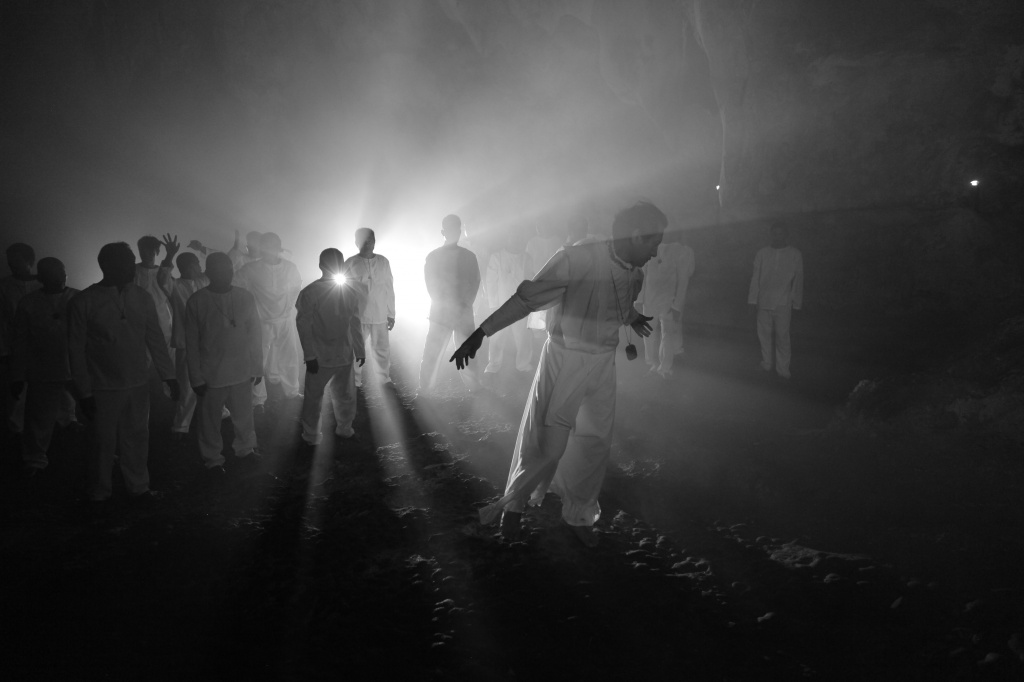
"Lullaby of mournful secrets" is a Philippine film ritual, lasting eight hours
The main and, of course, the most memorable event of Berlinale-2016, as well as the main feat for those who managed to perform it, is a competition of the competitive film from the Philippines “Lellless Sorrowful Secret”: the picture lasts eight hours, but they also showed it with an hour-long break, that is, in the hall had to be held literally from morning to evening. People came with food and water, many deserted from the battlefield, but they applauded for a long and conviction, and not quite clear - filming group or themselves. The director Love Diaz, who accepted on the appliances (by the way, is a reduction in Lavrenty: he himself assures that he was named after Beria’s parents) is known for his extremely long canvases, with whom he had never reached the main competition of a festival of this class, although he won the competition in Venice and won the competition in Locarno. But of course, the very scale of the problems raised by Diaz is truly biblical, he demanded such a monumental solution. And besides, he perfectly answered the leitmotif specified this year at the festival: man and history.
Ghosts yesterday
Do you know a lot about the Philippine Revolution - an uprising against the Spanish occupation that happened at the sunset of the 19th century? It is unlikely, like the vast majority of the audience of Berlinale. Probably, eight hours could have been enough for a detailed story about those dramatic events, but Diaz’s concept is fundamentally different: it is impossible to recreate history, it is pointless to imitate, and therefore it must be invented again in the parallel, alternative world of cinema. In the center of “Lullaby, mournful secrets” is a widow of Andres Bonifazio, which is not shown on the screen, the martyr of the revolution. Accompanied by several friends, she wanders through endless jungle in search of his body. She meets both people and mythical ticbalans - creatures with the appearance of a person, the wisdom of the spirit and the voice of the horse: they explain that the country will be saved only when a sleeping in the cave of Bernardo Carpio (the legendary hero of the already Spanish folklore, the murderer of Roland) will be found). At the same time, the revolutionaries share the skin of an unkilled bear and in front of the Spaniards fight for power, killing each other.
It is impossible to recreate history, it is pointless to imitate, and therefore it must be invented again in the parallel, alternative world of cinema
It is quite difficult to understand the black and white universes Lava Diaz, especially the viewer, poorly familiar with the material, but the idea is absolutely transparent. The revolution is beautiful, but myth. She has victims, rapists, traitors, and heroes remain elusive, invisible, possibly not existing at all. The meditative and defiantly picturesque canvas of a dimensionless picture is a kind of manifesto against any violence and the recognition that history cannot do without this violence. In this sense, the inhabitants of the century before last are no different from us, and the Philippines are neither from the Spaniards, nor from the Germans, nor from the Russians.
Hotel Europe
Festival cinema does not think of itself outside of politics, and the understanding of today is not possible without a view of the past. For Berlinal, this statement is especially important: there is no festival in which they would not show at least one picture of the gloomy Nazi past of the country. So this time, the competition was the tape “One in Berlin”, the directorial work of the Swiss actor Vincent Perez, who once played in “Queen Margo” with Patrice Sherro, and later became a partner of Anastasia Zavorotyuk in the “Apocalypse Code” and Dmitry Nagiyev-in “Kitchen in Paris”. Alas, the picture of the Peres is designed quite in the spirit of modern Russian cinema-this is a funny traditional and conditional costume drama, which is also shot with English actors (excellent: Emma Thompson and Brendan Glison) and English. In the outlines of the theater of the theater pompous history of the two inconsolable Berlint spouses who organized secret resistance to the system during the Second World War, the original source is hardly read-the famous novel by Gans Fallas, "Everyone dies alone." But this, in fact, does not matter. The gesture itself matters here: it is necessary to tell the history of hopeless heroic resistance to Nazism, but it will be well told or badly, it does not matter.
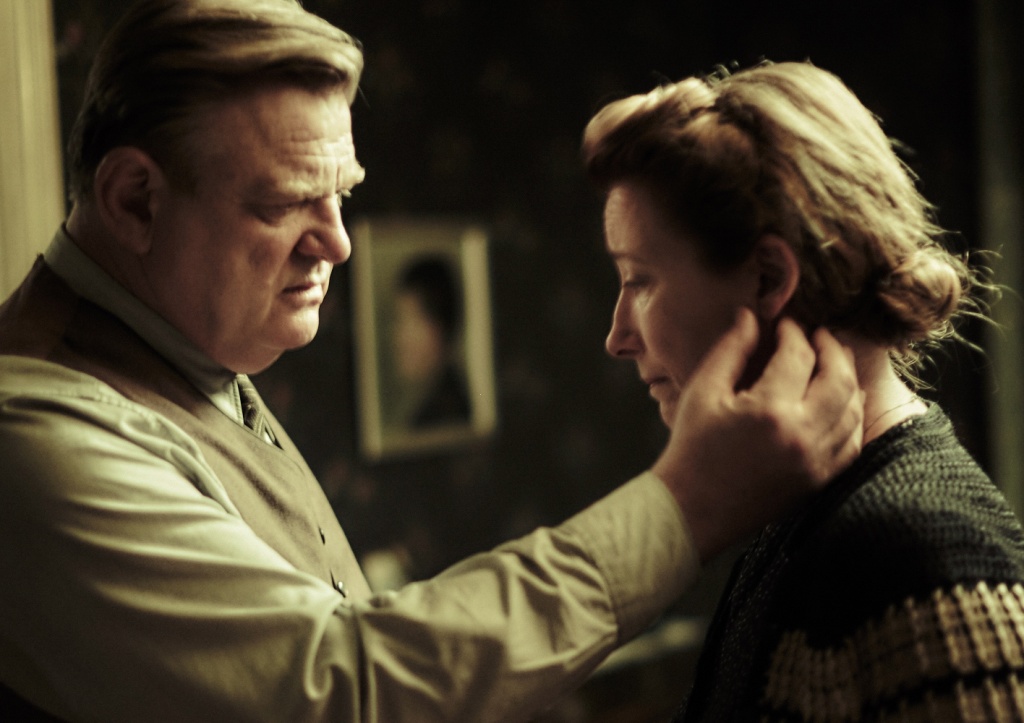
"Some in Berlin", a dramatic story about individual resistance to Nazi terror
"Nothing is forgotten, no one is forgotten." The old and not lost relevance of the Soviet slogan could be hung over the entrance to the Berlinal Palace and not shoot for years. Each nation drives here to the God of his demons and in public scourges them. For example, the Debutant Portuguese Ivo M. Ferreira showed in the competition “Letters from the War”-a pretentious-invented black and white ribbon based on the texts of genuine letters, which the military doctor Antonio Lobo Antunes sent a pregnant wife to Lisbon from the battlefields of Angola in the early 1970s. How much the film seems to be, the recognition of the officer who became a writer sound so piercingly.
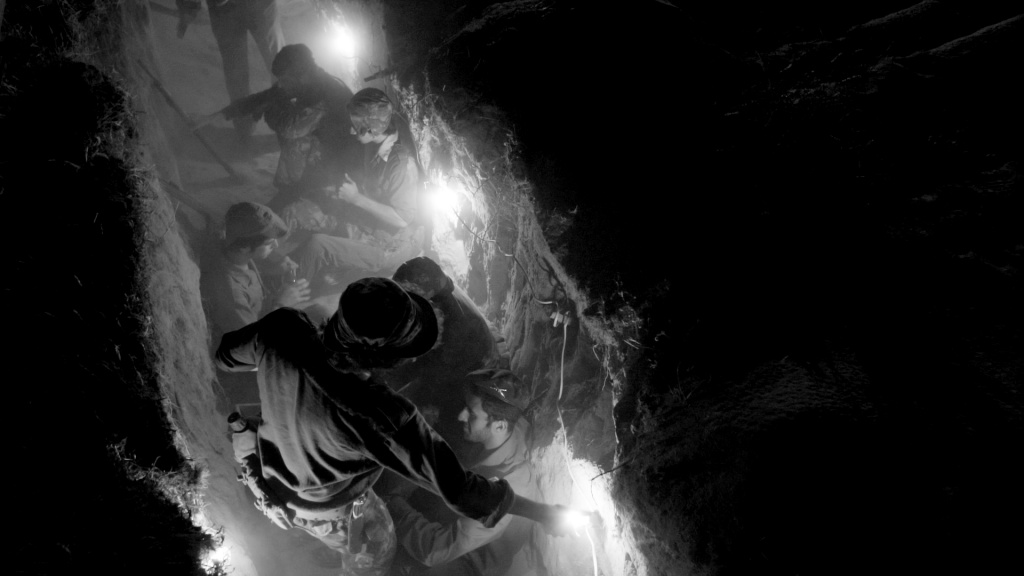
“Letters from the War” - Portuguese epistolary cinema -farm on the war in Angola
But the Oscars Bosnian laureate Danis Tanovich did not present a tragedy, but rather the sarcastic comedy “Death in Sarajevo” - the history of the celebration in the pompous “Hotel Europe” centuries of the murder of Archduke Ferdinand. Among the characters of this multi -figure fresco - cooks, maids and guards, as well as the director of the hotel and his eminent guests who rented anniversary reports and the modern namesake of the Gavril terrorist, with a pistol in the pocket of trousers. Some are preparing for official celebrations, others from the heart plan to disrupt them, no one has either money or beliefs. Whoever they shot today, this death will go unnoticed - maybe this speaks of the degradation of Europe, and maybe vice versa: the director offers the audience to answer the question.
"Nothing is forgotten, no one is forgotten." The old Soviet slogan could be hung over the entrance in Berlinal of the Palace: each nation drives here to the God of his demons and publicly beats them
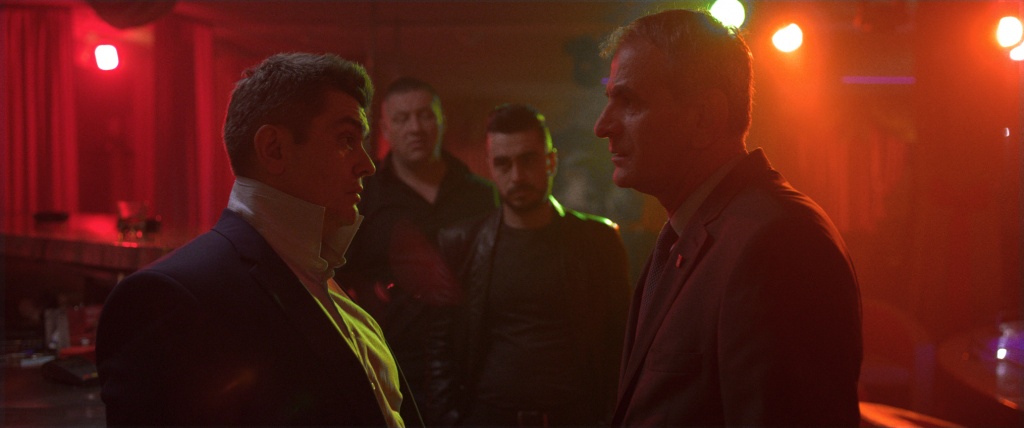
In the black comedy “Death in Sarajevo”, the terrorist attack of Gavrila of the principle is repeated a hundred years later
War outside the war
In any case, today's war cannot be similar to that old, although it threatens no less victims. This is scared by the American Alex Pertini, one of the two documentary contestants, whose film “Zero Days” promises a scandal even more than in the case of sensational paintings by the same author about “Vikilics” and the Church of Scientology. The new Fire Tape talks about the infamous Stuxnet virus, which, under the code name, “Olympic Games” developed and released the USA and Israeli special services into the world in 2010. They did not solve their immediate task - to destroy the nuclear program of Iran - they did not solve Pertini, but they discovered the era of Cyberovon, giving powerful weapons to their potential opponents, which has since adopted similar methods. In “zero days” there are recognition of a giant number of experts, but no one finally confirms anything - only hints. The most important information remains hopelessly classified. One of the two: either Pyatini is an Alarmist and paranoid, or he really affected the most sensitive and painful possible topics. In any case, “zero days” look like an excellent spy thriller. It is not clear only, fantastic or realistic.
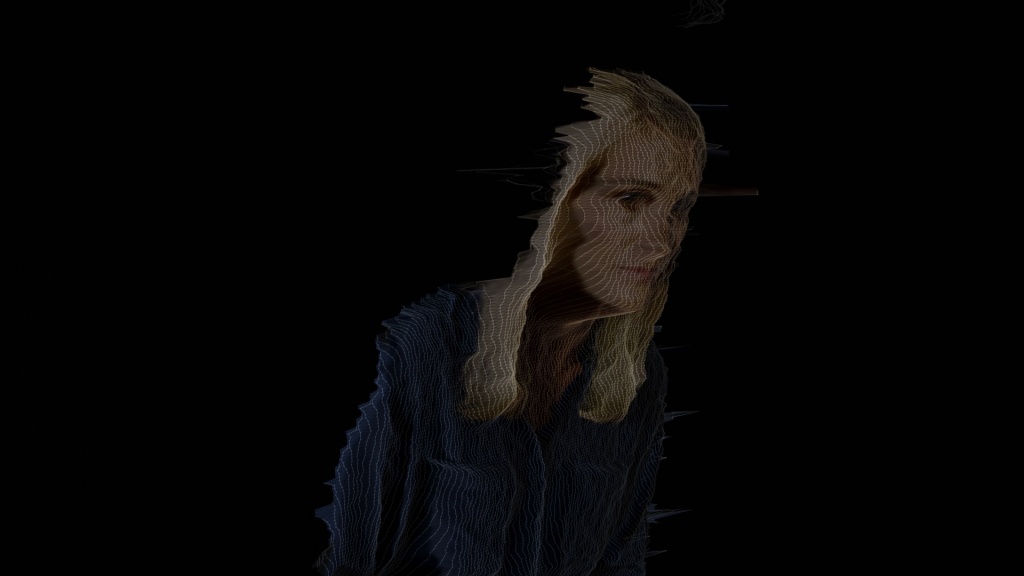
The agent whose name cannot be called is the main source of the documentary Alex Pereni in Zero Days
The second documentary of Berlinale produced an even larger splash: after all, it has not only information in it, but also artistic images of amazing power (some even unreasonably suspected the author in the sub -sector of reality). We are talking about “fire at sea”, the new work of the Italian Dzhanfranko Rosie, who already received the Venetian “Golden Leo” for his previous film “The Holy Roman Ring”. Rosie spent a whole year on the tiny Italian island of Lampeduza - a transshipment point for hundreds of thousands of refugees from Africa and Asia countries. His picture is not only an amazing human document showing in detail a rescue operation in the sea (alas, it is not possible to save many migrants), but also created in the best traditions of neorealism of the fresco about the daily life of poor fishing villages, so little reminiscent of paradise that the inhabitants of the “third world” are striving through the ocean. The dramatic paradox, however, is demonstrated with wonderful humor, through a series of comic and touching characters. The central of them is a ten -year -old boy, despite myopia, aptly shooting birds from a home -made slingshot. It is for him and his peers that to determine the future of our world, so shameless today.

Boy Samuel, a resident of Lampeduza and the hero of the documentary "fire in the sea"
Only a few years older than the hero of the game drama “My name is Nero”-a Mexican teenager-reeligal, who fled to the USA for a better life. In the picture of the Iranian director Rafi Pitts, shot according to the Romanian scenario, Raedupleka’s collapse (nevertheless, the most unusual combinations are found at festivals), the absurd luxury of Beverly-Hills mansions contrasts with the ascetic scenery of the Middle East, where he goes to fight for the newly-composed American birthday of Nero: other ways to get citizenship for people like him, not like him. exists. The film begins as a political commentary, then turns into an existential drama about the war with an invisible and unfamiliar enemy, and ends with a real fact. It turns out that the number of people-fighters for democracy are huge and many of them after completing the service are deported back to the historical homeland.
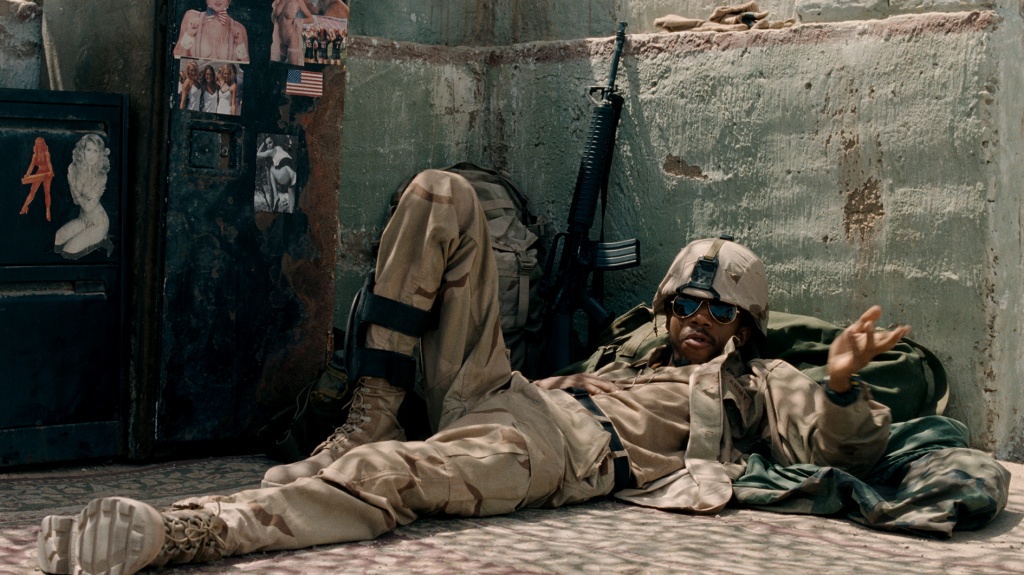
To become “real Americans”, the heroes of the film “My name Nero” have to serve
What will happen tomorrow
The “future” of the Frenchwoman Mia Hansen-Leva is not only a master class of acting from the best European actress Isabelle Jupper (as the head of the jury, Miril Streep, could not appreciate such a job!), But also a sarcastic reflection on what awaits Europe, which was mired in bourgeois comfort. The older generation - the leading comfortable life university teachers of philosophy - is at least endowed with the ability to feel and live on the whole coil, while anemic youth spends months in barren kitchen discussions about anarchy and revolution. It is not clear only who to fight, except for his own apathy and laziness, and where the dictatorship that is proposed to overturn.

Isabelle Jupper teaches the young generation to live in the drama "Future"
Here is the excellent hero-to the best of the sentimental, to the best of the ironic-Tunisian drama, the Hedi, shot by Mohamed Ben Attia, knows that he needs to defeat his imperious mother. He is already 25 years old, the wedding is not far off, and he did not make a single independent decision in his entire life. The meeting at the resort with a free -loving animator radically changes the consciousness of Hedi, and he dares to the riot: you just need to refuse to marry, quit work and leave for France. A pretty and miserable hero of this picture (Mazh Mastature) is a kind of subclesin, on the contrary, who strives as much as they are afraid of. Amazingly, the film shot in distant Tunisia can be understandable and close to the inhabitant of any country and culture. No wonder the tape producers are brilliant Belgian brothers Luke and Jean-Pierre Dardenna.
Anemic youth spends months in barren kitchen discussions about anarchy and revolution. It is not clear only who to fight, except for his own apathy and laziness
It is impossible to escape from reality with all the desire. Changing it is above human forces, and even large artists will not have enough gunpowder. What remains? Yes, all the same lullabies are fairy tales about the best, the impossibility of which only make dreams more attractive. This is signaled by the most unusual film of the Berlin program, the American fantastic thriller "Special Midnight Release", shot by the talented young director Jeff Nichols. In this fantasy, inspired by the old ribbons of Stephen Spielberg and John Carpenter, the desperate parents flee a few states from the armed sectarians and omnipotent special services, trying to save their son-an eight-year-old miracle resort, in whose blinding look the strength of several nuclear bombs is hidden. In this vague and seductive image - an innocent and slightly autistic boy in dark glasses reading with a flashlight under the blanket comics about the superman - the same, a little reasonable hope for tomorrow, which, for all its unreasonableness, continues to feed people with cinema.
Photo: berlinale.de