Translated material
"They kill my people"
Photographer Maxim Dondyuk - about the war, the Maidan, Ukraine, Russia and the wall shifting to the east
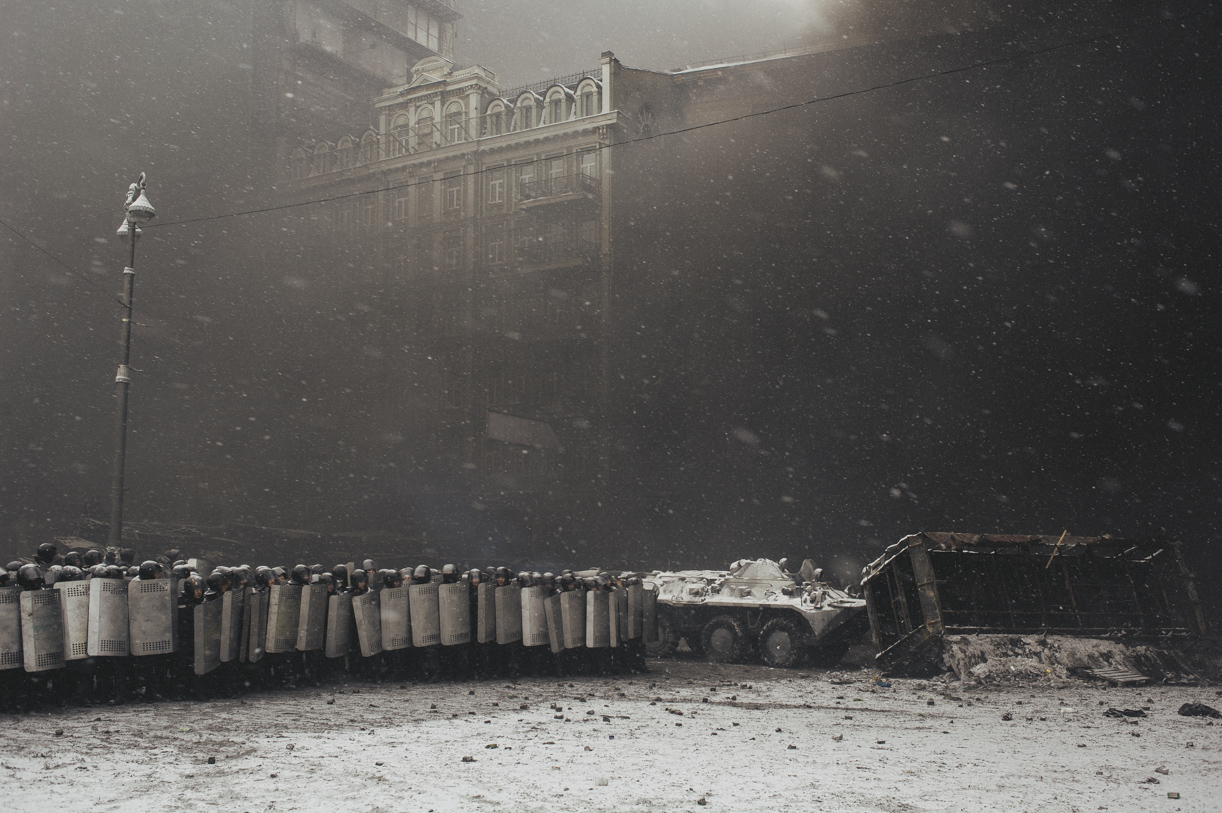
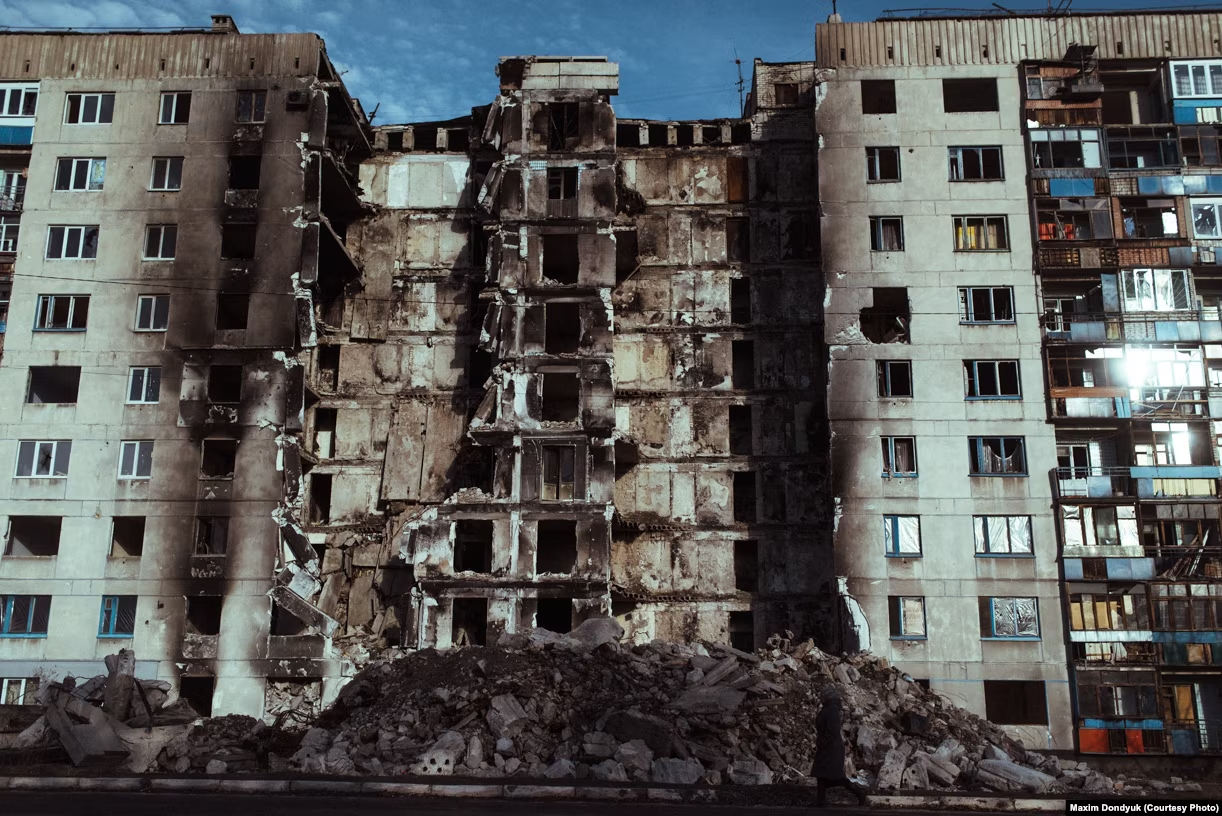
The photographer Maxim Dondyuk shot the Maidan and the war in the east of Ukraine, on both sides. He can tell how he was threatened with the execution of pro -Russian separatists, how he was surrounded by Ilovaisky and how Ukrainian staff were prevented from working.
On the eve of the second anniversary of the victory of the Maidan, the flight of President Viktor Yanukovych and who followed this Russian annexation of Crimea and the war in the Donbass Radio Liberty publishes the unrelated photos of Maxim Dondyuk.
He was born in the west of Ukraine, in the Khmelnitsky region, in a small town of Slavut, then together with his family (Dondyuk’s father - military) moved to the south, to the Kherson region, to the new Kakhovka, where most of his childhood passed.
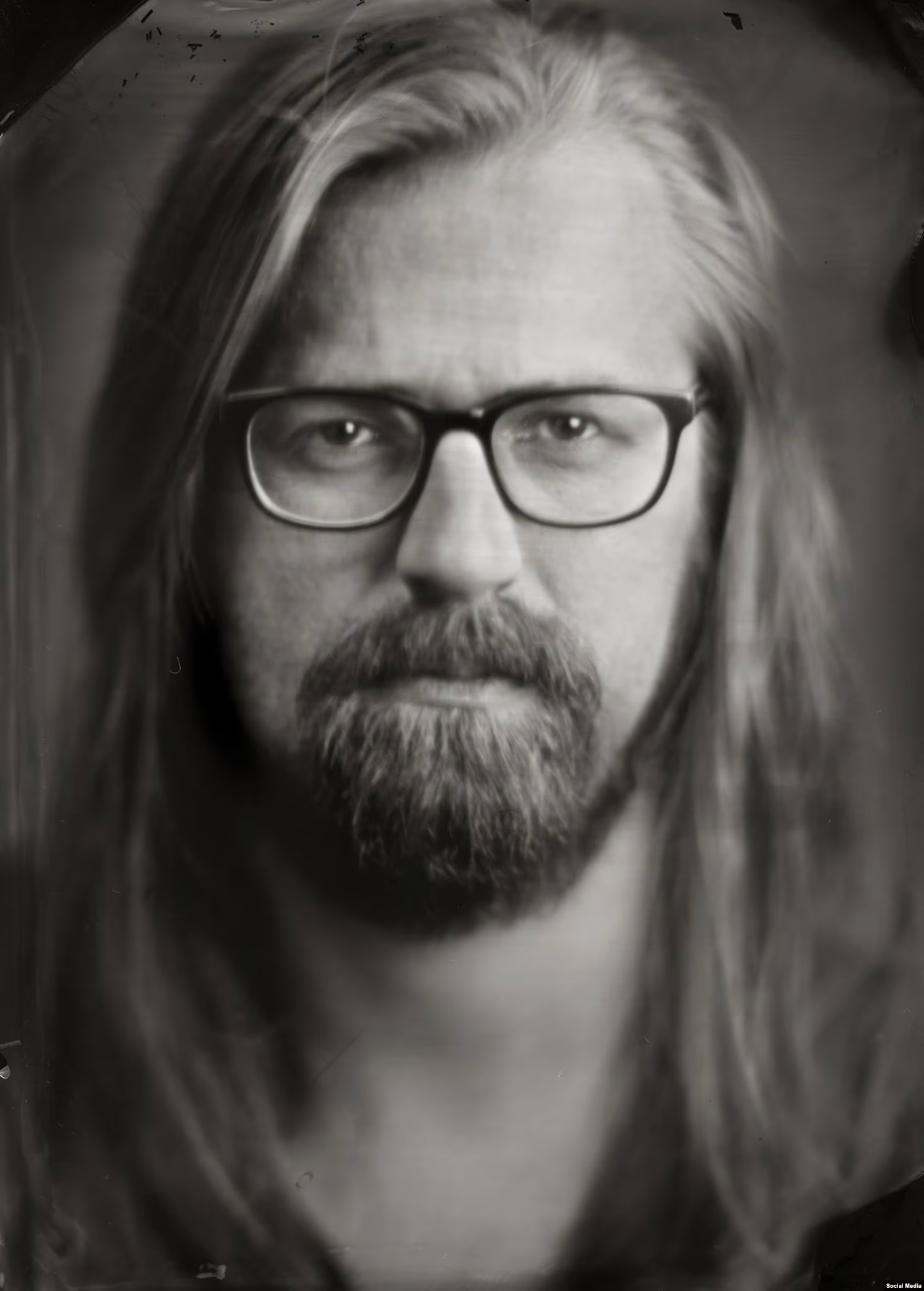
Dondyuk says that his mother taught his photographs, describes that he was sitting with her in the “red” room, calls the Soviet cameras: “Zenith”, “Change”. Later he began to go to a circle of photographs. And finally, already at the age of 24, after the army, in Kharkov, working as a cook, he suddenly returned to the photograph, was engaged in her free time, read books on photography, experimented. A year later, he quit his job, became a professional photographer, moved to Kyiv. At first, Dondyuk says, it was not about documentary:
-At first I looked towards some studio things, landscape things, was engaged in spherical panoramas-this was a very technically difficult thing then. In fact, what a report is in a good way, I already found out when I moved to Kyiv. Because in Kharkov a very strong art school, all that I saw there from reports is very boring newspaper things, news that did not inspire. At that time, I would be very surprised if someone told me that I would be a documentary.
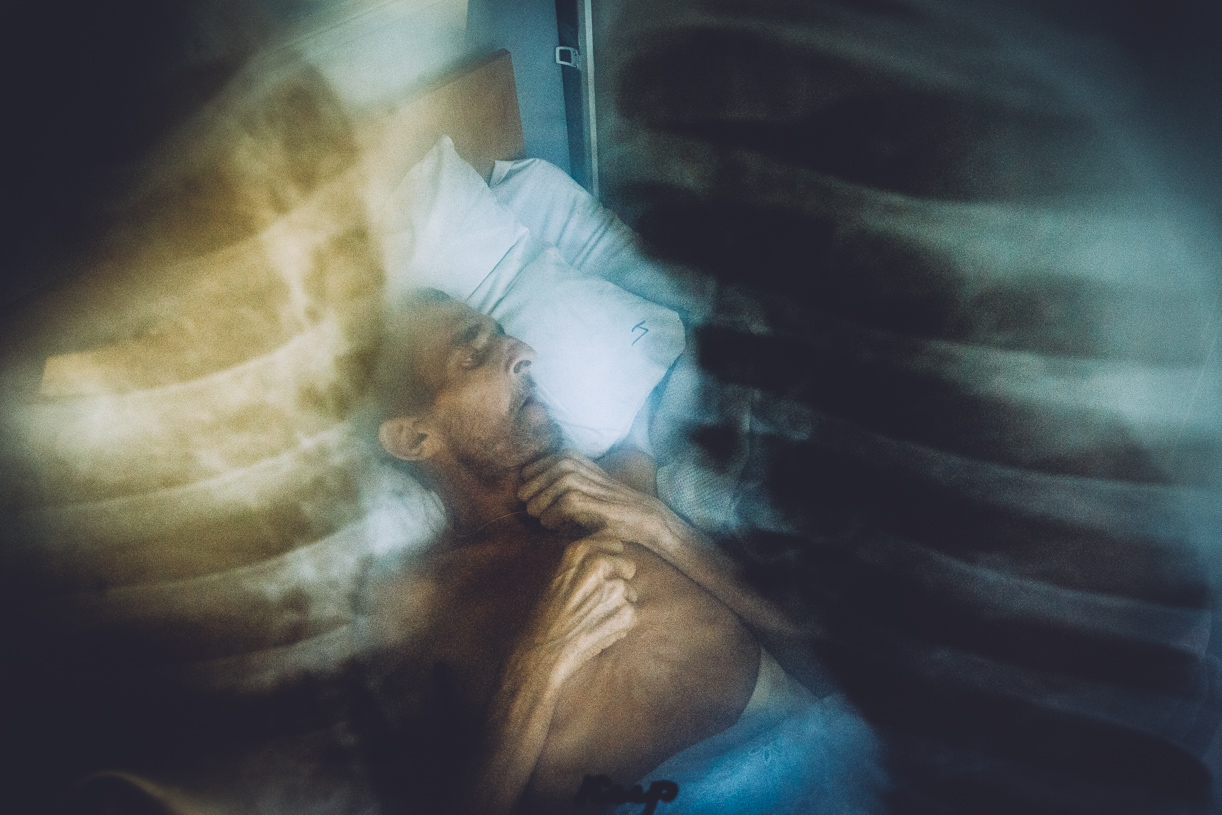
The black hole in which I got
- How did you become a documentary? How did you become the author of the project about tuberculosis patients for whom you received prizes?
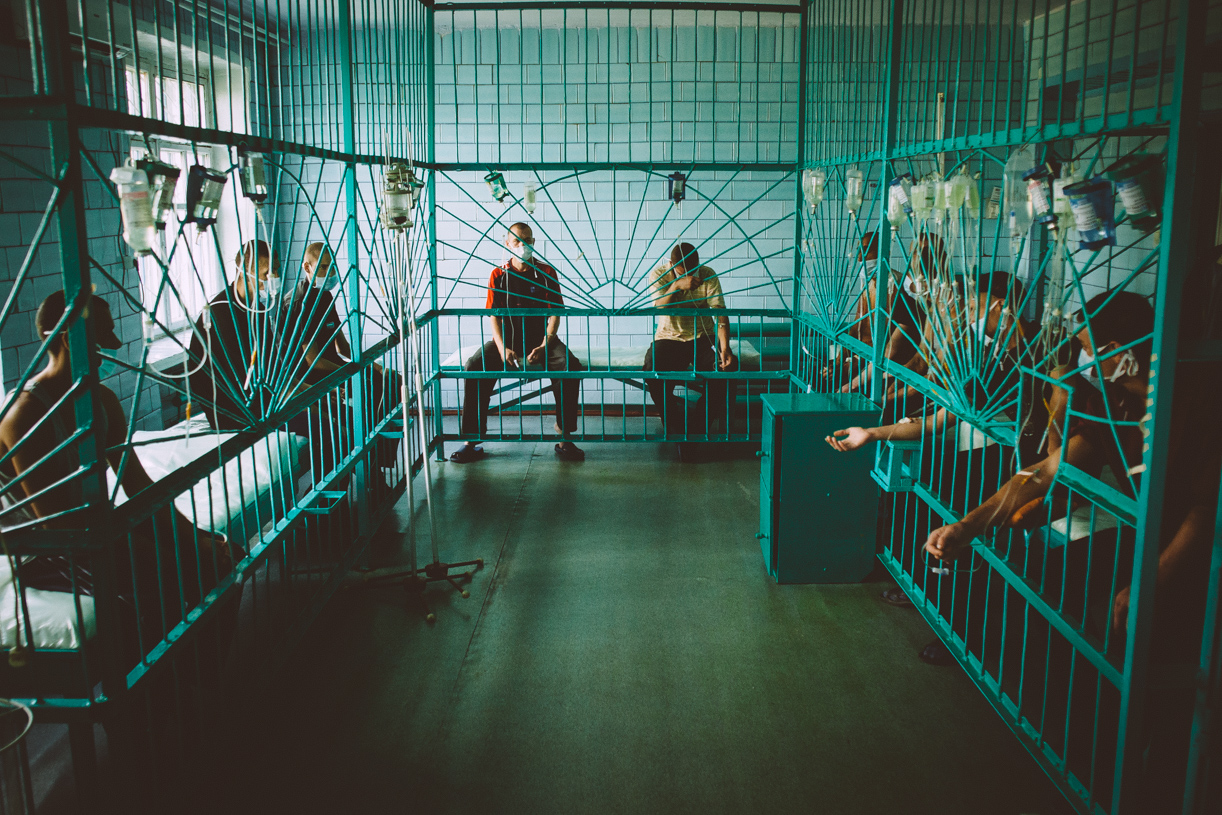
- This was the first serious project. Before that, I moved to Kyiv, worked at the news agency. For a long time I went on business trips throughout the country. It was at first exciting, the shooting was on the topics of politics, football and sat down to rallies and the Verkhovna Rada. This is a good experience and a colossal school, but after a few years I felt bored, I was very immersed in a documentary photo, I was very inspired. At that moment, I realized that I want to deal with a deeper project on some kind of social topic. After some time, I came to the problem of tuberculosis, about which he himself did not really know anything. It seemed to me that I would control in a month or two, that it was not so difficult and would not take much time, but it turned out that this project completely sucked me - such a black hole in which I got and which completely changed my life. I spent two years, taking off this project, I did not do anything else. The life that was before this project has completely disappeared, work, family, relationship, many friends, my worldview. The person who was formed after this project was already a completely different person. Therefore, for me this turned out to be a project of formation as another person. For me, photography is not a job, not a hobby, this is a philosophy, I love it very much for it, that it allows me to change with life with people in other situations that I could not get into if I were not a documentary.
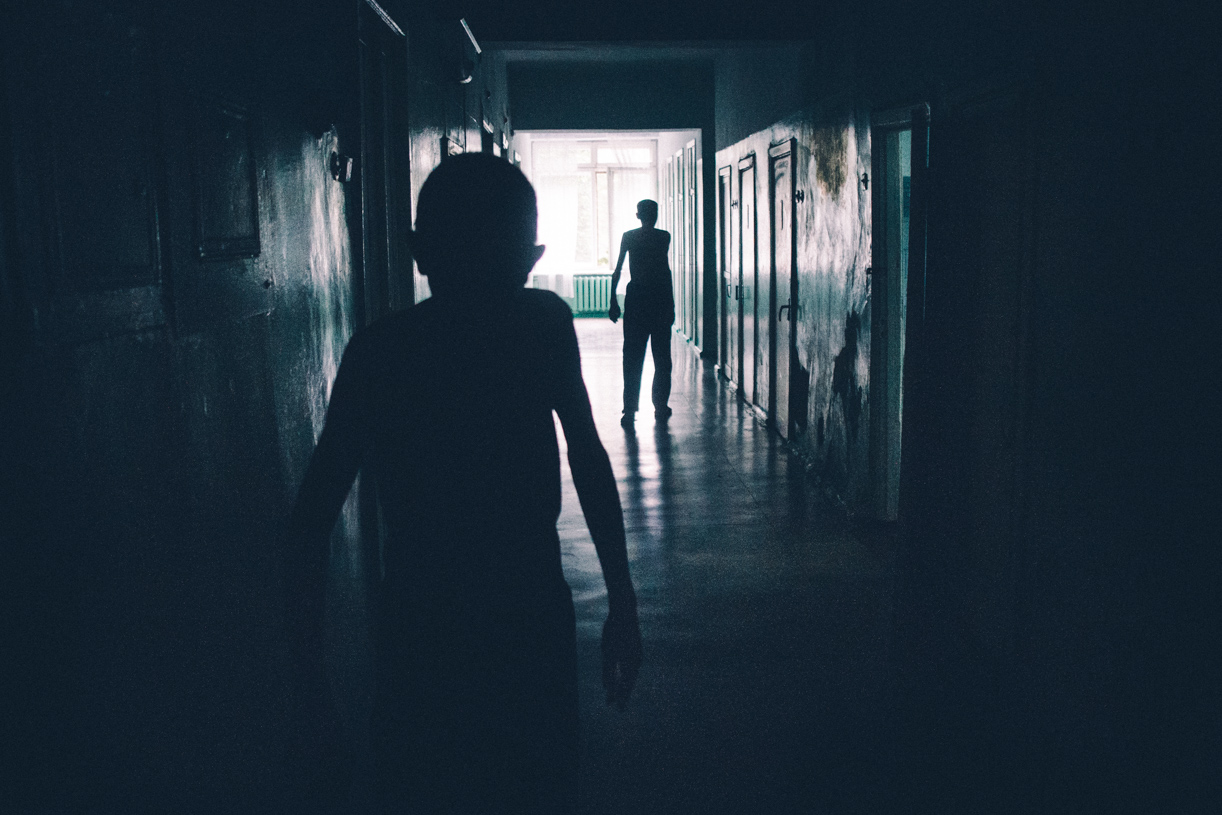
At some point I began to live in hospitals
“Wasn't it scary to work with tuberculosis patients?”
- Not scary, probably only crazy. At first there was no strong fear, I understood what I was doing. There were flashes of panic, of course, but they were quickly eliminated, I made conclusions for myself, decided - I continue to do it or stop. And continued. I tried to compete with Stigma, existing in society, with bias, with ignorance of this problem. I myself was part of this society, I also believed that if a person was ill with tuberculosis, he is almost contagious. I absolutely did not understand anything. It was a lot of experience, because tuberculosis is not a war, but you constantly encounter a slow death. Contact with such a life greatly affects you. By the end of the project, I understood that I was losing a sense of reality, I had problems with real life when I was returning. I quit, I lost my family, I had nowhere to live in Kyiv, at some point I began to live in hospitals, because I had nowhere to return. Maybe, against the background of everything that I shot, my problems did not seem any significant. Two years later, I began to understand that I was losing the line, that I live only that life, I absolutely do not understand what is happening in another life. Psychologists are called burnout.
Break at least some permission
“But you returned to ordinary life?”
- Of course, he returned, everything is fine. It was just a period of adaptation, just as when you return from the front. I had friends who were sick with tuberculosis, there are people who died, I was at their funeral. It is important for me when I leave somewhere, try not to be a guest there, so that it is a complete immersion, so that I would be part of what is happening. For example, I left, in the Donetsk, Lugansk or Kherson region, then to the Crimea, agreed with the regional doctor that I want to shoot from them - all this was on personal contacts, I did not work in the media, I didn’t have a cameras, my friends took it. Some doctors sent, and some said: cool, well done, what do you need? I had to shoot permission and so that I could spend the night, eat, I don’t have money to take off the hotel, let's live a week in this hospital, a week in that one. Sometimes I rented an apartment in the same town, it turned out cheaply. I agreed with the prisons in the same way. They said: break at least some permission to be your last name, and here we will already show you everything we can.
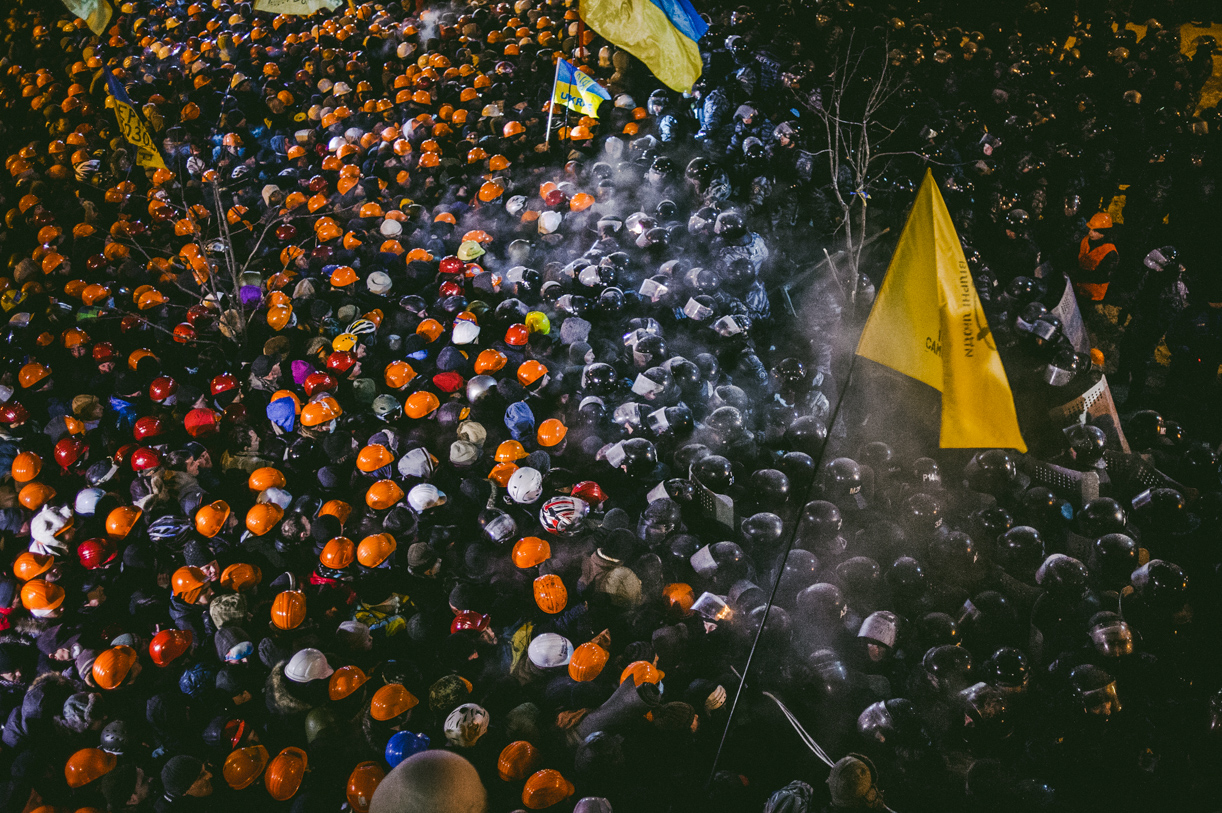
This is an attempt to be independent
- Let's talk about the Maidan. Two years ago he won. Have you comprehended what happened, two years later?
- It seems to me that I understood everything then, and my point of view has not changed. For me, what happened on the Maidan is the Berlin wall that fell - it simply continues its advance to Red Square, changes the geographical location. On the Maidan in the center of Kyiv there was a confrontation between two completely different cultures, two different layers of perception and worldview. This does not mean that there were young against the old generation. Just one culture is an attempt to be independent, an attempt to change life, to become part ... - I would not say part of Europe, we understand that Ukraine has many problems and become part of Europe - but try to live independently, without an imposed point of view, to live, how we need to live. Another culture is nostalgic, she wants to return old times, it is not interesting for this another future. My project was called the “confrontation culture” , this confrontation between two completely different cultures was in Berlin, the Czech Republic before that, “solidarity” and so on. The wall moves, and the influence of Russia is gradually moving, here such a split occurred. Because many people - those who are aged - are intimidated. And the youth, who was born in 1991, in independent Ukraine, they did not understand at all when they were told, they say, we want the Soviet Union or the former empire - they said: I do not know what it was, I was born in Ukraine, I do not understand what you are talking about. For me, this is a confrontation between completely different crops. This is not to say that one is good and the other bad, they just look completely in different directions.
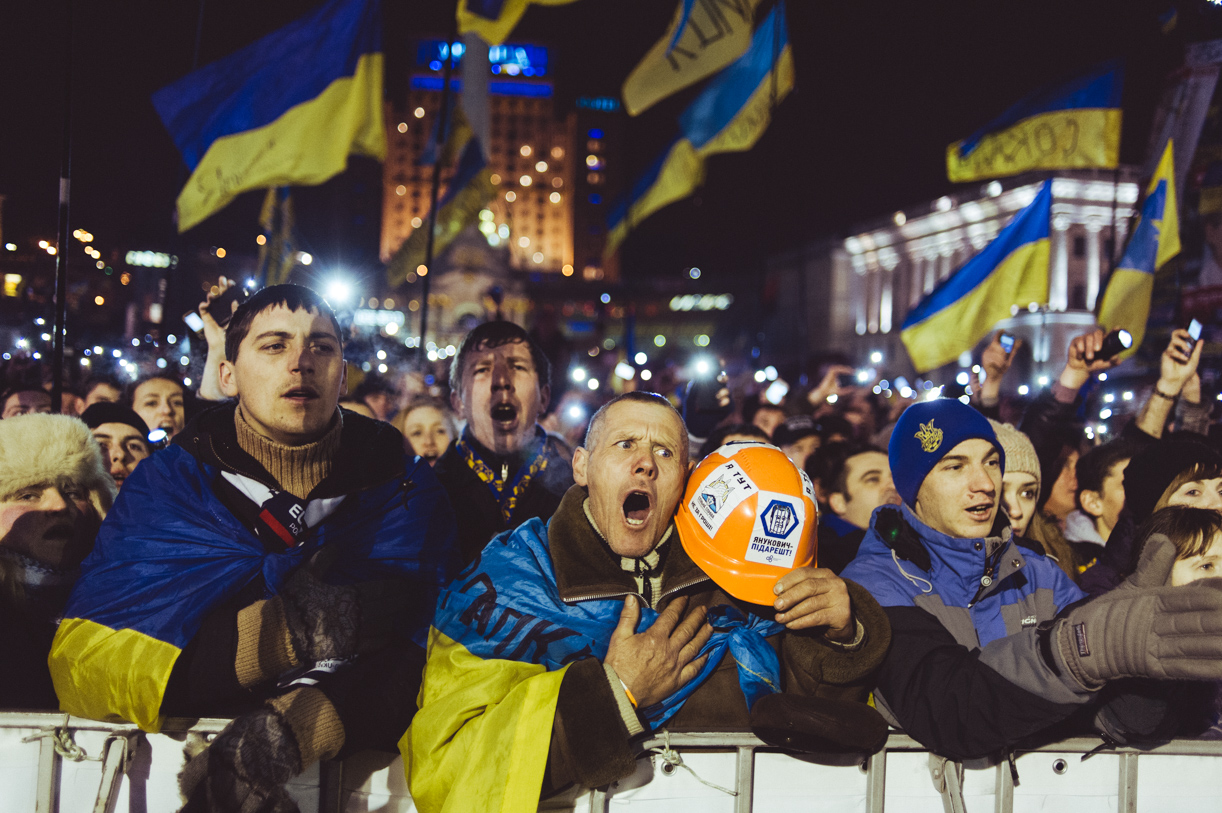
I have personal claims because they captured part of my country
- You worked in the Donbass by a virtually military correspondent. How do you feel about those who, roughly speaking, on the other side?
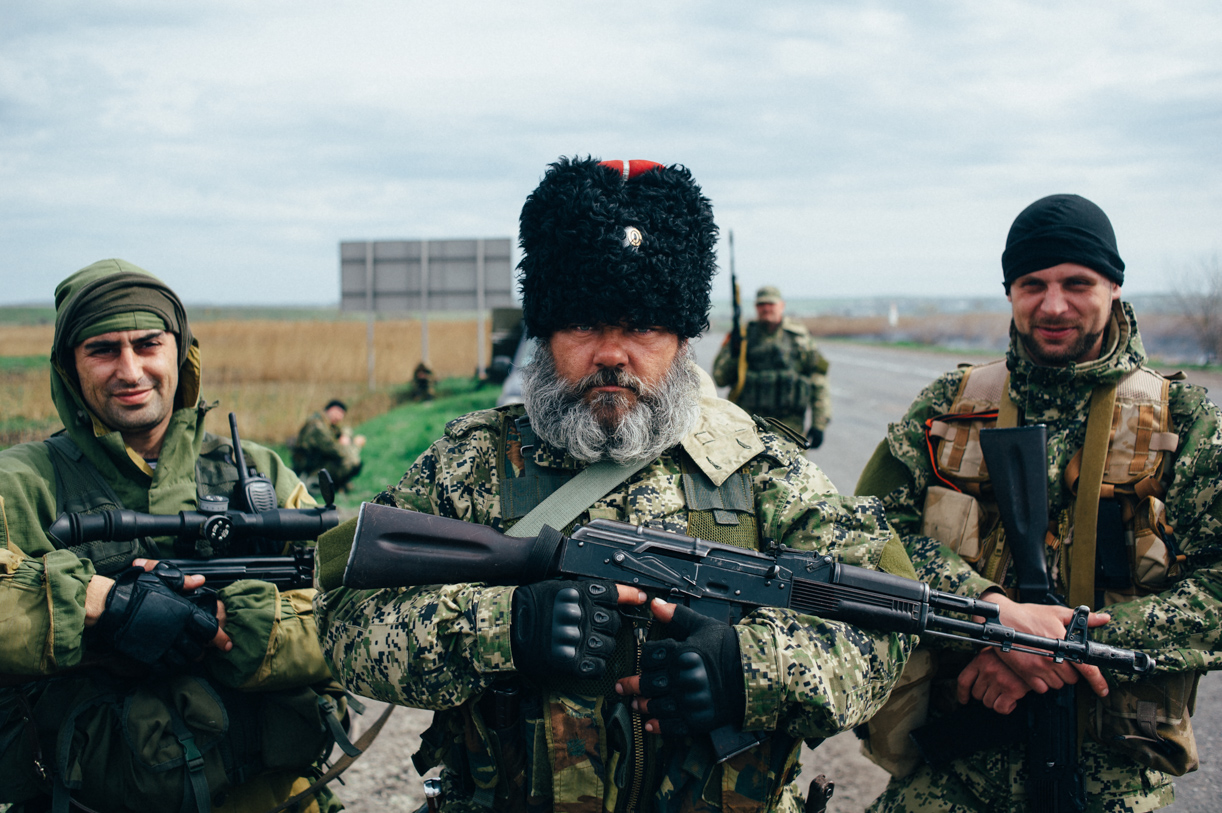
- The first few months I was illegally in the Donbass, pretended to be a Russian correspondent until our valiant Ukrainian media have opened me. I was there with Russian Xivas like a Muscovite, Akal, Bekal. It was important for me to be there with people who occupy my country, with Russian flags, I wanted to see all this not through TV, but personally. I saw how the separatists, the invaders who came with weapons already from the Crimea, capture my country. And it happened that the Kiev government exacerbated the explosive situation, which could be avoided. Of course, I have a negative attitude to people who took weapons there, because I myself sat under the shelling of Russian artillery, I lost friends and acquaintances because of people with Russian flags. I have personal claims because they captured part of my country. They interrogated me, led me to shoot, they put on my head a bag, I found myself in sad, deplorable situations. Therefore, I have as a citizen of Ukraine and just like that of a person who was brought to the machines of these people, there are big claims to them.
In fact, the whole situation is standard - this is a repetition of what was in Transnistria, in Ossetia, everything goes in a circle. It’s just a pity for the people who believed and went out when they saw that Crimea was annexed so peacefully - they thought they would join them the same way. These are ordinary people, they don’t even have a passport, they say: I have never been to Kyiv, I go to Rostov to the bazaar. They have absolutely their own world. In the Lugansk and Donetsk region with the flags "DPR" and "LPR" have been released since 2005, and the government in Kyiv has not reacted to this, no one raised noise. These flags were not invented in 2014. Of course, Russia helped with weapons and people who seized it all. But the fact that people in that territory and in Crimea were opposed to Ukraine is the big problem of the 20-year policy of Ukraine in relation to these people. They simply did not want to live in this country and helped the invaders and people with weapons.
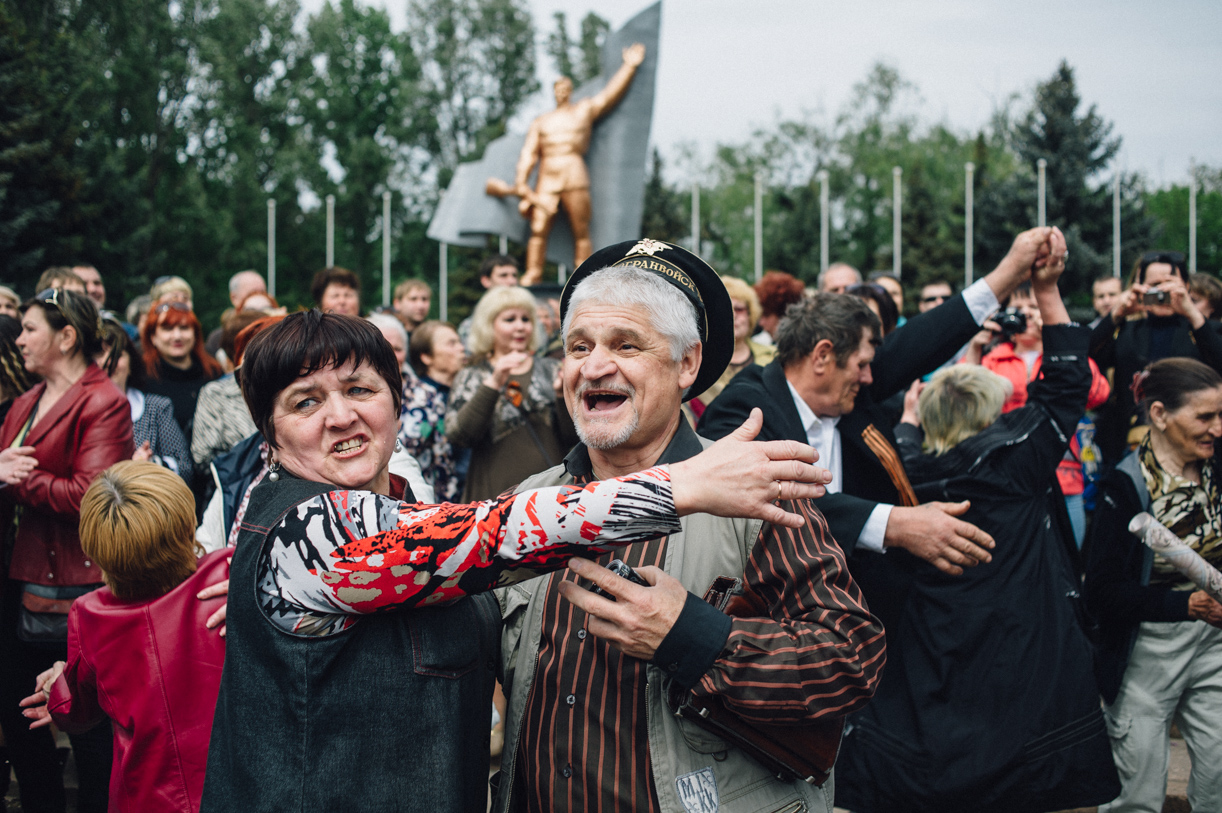
There are hard workers, many in Kyiv were not in their entire life
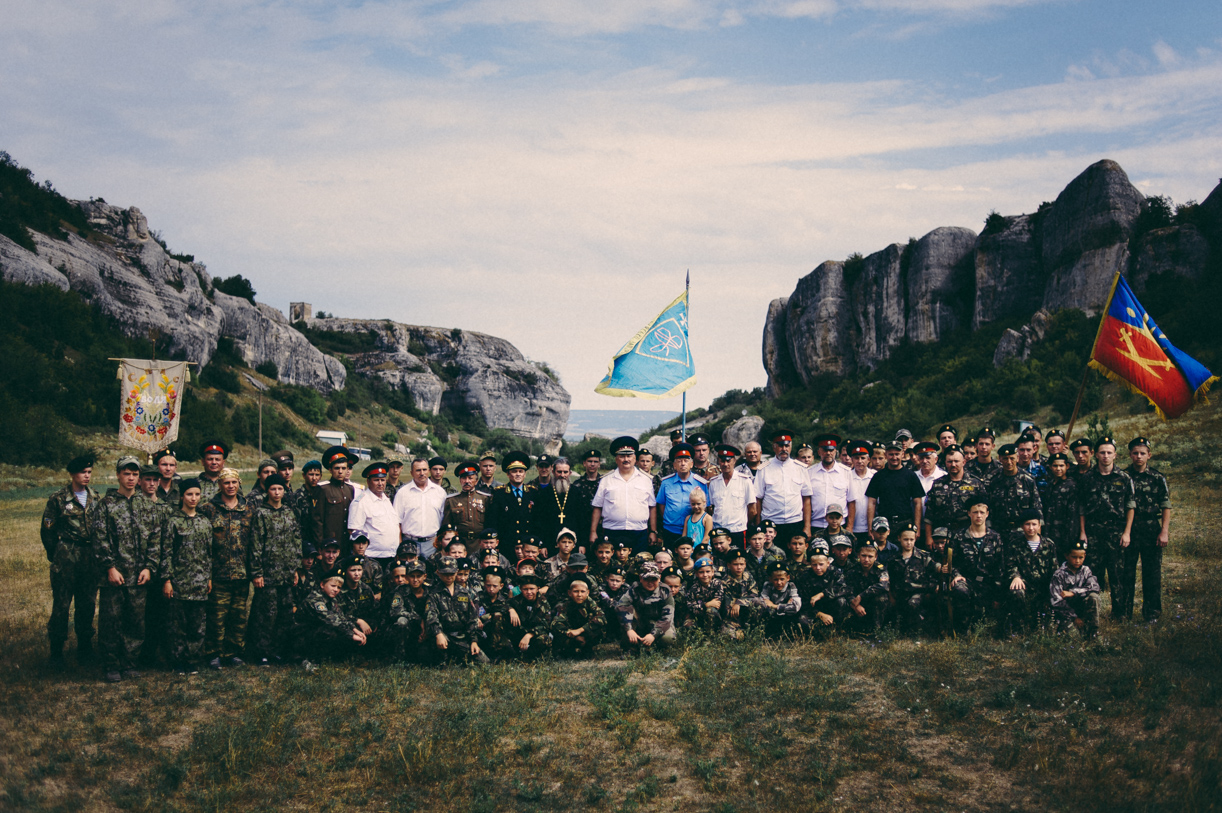
-You had a project in Crimea about the children's military-patriotic camp , which also split into the pro-Ukrainian and pro-Russian units.
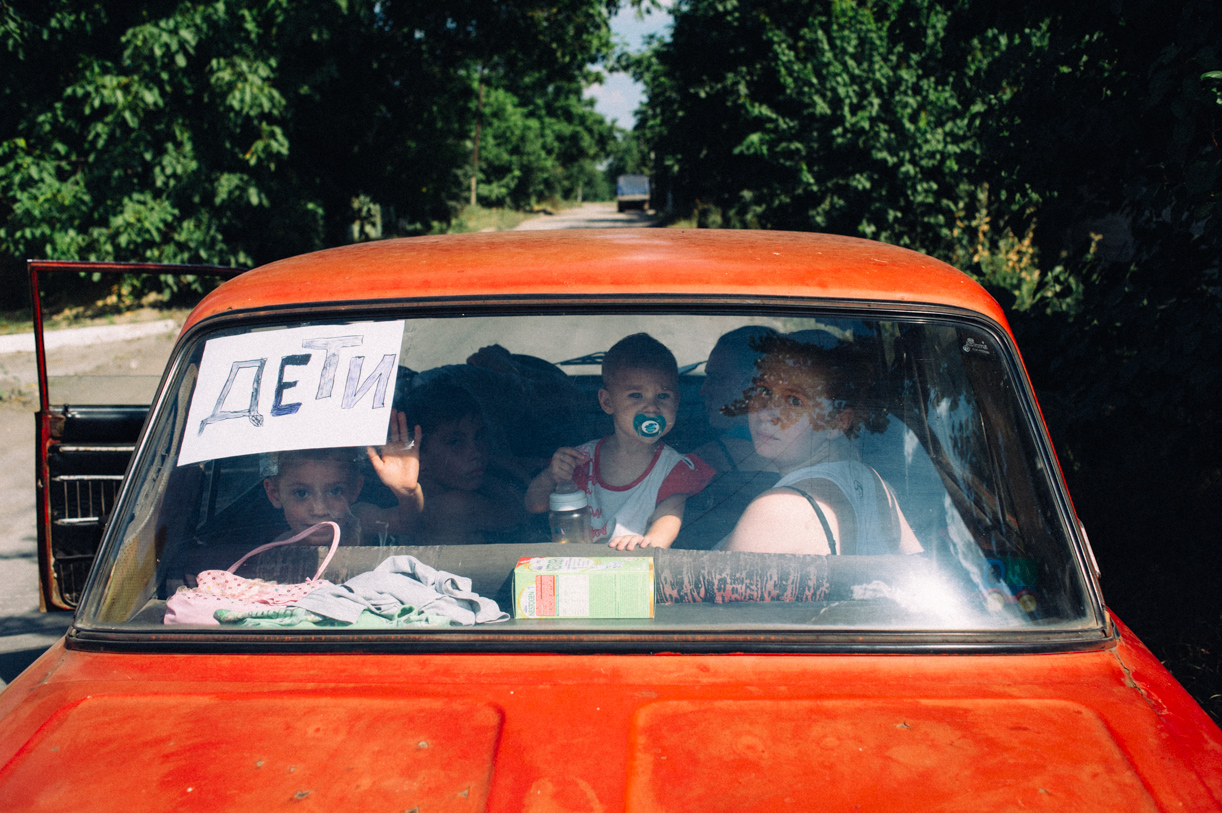
-Now I am working on the first documentary, which was shot a few months before the Maidan-it is about this Crimean Sich camp. Already in this film it is clearly visible that this problem is not because of the Maidan, it existed, just the Maidan was the last point when everyone had to say on whose side it is. The conflict existed, and it was not extinguished. Why didn't they go to the side of Ukraine there? There, the hard workers, they went down to the mine, they went out, many in Kyiv were not in their entire life. So he lives in Makeevka or in Lugansk, he has never been in Kyiv at all. He was mired in this propaganda, he does not know what is happening. This is the country's problem, why they didn’t report there, why they did not help. In the news about the Lugansk region, they never remembered at all until the war began. As about the North Pole. And there were already LPR flags, rallies, tough holidays on May 9, which were no different from the fact that now, the same nonsense happened before.
Bag on the head, but it all ended well
- And what kind of story, when you were taken out for execution?
- It was in Slavyansk. I came into contact so close that I could go to the office to Ponomarev, there was such a mayor, I knew everyone who seized Kramatorsk and Slavyansk. I had two friends, really Muscovites, Russian correspondents, good friends. They actually saved my life much more than many Ukrainian media, because of which I had many problems later. They were covered by Russian passports, and I am with linden crusts, we are the three of the Muscovites - they knew that I was not a Muscovite, asked me not to completely merge what was happening, because then their heads would demolish everyone. I constantly exhibited photos on Instagram: the statement makes Avakov ( Minister of Internal Affairs of Ukraine. - Approx. ) That all the checkpoints in Slavyansk were destroyed, the National Guard completely captured Slavyansk. The Ukrainian media then lied so that my ears were wrapped. I rode, shot all the checkpoints where the separatists stand on the phone, and I put it on Instagram - like, dude, this is not so. When the Ukrainian army passed to their side, I rented an BMP number, all the time showed that Ukrainian channels were lying a lot. Since I was there from the Ukrainians, the Ukrainian media began to make materials where some journalist goes on a black background and says: I am conducting a special portage from Slavyansk. They call my real name, the surname that I have in Russian certificates, and they say: here he told us. They begin to carry some nonsense, show my photos with the fighters whom I shoot on Instagram, begin to say: he told us that they were GRU special agents. Because of these actions, they arrested me, brought me out for execution, but, as it turned out later,-they just scared, everything was idle. A bag on the head, 6 hours of interesting conversations, but it all ended well.
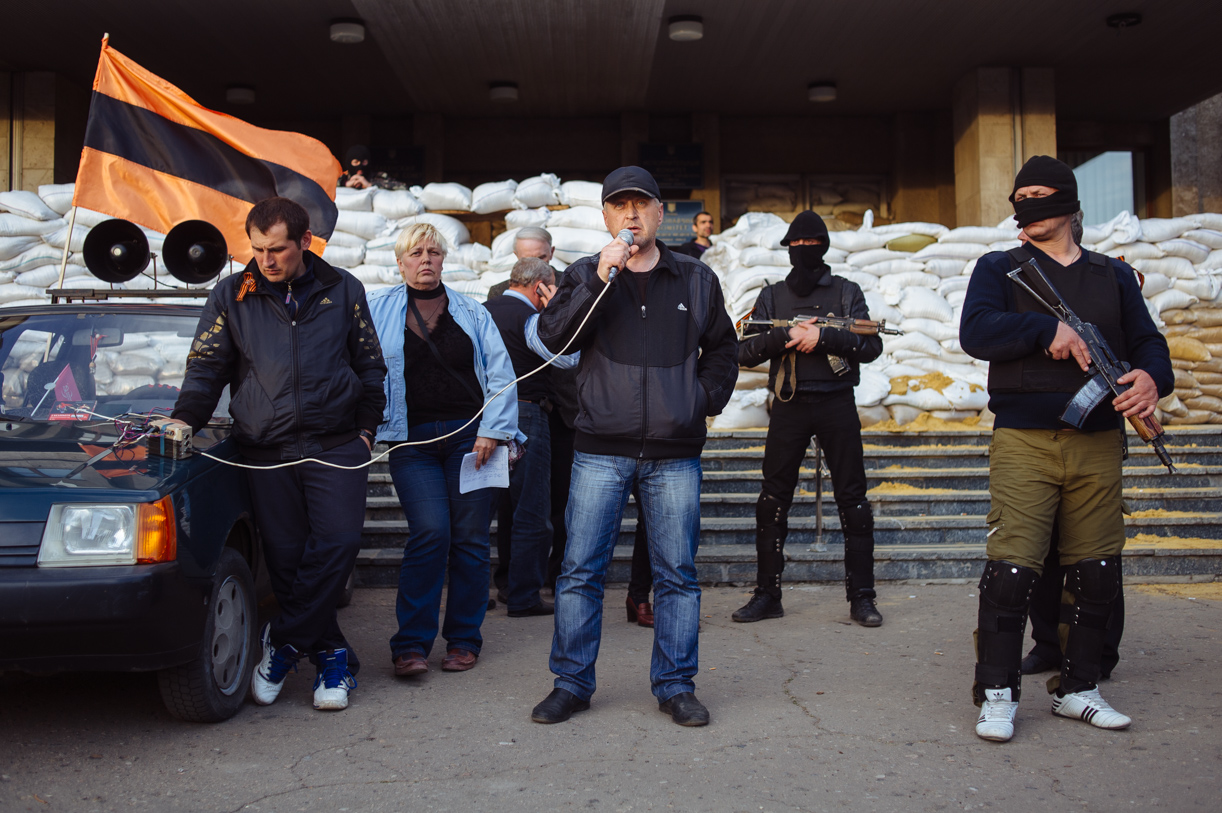
Each had their own "Russian world" in his head
- You observed the so -called "DPR" close to you, what impression is you - these are ideological people?
- At first, all ideological people from the local population, because they want to be part of Russia, they saw what happened in Crimea. And this top of what fought, those who fought in Chechnya fought there in Ossetia. "Shooter" ( Igor Strelkov, the former Minister of Defense of the so -called "DPR". - approx. ) Fought in Bosnia. You know, there are such military tourists. They are for the idea, but for what kind of hell you will understand, just, probably, to fight. Everyone had his own “Russian world” in his head - I cannot say that this is not for the idea. It is definitely not for them to pay a bunch of dough. Most are people who came from Russia, from Crimea, with inspiration, excitement, many local ones. But there were drug addicts, alcoholics, who stood on checkpoints for 300 rubles, but if they saw BMP, they all threw and left. In fact, this is a very worked out system, which Russia has used many times not only in Ukraine, everything is repeated and repeated.
Together with them we went to Ilovaisk
- And how did you work from the "Ukrainian" side?
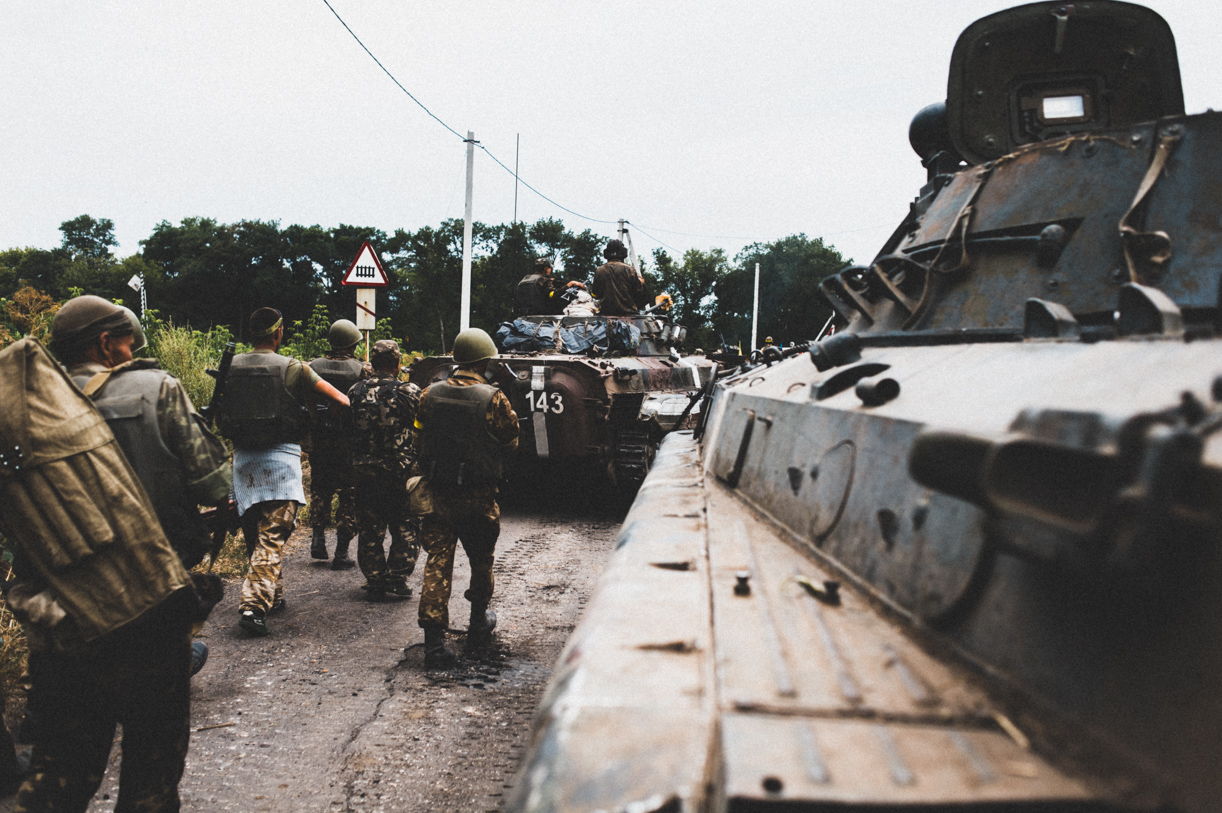
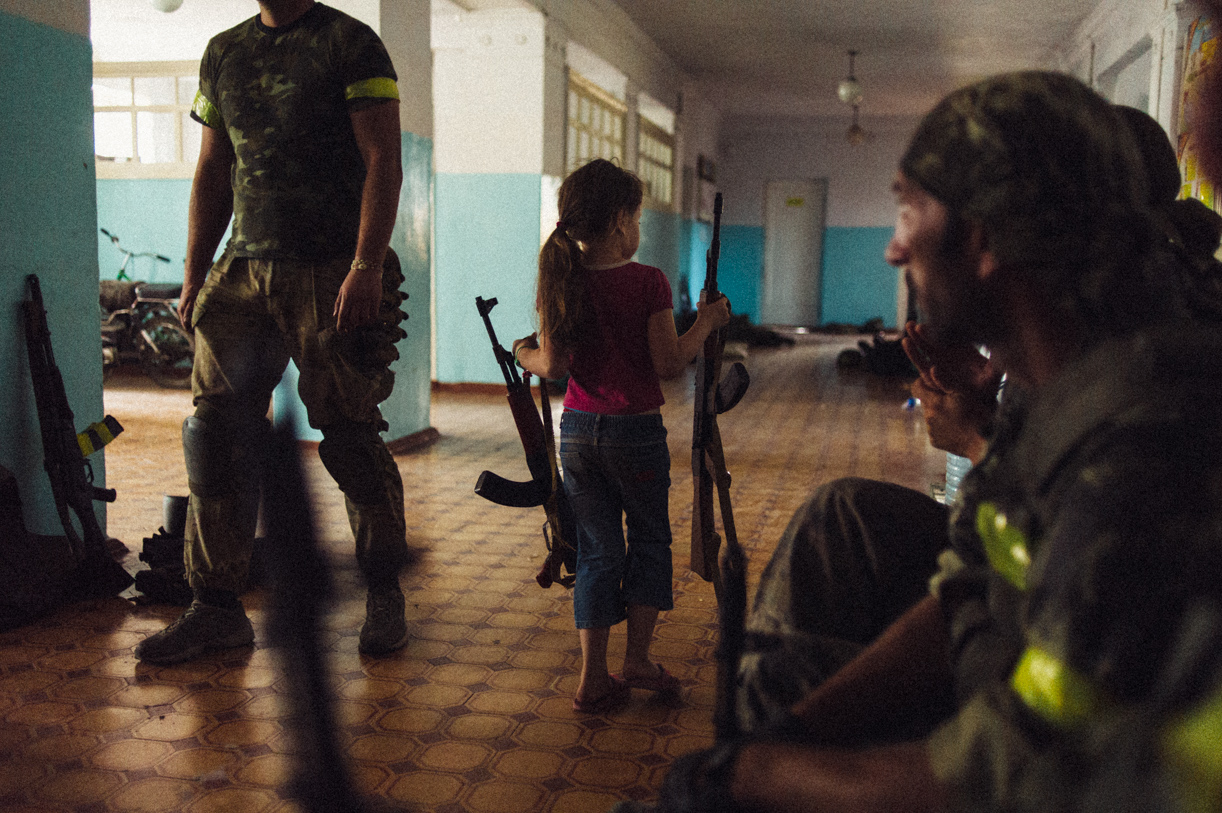
- When I was shooting from the “side”, I once fell under the fire of the Ukrainian army and realized that if they kill me in the Donbass, then I would die from Russia, I would be declared a separatist, I didn’t really like it. I decided to try to shoot from the Ukrainian army and faced the tremendous resistance of the press service of the ATO, the Ukrainian government and all who are possible. If you are on the other side, you have a completely green light on everything, and on our part everything forbid you. You come somewhere to the fighters, as it was at the beginning, the fighters say: yes. And the press service sends you and you are taken away. There were battalions such as Donbass, Aydar, Right Sector, with which it was much easier to solve it. At some point, when the press service again did not allow anything to shoot, I told Sasha ( photographer Alexander Gladelov. -RS ) that I know the commander of Semenchenko, we will go to Donbass, we will see what can be done there. It so happened that we arrived in front of the Ilovaisian events ( when the units of the Ukrainian army were surrounded. - RS ) and went to Ilovaysk with them, drove through all the checkpoints with them on their cars. On the checkpoints, no one knew that we were the press. Yes, and we can poorly call us a press, because we did not work anywhere, no one paid us, drove ourselves, and then as it came out. All documented.
Max, no offense, but if an ambush, I explode her to dick
It is not for me to judge, because of whose mistakes they were surrounded, like all the fighters, waited, hoping. Unfortunately, everything ended in deplorable for so many who were there. Sasha and I were lucky, Sasha was wounded a few days after we went there, it’s not difficult. We were nearby, I didn’t hurt me, my leg hurt him, I provided him with medical care. There were a lot of wounded, there were only a couple of people, they were engaged mainly by fighters, I helped Sasha, then he was taken away with the wounded. Sasha had a funny story, when he was taken away, all the films that he made in Ilovaysk fell out. And some fighter brought me all his films when Sasha was already taken away. I think: here is a joke, now I need to get out of the "boiler" with my photos, also with the Sashin. I was lucky, I left earlier, a couple of days before everyone was shot. We were launched by bus, fired at mortars, but there was no frontal resistance so that someone came right on some box, an infantry fighter or a tank, although the same bus was shot a day before us. I had to leave, I had an exhibition about the Maidan in France, I already had an airplane, I even tormented my conscience that I did not want to leave, I wanted to be to the end. But I was forced to go with the fighters who took the wounded, we left on a minibus. I remember there was a guy with a broken spine, I supported him, because we moved very much on the bumps, we shied up a lot of a mortar. He, I remember, held a grenade in his hands and said: "Max, no offense, but if an ambush, I explode it on dick." So we rode 10 kilometers along the red line, there were three fighters or four, the wounded and I got out of there. A few days later, many guys died a lot.
This is the story of my country
- You described how you were sitting in Ilovaysk, then you went out of there, because you have a plane to France for an exhibition. This is a very strong difference - sitting under a bombing, and then in France an exhibition. How do you feel in this fork? Where do you feel more at home?
– На самом деле все было психологически сложно, хотя я не понимал это тогда. Мои друзья после этой выставки повезли на Лазурный берег, где-то в Сан-Тропе или в Ницце. Мне друг говорит: "Как ты себя чувствуешь? Пять дней назад ты был под артобстрелом". Эти все синдромы послевоенные не чувствуются, на тот момент я не понимал, что у меня какой-то перепад. Сейчас я осознаю, что, конечно, очень нервный, психованный был, очень сильно сказывается. Где я себя лучше чувствую? Мне кажется, я себя лучше чувствую в своей жизни, моя жизнь там, где я нахожусь. Я знаю многих фотографов, которые, уезжая с войны, не могут нормально жить мирной жизнью, возвращаются на войну. Я к таким не отношусь, потому что мне есть чем заняться и на гражданке. Я не считаю себя военным фотографом. Я был на войне, потому что я захотел там побывать. Не потому, что я репортер, который должен это снимать. Это произошло в моей стране, это история моей страны, я начал ее снимать с Майдана, я был в Крыму, потом я был на Донбассе, изначально принципиально поехал на ту сторону. Для меня это моя история, я был со всех сторон. Это мой опыт. Сейчас я туда не возвращаюсь, потому что я не понимаю, что я буду там делать. Я там был в тот момент, я себя чувствовал комфортно, когда я был там, сейчас я себя чувствую комфортно не на войне.
Медленно молодая кровь должна вытеснять этот старый режим
– Вы снимали на Майдане, вы снимали украинских солдат на войне, это часто сильное воодушевление, движение духа. Трагические события были на Майдане и на войне, но без сомнения, в этом было что-то возвышающее. У вас сейчас ощущение, что это прошло, ушло куда-то, это воодушевление людей, которые меняли Украину, отстаивали ее?
– Все это вдохновение должно подпитываться чем-то, на самом деле оно сейчас держится на энтузиастах, но это не благодаря, а вопреки тому, что происходит. К сожалению, то, за что вышли люди, произошло в очень минимальном процентном соотношении по отношению к тому, что хотелось бы. Во власти осталось много старых людей, система не очень изменилась. Старая система другими способами пытается <добиться своего>. Старой системой я называю не систему Януковича: система Порошенко, система Тимошенко, система всех политиков, которые были тогда, – они ничем не отличаются. Новая власть в виде новых людей, которые пришли после Майдана, – это очень малое процентное соотношение, мы бы хотели, чтобы все произошло намного быстрее. К сожалению, теперь нам остается надеяться на то, что постепенно молодая кровь будет вытеснять старую. Но старая система очень борется, есть очень большое сопротивление, и это очень тяжело. У меня много знакомых, которые ушли из бизнеса, пошли в политику или в министерство какое-то, у них были очень хорошие зарплаты, а там им дали зарплату пять тысяч гривен, 200 долларов. Они два года работают, говорят: у меня все сбережения закончились. Я работаю, я депутат, в министерстве, и у меня нет денег. И им говорят: мы все ждем, пока вы устанете, уйдете, мы дальше будет опять делать, что делали. К сожалению, сейчас единственный шаг – это медленно, постепенно молодая свежая кровь должна вытеснять этот старый режим. Флаги поменялись, а мировоззрение наверху у людей не поменялось. Я не говорю про всех, я считаю, что одна треть, хотя бы одна треть – это люди, которые пытаются изменить страну. Но существуют две трети, которые не хотят ничего менять, они не приспособлены к новому европейскому государству. Все бы хотели, чтобы они собрались со своими деньгами и куда-нибудь укатили, чтобы молодое поколение, интеллигенция вела бы страну в какие-то новые времена. Многие люди возвращались из Европы сюда, чтобы что-то изменить, но я знаю сейчас тенденцию – они уезжают, потому что разочарованы, что ничего не изменилось.
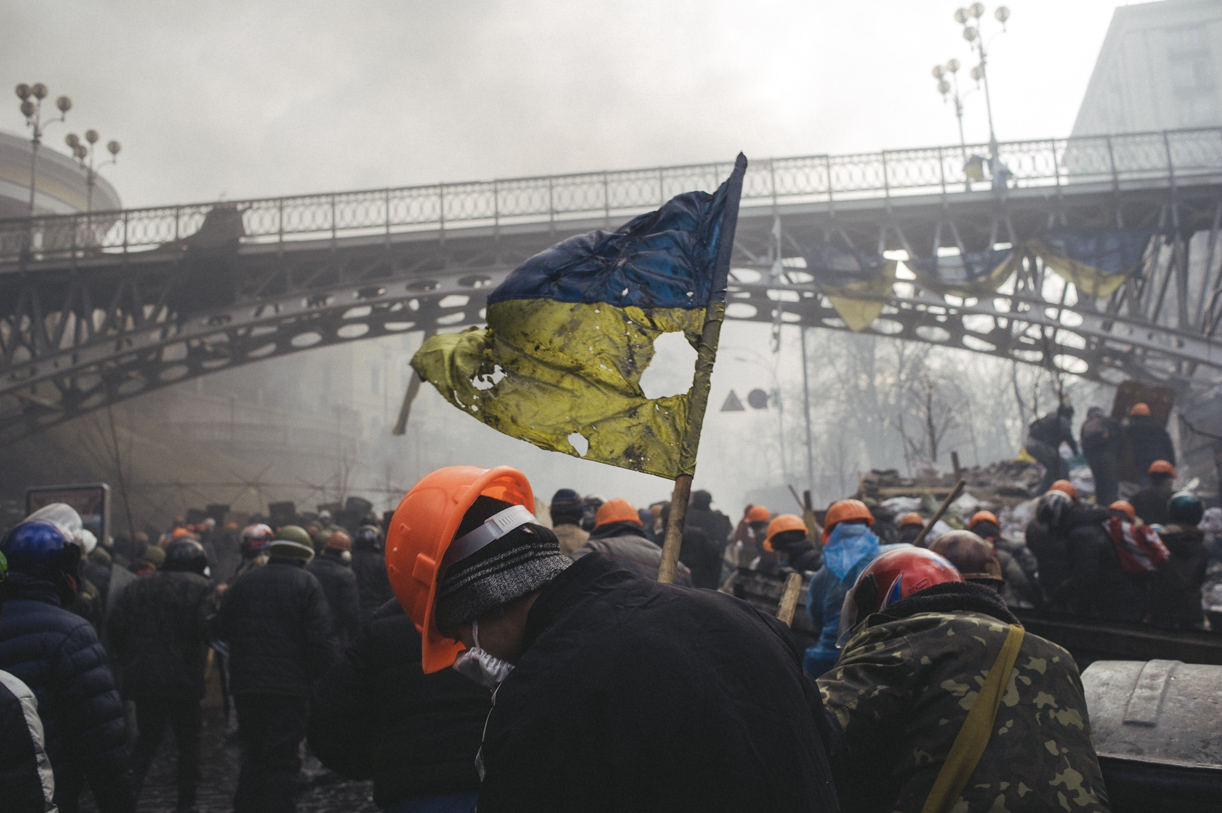
Моя претензия к России. Они убивают мой народ
– Я хочу вернуться к тому, с чего вы начали, к этому движению стены. Стена, которая рухнула в Берлине, на Майдане ее частично обрушили, и она...
– Сдвинулась в Донбасс.
– Движется на восток. Я хотел вас спросить, как вы относитесь к России, чем это движение стены, с вашей точки зрения, закончится?
– Это очень сложный вопрос, потому что у меня в России есть много друзей, с которыми у нас очень хорошие отношения. До всего, что случилось, я часто приезжал в Россию, был в Москве. Это больше похоже на помешательство. Я отношусь хорошо к людям, которых знаю в России, а к общей массе у меня плохое отношение, потому что они поддерживают то, что делает их правительство. Они молчат, боятся, не хотят ничего говорить. У меня, наверное, больше не ненависть, а разочарование или непонимание, как можно не видеть, что происходит. Потому что ощущение, что это возвращение назад, полностью в Советский Союз, и люди счастливы от того, что это происходит. Люди довольны, люди поддерживают войну, люди максимально разжигают ненависть – все эти лозунги, призывы и то, как они реагировали, говорило о том, что проблема не в Майдане. Стоило только назвать украинцев фашистами, сразу же большая часть населения России это поддержала. Это говорит о том, что эта мысль в голове культивировалась, Малороссия, все остальное – было уже в головах, это не могло появиться за одну неделю. Отношение истинное... Мне кажется, большая проблема россиян – это империализм, они хотят вернуть свою империю, свое влияние на соседние государства. Они не могут найти ничего другого, как сделать это силой, и в этом именно моя претензия к России. Они убивают мой народ. Как можно рассказать детям, у которых стоят дома фотографии их родителей, отцов, которые были убиты людьми с российскими флагами, что это наша братская страна? Та война, которая произошла, уже нас разделила. На самом деле это за год, за два, даже за пять, за десять лет – не разрешится, потому что эта война затронула каждого. У каждого кто-то из знакомых погиб, или пришел раненый, или был на фронте, или он был там сам. На самом деле это глобальная проблема, потому что люди потеряли близких. И с той стороны та же ситуация.
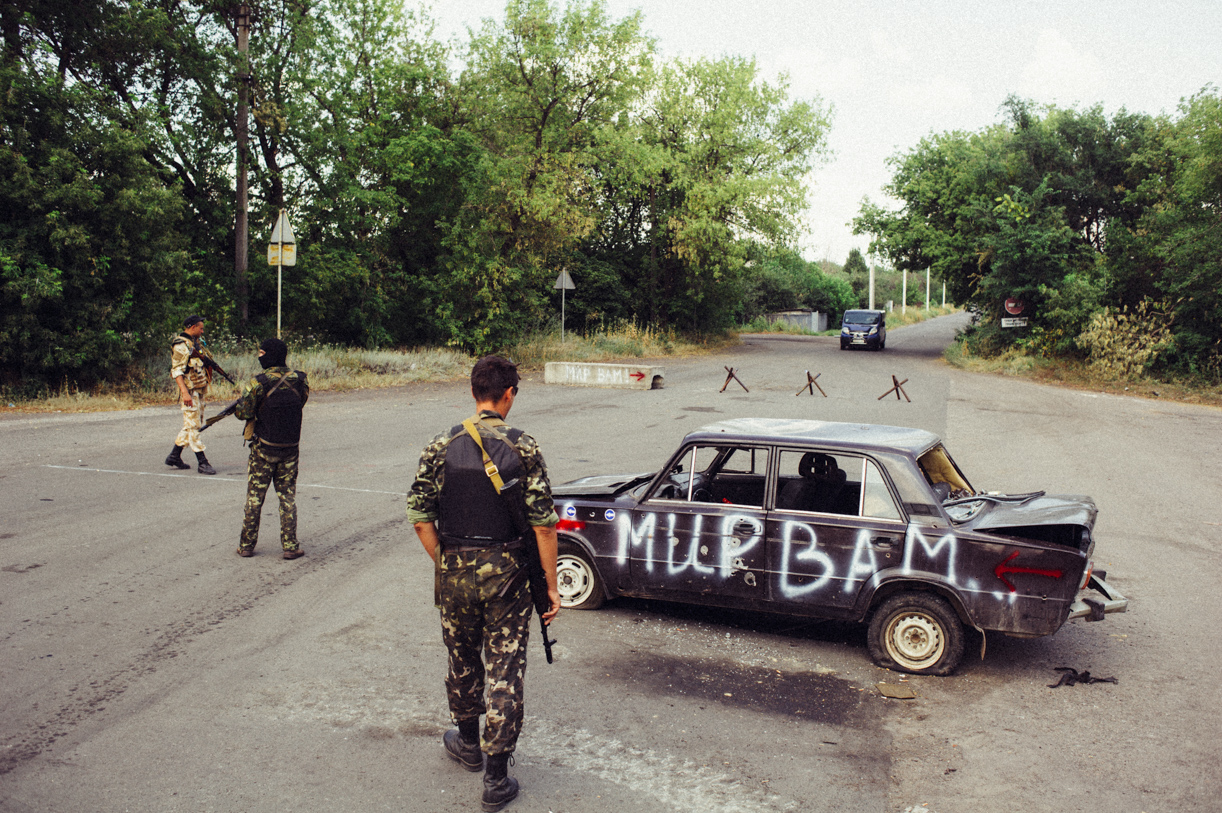
Война России в Украине началась благодаря СМИ
– А про стену?
– Так получилось, что в Украине сейчас процентное соотношение людей – еще до Майдана было – немного другое, они хотят другой жизни, не хотят возвращаться в ту жизнь с Советским Союзом, в те времена. А на Донбассе – люди, которые отстаивают это. Стена – это граница империализма, она сдвигается. Это просто геополитическое влияние. Сейчас Россия не имеет такого влияния на Украину – на ту часть Украины, которая контролируется украинской армией, украинским правительством, – как она влияла до Майдана. Эта стена – влияние России на соседние государства, влияние на умы. Потому что когда человек перестает смотреть только российское телевидение, только российские новости, то он начинает иметь другую точку зрения. Мы все думаем, что у нас у всех есть свобода, мы можем зайти в интернет, все увидеть, все почитать, но большинство людей, что в России, что в Украине, включают телевизор и смотрят то, что там показывают, слушают, читают газеты, общаются. Когда я был в Крыму и в Донбассе, то порой доходило до смешного, люди рассказывают такие сказки. Я был свидетелем какой-то ситуации, а люди через час уже все настолько перевирали и в это верили, какой-то "Правый сектор", который кому-то отрезал голову, сидит где-то в погребе. В чем Россия хороша, так это в информационной войне. На самом деле вся война России в Украине началась благодаря СМИ. У меня иногда много вопросов к СМИ, потому что люди верят.