
Translated material
"I remain an optimist"
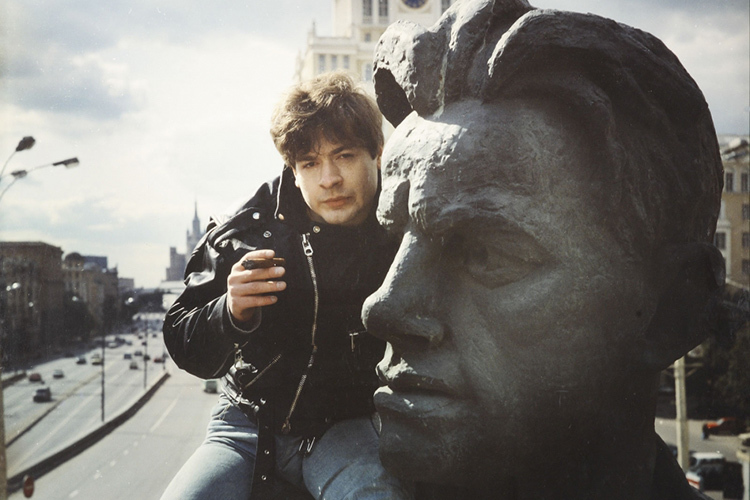
In the material “Four -sided success” of this issue of “Disagreements”, artist Anatoly Osmolovsky was mentioned as an author, yearning for Welt, by great art with world significance. And we decided to turn to Osmolovsky himself with the question - in any era, the artist’s work makes sense? What is the place of art in the latest history of Russia? In short - give a voice to the desire for Welt as a hegemony of art.
It is believed that there are such eras when the artist’s work does not make sense. But I don't believe it. Even if the “era” is inaccessible to the artist and his work, then another will come when his work will be appreciated. Moreover, such a delayed recognition for future generations can be extremely important. Art never starts from scratch, but is based on some predecessors, and the search for its “source” can become an exciting detective story. An exemplary example here is surrealists. In the first manifesto of surrealism, Andre Breton described in detail his predecessors, and it was he and his friends who introduced the name of Loreron into the pantheon of French literature. Of course, the marginalization of the artist is an unpleasant, harmful and painful process, but the artist is given brains, including in order to turn his weaknesses into advantages. For example, Moscow conceptualism brilliantly coped with this problem and for several generations became a guideline, as well as a repulsive point. “Expiration”, the exhaust of meaning is a psychological effect, often associated with the reactionary political situation - for example, modern Russian. It is necessary to learn how to overcome it. And, perhaps, its overcoming can serve as the basis for the emergence of new forms. In a situation of “eras”, the most difficult artists have already taken place, because the ability to radical restructuring over the years becomes more problematic. This ability in a more favorable time must be trained and not afraid of radical changes. In Russia, such changes are more “legal”, because the artist here does not experience gallery pressure, and a relatively small number of public is also able to perceive these changes.
The current situation is rotten, but the number of people interested in contemporary art amazes me.
I think that contemporary art in Russia has a great future. Not so much substantial (however, the creation of new forms is not excluded at all) as social. In my opinion, one or another style goes only if a full circle of social adaptation passes. From the underground stage, he must necessarily turn into a dominant hegemonial style with all the ensuing consequences. In the Russian context, hegemony is quite far away. Moreover, it can be noted that if there is suppressed content in our context, then, first of all, it is a contemporary art and a complex of knowledge associated with it.
Yes, at first glance, the current situation is quite rotten, but at the same time I personally amazed at the number of people who are interested in and want to engage in contemporary art. In the 1990s, this was not (however, in the mid-end of the 1980s-it was, but those people disappeared along with the drowned mainland of the USSR). Even if this generation is barren (which I do not believe in), all the same, their experience will be extremely important for future development. So far, it is too early to talk about any achievements-there is an accumulation process. Personally, I do not see the face of a new generation, there are no authors that everyone would talk about and not to know which would be indecent. For comparison: in the 1990s, after the Festival “Animalist Projects” in the Ridgin Gallery , the new generation announced itself not only in the form of street actions (they caused a considerable share of skepticism), but also on the conventional platform. And a rather voluminous publication in the magazine “Decorative Art” was even a small scandal about this project, because in this publication an “epistemological gap” was recorded between generations.
As for the world artistic context, then, of course, they live in another era. This is the era of cultural hegemony, big money, megasance, superstars and other things. But now I’m reading the book of Julian Stallabrass “High Art, the Celebrated version”, dedicated to the detailed critical analysis of YBA (“Young British Artists” - Damien Hurst, Tracy Emin, etc.). The author of leather is climbing to expose these British artists of the 1990s. He even refused to call them the YBA name entrenched after them and tried to introduce them to the elaborate and pretentious Pogonyalovo Vivo (in fact, this is the abbreviated name of the book itself). But the more you read, the more you understand that in the 1990s in the UK there was simply an artistic megavor. Moreover, the funny thing is that the book begins with the transfer of “diseases” traditional for the UK. This is both the “traditional logocentricity” of British culture, and the visual art, which has always been a “Cinderella” of cinema and mass media, and extremely, almost to the indistinguishable, the narrow circle of connoisseurs of contemporary art (does this not remind you?). And then there is a directly inspiring description of the real British artistic context.
I think we will all force the time of a new radical turn.
After all, how are we used to relate to YBA ? This is a couple of stars, which have long been tired of everyone. Damien Hurst, Sarah Lucas, Tracy Emin and Rachel Whitered (this is already for experts). But the British art of the 1990s is not at all exhausted by these names, and a large number of projects (just non-profit content) simply did not leave the borders of the British context (for obvious reasons). And a whole series of first underground exhibitions in the early 1990s? And all this, it should be noted, with the author’s clearly skeptical terms. I recommend to young artists to read this book. It was for artists that she could be useful - critics there have nothing to catch there, because the author’s critical apparatus is quite average. However, critics can be instructive in the sense that it is not pointless to criticize art.
I remain an optimist. My personal problems of adaptation to the new era that has come here are not taken into account. Yes, for me personally, this new era is extremely painful - after all, I grew and developed as the author in the era of perestroika with its enthusiasm and great hopes for a jerk. But, in truth, since 1993 (if not with the collapse of the USSR), it was clear in terms of the level of insanity and the groundless ambitiousness of some characters that conservatism and reactionary ideology would ever take revenge. For example, I closely watched the development of Alexander Dugin and his Eurasian-Fascist ideology. I was convinced that it was this ideology that would become a skeleton for the new revenge. Now we absorb it in a slightly diluted form.
But I remain an optimist. And I think that we will all force the time of a new radical turn and, perhaps, we will take part in it. And the task that will stand before us is cultural hegemony. And it will definitely be interesting and exciting.
Download the entire issue of the magazine "Disagreements" (No. 1) "Work, rest, unemployment": pdf , mobi , epube