
Translated material
Four -leaf success
The editor -in -chief of “Disagreements” Gleb Zasparenko met with the art of Alexander Novozhenova and the artist Anastasia Ryabova to find out from them, which leads people to art, that he throws out of him and that he returns again and again - is there success on this hopeless path.
Gleb Nastenko: Sasha and Nastya, you are both interested in how artists and critics act in a social field, what subjective trajectories in this field are available to them. You are trying to work with these issues performance, that is, firstly, acting yourself according to the rules of the field of artistic production, and secondly, turning the conversation about these rules into artistic practice. You told me that you developed in your studies a certain four- or even five of a milestone of success. What is it?
Alexandra Novozhenova: It is known that if you find a four -leaved clover in the field, you are a dwarf with a pot of gold.
Anastasia Ryabova: A clover with five leaves is even cooler.
NAVPENKO: And who is this gnome - the curator? Galerist?
Ryabova: This is not specified in the legend, but we really began to develop a formula. When we describe it to you to the end, you may understand who this gnome is.
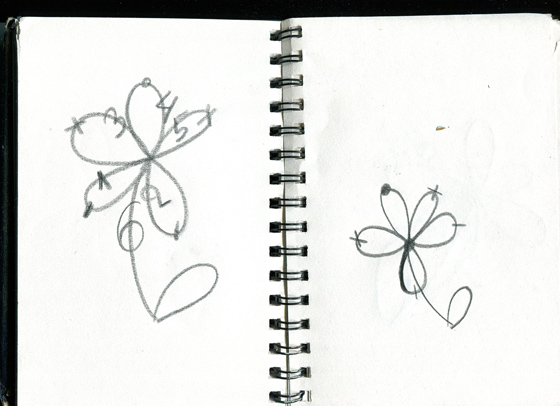
(Ryabova draws a diagram.)
Novozhenova: A four-leaf or five-leaf-this is a socio-spatial model of a possible trajectory of entering and going out to exist as an artist ...
 © Anastasia Ryabova
Naplyenko: That is, you are interested in the borderland of the social field of art with the field of society in general ... And how and why can you enter art and get out of it?
Novozhenova: Art is a point at which you can linger, but which can be slipped. Therefore, the four -leafer is a dynamic model.
Ryabova: She is unstable.
NAVPENKO: That is, being in art unstable.
Ryabova: Well, being is generally unstable! (Laugh.)
Novozhenova: Sometimes artists become one exhibition, for a year. There are artists who regret to say that they have stopped being artists. In the 1920s, production workers had the idea that it was necessary to stop being an artist for a larger goal. Now stop being an artist is a miserable destiny. But maybe you need to reconsider this attitude and consider art as a half -steam, and not as an ultimate goal. Indeed, depending on where people get into art and where they move from it, their attitude to what they do in it varies.
Ryabova: But today, too, sometimes moves from art to space, where action is possible, to activism or documentary.
Naparenko: Sometimes the title of art is a cover or justification for other practices.
Ryabova: “Art” has no final definition.
Naplyenko: It turns out that what the art is for you depends on which side you entered it?
Novozhenova: This is the point that there is no such thing as an artist, but there is a person who enters this territory from a particular side - and this entrance is a redesign territory.
Ryabova: Under the trajectory in our scheme, which is now resembling a five -line clover, is meant a line of movement from the extreme point of the petal through the center of the inflorescence in the direction of the extreme point of the opposite petal.
Naparenko: And on the diagram I read: “Trajectory 1: Fleet to unprofessional space” ...
Ryabova: We noticed that some young people, including ourselves, made a transition from the previous profession to the profession in the field of art. For example, I have non -core education - like your first education.
Novozhenova: An even more acute situation is when the flight to art from the previous profession is connected not only with education, but also with labor experience. Usually this is the experience of alienation when people understand that the tasks set before them are not the ones that they themselves would formulate. Often this is work in the permanent industry of the production of images.
Ryabova: And there is an idea of the ideal space of art in which inalienable activity takes place, where you work for yourself. You “work” in quotation marks, because it is assumed that you hang out and do something that is not constrained by the requirements of the profession, labor conditions: get up early, go to work five times a week, work “for uncle”.
It is necessary to consider art as a half -steam, and not as an ultimate goal.
Naparenko: Is this a desire to reformat his relationship with the other, which is for each work or employer?
Ryabova: An attempt to change another from bad to good.
Novozhenova: And the thirst for the fullness of the embodiment of his “I” in a certain object-and it is assumed that now the other will be happy to accept from you not what is required, but what you yourself want to give.
NAVPENKO: It looks like a fantasy about a complete harmonious merger with another in the maternal womb.
Ryabova: No matter how ridiculous, it seems that, it seems, that moved all of us at the entrance to art.
Naparenko: That is, the entrance to art is actually the outcome?
Novozhenova: ... in the territory of the allegedly benevolent another. Such an outcome entails, of course, a shock from the fact that in art the requirements of the profession, the requirements of the other may again arise.
Naplyenko: In old art, it was obvious that this is a profession requiring craft skill. And the idea of contemporary art is that craft skill is no longer necessary. Hence the myth of liberation.
Novozhenova: At the Academy for several years you learn to imitate. And when your skills are associated with industrial and post -industrial mediums, which are mastered much faster, inter -professional mobility increases.
Naplyenko: such mobility, especially in the growing sphere of creative industries, and characterizes postfordism. The conditions of a modern career require a readiness to change the profession.
Ryabova: Even inside art-who are you: critic, curator, or still an artist?
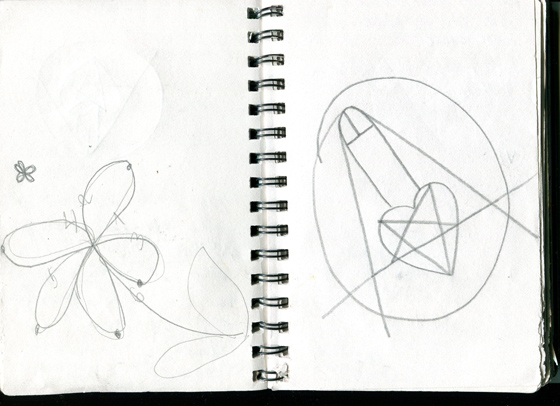
NAPENKO: Let's move on to the second petal.
 © Anastasia Ryabova
Novozhenova: The second trajectory is opposite to the first and at the same time its consequence. It is connected with the desire of the artist to fit into professional structures, to be in the art of salary, working in a culture institution, to demand compliance with labor rights. Even if initially a person went into art to get out of his former profession, in art he again begins to demand professionalization.
Ryabova: That is, to demand rights as an artist, as a one who is not alienated, but still has the right to salary and pension.
NAVPENKO: That is, to register your relationship with the new other, no matter how benevolent he is.
Novozhenova: Because the artist’s position ceases to be an imaginary rest position. Inalienity, in which the artist becomes a specialist, begins to be considered by him as universal good, and that is why he requires social guarantees provided to other professions that are considered socially useful.
Ryabova: The trajectory to the second petal proceeds from the position of legal location in the system, and on the other hand, it requires the struggle to adjust its insides.
Naparenko: And the position of institutional criticism is included in the second trajectory? For example, in the case of Hans Haak?
Ryabova: It seems to me that today institutional criticism, as well as conceptualism, for example, is already so built -in concepts of contemporary art that one cannot but be a conceptualist today, one cannot but be institutionally critical.
NAVPENKO: Near the third petal it is written "Bring Self -Financing."
Ryabova: On the way to the third petal, you continue to seek freedom of realization of yourself in art and at the same time strive to solve the problem of survival in order to ensure the possibility of self -expression. To be able to express yourself honestly, you need to self-financing.
Novozhenova: The source of “delirium of self-financing”-in the idea that in order to be truly free, you need to be financially independent. But in order to solve the problem of survival, you are forced to enter into a deal with another. For example, go to the alienated work. Then it turns out that the place where you are alienated, and the place where you create are complementary and can only exist at the expense of each other.
NAPENKO: This is a very autoerotic fantasy.
Novozhenova: Yes, you fall asleep in bed, and you are presented with an ideal project. But in order to realize it, you need to redeem yourself from capitalism. To stir up for an uncle or come up with a scheme for playing the exchange or sales of some invisible nonsense, which will make money that you already invest in genuine activities-in art.
Talent is just an opportunity to buy yourself.
Ryabova: There is another option-you are privileged, that is, in a sense, at first, first entered the deal with society and capital, then to express himself. You are a tent - or you have rich relatives. There is a version that in order to fully engage in art, you need to be rich. Therefore, the third trajectory is indicative of Marxist. The art here is elite activity, and not everyone has access to their occupation for economic reasons.
Naplyenko: That is, on the third petal, we are faced with the idea of autonomy of art in one of its maximum options. To build autonomy, you are ready to pay off the public system.
Novozhenova: “nonsense of self -financing” often gives rise to autistic works that do not mean the viewer at all.
Ryabova: And it also happens that the artist can financially afford complete autonomy, but still strives for the territory of institutions and recognition ...
Napapenko: That is, the question of the second petal about the relationship of the artist with social guarantees here is resolved by an external factor in relation to the art of the factor. Be it rich parents or work for uncle.
Ryabova: Yes, and the third trajectory is due to this. This is the logic of capitalism. And in this regard, the category of “talent” can be especially critical. For example, when they say: “What is he snorting about money there? There would be talent - and so would have achieved. ” The third petal shows that talent is just an opportunity to redeem yourself.
NAPENKO: The next petal - the fourth - is called by you "Fight for pleasure."
Novozhenova: Our trajectories are deterministic, they determine the development of events, but there is still such a thing as pleasure: it arises individually and suddenly, anywhere in any trajectory, and is associated with a violation of plans.
Ryabova: When you suddenly see that art is like a mistake: an unscheduled thing.
Novozhenova: Accordingly, this is unconscious, and perhaps it does not lead you to success at all, but throws you to the side of the road ...
Naplyenko: That is, the desire for the inalness from which the first petal began, reminds of itself, and it turns out that the desire for freedom in art is not what it seems.
Ryabova: But by this moment you are already engaged in art. And how strong your craving for pleasure through art is, so perhaps you will be able to redraw the foundations of art - to influence the structure of the art process.
Novozhenova: And this pleasure is associated with a certain risk.
Ryabova: Like any following passions.
Novozhenova: Instead of allowing you to enjoy another, what the format sets you, you come up with the format yourself.
Ryabova: But not the fact that there is a pleasure for you. It may be allowed to enjoy another - this is your pleasure. But now you are opening it.
Naplyenko: That is, the fourth petal is a reflection petal when you find that in art, in addition to questions about social guarantees, earnings and overcoming alienation, is there something more complicated in relations with another? Regularly repeating the act of art production, you think about why you need this object of art, why is this repetition, what are you actually doing?
Novozhenova: Indeed, nowhere, except on the object of art and on relations with it, you cannot find out what you really want. Because it is there that pleasure arises, not related to a direct profit. Art is the only social place where you can learn about your desire.
NAPENKO: In addition to the sphere of love relations. That is, you have art - a way of self -knowledge of oneself in social. Almost like in the Hegelian history of self -knowledge of the spirit: having gone through questions of relations with society in the first three turns, in the fourth round, a person returns to his desires, which led him unconsciously into art.
Ryabova: The artist begins to think: what is really interesting to me?
Novozhenova: This is a happy script.
Ryabova: success is possible here as a seizure of pleasure. But in the fourth round, the pleasure of art and social success are not necessarily consistent.
Novozhenova: This is just about the mismatch between the struggle for rights and the desire. And this is the difference between the poor and the poor, which is similar to the difference between the capitalist and the rich man. The poor man is one who wants to improve his living conditions and is inscribed in the social system, as is the capitalist who is also locked in the capital production system, having a minimum for himself personally. And the beggar is one who enjoys his discardation, like a rich man who distinguishes him from society with a luxury. In the film by Luis Bunuel, Viridiana, the heroine-Svyatosh brings the poor to live in his house on the condition that they will pray, go to bed early, do not swear and do not have sex, for which he promises to feed them and give them shelter. But when she leaves, they arrange a feast in her mansion, knowing that this will come to the end of their good life: once it is more important to spend time in terms of time than a constant improvement in existence. On the fourth petal, it can happen that instead of improvement, you choose a radical and excessive pleasure - and it is all in a blue flame.
 © Anastasia Ryabova
Naparenko: That is, to get a transgressive unlimited pleasure for them once more than constantly getting limited. While on the second and third trajectories, when you ask the question of social good, this is rather the position of the one you call the poor ... Let's move on to the fifth petal.
Ryabova: In fact, it is the fifth trajectory that should be about pleasure. Open the secret of pleasure - superuspech in search of clover, the phenomenon of a gnome with a pot. But since pleasure exists across the rules, it is natural that it crept forward ... and now you have to take a step back.
Novozhenova: If you look at people who have just entered art or try to enter, we find the position of professionals in the fields of type of video editing, wedding or reporting photography ... On the other hand, there are subculture zones where people are implemented in the community of adherents who understand each other and the rules of the subculture, as in the technoculture of comics. For professionals and subcultures, the question arises of how public their statement should be, what kind of recognition they are looking for. Often they are looking not for risky meetings, but a closed acceptance environment. They want to where they will be appreciated according to their criteria.
NAPENKO: Without claiming universality. Again, intrauterine fantasy.
Ryabova: Here we introduce the concepts of Welt and Umwelt . Umwelt is the world of identification of similar ones with similar ones. In biology or anthropology, this is a limited territory associated with a specific ecosystem, or the viability zone of this ecosystem ...
NAVPENKO: In search of UMWelt , you are trying to get away from the fact that the human animal does not have a natural habitat.
Ryabova: And the boundaries inside the art from the point of view of UMWelt are very biological: the grove ends, the field begins, and there I can no longer feed.
Novozhenova: Likes end there. In search of your own kind, which will reward you with understanding, the Internet plays a big role. At some point in the planet, thanks to the Internet, there are people who will approve of you.
Ryabova: At the same time, the Internet is mythically as Welt , that is, a large, global world. And this is a mistake.
Naparenko: That is, you come to the idea of UMWelt by going to the global world - Welt ? For example, first you come to the world of contemporary art, and then you try to find a cozy micro -community in it - like on the Internet?
Ryabova: And in art there is a drama between the criterion from the point of view of Welt - for example, “This is not relevant, this is not new” - and the criterion from the point of view of UMWelt : “This is cool, you are ours, here you like.”
Novozhenova: In fact, anyone who comes to contemporary art in search of Umwelt is playing a double game-a game with Welt , with the idea of universality: after all, they come to art for it. This is a game of subculture and open world.
NAPENKO: But the very idea of involvement in the big world is problematic. Globality is always mediated through the local community - as, for example, we are mediating it through each other now. And Welt can be very repressed in its leveling of the act of the artist’s statement, entering him into the global “it was then that and that.”
Novozhenova: But not the fact that such statements are Welt manifestations. Rather, it is an attempt to turn all the art into Umwelt with understandable criteria for comparison and assessment. Welt language is not just a universal language, it is not a consensus language at all. In Welt, you can appeal not only to your strategic, but also to the people who are outside it. This is a desire for polemic.
Ленин не повесится оттого, что не сможет отдать деньги, одолженные на революцию, немецкому правительству.
Напреенко: То есть Welt — пространство, где, по идее, всегда есть место для дискуссии, в отличие от вечного консенсуса в Umwelt ... А есть авторы, которые безнадежно тоскуют по этому самому Welt ?
Новоженова: Ну вот Осмоловский.
Рябова: Но, кстати, о субкультурах в искусстве я узнала из тех практик, которые инициировал Осмоловский в 1990-е. И у субкультуры есть важная функция потайного инкубатора — вот мой тезис в защиту субкультурности.
Следующая траектория — последняя. Это выход линии от пятого лепестка к стебельку. Это половинка траектории: жизнь в долг. Долг — это вопрос времени: деньги материализуются во временном континууме. Тебе нужны они сейчас, а отдаешь ты их потом.
Новоженова: Это немножко связано и с выкупанием себя из капитализма, такой придаток третьего лепестка. Правда, тут выкупания не происходит — возникшая у тебя идея о великом искусстве заставляет тебя стать должником и отправляет тебя в минус, а не в самоокупаемость. Берешь кредит в банке или занимаешь на проект у друзей. И хотя это не потребность в том смысле, в котором потребностью является еда или жилье, эта необходимость уйти в минус рождается внутри тебя как голод и холод. И ты не соглашаешься на компромиссы, на упрощение замысла, на погрешности в технике. Это антиавангардизм: ведь авангардизм подразумевает ничего не стоящий жест, ставящий под вопрос твой профессиональный статус. А когда ты, движимый внутренним долгом, ищешь должного финансирования на продакшн, ты возрастаешь как профессионал, но это антиавангард.
Рябова: Но все же тут могут быть разные ситуации. Одно дело, когда человек становится жертвой технологий, на которые ему нужно мощно потратиться, а другое, когда ему нужно реализовать некоторые не сводящиеся к техничности ситуации здесь и сейчас и все равно вложить в это какие-то деньги, которых у него на данный момент нет. Ну или если он трезво оценивает, что никакая институция ни за что на свете не поддержит его замысел в том виде, в котором он хотел бы его реализовать. Можно брать деньги в долг у самого себя или у других своих проектов...
Новоженова: Тут полезно опять вспомнить разницу между бедняком и нищим. Бедняк берет кредит, чтобы обеспечить свои естественные потребности, и собирается его отдать. Нищий же на одолженные деньги совершает аферу.
Рябова: Да, и это совсем другой тип жизни в долг — это не долг на качественную работу.
Новоженова: Упоение техническим качеством связано с удовольствием по правилам, а следовательно, с чувством вины, которое заставляет отдавать долги — либо покончить с собой. А если речь идет об афере, не связанной с качеством исполнения (ответственностью перед зрителем) и разрушающей условия кредитования, то нет и вины. Ленин не повесится оттого, что не сможет отдать деньги, одолженные на революцию, немецкому правительству.
Рябова и Новоженова (хором):
Fly, fly, petal,
Through the west to the east,
Through the north, through the south,
Return, making a circle.
Лишь коснешься ты земли —
Быть по-моему вели!
Скачать весь номер журнала «Разногласия» (№1) «Работа, отдых, безработица»: Pdf , Mobi , Epub