
Translated material
The gifts of the Apocalypse. TV
The new issue of the Apocalypse Gifts has a long -awaited TV. Somehow, five issues in a row bypassed this tickling object, which is actually the ontological basis of modern Russia. It is from there that all these unimaginable shows are shed on us and cement the social body of the country . It's time to talk about the amazing apocalyptic nature of the TV.
Position in the world
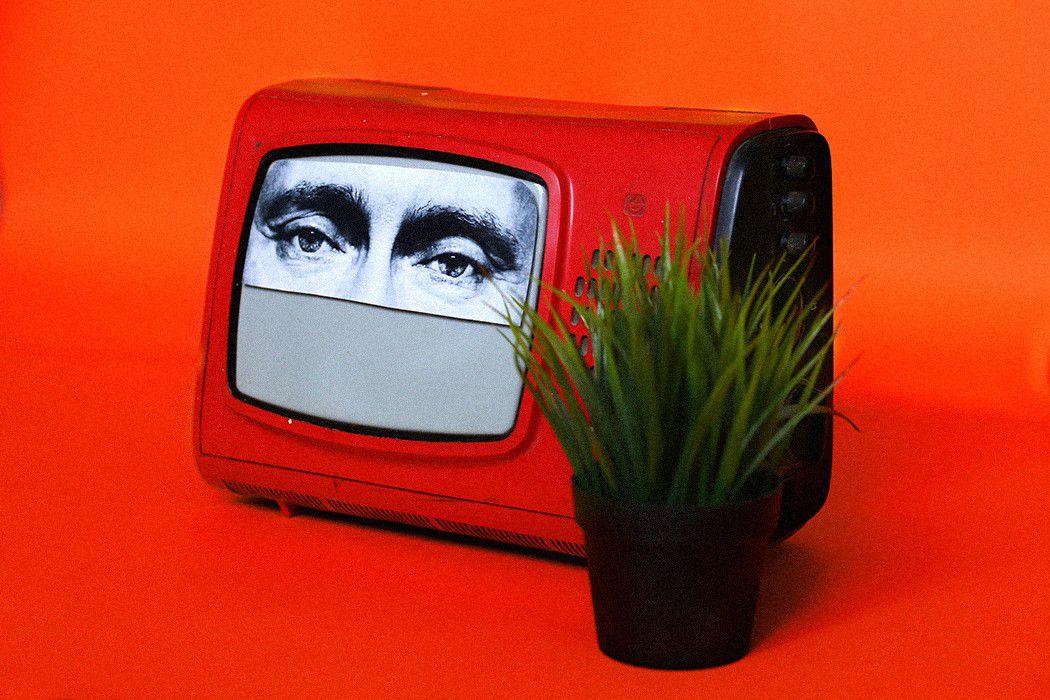
Humanity sought to learn to convey the picture at a distance for a more clear description of reality, believing that the picture is much more objective than the text. But it was the illusions about the impartiality of the information transmitted from the screen that turned the TV into a hellish machine, which not only affects the minds, but enslaves them.
TV - by Baudrillard, Simulakr reality. The visible on the screen is important to us not so much from a practical point of view as it makes us feel the involved what is happening. The fact of obtaining information becomes significant, but the process of its consumption. Surely do you know people who watch TV in the background? They do not need to learn something new or even have fun, it is only important for them that there is a fictitious reality around the audiovisual images around them.
But the position of the TV in the world is by no means as stable as it seems at first glance. Huge plasma panels hanging on the walls in modern apartments are only the ghostly emanations of the TV, killed by interactivity. Now we choose what and when to watch, or put the TV (or rather, what remains of it) in an even more humiliating position, preferring to view the TV shows of films or play on the prefix. The future of the TV today raises serious questions, so you can confidently talk only about the past.
Genesis
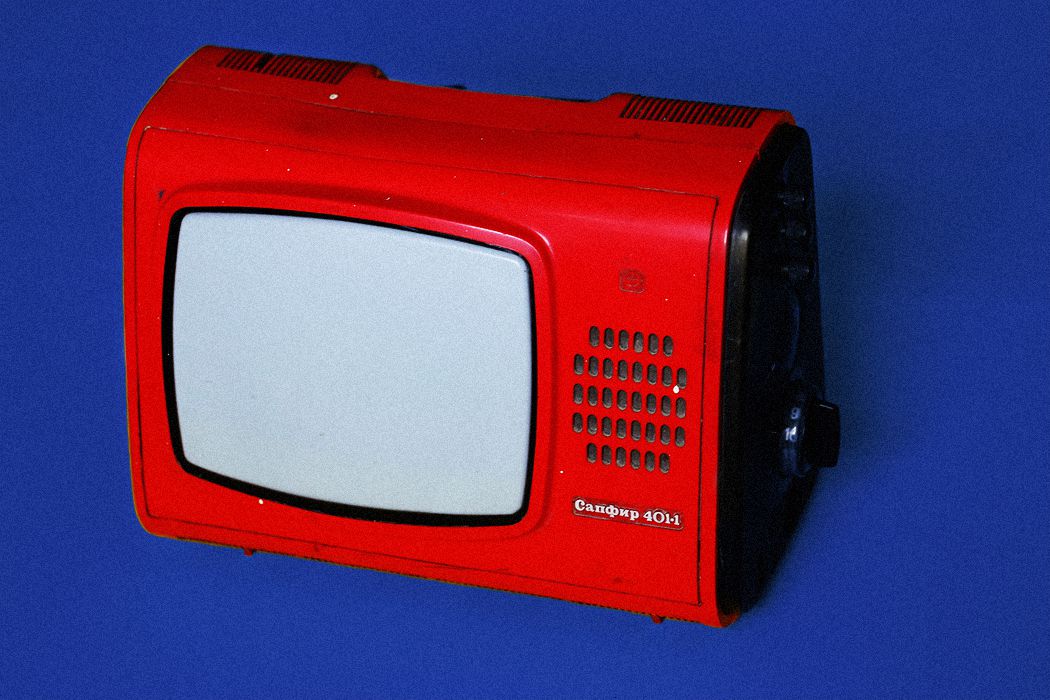
The history of the invention of the TV perfectly characterizes the development of Russian science of the last two centuries. The large scientist Boris Rosing, engaged in research in the field of image transmission at a distance, brings up the talented student of Vladimir Zvorykin, who will have to continue the teacher's business. But in Russia, a socio-political and economic crisis begins, Zvorykin understands that it is impossible to work in such conditions and leaves for America, where businessman David Sarnov finds him and gives him money to develop. Sarnov and Zvorykin, on venture conditions, create a television broadcasting system in the United States, after which the latter is called back to their homeland - only in the USSR. But by that time, the teacher Zvorykin Rosing was already shot. The engineer considered it not a very good sign and decided not to return. Since then, nothing has changed. Closing the last largest scientific discovery - the detection of gravitational waves - the Russian media, including television, focused on the fact that a graduate of Novosibirsk State University Sergey Klimenko participated in the experiments of the Ligo collaboration. The only problem is that the scientist in Russia no longer works, but its history is actively used to simulate the greatness of Russian science.
In the USSR, a TV, like everyone else, has come a special way. The Soviet government, replacing Orthodoxy as the ideological basis of Russian statehood with communism, tried in return for obsolete religious signs to create a new semiotic system that can serve the ideology of the state. If, by the end of the 40s, the authorities walked along the beaten road, sharing the visual image-the propaganda wiper-and the audial, focusing on radio broadcasting as the most important media of the country, then in the early 50s an understanding came that you can combine the icon and preaching in one device-TV. The divine image goes out of the red corner, a black square - a TV - a TV. The iconic essence of the TV manifested itself as soon as he fell into Soviet reality. The first TVs in the USSR were usually decorated with precious stones, which is why their corps looked like a salary, and lace curtains in the red corner, which covered the icon, migrated directly to the TV, modified into a round napkin. But the TV and the icon are not so much in form as the content-they both simulate some ideal reality, focusing the consumption of translated images in consumption itself. The icon shows the ideal divine world to which the believer should strive for, but most people who pray to the icon see the meaning of the prayer not in achieving the “world of the mountain”, but in the very prayer, involvement. The same thing with the TV: Soviet, and modern Russian television, create the perfect reality, where we built communism, for a long time “caught up and overtaken” and gave it to the West. But the problem is not even that this reality is fictitious, but that the viewer does not want to do anything for its implementation, because it is enough for him to consume information that his country is stronger than all, to be involved in this statement.
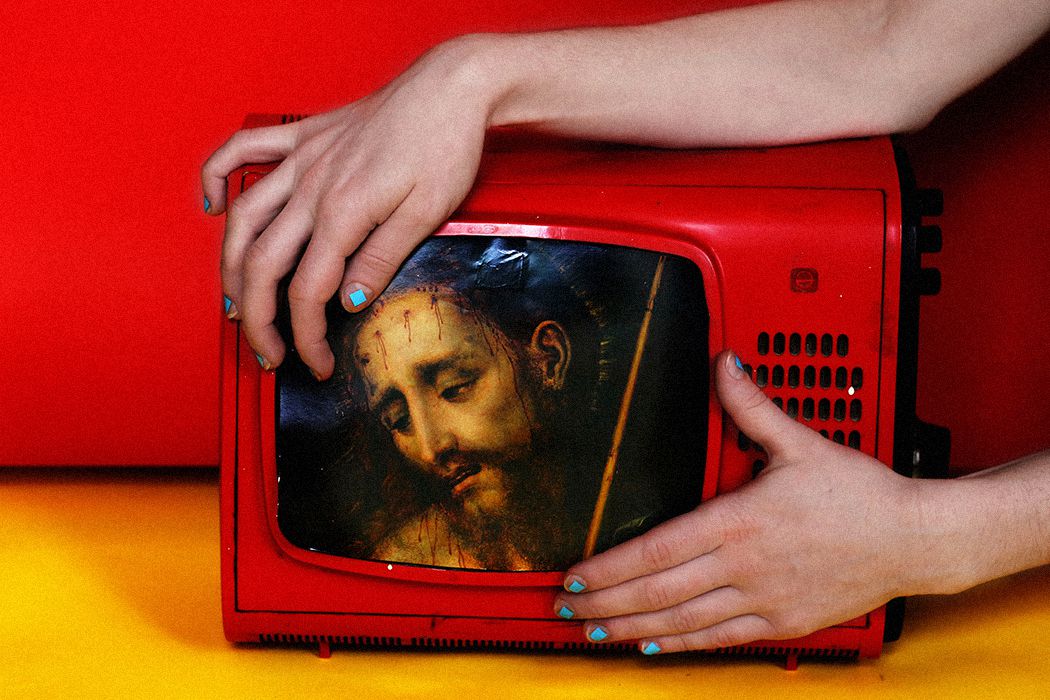
The divine essence of the TV is not limited to sermons from the screen. Communication of a person with a TV resembles a prayer, an appeal to God. Remember at least Svetlakov’s character from “Our Rashi”, who loved to talk to the TV. His crown phrase "Come on, television, enlighten!" He expressed the timid hope that the TV would make a person smarter, more humane and spiritually richer, as was religion at the first stages of its formation. Questioning to the TV, a hot dispute and even turning off - this is a rebellion against its single -channel divine essence, unwillingness or inability to comprehend fishing. But the believer always returns to God.
The TV is sometimes jokingly called a family member, but usually they do not specify what functions in the social cell are assigned to him. And there is an answer. It is no secret that there are significantly more women in Russia than men. And if in depressed cities women still hold on a combat one, then men are frankly drunk. Nevertheless, the expression “a man said-a man did” suggests that there is some kind of abstract real man who can bear responsibility for his words and actions. It is not easy to meet such a man, but his functions are performed by TV. It is difficult for his delivered voice, and it is pointless to contradict, he inherits the divine (and God the man, if that) the right to the absolutability of the statement, does not affect the body through physical violence, but on the soul. The whole family gathers at the New Year's table, including a TV, from which a confident man says that everything will be fine.
The model of Pelevin oranus describes the relationship between TV and man. We strive to absorb information from the screen only in order to absorb it, and emit it from ourselves almost unchanged, without removing anything useful for ourselves and without bringing anything new. But when someone attempts and breaks the oranus cycle on the divine source of presence in the world, war and the apocalypse begins.
Apocalyptic transformation
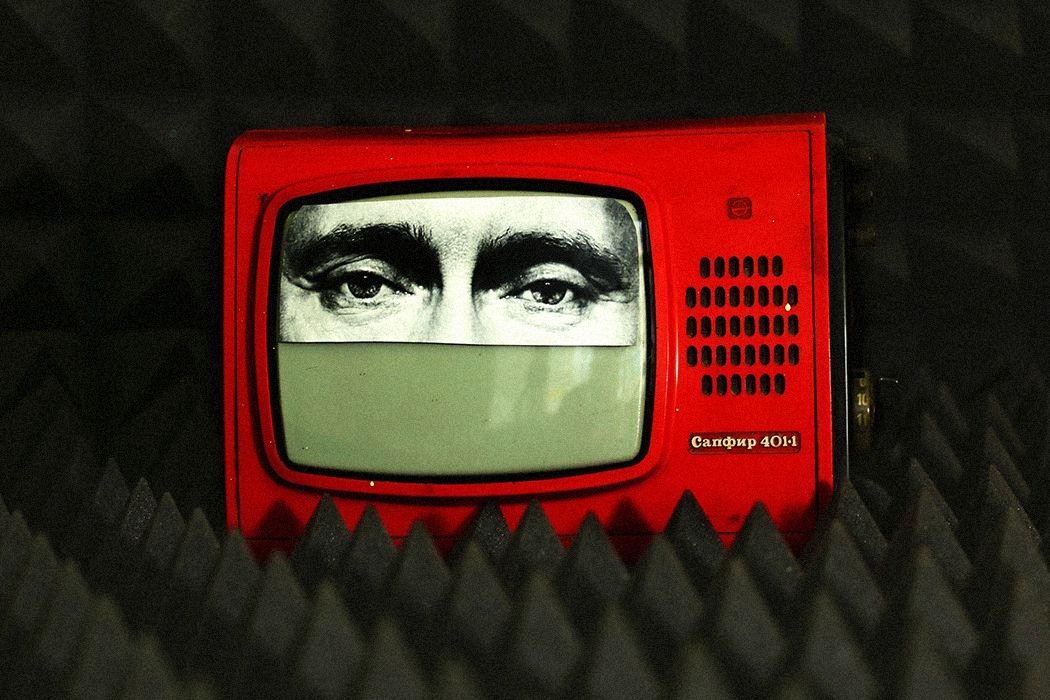
In the city of Valuyki, the Belgorod Region, a man stole a TV from the temple during a charity dinner. And this, obviously, is not just a miserable theft for the purpose of profit, but an element of a religious war. The police found the church and the state who tried to divide the church and returned the TV to the temple.
The interaction of a person and TV is so sacred that any intervention in this process is perceived as an insult to the feelings of believers and pours into a religious war. In Voronezh, the man fired at a car that prevented him from watching TV. When interference began on the screen, the viewer decided that they were created by a working engine standing outside the Volga window. He stuck out the weapon into the window and fired in the air, but the righteous rage did not retire. The man left the house and shot twice at the driver's door. The driver jumped out of the car, but the offender grabbed her hair. When the passenger stood up for her, the telecounter fired three times and wounded him. Then the son of the victim jumped out of the car and took the weapon from the shooter. In the next few years, the offender will be able to watch TV only if he gets into the camera to the thieves. The Holy Sacrament of Viewing the TV was guarded by a resident of the Republic of Tatarstan. The woman tried to beat off the TV from the bailiff with an ax. The bailiffs came to her husband in order to confiscate property for debts. But when they began to describe the TV, the woman burst into the house with an ax and attacked one of the bailiffs, though the weapon was able to intercept his partner.
The transition of the patriarchal family to the nuclear, a characteristic of modern society, ousted the TV from the leading positions in the family, but did not rule it out of love relationships. A resident of the Kuban decided to show who is the owner in the house, and stole a TV of his friend, who replaced the man, so that she watched the series less and devoted time to him. This story demonstrates the attempts of men to return their position as the head of the family by overthrowing the TV from the top of the family hierarchy. The interpenetration of human relations and TV is terribly great. In Krasnodar, a man stole a TV from the ex-livingor in memory of a relationship. Apparently, the best memories from their love story are evenings spent on watching the news of the week.
If you do not believe in the TV, this does not mean that it is not.