
Translated material
ECHO ECO
In Milan, they spent on the last path of an outstanding writer, scientist, philosopher and journalist
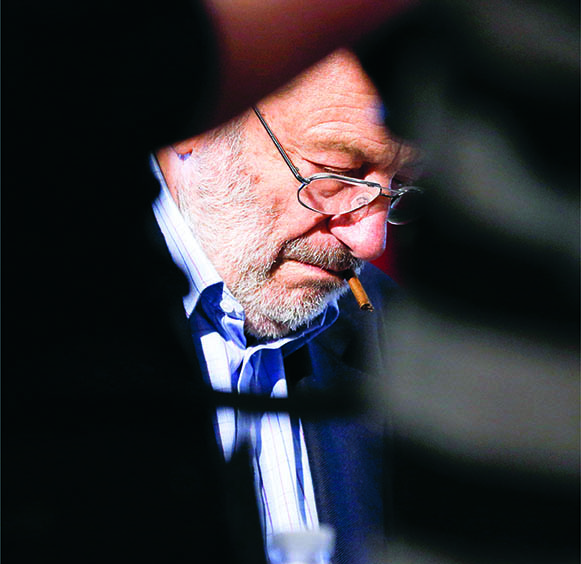
Umberto IVF was an exceptional figure for the culture of Italy and European Rubege of the XX - XXI centuries
A simple wooden coffin, without delights, on it - white flowers: when he sailed through the crowd, readers escorted Umberto by eco applause. Because there were no doubts: hundreds, if not thousands of people who filled the rather big space of the medieval castle of Sforz in Milan, were precisely its readers. If among them there were ordinary onlookers, hunting for historical events, then a minority. It was enough to look into the faces of those who listened to every word, spoken from a small stand in the courtyard of the castle. To see their reaction to humor, to memories, to unexpected quotes, even to special terms. (I wonder if often the words “structuralism” or “semiotics” sound at the funeral that collect so many people?) To eavesdrop on what and how they are quietly talking between performances. In various languages: IVF was an international phenomenon, and not only Italians were far from at the funeral. At least representatives of ministries of culture from many European countries, numerous publishers and translators.
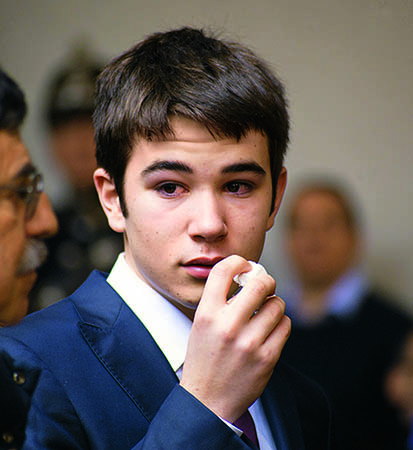
The grandson of the writer Emmanuel spoke at the funeral on behalf of the family, Milan, Italy, February 23, 2016
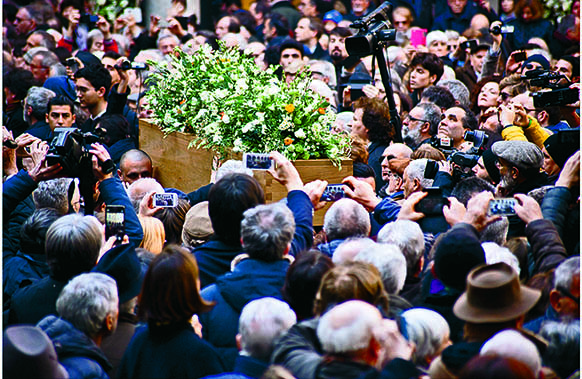
A coffin decorated with white flowers was escorted with applause, Milan, Italy, February 23, 2016
These were secular funerals, which was not so often for the funeral of a public person in Catholic Italy - but the author of the Name of Rosa and the Pendulum Foucault not only did not make a secret from his atheism, but also devoted several significant works to him. Including, therefore, there was no ceremoniality in the funeral. The tone was set by the quiet sounds of Viola da Gamba and the harpsichord who played baroque music so sweet to the heart of the writer at the beginning and end of farewell. It was the sonata of Arkanjelo Corelly La Follia - IVF himself loved to play it on a clarinet. The speeches of officials - the Minister of Culture of Italy Dario Franz, the Minister of Education Stefania Giannini and the mayor of Milan Juliano Pisapia, among others, sounded informally and briefly.
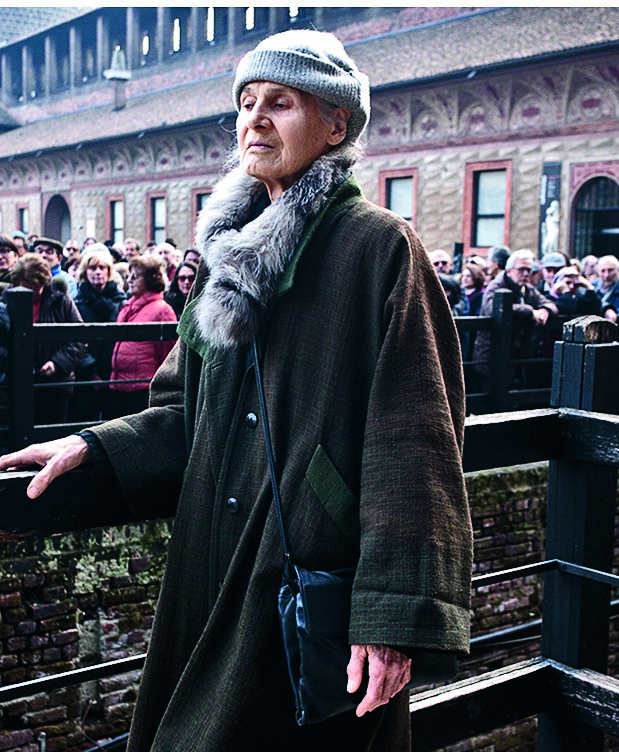
German art critic Renata Ramge, widow Umberto Eco and mother of two of his children, Milan, Italy, February 23, 2016
In general, the lapidarity of the funeral, which faved at an hour, was the requirement of the family of the deceased. Standing near the coffin of Roberto Beninya, one of the most popular artists and directors of modern Italy, abstained from a performance. The publishers of IVF, his old friends and associates on the club of bibliophiles spoke from the stands, but the warmest trick met the brief speech of the grandson of the writer and the scientist - Emmanuela, who performed on behalf of the family*. “Thank you, grandfather, for the stories that you told us,” he said. Obviously, under these words, many would have signed up, and not only those who were able to be in Milan in parting with Umberto Eco.
Umberto Eco was remembered by such a ironic writer, a secular man, a bonvivan, bibliophilus and a scientist
* Umberto Eco devoted to his grandson an essay “Dear Grandskirt, Teach by Night”, in which he recommended to him (and at the same time and to the whole young generation) to use a computer and Internet for training, remembering historical facts and events to “live a thousand lives”.