
Translated material
The case of sexot Bolek
"Who are you, pan Valens?" - The Poles again, as it happened more than once in the past, was proposed to answer this question. Only now they are in front of them - irrefutable documents: the Institute of National Memory (Inp - IPN) at first betrayed publicity, and then provided open access to archival materials about the activities of the secret agent of the Security Service of the Polish People’s Republic (Sat PPR) Bolex. Among them is the consent of cooperation with the signature of “Leh Valens, Bolek”.
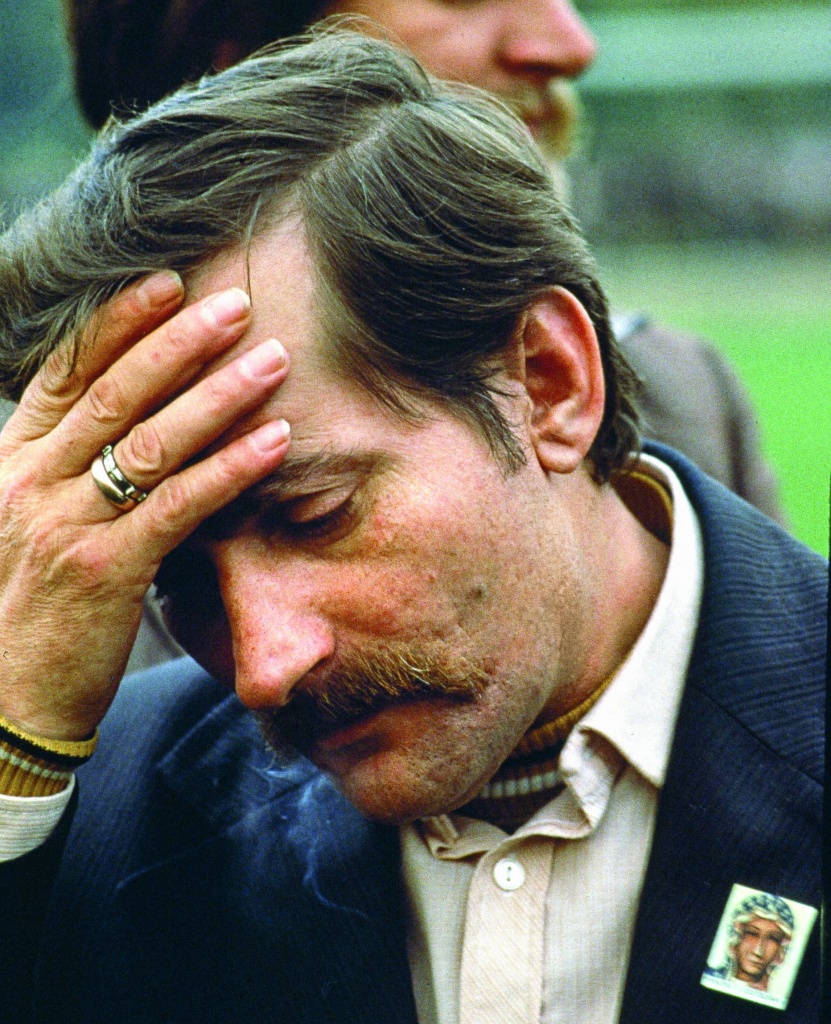
Lech Valens Solidarity leader, 1980
The first visitors to the IPN reading room, in which on February 22,, by decision of the President of the Institute, Lukash Kaminsky, they put documents indicating the agent of the leader of the famous union "Solidarity", the Nobel Prize laureate and the first president of post -communist Poland, were journalists. In front of them were materials from the archive of the ex-head of the Poland Ministry of Internal Affairs (in 1981–1990) General Cheslav Kishcheak, who died in November last year: two folders, one-the personal file of the secret employee Bolex, the second-a description of his work, in total more than 750 pages of documents, covering the period from 1970 to 1976, including handwritten and machine recordings employees of Sat. At the time of the legend of publicity, the documents have not yet passed the graphological examination, but Dr. Kaminsky assures that a “thorough study” is still ahead, and with the publication they hastened to “enormous importance to society”.
Cash finds
Perhaps the greatest interest in the IPN reading room was caused by several paragraphs of the handwritten text:
“I, the notorious Valens Lech, the son of Boleslav and Felix, born in 1943 in Popov, undertake to keep the content of conversations with me in strict secret.
At the same time, I undertake to cooperate with the security service in regard to the location of the enemies of the PNC and the fight against them. I will transmit the information in writing, and it will be true.
I undertake the fact of cooperation with the security service to be preserved in strict secret and not to reveal it even before my family. I will sign the information transmitted with the pseudonym Bolek. Leh Valens, Bolek. " Date: December 21, 1970.
Among the “finds” - and the receipt signed by the pseudonym Bolex in receiving money: 1000 zlotys, 1,500 zlotys ... The first receipt was dated January 5, 1971: “I sign in receiving 1000 zlotys from the security officer for cooperation and providing information. Bolek ". Below is the post: Money was awarded to the agent during the meeting. And the signature is captain E. Grachik ...
A day later, on February 23, the shocked visitors of the reading room heard the words from the personal blog of Valensa, who was behind the ocean at that moment: yes, he “collaborated” with the special services and signed documents about receiving money, but he did not take the money, and did not report to anyone, but signed only to his familiar employee (the same captain Grachik from sb?) Money for themselves: “They took money for themselves, not for me and, lo and about a miracle, different people did this in turn, and long enough. I have long stopped maintaining contact with him. ”
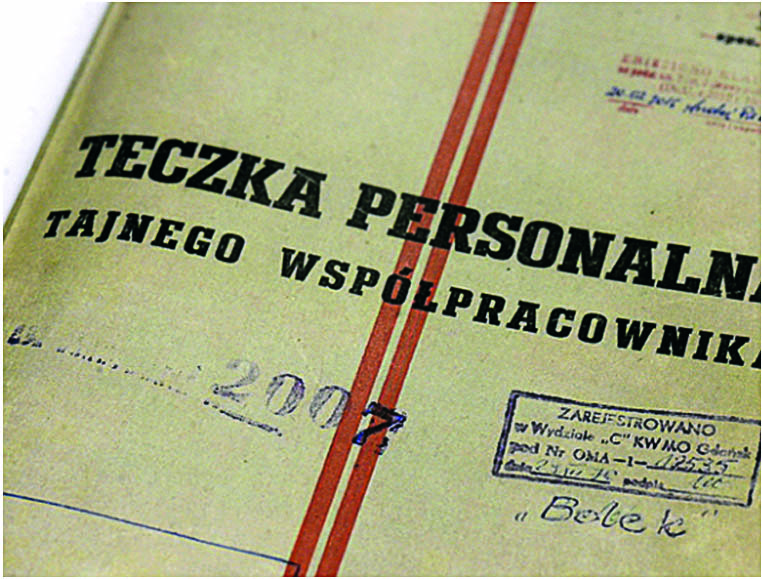
Personal business of a secret employee Bolek - now in the public domain, Warsaw, February 22, 2016
By and large, the Poles did not learn anything new. Over the past quarter century, information about the cooperation of the main fighter with the communist regime of the PNC has surfaced more than once. For example, this can be read about this in the book of Slavomir Tsettzkevich and Peter Gontarchik “Service of Security and Lech Valens. Addition to the biography ”, which IPN published in 2008.
(By the way, Tsaltskievich himself, regarding the latest excuses for the protagonist of the scandal, said the following: “I was faithful to read the Lech Valensa blog, but he changed the version of events so many times that I no longer attach importance to this.”) But the documents confirming these accusations are presented for the first time.
Dossier
In 2000, the Polish Lustration Court considered the Bolex case and admitted that Valens did not collaborate with the special services of the PNR. The court decided that the state security of the PNR specially brought to him the dossier of the secret agent in order to slander him and thereby prevent the award of Valenes, at that time the leader of the Union "Solidarity", the Nobel Prize of the World. However, the Polish Institute of National Memory (IPN) did not agree with the conclusions of the court and continued the search for documents on the agent of Valensa.
The failed transaction
According to the official version of the IPN, this volumetric dossier was at the disposal of the Institute of National Memory (Commission on the Investigation of Crimes against the Polish People) by chance. On February 16, the widow of Cheslav Kishcheak invited the IPN president to Kaminsky to buy the archive that her husband kept. In an interview with Onet.pl, Maria Kischak tells that her husband was allowed to sell documents - in case of need, and this need has come.
Healed uneasily in front of the video camera, the woman hastily explains: her husband was seriously ill in front of the death, had to hire a short-button, had to spend 50 thousand zlotys on the funeral (about $ 12.5 thousand), and now you need to pay for a tombstone, in general, she needs money-90 thousand zlotys (about $ 23 thousand). But she did not know that among the papers there was a letter where General Kischak asks to publish these documents no earlier than five years after the death of Lech Valensa. “I have not read this letter,” Maria Kischak laments. “It turned out stupid, stupid.”
“Yes, Leh Valens had such an episode in his life, but during the“ solidarity ”he was no longer an agent - there is no doubt about it”
It turned out really stupid. Nobody gave the money to the general widow. And they could not give under any circumstances: Polish laws oblige each citizen to submit to the IPN all important documents regarding the communist past. It turns out that Kishchak himself, keeping such serious documents after his resignation in his house, violated job descriptions. Why did he go for it? Most likely, he tried to insure himself from all kinds of slander or even attempts to persecute from the new authorities: documents, they say, will say everything for themselves. Moreover, in Poland, where the law on lustration, in comparison with the same Czech Republic, was adopted with a clear delay, only in 1996, clarifying the role of various kinds of personalities in the history of the country was painfully long.
The version of the desire of the late general to preserve the opportunity to blackmail Valens and even “take revenge on him” also surfaced. But she immediately raised doubts. “Kishchak wrote in his will: the documents must be published only five years after the death of Valensa,” professor of the University of Warsaw, historian Tadeusz Tsigelsky recalled NT . “I think he kept them exclusively for his own safety.”
One way or another, at the Institute of National Memory, after Randev, with a widow, the general reported the whereabouts of important historical documents to the police, the Kishcheak house was immediately searched, the found papers were seized.
13 thousand silver
Bolex cooperation with the security service at the Ministry of Internal Affairs of the PNC, which, like the rest of the “bodies” of the social camp countries, “consulted” the 11th department of the 1st Main Directorate (Intelligence) of the KGB of the USSR, judging by the papers, lasted until June 1976. In just five and a half years, agent Bolek received 13 thousand zlotys. Considering that in those years the average Pole earned 14–20 thousand zlotys per year, it has to be concluded: sexot (secret employee. - NT ) is not too rich.
But Captain Grachik paid Bolek money for a reason. “Watch the moods in the team and immediately inform about the planned stops of work. To determine the individuals who took part in inciting, fights, and those who own weapons, ”Bolek says in one of the tasks.
If you believe the papers, Bolek of his cuts, that is, zloty, worked properly. On January 22, 1971, he reports to anyone about the conversation with the electrician Kozlovsky: “During the December riots in Gdansk, he was one of those who captured the radio car and traveled to the city on it ... He also told me that during the December riots he acquired several units of weapons.”
Timely scandal?
For experts, the authenticity of documents found in the house of General Kischak is not in doubt. “The documents contained in Kishcheak folders really belong to security services,” assured the NT employee of the Institute of Grzegozh Maikhzhak, an expert on the activities of Solidarity in the early 1980s. “If you evaluate the entire volume of the material, then there is no doubt that it is genuine.” According to him, the connection of the SB with the future leader of "Solidarity" is confirmed by other documents: "There are, for example, documents of Czech special services on the cooperation of Valens with Polish special services."
“Already 37% of the Poles understand what was actually the role of Valens and all this pseudo -elite, which built her career on lies.”
But despite the fact that many in Poland have known about the unsightly page in the biography of Valens for a long time, the scandal has split the Polish society. Among the politicians and publicists of the liberal and left, this position prevails: even if Valens and signed something back in 1970, this does not mean at all that he needs to be deprived of all merits of a later period. Yes, and the times were cruel - with the “organs” of the PNC, hundreds of thousands collaborated in one form or another, if not millions ... Right and conservatives, on the contrary, speak of “triumph of justice” after decades of concealing the truth, call Valen “puppet of communists”. And they are trying to convince society that during the legendary “round table” of 1989*, when the fate of democratic changes in Poland decided to share the authorities of Porp with the opposition to their exemption from responsibility for the deed with the opposition’s negotiations with the opposition.
Document
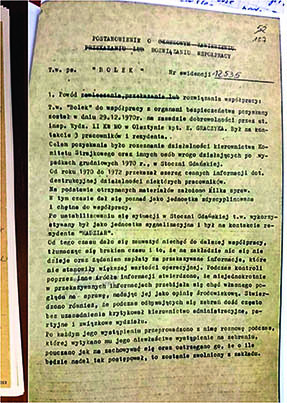
The official resolution of the SB of the Ministry of Internal Affairs of the PNP on the termination of cooperation with the agent of "Bolex"
“The secret employee Bolek was involved in cooperation with the special services on 12/29/1970 on the basis of voluntary consent ... I was in contact with three employees and one resident.
The purpose of cooperation was to monitor the activities of the leadership of the strike committee and other personalities participating in the December events of 1970 at the Gdanskaya mine.
From 1970 to 1972 he transmitted a lot of valuable information regarding the destructive activity of some employees. On the basis of the materials received, several cases have been instituted.
After stabilizing the situation at the Gdanskaya mine, he was in contact with Madziar resident. From that time, his reluctance to further cooperation was noticed, which (“Bolek.” - NT ) explained the lack of time and the fact that nothing was happening at work. He also put forward a requirement to pay for transferred information that did not have operational value ... During the meetings (at the Gdanskaya mine), he increasingly criticized the administrative and party leadership, as well as trade unions.
After each of his performances with him, conversations were held, during which he was indicated at an improper performance at the meeting, he was taught how he should behave, and warned that if he would do this, he would be fired from work in the mine.
He always explained his speeches by the fact that if he does not defend the workers, he would completely lose confidence among the team and will not know what is happening. Despite our many warnings, on 02/11/1976, speaking at a collection of the trade union, the administrative, party and trade union leadership of the owing manner ... For his speech on 04/30/1976, he was dismissed from work. In connection with the foregoing, taking into account the inappropriate behavior of the secret employee Bolek, as well as the fact that he was fired from work, I propose to exclude him from the agent network, and the existing folders, personal and working, and transfer it to the archive. ”
Major S. Voitelik .
“There will be no longer the legend of Lech Valensa. He will go into the past, which he deserved ... Now 37 % of the Poles (reference to the survey. - NT ) understand what the role of Valensa and the role of all this pseudo -elite, who built his career on lies ... ” - said the Minister of Defense Antoni Maderevich, one of the key figures of the ruling party of law and justice (PIS).
Meanwhile, Professor Tsigelsky draws attention to the fact that the story of the unlucky widow, who decided to sell the once secret papers, occurred at the moment when the government formed by the Pis Pis, which came to power as a result of the October elections, should report on the results of a hundred days of work: “They have nothing to brag about, and Kishcheak’s documents came in handy: instead of paying attention to a failure policy of the country's leadership, all They will jump on the stomach of Valensa, ”the professor believes. In his opinion, Pis “just howled with joy” that it became possible to finally compromise the leader of “solidarity”.
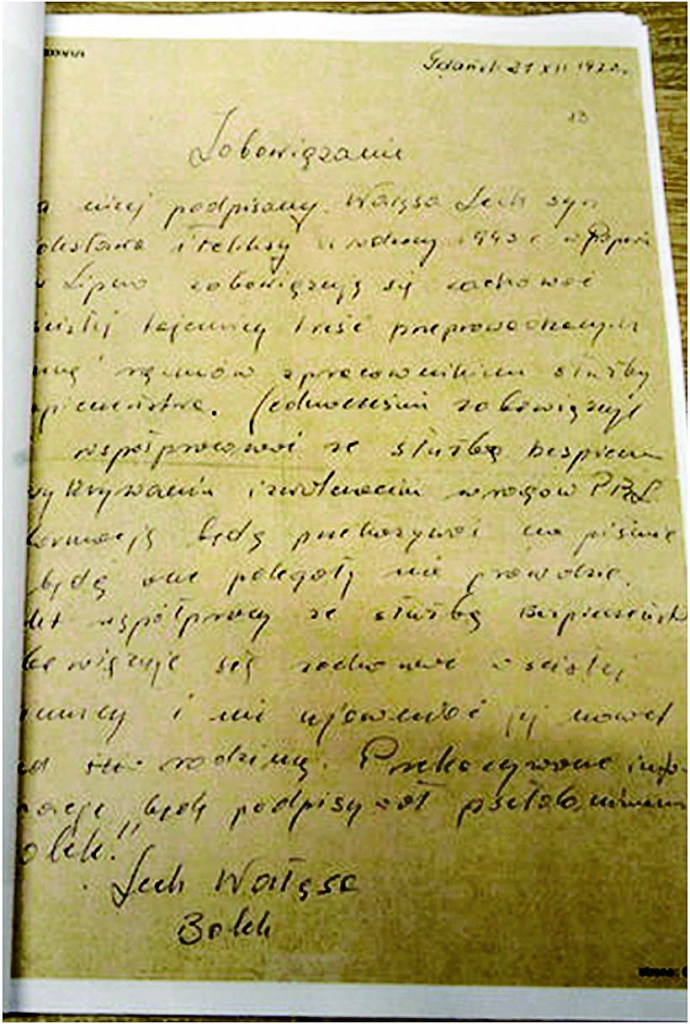
The statement by Lech Valensa (Bolex) about the readiness to cooperate with the special services.
The opposition politician, the head of the Nowoczesna Party, Ryshard Peter, also expressed his own version of the “directed scandal”-he announced his desire to “ask Pis, did anyone from this party with Ms. Kishcheak over the past weeks or months? If so, what was the conversation about? Why did it happen that the documents for Lech Valens appeared precisely at the moment when Poland handed over to Brussels Poles in Brussels, when (prime minister) Beata Shidlo gave up the social rights of the Poles, not only in the UK, but throughout Europe, ”Peter hints at London’s agreement with the leadership of the European Union about the restriction of benefits for children for 800 thousand Polish Polish "Gastarbaths" in the UK.
He fell, then rose
It is curious, but the very fact of cooperation between Valens with the special service of the NTC NT interlocutors does not bother. “What are Kishcheak folders talking about? The fact that yes, he reported, but then refused to cooperate and was expelled from the agent network, - Professor Tsigelsky explains his position. - The man fell, but was able to rise. This is a very important characteristic for a person living in a communist system. ”
“Yes, Leh Valens had such an episode in his life, but during the“ solidarity ”he was no longer an agent - I have no doubt about this,” the expert of the IPN Grzegozh Mahezhak echoes Tsigelsky. In his opinion, August 1980 proved that the “solidarity”, the indisputable leader and the hero of which is Valens, was an authentic, and not created by the special services.
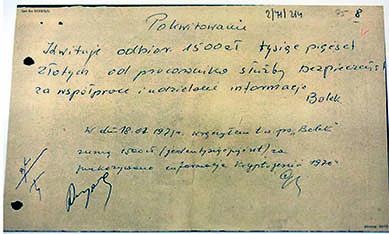
A receipt in receiving a monetary reward signed by agent Bolek and confirmation of the fact of the transfer of funds as an officer of the Security Service (SB) of the Ministry of Internal Affairs of the PNP: *“I confirm the receipt of 1,500 zlotys for cooperation and transferred information from an employee of the security service. Bolek ". *
Below is written:
“07/18/1971 transferred to a secret employee Bolek the amount of 1,500 zlotys for the transferred information in the 1970 case
Of course, for 72-year-old Lech Valens, everything that happens now is a drama, sympathizes with the former Polish leader Tadeusz Ziegelsky, noting that in cooperation with the SB he had to admit back in the 1990s: “But for the historical figure of Lech Valensa, this is not a drama.” The leader of the “solidarity”, the Polish historian is sure, will still be remembered both in Poland and in the world as a person who was a symbol of revolution and a bloodless transition from dictatorship to a democratic state.
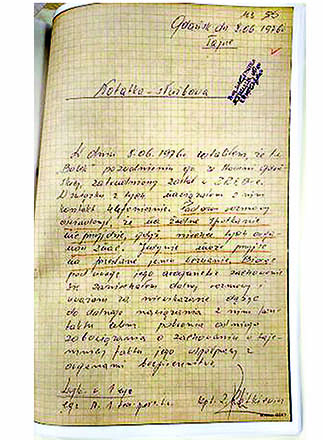
Office note by the captain of the SB Ratkevich:
“06/08/1976 I found that after the secret employee Bolek was fired from the shipyard, he entered the work of ZREB.
Taking this into account, I contacted him on the phone. During the conversation, he stated that he would not come to any meeting, because "does not want our organs to know." And it can only appear on a written agenda. Taking into account his arrogant behavior, I interrupted the conversation and consider it undesirable to continue attempts to establish contact with him in order to obtain an obligation to keep the fact of his cooperation with the security authorities. ”
Comment
"Are you ashamed of Lech Valens?" - NT asked the opinion of people famous in Poland
Andrzej Zybertovich , professor, adviser to Polish President Andrzej Duda *:
Actually, the fact of his (Lech Valens) cooperation (with specialists of the PNR.- NT ) was scientifically proven long before the current scandal-by analyzing a number of documents of the communist secret police. Yes, he collaborated, reported, took money for this, deceived for years, and a whole factory for the production of lies and service of unscrupulous interests was built around his person. The problem with Valensa and some other figures is that, evaluating them, you always try to find pros and cons ... But it is clear: Leh Valens is an exceptionally vile person.
* Excerpt from an interview with Superstacja.
Adam Mikhnik , editor -in -chief Gazeta Wyborcza, in 1968-1989 - one of the leaders of the anti -communist movement in Poland:
The denigration of people whose merits in the struggle for freedom are undeniable are the well -known method of dictatorships and autocracies, carried out by people of vile and stupid. Thus, Alexander Solzhenitsyn and Andrei Sakharov were denigrated, they also acted with Vaclav Gavel. Таким же манером лили грязь на Юзефа Пилсудского** и Винценты Витоса***… Так вот: сейчас мне стыдно, что сегодня в моей стране так очерняют Леха Валенсу.
Станислав Чосек , экс-посол Польши в РФ, один из организаторов «Круглого стола» 1989 года, в 1980–1985 годах — министр по делам профсоюзов:
Я был тем, кто со стороны правительства и партийного аппарата проводил переговоры с Валенсой, когда его интернировали после ввода военного положения и запрета «Солидарности» в декабре 1981 года. Он производил впечатление человека несломленного, настоящего лидера нации. И могу сказать то, что уже неоднократно повторял: мы тогда не владели той информацией, которую, как оказалось, хранил в своем шкафу генерал Кищак. Я, например, вообще об этом ничего не знал! Наверное, только Кищак с Ярузельским и знали. Почему они не использовали эту информацию? Вероятно, потому что осознавали: в качестве средства давления на Валенсу она не сработает.
Я вовсе не исключаю, что Валенса (в начале 1970-х) сотрудничал со спецслужбами или, говоря по-русски, был стукачом. Но потом, когда он стал лидером «Солидарности», объединившей 10 млн человек, он был подлинный лидер. И только идиот может сегодня утверждать, будто коммунистическая власть все это организовала.
* Переговоры власти и оппозиции в 1989 году, положившие начало демократическим переменам в Польше
** Юзеф Клеменс Пилсудский (1867–1935) — польский государственный и политический деятель, первый глава возрожденного польского государства, основатель польской армии.
*** Винценты Витос (1874–1945) — известный польский политик XX столетия, три раза занимал должность премьер-министра Польши: в 1920–1921, 1923 и 1926 годах.
Фото: east news, pap/jacek turczyk, bi.gazeta.pl, onbt.pl