
Translated material
Workout from Alister Crowley
Recently, we published a large article under the heading “Dictator of the Week” about the Alistaner Crowley , the scientist, the philosopher and the esoteric hooligan. Crowley traveled the whole world and studied Taoist practices, Kabbalah, Indian yoga, Christian mysticism, astrology, Pythagoreism and other wisdom. His main merit is that he summarized the acquired knowledge and synthesized from them a single clear step system of teaching sciences about peace and man. Today you will get acquainted with the list of some of those practices that Crowley advises novice researchers of human nature in order to master their mind and body, as well as a list of literature for beginner researchers. We chose the most suitable exercises for the beginner and tried to explain them as clearly as possible.
What can be taught, should be taught - and then the student in the end, perhaps, will comprehend that which cannot be taught. © Alistair Crowley1. Study of their physical limits
Many people are engaged in overcoming their borders, depriving themselves for a long time or drinking an excessive amount of alcohol. However, their activities are unscientific, since they are forgotten in their classes, and the practitioner must carefully observe himself, note the stages of changes in his state and record the results. Crowley suggests studying himself in the following conditions:
• How much can you be without food without serious obstacles for your work, what is happening to you?• How much can you do without water without damage for performance?
• How much alcohol can you take and what do the stages of your intoxication look like?
• How long can you go, dance, swim or run without stopping?
• Determine the limits of your endurance in various sports training.
• Install how much you can be silent and what happens to you during this practice.
If other research comes to your mind, conduct them too. The data that you succeed is the basis for building your life, work and practice, taking into account your personal characteristics.
2. Body control
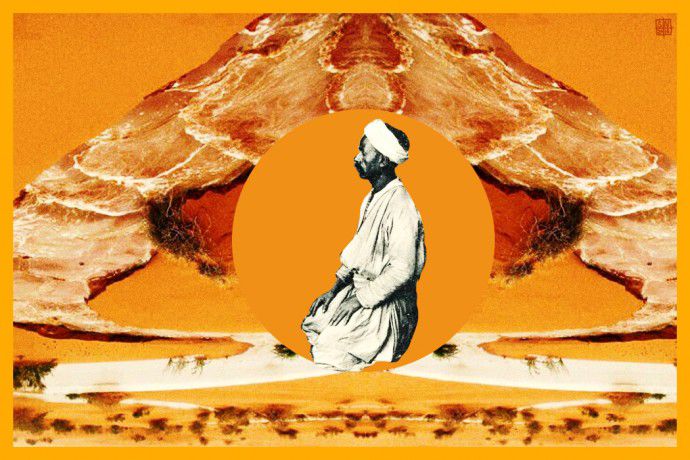
In order to begin to realize and control your body, first of all, it is necessary to learn how to stay in immobility for a long time. In free clothes, one of the following poses should be taken.
• The dragon's pose: kneel down on the floor or rug, sit on the heels, back is straight, your hands lie on the hips.
In addition to these poses, other yogic asanas are suitable, for example, a lotus, prelotx or even wood pose and any other poses that allow you to keep the back straight and in good shape.
It is best to put a timer during this exercise so as not to be distracted by thought of time. A beginner can sit in the position of God and the dragon for twenty minutes.
No matter how convenient it is at the beginning of the exercise, you will become terribly inconvenient in a few minutes, and by the end of the exercise you will feel serious discomfort and, very possibly, unbearable pain. The mind will begin to rebel and convince you that sitting without movement is a stupid undertaking; You will want to scratch in three places at once; You can start falling asleep or experience unbearable itching in your knees and the desire to jump up and jump or break something in a rage. This is not at all connected with a poorly chosen pose: it is the resistance of the body that is not used to maintaining static, and the mind that quickly gets tired without the flow of sensory information.
After a month of daily exercises, you will learn not only to cope with discomfort and increase the duration of the posture, but also get acquainted with a qualitatively new sense of comfort, which comes not from external circumstances, but from the ability of the mind and body to concentrate and maintain concentration and tranquility. After several months of training, you will see how the mastery of static will affect the effectiveness of your concentration in reading, listening, watching films, conversations, exciting events - in all that the nervous, twitched and clumsy body interfered with you.
3. Three -stage control
Following the development of the body, the development of the mind should follow. For this, Alistair Crowley came up with a three -part practice called Yugorum. Each step of exercises will allow you to look deeper into your own mind and psyche and teach you to control more the levers of your “biomash”. In order to master himself not only in secluded meditation, Crowley made exercises to master the speech, action and thought in everyday life, which will not require solitude and can be practiced in any circumstances.
I.
In order to master your speech and never bite off the post-fact, perform such exercises during the week: 1. Exclude from your speech some common word, for example, “and” or “but”: this will help to realize the speech as a process in which we can still make a choice 2. Exclude from your speech personal and attractive pronouns of the first person (that is, “I”, “I” and so on). This will not only teach to control speech, but also draw your attention to how often you want to talk about yourself when no one asked you. 3. Exclude words containing a certain letter from your speech. Such verbal selectivity may perhaps sharply increase the degree of your eloquence and forcibly expand the active vocabulary.II.
In order to master the action and always be responsible for his actions, Crowley advises to give a vow not to raise his left hand above the waist or not to cross his legs and to the best of his ingenuity to come up with his tasks. The best will be to take bodily habits and abandon them (because for such a victim there are always high dividends). For example, do not cross your legs, do not intertwine your fingers, do not fold your hands on your chest, do not gesticulate during a conversation, do not support your head with your hand or not back on the back of the chair. Do not take too many points at once: each failure hurts the spirit, and it is better than a week of not too difficult exercise, which brought a victory over oneself than indulging their exorbitant ambitions, losing and self -abundance.
III.
To master your thoughts and stop being a garbage bag for information viruses, you need to practice this. Choose some thought that you often think: about a person and the upcoming business or memoirs-of those that often come to mind or which others resemble all the time. Avoid this thought. You can come up with a really useful and important thought in advance that you will turn to as soon as an uninvited guest comes to you. When a week passes, you will note that the obsessive nature of thought will weaken. Repeat this exercise until you see that you can cleanse your head at any moment. When the control of thought will be familiar to you, try working on complex thinking: imagine the opposite thinking to you and with the help of a conditional sign (a special ring on your finger or other thing) “switch” to the thinking of this other person. This exercise will allow you to better understand other people and more objectively relate to your set of beliefs.
Alistair Crowley recommended to celebrate every violation of his vow with some kind of physical punishment. But the experience showed that this method of awareness is far from suitable for everyone, inciting unnecessary emotions and simply frightening the people around them. Sometimes it is better to set the opposite reaction to errors: each time when losing, close your eyes and make three deep breaths and exhalations concentrated, trying to form the intention to fulfill the vow to the end and be attentive to yourself. This will help to return concentration, and will soon turn into a universal way to recover in any circumstances as a conditional reflex.
For intellectuals, Crowley also offered another exercise for the mind associated with opposites. Take the theses that you like to defend in the dispute, and formulate their antithesis. Try to form the proof of the antithesis so that it is convincing for yourself. The top of practice is to occupy an arbitrarily chosen position in conversations with surrounding people and intentionally defend it as if it is truth. The task here, of course, is not to confuse other people, but to make the mind flexible and impartial, able to handle information without involving emotions: the mind is, in reality, only the tool should be such. This exercise helps perfectly to study philosophy, religious texts and various copyright concepts, because it allows you to completely turn into an apologet of the author, and having finished to move back again.
4. Flevnoy clairvoyant
Alister Crowley believed that the voice of intuition could be developed while practicing. He proposed to use the Tarot card for the development of clairvoyance. However, this is a good advice for those who have already begun to study the deck and spilled the books “Tarot Tota” and “777”. Knowledge of astrology, Kabbalah, mythology and comparative religious studies that are presented in these books make cards with pictures of richly saturated symbols. It is precisely due to this wealth that it is very convenient and productive to exercise in their guessing. It will be better to work only to guess the presence of people close to you, because in these two ways there is a necessary space for scope of intuition. However, Soviet experiments on bodily clairvoyance showed that it is possible to achieve effectiveness when guessing cards with color letters or simple images, as for kindergartens, or even learn to read simple words.
Crowley advises to lay out the cards with shirts up and try to guess them, without using smell, touch, or even more than vision. He also advises not to try to literally see them - but to follow the first outbreaks that appear in consciousness during concentration on the map. Be careful when reconciling the results. Now that you know the symbolic content of each card, you can independently figure out how related the card is the option that you called. Remember that the average probability of guessing is 1 out of 78, so if this happens more often, you succeed.
5. Thinking
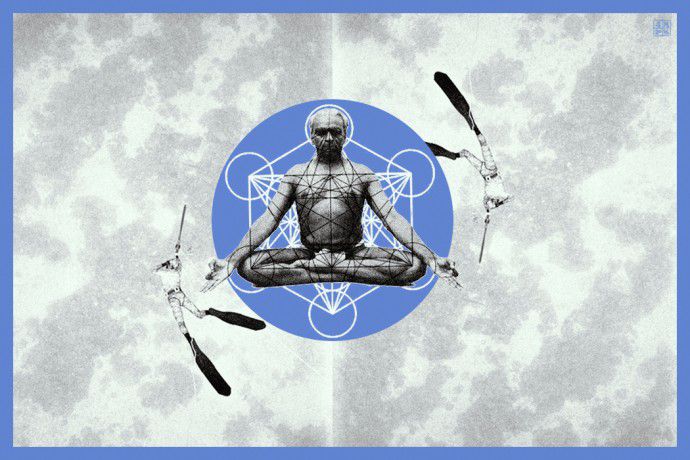
To train thinking, you need to not only learn and think a lot: you also need to learn how to concentrate on only one object - and do not think about anything else. To begin with, the simplest objects are suitable: a black oval, a blue circle, a yellow square, a red triangle. Having chosen one of these elements, sit in a comfortable pose with a straight back, close your eyes and try to imagine a chosen figure before your eyes.
The mind should be completely concentrated on an object chosen in advance, you cannot change the object during the exercise. No extraneous thought should invade your head: mark any thought, no matter how important they appear - let it dissolve, fly away, drown in black, disappears.
When you can concentrate on a simple object, proceed to their combinations (for example, a black oval inside a yellow square and so on) and to moving objects (a swaying pendulum, the movement of the piston). Only when you can easily hold the concentration on the systems of moving objects - you can proceed to living objects. It is better to start with the one you know well.
To diversify this exercise, sometimes you can concentrate on individual senses. For example, concentrate on the taste of bake chicken, the smell of brand new tires, touching the rabbit ear, the sound of rain or imaginary ticking watches.
The last stage of concentration will be the exercise to eliminate information from your mind from all senses and prevent any thoughts. This will take from a year to several years of daily practice.
This exercise is aimed at becoming the master of his attention. While you do not own them, propagandists of different varieties, creators of advertising and subconscious messages in the news, demanding hysterical women and sophists of all genera are unceremoniously captured. When you yourself will dispose of your concentration, you will see why you had not managed to do what you wanted to do before - and how it turned out that you were all the time to be distracted by which you were not going to do.
6. Diary
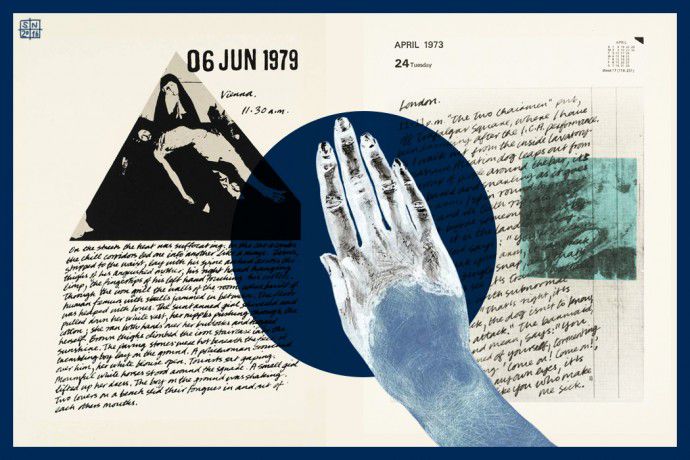
The course of all practices must be recorded in the diary. You should record all bodily symptoms when mastering the pose and fix your emotional sensations and impressions of each exercise session. The results of the concentration of thoughts and the duration of the exercises, the results of three -stage control and the number of errors for the vow period, as well as how your well -being changed from the beginning of the experiment, should be recorded. A diary is the main tool for scientific research, which is carried out using an experiment and observation.
7. List of literature
Alister Crowley advises a small list of literature for someone who wants to understand the world science of man and the world. It consists of both ancient texts and the works of the master himself and his contemporaries. This list, of course, is only a small part of what you need to know (and there is an extended list that is waiting for a student with advancement in training) - however, this is a wonderful small library for someone who decided to start and wants to master basic knowledge.
• " And jing "
• " Tao de Jing "
• " Upanishads "
• " Bhagavad-gita "
• " Shiva-Samhita "
• " Aphorisms " Patanjali
• " Hatha Yoga-Pradipika "
• " Raja Yoga " Swami Vivekananda
• " Dhammapada "
• “ MILINDA questions ”
• Egyptian "Book of the Dead"
• " Book of Holy Magic Abramelin "
• " GETIA "
• " Spiritual guide " Miguel Molinos
• “ Voice of silence ” by Elena Blavatsky
• “Teaching and ritual of the highest magic” Elifas Levy ( Volume 1 and Volume 2 )
• History of Erdmann philosophy: a two -volume “Essay on the History of Philosophy” (German Grundriß der Geschichte der Philosophie; 1866)
• “ Diversity of religious experience ” by William James
• “ Exposed Kabbalah ” Samuel Liddel McGregor Maszers
• " Konx Om Pax " Alistair Crowley
• " 777 " Alistair Crowley
• "Sword of the Song" Alister Crowley
• “ Star in the West ” by Captain John Fuller
• "Tanniezer" Alister Crowley
 Polo Theodor Glagolev for our Polo we use wear-resistant fabric made of pure cotton, sew them in Belgium, and make stripes in St. Petersburg to buy for 2000 rubles