
Translated material
Naked king
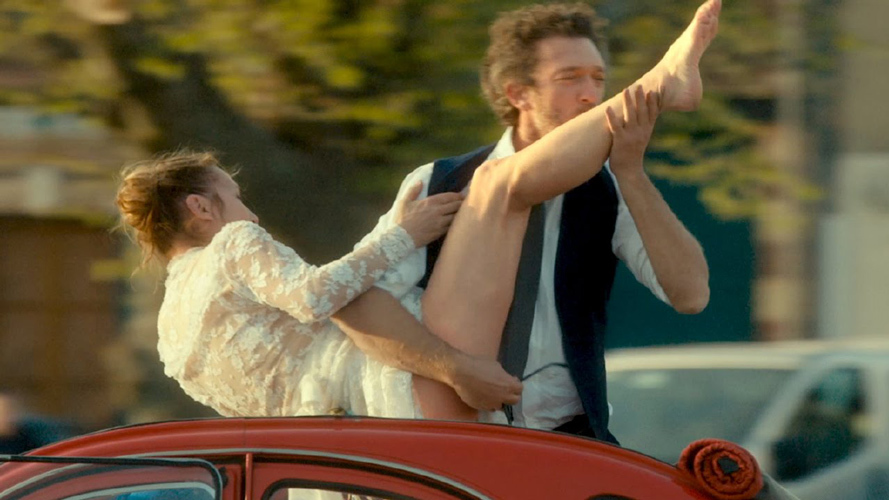
At the Russian rental, he continues (but already almost pumped) to go peppy and funny melodrama with Vincent Kassel and Emmanuel Berko. The film flew past almost all critical radars - and in vain. Vasily Koretsky hastily corrects this defect.
To be honest, from Mavenn Le Besko, the actress who became the director (it was at that moment that the surname fell off on her behalf), no one expected anything interesting. Especially after Cannes. Peter Bradshaw from Guardian , for example, slapped a unit for the film, and Hollywood Reporter praised him so that the cheekbones were reduced from boredom - in particular, calling the “my king” “typically French”; Who after that will want to go to the cinema at beret, baguette and indispensable Louis Garrel? Plus, the previous exercise of Mavenne in directing - “Polyss” - it was impossible to watch to the middle. The story of the difficult everyday life of the employee of the juvenile police department was a kind of “fairy tale about the darkness”, only instead of the ham-neat European faces, and the darkness huddled in the souls of a peaceful population, which was completely guilty of pedophilia.
It is all the more surprising to watch the “king”: as if a veil was sleeping from the director’s eyes, and she suddenly saw a life in everyday life, and not a set of socially demanded tops and stamps. Yes, in a sense, it is “typically French cinema”-if you take the realism of Maurice Piala as the standard. The “my king” differs from the films of the bowl - first of all, clearly female intonation. The point here is not only of what point of view of Mavenin on gender relations, but also in a certain agitation - the film is explained by almost a cry, exclusively large plans of the heroes. It seems to be time to say what, in fact, yells about - but in a whisper is a movie.
 © A-On Films
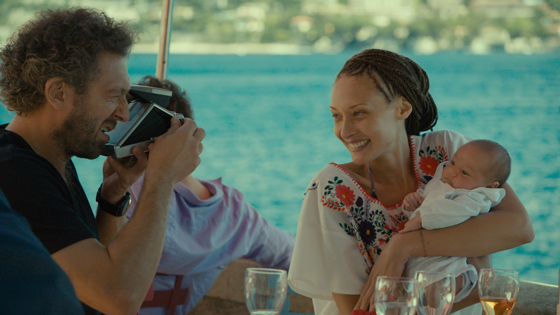
So: one summer night Tony (Emmanuel Berko), a divorced and childless-adulterous woman at forty, sees a person from the past at the disco of Vincent Cassel (in distant youth she seemed to be a little in love with him), and eccentrically greets him. They already meet the morning in his kitchen: Georgio (so the name of the hero) not only dancing coolly, but also cooks well; He is generally a cook, a playboy and the owner of the restaurant. A swift and perfect novel (the authors supply it with a large number of funny and accurate household, as well as anatomical details) soon ends with the wedding and pregnancy of Tony. It ends literally: as soon as the pair invades the life of the pair (for example, buying a crib), Georgio-Korol turns out to be the king of morons and immediately dumps into a specially purchased Garsonier nearby. In parallel, Tony's life is poisoned by a neurotic girl Anyue, the former Georgio, with whom, however, a rather laborious relationship continues. In the distant perspective, everything ends with the fact that, skiing with a grown son, Tony tears a ligament on his leg and for a long time enters the recreational boarding house. There life flows calmly, already on general plans; Actually, the film begins with this incident.
In the form of the “king”, it undoubtedly pulls on a great realistic romance: the time of action is ten years old, the main characters of the five: our couple, plus demonic Anyes, plus the hilarious brother of Tony - he is played by Garrel - and his girlfriend (Isilda Leko, here she mainly laughs with the bass). The plot also has a logical accident necessary for any novel like the fall of Vronsky from a horse in Anna Karenina (the very fall of Tony on skiing), and also ironically reflected. The motive of the doubles is not forgotten: dysfunctional relationships of the super-swarming and patient Georgio and psychopath-manipulator Agnes here turn out to be a basic model of interaction between the characters. Heroes periodically simply screaming inside this model, letting the viewer feel all the faces and intonations of such relationships.
 © A-On Films
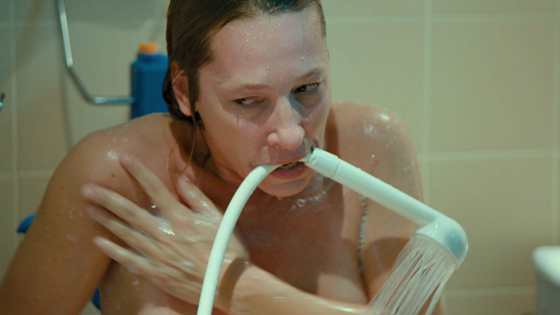
At the same time, the obvious doing, the almost mechanical structuralness of history does not turn the film into a dead machine: rather, following the heroes of the tough plot scheme, it seems here to the work of fatum. The wrong choice is drawn by the whole set of tragicomic situations in its predictability, which are detailed ridiculous and very vital, without pathos and teachings. All voltage lines, the precursors of the disaster and household blood pressure are registered here with one stroke, a delicate hint, the language of bodies, views, pauses and defaults. This is one hundred percent acting; The directing of Mayvenn is reduced to non -interference, and there is nothing to catch on the eye of Sinefil - half the action takes place exclusively on the face of Berko (well, yes, a couple of times the director allows himself a modest feminist front, showing an old naked body of the actress - as a symbol of the real). Actually, the delicacy unexpected for Mayvenn decides everything: over time, the main intrigue does not become the vicissitudes of the female fate, but the growing amazement of the heroine (and our) is the phenomenon of the parallax vision: the prince turns into a toad, toad into the prince, and it does not work out to combine these two pictures. Still - the director, too, is not eager to open this ugly Grenuy to see how everything is arranged inside him there. Fudy, Wumanayer and the Beng of Georgio remains an absolute mystery. He is obviously deprived of not only motives, but also internal tragedy (compare with “we will not grow old together” the same bowl, where the confessional and unpleasant self -portrait of the director is still equipped with a certain internal breakdown). It seems like a trifle, but without a tragedy, the character of a cassel turns from a demonic antagonist simply into an asshole. So they are girls.