
Translated material
The only Russian aircraft carrier "Admiral Kuznetsov" will be sent to the Mediterranean Sea
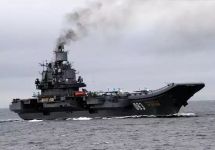
The only Russian heavy aircraft carrier "Admiral Kuznetsov" will be sent to the Mediterranean Sea in the summer. This was reported by TASS with reference to a high -ranking source in the main command of the Russian Navy.
"This summer it is planned to travel Kuznetsov to the Mediterranean Sea, he will lead the constant grouping of the Navy in this region," the source said. He did not specify what tasks the aircraft carrier will perform.
According to the source now, the aircraft carrier is located at the 35th shipyard in Murmansk. The ship is restored by technical readiness before a distant sea campaign. In particular, by the beginning of the summer of the cellar of the aircraft carrier, they will have to modernize for new types of aviation ammunition.
In the fall, upon returning from the Mediterranean Sea, Admiral Kuznetsov, after a distant campaign in the Mediterranean Sea, will take up repairs for 2-2.5 years. The ship will, in particular, by updating the air group.
Admiral Kuznetsov was laid in 1982 at the Black Sea Shipyard in Nikolaev (now Ukraine). The ship was launched in 1985 and was completed afloat. Admiral Kuznetsov was introduced into the fleet in January 1991. It is based in Vidyaev Murmansk region.
The constant grouping of Russian ships has been in the Mediterranean Sea since 2013. Now it is headed by the flagship of the Pacific Fleet, the Varangian missile cruiser.
In December, the Russian submarine "Rostov-on-Don" from the water area of the Mediterranean Sea fired at the positions of the Islamic state " Caliber winged missiles". “We can say with complete confidence that quite significant damage to the warehouses with ammunition and the mining plant and, of course, oil infrastructure,” then reported the head of the Ministry of Defense Sergei Shoigu to President Vladimir Putin.
On October 7, on Putin’s birthday, four missile ships of the Caspian flotilla made 26 launches of Caliber-NK missiles for targets in Syria. According to Vedomosti, these launches cost Russia from 500 million to 1 billion rubles.
Two days later, US Secretary of Defense Esh Carter confirmed that 4 of 26 Russian cruise missiles did not reach their goals in Syria and fell in Iran. The cause of the fall of shells, according to the assumption of the crankcase, was their malfunction.