
Translated material
ARD: Russia continues to violate anti -doping rules
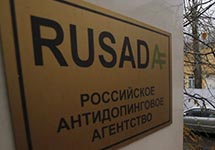
Russia continues to violate anti -doping rules. This is stated in the third film from the series "Secret Doping" under the title "Distracting maneuver of Russia." Its author, a journalist of the German television channel Ard Hayo Seppelt, argues that Russian athletics has not yet ended the path of purification.
The heroes of the 30-minute film were the acting director of the Russian Anti-Doping Agency (RUSADA) Anna Antzeliovich, as well as coaches Yuri Gordeev and Vladimir Mokhnev. In particular, the author of the film accuses Antseliovich of the fact that during her work in this organization to another position she agreed with the athletes about the time they surrender doping tests. Zeppelt claims that he has an audio recording of the conversation of the current leader of Rusad with one of the athletes.
Gordeev, Zeppelt claims, supplied athletes forbidden drugs. Former coach of the Russian athletics, Julia Stepanova, Vladimir Mokhnev, who, by decision of the International Association of athletics federations, must be lifelously removed from work in sports, according to the journalist, despite all the prohibitions, continues to train athletes.
Seppelt also considers the death of the former executive director of Rusad Nikita Kamaev. The author of the film claims that shortly before his death, Kamaev was supposed to transfer data on doping in Russian sports in foreign media, which are revealing.
According to the Minister of Sports Vitaly Mutko, the information given in the film "is torn from context and is an attempt to mislead the public." "We have a huge country, with 83 regions. It is quite possible that the coach was removed, he could work in any of the regions, but, of course, not with the national team and not at official events," he said .
Later, the adviser to the Ministry of Sports, Natalya Zhelovanova, said that Mokhnev was removed and an investigation is being conducted “on the facts of a possible violation of anti -doping rules”.
The first film about doping violations in Russian athletics was released in December 2014. The information given in the films provoked an investigation into the World Anti -Doping Agency (WADA).
The first part of the WADA committee report was published on November 9, 2015. With reference to the data transmitted by the Interpol, it was argued that leading Russian athletes, including participants in the Olympic Games and winners of prestigious competitions, have been taking doping for years . In addition, the authors of the document stated that instructors, coaches and doctors, as well as various institutions, were involved in the Russian doping program.
The report included Rusada and the Anti -Doping Center, which studied samples for the 2014 Olympics in Sochi, were among the reports in Sochi. It was reported on remuneration for concealing doping tests and agreements with athletes who knew that the samples taken from them would be destroyed.
The orders of manipulations with doping tests of athletes, according to the report, were personally given by the Minister of Sports Vitaly Mutko, and operatives of the FSB were observed in the destruction of samples in the laboratory. As noted, three days before the audit, which WADA sent to the "Anti-Doping Center", its director Grigory Rodchenkov destroyed 1417 doping tests.
In the second part of the report issued in January 2016, it was argued that Vladimir Putin could influence the concealment of the positive doping of Russian athletes. According to the authors of the document, ex-president of the International Association of athletics federations (IAAF), Lamina Diack and Putin, connected friendly relations. Lawyer IAAF Hav Roberts personally transmitted Diac about nine cases of doping to use Russian athletes, learning what actions he plans to take.
The ex-head of IAAF objected to the lawyer that "he is in a difficult situation that only Russian President Vladimir Putin, with whom his friendship connects him." The document states that after that none of the nine Russian athletes took part in the competition, but their affairs were not investigated.
The document also states that in 2012 a meeting with a certain consultant to Russian television was held in Moscow, which discussed the situation with Russia's television rights to show the 2013 World Cup. It is noted that their cost suddenly increased from 6 to 25 million dollars.