
Translated material
There was free time and money
The American lawyer found a fragment of the missing Boeing
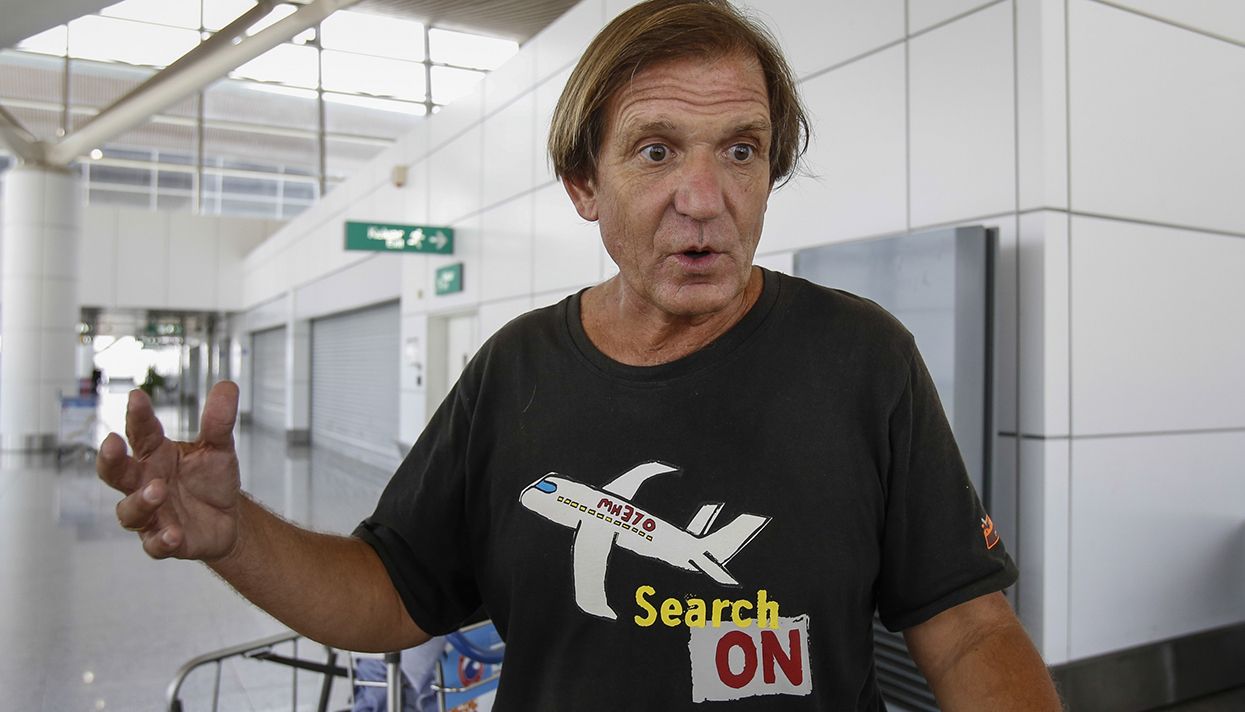
American lawyer Blain Alan Gibson alone did something that three states failed. Gibson discovered a piece of fiberglass, which was probably belonging to the Boeing-777 "Malaysian Airlines", which disappeared in March 2014. The New York Times tells how a Sittle lawyer from Seattle was able to find a fragment of the missing aircraft.
Boeing-777 Malaysian Airlines, flying the MH370 flight from Kuala Lumpur to Beijing, disappeared on March 8, 2014. Judging by the data from the satellites, the liner deviated from a given course and flew south for several hours until he fell into the Indian ocean. There were 239 people on board.
The authorities of Malaysia, China and Australia organized a large -scale special operation, during which almost 120 thousand square kilometers of the surface of the ocean were examined, but it was not possible to detect the binge fragments. The only fragment of the aircraft that was recognized as part of the missing Boeing-777 was found more than a year later on the island of Reyunon.
The second fragment of the aircraft was probably discovered by the 58-year-old lawyer from the USA Blain Alan Gibson.
Gibson loves to travel (he visited about 180 countries in his life), but prefers that in addition to tourism, trips still have some goal. In the 1990s, he came to Russia in search of a Tungusky meteorite, participated in the excavations of Mayan civilization in Guatemala, and wanted in Ethiopia the ark of the covenant . According to the American, he decided to do the search for the missing Boeing because he "had free time and money."
In search of Boeing, Gibson visited Myanmar, in the Maldives and Reunion. After one Australian Oceanographer suggested that the course could include the fragments of the liner to Madagascar, Mauritius or Mozambique, the American went to the south of Africa.
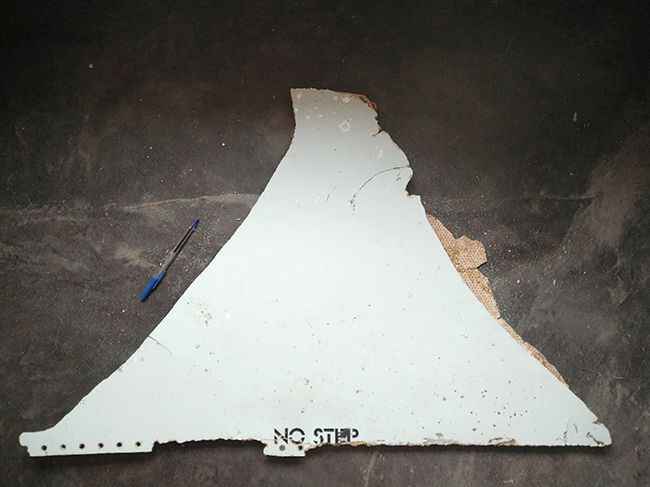
In Mozambique, Gibson visited the capital - the city of Maputo, after which he went to the coast. There he rented a boat, found a guide and went to explore the places where the fragments from the ocean ever nailed. On February 27, Gibson with a conductor sailed to a small desert island. When it came along and across it, they at first found nothing but ordinary garbage, but then the conductor found a triangular fragment of fiberglass and aluminum. It could be distinguished by the inscription "No step". According to NBC News, the fragment may be part of the horizontal tail stabilizer of the aircraft.
Gisbon took the find to Maputo and handed over to the local authorities. From there, the fragment was sent for examination to Australia. Transport officials from Malaysia and Australia have already announced that the fragment “with a high probability” belonged to the missing Boeing. Gibson himself is in no hurry with conclusions. “I prefer not to build hypotheses, but to look for evidence,” he told The New York Times.
“I will intrigue riddles and secrets, and I also want to help people who in two years have learned almost nothing about their missing relatives,” said Gibson. “So I decided to go a couple of places to find out what could happen” (English).