
Translated material
What time do we get back
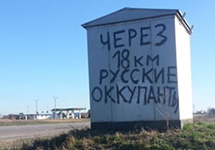
On February 25, the journalist of Ukrainian Pravda, Crimean Anastasia Ringis was detained by the border service of the Russian Federation on the border with the annexed Crimea. Nastya was traveling to a sick father, but, as it turned out, she was prohibited by the Federal Security Service of the Russian Federation. The basis for the ban on the entrance is clause 1 of Art. 27 of the Law "On the procedure for departure and departure from the Russian Federation." The rise is prohibited until 01.09.2020.
"Yes, I called annexation annexation many times, yes, I am familiar with Lenur Islyamov and Medzhlis members, but no matter what opinion I express, my position cannot be the basis for refusing to enter the Crimea," Ringis comments. "The Russian Federation committed two crimes against me: in February-March 2014, when I began Annexya, and February 25, and February 25 2016, when I did not let home. "
The next day, February 26, four more Crimean activists were not allowed into the Crimea. Many Ukrainians who left Crimea do not even risk driving home, afraid to be detained on the border or already on the peninsula itself.
There are no exact data on the number of Crimeans who left the peninsula after the annexation. According to the UN UNKB, there are about 40 thousand. But, according to human rights activists, in fact, forced immigrants from Crimea are much larger. Not everyone began to register in Ukrainian social protection authorities. Someone does not need state assistance, someone else hopes to return home soon.
For tens of thousands of people, the annexation of Crimea became a personal drama. The houses left houses, torn families, problems with arrangement in a new place ... For two years, Ukrainian society and the state have been trying to cope with the problem of the so -called internally displaced persons. But if most immigrants from Donbass fled from hostilities in their cities and villages, then migrants from Crimea, as a rule, are “ideological” and “political”: activists, journalists, human rights activists, entrepreneurs, teachers of the Ukrainian language and literature, patriotic Ukrainians and Crimean Tatars. Here, in mainland Ukraine, they continue active activity with the aim of de -Ukrainian discovery.
The “facets” gathered several stories of Crimeans about how they left home and how they were going to return there.
Olga Skripnik, human rights activist:
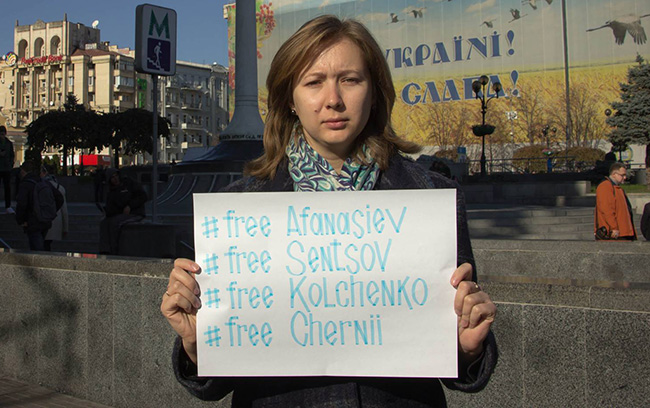
- We left March 16 (2014. - Ed.). My husband, having experience in the Caucasus, said that this will be the safest day. The appearance of a transparent referendum was created, and we understood that open crimes would not be committed. Why had to leave? There were concrete threats from Crimean self -defense and from those who stood behind them. The fact is that in Yalta we belonged to the active part of citizens, engaged in human rights activities. Since February 25, I began to collect data on the presence of the Russian military in the Crimea. They were based on the sanatorium of the Ministry of Defense of the Russian Federation. Two cars with the Russian military drove into the so -called KFF club in Yalta. I immediately ran there, began to fix, record numbers, collect the facts of a military presence. We also recorded the presence of "night wolves" - this is a Russian biker club, which took part in the acceleration of pro -Ukrainian rallies.
We organized rallies in support of Ukraine, visited the Ukrainian military units, supported Ukrainian soldiers and there often met with Crimean self -defense. At first, they did not pay attention to these threats, but on March 9 Anatoly Kovalsky and Andrei Shchekin were stolen, with whom we had already been familiar by that time. We were made to understand that after the referendum there will be a cleansing of the main activists and leaders in the cities. It was very difficult to leave, I resisted to the last. It hurts and humiliating when in two hours you need to collect everything you have time, throw it in the car and run from your own house.
The most difficult was the entrance to Jongar. We already knew that there many activists were held captive, that there is not only Crimean self -defense, but also the so -called Crimean army (after it turns out that it was led by Girkin). It was scary. Scary for his life, for her husband, for the family who remained in Yalta. We understood that we could not go to Chonggar, we knew that I was already on the lists. All hope was on the Russian’s Russian passport, he conducted all negotiations. As a result, after some time we were missed and we went to the mainland of Ukraine.
We did not know where to go. Our whole life remained in Yalta. We could not go to Russia either, since my husband has a long history of the struggle against the Putin regime. We went nowhere. Thank God, we had a car where we could spend the night. It was my birthday, and we all spent it on the road. But the most difficult thing was to transfer on this day - this is a picture in memory: the face of the mother who escorted us. I can never forget and forgive the pain that my mother experiences and continues to experience.
We got to Kyiv. Then there was still no special excitement, no one understood what was happening in the Crimea. We performed on the Maidan, talked about how the pseudo -referendum took place. So our activity spun. We began to engage in legislative activities, more precisely, to influence it. The process of adopting the law on the temporarily occupied territory began. His first edition was terrible - the concept of collaborationism was introduced there. We understood that this would lead to unreasonable persecution of Crimeans. We have achieved participation in the work of the Verkhovna Rada Committee.
In Kyiv, we continued to engage in the same human rights activities as in Crimea. Documentation of facts of military presence has increased into documenting violations of human rights. Previously, we did this as part of the Crimean field mission on human rights. After the Crimean field mission in Russia was included in the stop list, our team continued this activity under the name of the Crimean Human Rights Group. In our team, mostly Crimeans: activists, journalists, human rights activists, as well as people who remain to live in Crimea and help us collect information. If possible, we try to help people who are in trouble, sometimes we cooperate with Russian lawyers, because this is the only way to get to the prisoner.
But we have a second important area - this is working with our own state, with Ukraine. It is clear that Ukraine suffered from aggression that part of its territory is occupied, but this does not give the state the right to decisions that unreasonably limit human rights. Therefore, we are engaged in the control of the Cabinet and the Ukrainian Parliament in the field of decision -making on Crimea. And we already have some results.
Nevertheless, the main direction of our work is the documentation of violations of human rights precisely in connection with the Russian presence. And this is our way to return home. This is our evidence that Russia's actions pose a real threat to the civilian population.
Andrey Shchekin, coordinator of the Euromaidan-Crimea movement:
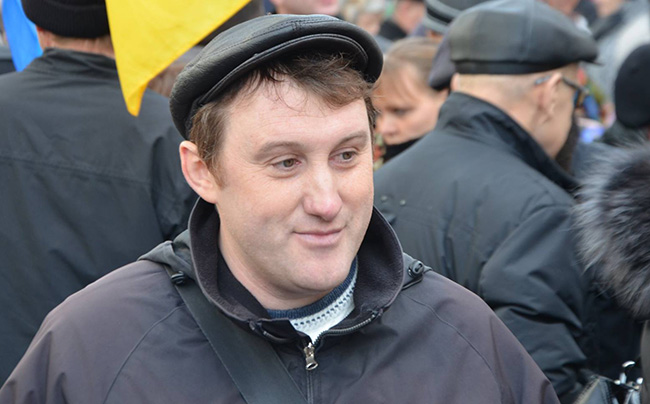
- Personally, I do not attribute myself to the forced immigrants, since I was deported by force from the peninsula after 11 days of staying in captivity. At that time, I understood that this was the beginning of the war, and therefore I put my family on a train and sent to the mainland. We ourselves - activists of the Euromaidan -Crimea movement - began the organization of the population, from March 1, 2014 they held daily actions in Simferopol and other cities of Crimea against the occupation of the peninsula by the Russian Federation. This was the beginning of civil resistance. After the invaders captured Anatoly Kovalsky and me, the shares practically stopped, many began to leave the peninsula.
Today, here, in Kyiv, we created the coordination council of organizations of forced immigrants from the Crimea in order to coordinate our actions to de -enable the peninsula. We carry out many shares, replicate information on Crimea, work in the field of education for children in the occupied territory. Constantly in motion, in the search for those necessary solutions that will bring the return of Crimea to Ukraine. And this day will come. We believe ...
Elena Lysenko, journalist:
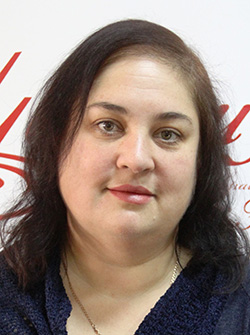
- I do not have enough the sea that I saw every day. I do not have enough wind and air soaked in air. And the eye is crowded, because I do not see the distant horizon of the strait and the Crimean steppe.
It is necessary to leave the house and conquer large cities in their youth. The older you become, the more difficult it is to get used to a new job, a new home and a new environment.
The first thought that I would have to leave Crimea came when I saw two years ago that I wanted to burn our family car in the garage. Immediately frightened for the child - he himself went to school and back. I thought that God forbid something would happen to him. Just a few days later, when I shot the capture of the Kerch crossing, the Russian military set me a mummers with whips. 300 meters that had to be run to the car seemed kilometers. Children's fears returned. After the films about the war, I often had a dream: I am running with young children, hiding in the cellars from the Nazis who capture Kerch. Now everything is repeated.
The last drop is when I saw how the inhabitants of my city at the Parade on May 9 run out on the road and applaud tanks. They rejoiced at the weapon of death - their own or a stranger, what's the difference? I definitely decided that I would leave. And not only for the sake of himself, but also for the sake of his son, so that Russian propaganda does not make him zombies.
After the events of two years ago, I worked in Crimea for almost two years, but every two to three months, and sometimes more often I had trips to mainland Ukraine. I got involved in human rights activities: after all, many human rights activists and journalists left immediately, so I had to do everyone at the same time - to shoot, write, help people. Work helped not to go crazy and remaining myself.
In Kyiv, I recently. I have a worthy job, I rent housing, there are reliable friends - both among Crimean migrants and among Kiev. The son goes to school and plays sports. And Kievans are responsive, sincere people who are ready to help and suggest. Sometimes it seems to me that I am in Kyiv on a long business trip and soon I will be at home again.
There is no day for me to not think about my native Crimean house. After all, there are also people. Yes, many of them are mistaken, but do not condemn them - it is almost impossible to resist the Russian propaganda of an unprepared person. Crimeans are the victims of the war, this is how they should be treated.
I think all the time: what's next? Where will the Crimea be and where are we? How will we live and be able to return the world to our house? Now there are more questions than answers. In order to answer these questions, you first need to understand us all why it happened. The fate of Crimea now depends on both Ukrainian and Russian societies. So my fate is too. Because I want to return home.
There, in Crimea, I have a lot of friends and like -minded people. And for the sake of them and for me, we must save Crimea.
Zakir Zakirov, freelancer:
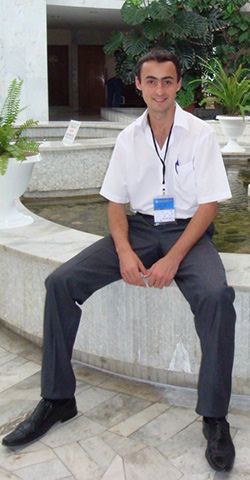
- I left Crimea out of ideological reasons. It was impossible to be there from a moral point of view. The decision was not easy. It was difficult for me, like the Crimean Tatar, to leave my native peninsula. My old people spent half his life just in order to return to the Crimea. Relatives are the only thing that held me there. Do you know how you feel the feeling when you are in the current Crimea, when you have to walk along the same streets with quilted jackets and other Crimeanists? Suffocation. It seems that you are shouting. Living on your own land, but in such conditions it is impossible. I can come to the Crimea to see relatives, but I can’t spend more than two to three days there. There is simply no desire to plunge into this endless insanity again.
They rawed out of their own lies there, having lost the human appearance. It is disgusting to observe their duplicity and hypocrisy. In social networks, they glorify Russia, and under the pillows they carefully store Ukrainian documents, dangle to the mainland Ukraine for visas, make purchases here, send children to teach children, but at the same time they hate everything Ukrainian. After the "referendum" they became even angrier. Do you know why? Banal fear. They hoped that such a country would no longer be. They believed in the tales of the Kremlin TV, it seemed to them that "Ukraine would fall apart." There is no such country, there is no criminal code - there is no problem. Now they were overtaken by bitter disappointment. The situation there is extremely nervous. Yes, this is my homeland, but it was turned into a huge psychiatric hospital. The normal person has nothing to do there.
Material Ukraine met me perfectly. Here is my country, here everything that I am used to. I will never forget the day when I crossed the so -called administrative border with things. For the first time in so much time I swallowed free air, and even in a sense felt like the hero of the film "Dzhango freed." Thank God I was not in slavery, but from the spring of 2014 to the summer of 2015 I felt, to put it mildly, not at ease. After Crimea, I once again became convinced that Ukraine is a free country for free people. Of course, it is not easy with work, but I do not complain about fate.