
Translated material
What Russia has achieved in Syria. Short
The main results of five and a half months of bombing
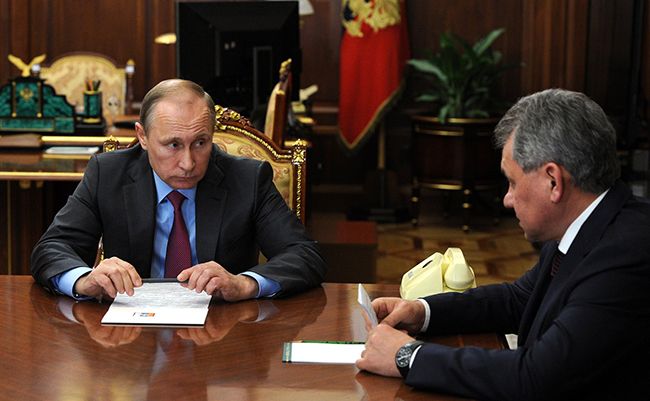
Russian President Vladimir Putin announced the withdrawal of troops from Syria. Thus, the operation, which lasted from September 30, is almost completed. "Medusa" tells what Russia's interference led to the Civil War in Syria.
Bashar Assad remained in power. Moreover, his troops, with the support of Russian aviation and assistance from Iran, managed to strengthen their positions on the fronts. The main success of government forces is that they almost managed to surround Aleppo-once the largest city in Syria, part of which was under the control of the rebels. As a result of the siege, the city was on the verge of a humanitarian catastrophe (the UN warned about the threat of hunger for 300 thousand people). In an interview with El Pais, Assad said that he was ready to amnesty the opponents who had developed weapons.
The West had to negotiate with Russia. After the introduction of sanctions against Russia, the participation of Moscow in international political life turned out to be minimal. The operation in Syria led to the fact that Russia again began to play an important role in the world arena. Without her participation, the peaceful settlement of the conflict in Syria became impossible - despite the fact that Western countries categorically opposed Russian military intervention. The main condition of the United States and its allies is the immediate resignation of Bashar al -Assad from the post of President of Syria - during the participation of Russia in the operation in Syria, it is much softened: now we are talking about a certain transition period, and the immediate removal of Assad from power no longer require diplomats. It was Russia, along with the United States, have agreed on a truce, which was announced on February 27. Negotiations on the conditions of the ceasefire, Foreign Minister Sergei Lavrov and US Secretary of State John Kerry.
The Islamic State passed from an attack to defense, but not destroyed. According to the results of 2015, the Islamic State (prohibited in Russia as a terrorist organization) lost part of the territories in Syria (you can see the map here ). Nevertheless, a significant part of Syria and Iraq remains under the control of terrorists, IS continues to carry out terrorist operations abroad. In addition, it is not clear what the merit of Russian troops in the fight against IGs is attributed to a decisive role as a Western coalition and Russia.
Victims among the civilians. Russia has been repeatedly accused of bombing not only terrorists. American officials and observers pointed out that Russian planes were striking the rebels fighting against the army of Bashar al -Assad, and part of the bombing falls on civilians. According to observers from the Syrian Observator for Human Rights, the London organization, as a result of Russian bombing from September 30, 2015 to March 1, 2016, about 1,700 civilians were killed. Also, Russia was accused of intentional airstrikes in hospitals. The Ministry of Defense of the Russian Federation information about the death of civilians and the attacks on the hospitals invariably refuted.
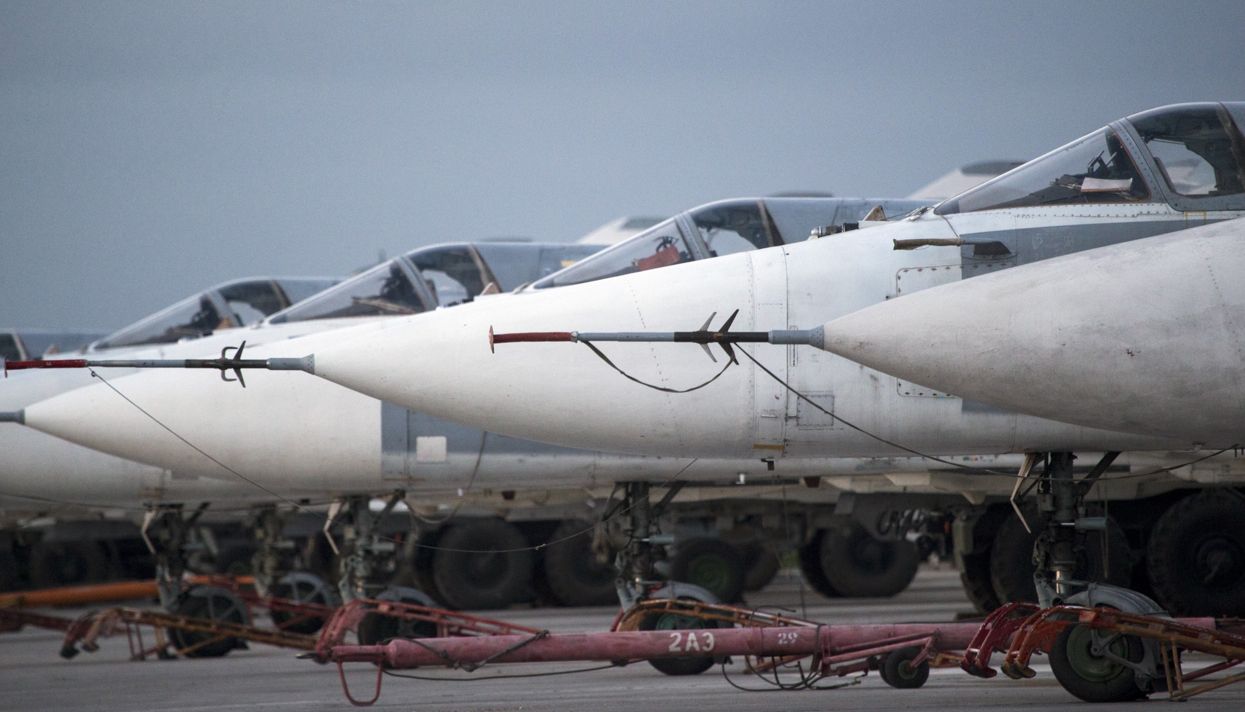
Russia has entered into a protracted conflict with Turkey . Its reason was the attack of Turkish fighters on the Russian Su-24, which allegedly violated the country's air border (this is a version of the Turkish authorities; Russia refutes it). Vladimir Putin called the attack on the bomber "a blow that the accomplices of terrorists inflicted on the back." Russia imposed food sanctions against Turkey, and also canceled a visa -free regime, banned organized tourism into this country and froze large economic projects. Turkish businessmen and students in Russia began to complain about oppression by authorities. In Russian propaganda, Türkiye took the place of Ukraine: television channels created the image of an enemy cooperating with terrorists who are opposed by Russia.
Victims among Russian troops could not be avoided. About a month after the start of the bombing, it became known about the death of the 19-year-old contractor Vadim Kostenko. According to the official version, he committed suicide because of a break with a girl. The Kostenko family refused to believe in the version of his suicide. On November 24, Oleg Peshkov, a pilot of the Su-24 bomber, shot down by Turkish fighters, died in Syria. Peshkov was killed when he was parachute - they opened fire from the ground on it. The Su-24 navigator Konstantin Murakhin was saved, but the Marine Corcodier Alexander Pozinich died during the rescue operation. On February 3, the Ministry of Defense of the Russian Federation reported the death of a Russian military adviser in Syria who fell under a mortar shelling. According to the official version, he did not participate in the hostilities, but was engaged in the training of the Syrian military who receive Russian military equipment. The name of the deceased Ministry of Defense did not name.
The latest weapons are tested. Despite the fact that Vladimir Putin denied that one of the goals of the operation in Syria is to test new weapons, the Ministry of Defense took advantage of this. The blows on targets in Syria struck not only planes, but also ships, as well as the Rostov-on-Don submarine, launched missiles from the Mediterranean Sea. In addition, for the first time in history, Russia used X-101 cruise missiles and other latest weapons. As RBC wrote before the launch of the X-101, Russia spent at least two and a half million dollars per day on surgery in Syria. If we consider the calculations of RBC correct (the publication itself notes that they are approximate), it turns out that by March 14, $ 415 million were spent.