
Translated material
The discoverer of special folders
What historians say about the resignation of the head of the state head Sergey Mironenko
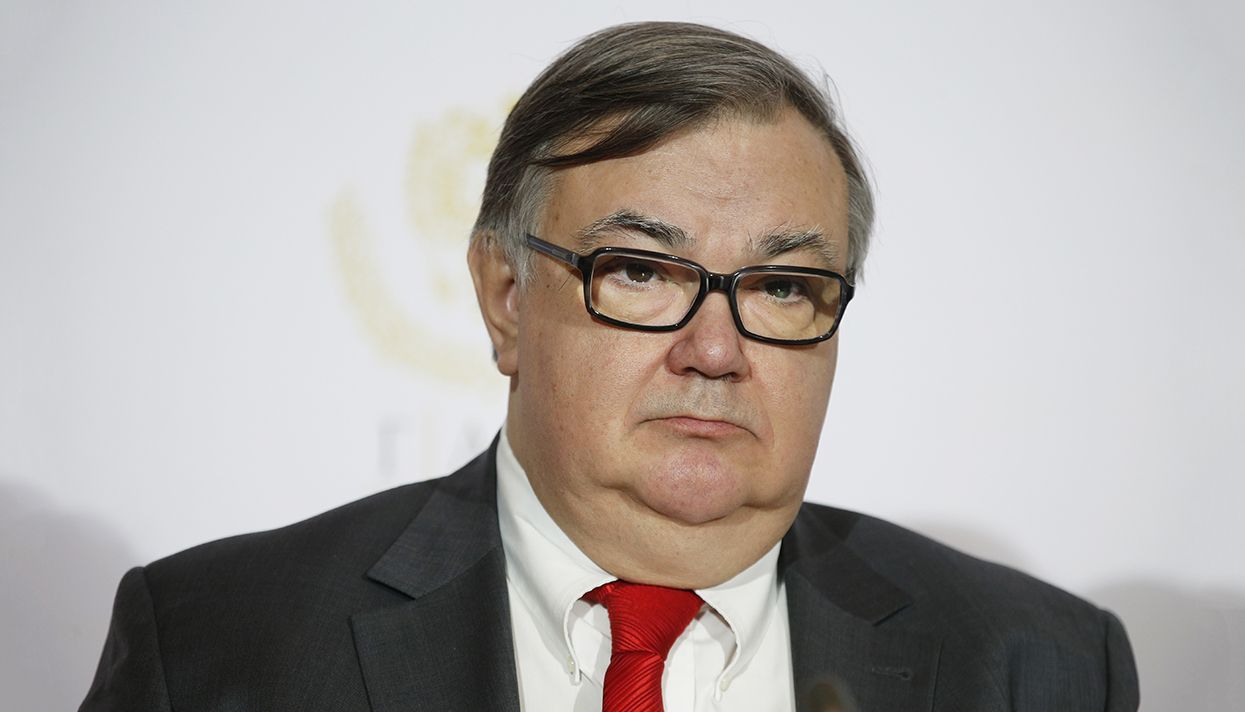
On March 16, it became known that Sergei Mironenko left the post of director of the State Archive of the Russian Federation, which he occupied for almost 25 years. Mironenkowill remain the supervisor of Garf, but his deputy Larisa Rogovaya will now lead the archive. Mironenko claims that he left on his own initiative, but it is known that in July 2015 he had a conflict with the Minister of Culture Vladimir Medinsky: the head of the archive published the materials that were not liked by the “Panfilov Heroes” is a propaganda myth. Medusa talked with historians Andrei Zubov , Nikita Okhotin , Nikita Sokolov , Elena Syanova , Arseny Roginsky and Oleg Khlevnyuk , who worked in Garf, why, in their opinion, Mironenko managed to create one of the best archives of the country.
The State Archive of the Russian Federation is the largest federal archive of Russia, which contains about seven million cases with documents on the history of the country of the XIX-XXI centuries. It is equipped with documents of the highest bodies of state power and the Department of Russia. The archive appeared in 1992 and was formed on the basis of the Central State Archive of the October Revolution, the highest bodies of state power and government bodies of the USSR and the Central State Archive of the RSFSR.
Garf does not close access to unequal documents
From the point of view of access to the documents, Garf is one of the best, if not the best archive in Russia. Sergei Mironenko always sought to make as many archives as possible, promoted legislative measures in this area. The specificity of the Russian archival system is such that the document does not have to be secret so that it is difficult to get in other archives, but there are no such problems in Garf. Mironenko has always been an opponent of artificial bureaucratic obstacles between documents and the reader.
Garf actively publishes archival materials
Gosarchiv published a huge number of documents: thanks to Mironenko and his employees , many important publications have been published. Among them are the so -called “special folders”, a seven -volume on the history of the Gulag, the diaries of Nicholas II, a three -volume of documents about General Vlasov, materials about the dissenting times of Khrushchev and Brezhnev and much more. Many of these publications are available on the Garf website. In addition, Garf always easily provided his documents for publication when publishing collections from different archives.
Garf publishes materials not only on paper, but also on the Internet
A huge number of GARF materials are available on the network - in particular, on the history of the Great Patriotic War. On the site, for example, you can find an electronic archive of the Soviet military administration in Germany (SWAG). Among other things, Garf published on the website “ Certificate-Competition of the Main Military Prosecutor N. Afanasyev“ On 28 Panfilovtsy ” -a document that showed that the legend of heroic fighters was nothing more than falsification. After Sergey Mironenko publicly called the history of Panfilov by myth, he was criticized by Minister of Culture Vladimir Medinsky. He stated that the head of the archive "should not give assessments of archival documents." According to historian Andrei Zubov, Mironenko in this conflict occupied a "reasonable, noble position - to defend historical truth and fight myth -making."
It’s more convenient to work in Garfe than in most other archives of Russia
Garf is one of the best archives of Russia for the work of researchers. Garf has very good electronic resources; Access to the scientific and reference apparatus on the Internet allows you to prepare for work in the archive without sitting too much time on the inventories in the reading room.
Garfe respects visitors
Garf has always distinguished from many other Russian archives atmosphere of openness and a benevolent attitude to the reader. In other archives, the attitude in the spirit of “all our documents is often found, and you must still ask them properly”, but not in Garf. The same applies to work with historians: the researchers found a warm welcome and all support in this archive.
In Garf, they strive to popularize science
The constant concern of Sergei Mironenko is the popularization of historical knowledge, in particular, documentary exhibitions that were arranged in the exhibition hall of the federal archives (on Big Pirogovka) and at other sites in many museums of Russia and Europe. In particular, the constant partners of Garf were the Hermitage, GIM, the Museum of Modern History of Russia, the Museum in Pavlovsk and others. There were television programs, documentary and feature films, materials to which Garf provided. In particular, Sergei Mironenko himself repeatedly performed on TV-in the late 1990-2000 he even had his own programs-informative, interesting, sober and without conspiracy cranberries.