
Translated material
Tired of playing, it's time to earn money
Why is Google getting rid of Boston Dynamics: Mashable
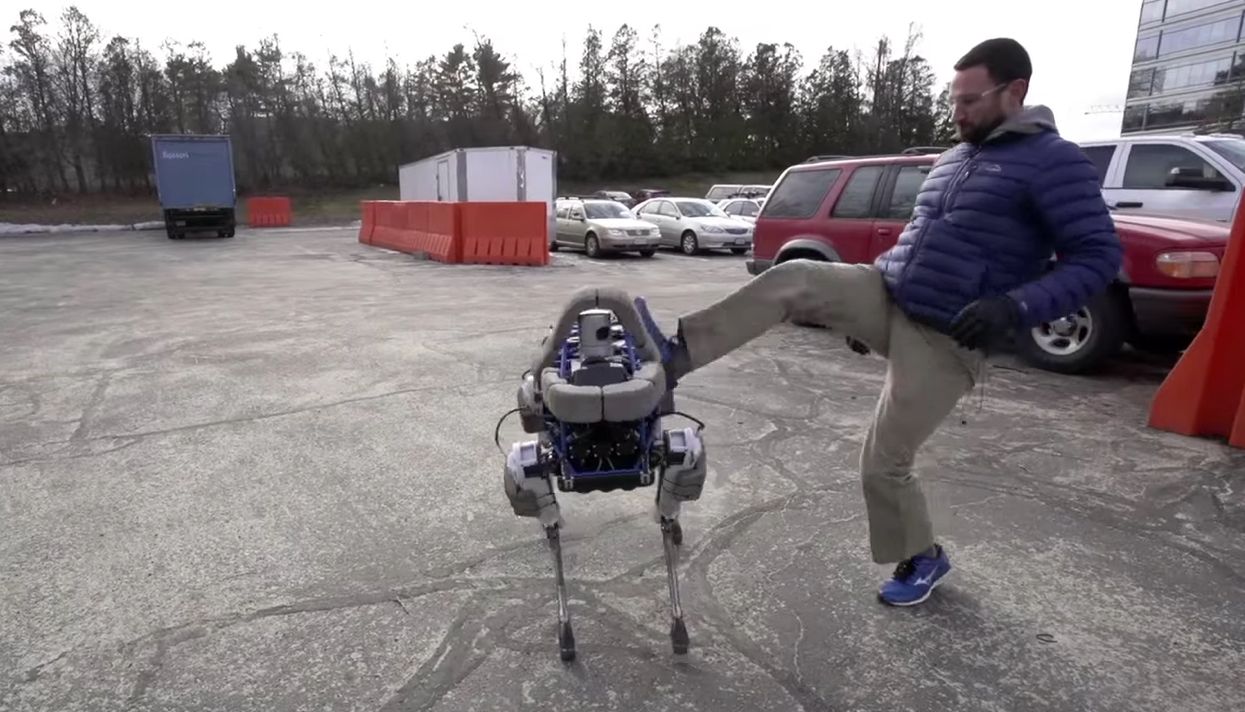
In 2015, Alphabet holding appeared on the basis of Google. The restructuring of one of the most expensive companies in the world was explained, in particular, the desire to work on unusual, revolutionary things - and so that this does not interfere with Google itself, which became only an independent unit. On March 17, Bloomberg reported that Alphabet was about to sell the manufacturer of Boston Dynamics robots. The senior correspondent of Mashable Lance Ulanoff, who writes for two decades about technology, remained dissatisfied with the following solution: he considers this a blow to the entire field of robotics. "Medusa" publishes a retelling of his columns.
The news about the sale of Boston Dynamics appeared just a few weeks after the company managed to make people and journalists sympathize with the robots. To sympathize so that in Mashable, the material about the tests of the bicentenary robot went out under the heading: "The Kostan-Coste beats the Boston Dynamics robot."
The corporation has no relations with robots at all. A few years ago, Google bought a dozen companies engaged in robots. They all fell silent after the deal, and even Boston Dynamics after joining Google stopped publishing her frightening demonstration videos for some time.
Ulanoff recalls that for many years he unsuccessfully tried to squeeze her from Google with her robotics strategy. At the same time, from his point of view of the case with experiments in this area, the corporation went well: Boston Dynamics developed well and even participated in the Darpa Robotics Challenge competitions . The journalist believed that soon we would get a home robot like C3-PO.
After the purchase of all companies creating robots, Google and the former leader of the relevant unit Andy Rubin found out what the journalist himself knew “decades”: engineers love robots and experiments, but do not really know how to create final products or business solutions-and do not even seek to learn. They just wanted to do cool things.
Many people think that now the corporation will direct the remaining energy in the field of robotics to the cool projects within the Google X experimental unit. But Ulanoff believes that the plans of Google and its mother's company Alphabet in this area will only be associated with self -governing cars: “Obviously, Google puts on this direction because it has a clear strategy and a clear strategy and a clear strategy and a clear strategy and a clear strategy and A product that does not terrify people. ”
Alphabet is finally tired of experiments. She definitely ended with ultra -modern androids. This is a shame, and the lack of Google faith in the company, focusing on robotics, will most likely slow down the development of robots for a decade. Thank you for this, Google (English.).