
Translated material
Mantra for losers
Reasoning about the imminent decay of united Europe became one of the skates of Russian experts and politicians. Someone even calls a specific date-2022, calculating some magical “segments of life” according to analogies with the history of the USSR. All this would be funny ...
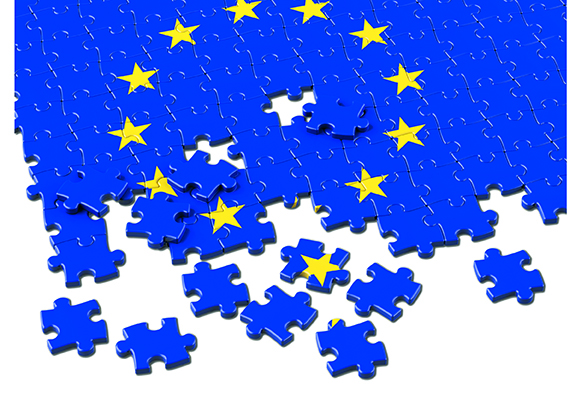
Will the EU break up? First of all, let's clarify what it should be understood as “decay”. Since the perverted Russian consciousness adequately perceives anything exclusively through the prism of comparison with the USSR, it is worth asking: if the prosperous Tajik SSR (which accounted for 1.87% of the population of the Soviet Union and 1.05% of its economy), would we perceive this episode as the collapse of the USSR? Most likely not.
Then why did the exit from the EU of Greece likely in 2011-2015 (with its 2.2% of the population of united Europe and 1.57% of the economy) was considered almost as a sentence to the European Union? And what is terrible to happen to Europe if it is left by the Slovakia, loved by Vladimir Putin (1.1% and 0.8%) or Hungary, respectively (2.0% and 1.35%), despite the fact that such events are possible. (By the way, the demonstrative exile of Greece from the EU in the recent past would also be very useful, especially in the light of the current crisis with migrants). Only this is not a breakdown.
Actually, the collapse of the European Union is a split between EEC founders, denunciation of agreements on the formation of European communities, the termination of the European Parliament and the European Commission, the abolition of the euro and the return of national currencies, not to mention the separation of a single humanitarian and economic space, is impossible. There are several reasons.
The first is economic
Created as an instrument of economic integration, designed to eliminate the very possibility of military conflicts in the Old World, the EU coped with this task. Today, the economies of 28 states that are part of the Union actually act as a whole: there are no customs borders between them, technical regulation and standards are unified, mutual guarantees of investments and almost a single labor market are operating. In the foreign trade in the EU for other countries of the Union, there are 62% of the turnover (for comparison: in the EAEU - less than 13%). Companies from the EU countries invested in the economy of each other more than є7.4 trillion. On average, European companies from more than 1000 employees receive about a third of their income of their EU market operations, but outside their countries.
Of course, one cannot fail to mention the euro - the most common currency in the world and the most popular currency for nomination in it corporate bonds, the most common today in cash circulation. His introduction at the turn of the century caused a sharp acceleration of economic growth in southern Europe and, although it led to subsequent shocks in financial markets, is evaluated by European business as an obviously positive phenomenon.
A possible exit of a country from the euro zone will cost it 2–5% of GDP due to the revision of credit ratings and difficulties in attracting capital. The sharp failure of the euro course, respectively, will reduce the welfare and purchasing power of all Europeans. The revival of borders and currencies will affect the number of tourists (now 470 million people a year) and will cause a crisis in the transport sector (3.7 thousand flights a day between cities in the EU countries). A single agricultural policy will collapse; The new EU countries and poor regions within old countries will cease to receive pan -European subventions.
The task of professional liars in Russia is to convince the audience that somewhere things are going worse than ours, or to justify the former failures: the Soviet Union has broken up, which means that the European will also fall apart
Perhaps the only beneficiaries will be financiers who can charge commissions for the conversion of currencies and transfers between countries - everyone else will be in the red. That is why, although the right of each EU member to withdraw from the Union was enshrined from January 1, 2009, Art. The 50 consolidated version of the agreement on the European Union, no one has yet used it (with the exception of the islands of Saint-Martin and Saint-Barteli, who separated in 2007 from the Guideloud as the overseas department of France, but then accepted the status of the overseas territory associated with the EU). Even Greece, who considered itself financially deceived and economically offended, did not go to it.
The second is legal and organizational
In almost 60 years that have passed since the signing of the Roman Treaty, the European Union has become, in fact, a quasi -state with its laws and norms, which often have extraterritorial application. The Code of Laws of the EU, known as Acquis Communautaire, is one of the widest and most detailed in the world. At the same time, almost all economic issues are attributed to the exclusive competence of the EU and withdrawn from the sphere of regulation of national governments. EU citizens have equal rights, including the right to vote and be elected in local (so far) elections in other EU countries. In the Union, a powerful cosmopolitan control class was formed that could withstand decay.
The rupture of the legal space in the case of the “collapse” of the EU is comparable to economic damage in its significance. It is enough to recall how quickly the investments came - and not only from other EU countries - to the new countries of Central Europe after their accession to the Union in order to understand: a single legal field is the main competitive advantage of the European Union. Its destruction can attract only politicians as Russian, who generally have a strange relationship with the right and count only in touch.
In any case, the restoration of national legal systems will become even a more difficult process than the preservation of economic ties.
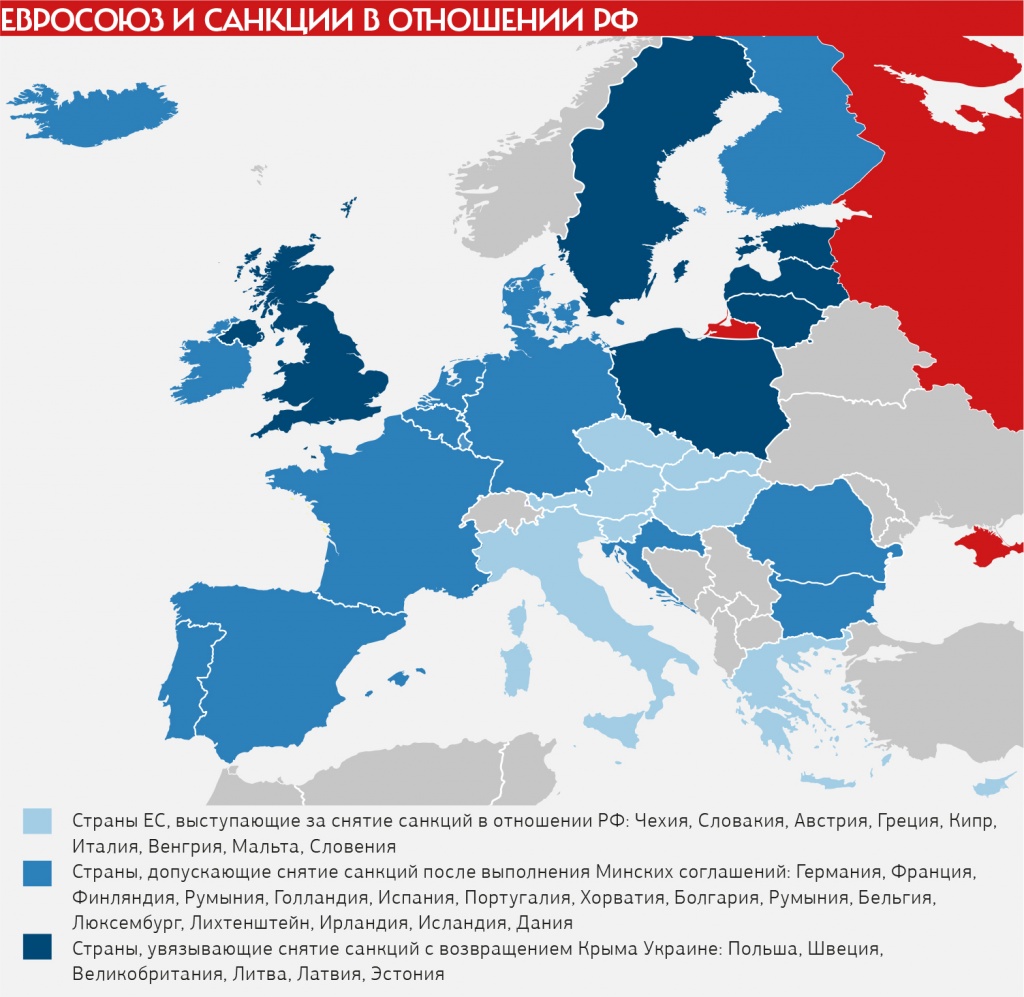

Source: foreign media
The third is humanitarian
The European Union, which canceled the borders and - in many ways - citizenship, provided an unprecedented “mixing of peoples” in Europe. Today, 65% of citizens of the EU countries are freely speak at least in one of the languages of other countries of the Union, and 18% for two or more. On average, up to 3% of EU citizens live in other countries of the Union-this is about 16 million people, which is more than the population of 20 out of 28 member countries. But more importantly, this is the appearance of mixed families: if in the early 1960s only 0.7% of marriages of the EEC countries concluded with citizens of other countries of the community, then in the late 1980s this figure reached 2%, and in the early 2010s-almost 6% (for comparison: interethnic marriages in the USSR at the beginning of the perestroika consisted of about 11%, and if one of the partners was excluded in which one of the partners was (a) was (a). Russian (oh), then less than 2%).
If the process continues with the same dynamics for another 20 years (and in fact its pace can even accelerate), we can talk about the prerequisites for the emergence of a single European nation, which will turn the European Union from the "United States of Europe" into a national state.
Migration, despite all the current fears, will not destroy the union (although it will not strengthen it). Today, more than 32 million people born outside the Union live in the EU, and their share in the total population of the largest member countries does not exceed 8–9% (in Moscow, which so lures the European migration crisis, the indicator is almost 2.5 times higher).
The main provocateur in the migration sphere - Turkey - is nothing off by Europe nothing more than ... Acceleration of negotiations about his own joining the EU (which Ankara would hardly have achieved if the split of Europe, attributed to almost its efforts, was a real prospect).
Qui Prodest?
Other arguments can be brought, but the main question remains very simple: who is beneficial for the breakdown of the European Union? The answer to him is obvious - to anyone. At the same time, Russia, which today looks like one of the most active spindles, will also not get benefits: the decline in the economy of the Blok, which is the main buyer of our raw materials, we need least of all. Why, then, are the moaning of the decay of Europe today so common?
Firstly, they are a significant part of the rhetoric, which professional liars address not very educated townsfolk (Russian case). In this situation, the task is to convince the audience that somewhere things are going worse than ours (even if we cannot create our integration association, but also not another tenant), or to justify the previous failures (the Soviet Union has broken up, it means that the European will also decay).
Secondly, the mantra about the “EU’s decay” is used by European ultra-right radicals that do not accept the European agenda and understand that the rules established at the European level (for example, intransigence regarding fascism and nationalism) make it difficult to achieve their political goals.
65% of citizens of the EU countries freely speak at least one of the languages of other countries of the Union, and 18% for two or more. More than 32 million were born outside the union, their share in the total population of the largest member countries does not exceed 8–9%-in Moscow, which so lures the European migration crisis, the indicator is almost 2.5 times higher
Thirdly, the slogans about the sunset and the death of Europe are distributed by status policies who are striving to grab voters and/or to get concessions from Brussels (as a rule, they want to maintain the rights granted by the EU, but to evade duties), David Cameron, who first advocated the exit of the EU, but after reaching the agreements with Brussels, began Neva from the Union in a referendum appointed by himself on June 23.
Finally, fourthly, such scenarios are often said by those who seek to simply draw attention to certain problems that, according to the speaker, are so serious that they can lead to fundamental changes in European structures, such personalities can be attributed, for example, to attribute George Soros with his recent statements that the EU, which was not able to cope with several crises at the same time, was “on the verge” on the verge “ decay ".
By the way, a considerable part of the rhetoric is perceived viability. For example, recently in Russia they have been talking a lot about the "decay of the Schengen zone." The reason for such conversations was the temporary restoration of border control between some EU countries. (This measure did not exclude the possibility of free movement of people with Schengen visas). To draw a conclusion about the “collapse of the European Union” from this fact is like predicting an imminent decay of Russia on the basis that when moving from one city to another, you need to draw up temporary registration, and when buying a train ticket to a certificate of personality. And in general, it is not for us, the Russians, with the regulation surrounding us, to sympathize with Europeans, who will sometimes be asked to show passports. It is not Russia with its “successes” in integrations (both in the Soviet and in modern Eurasian) to question European integration. And not Russia with its scale of illegal migration to express condolences to the Western neighbors.
And who will fall apart before - time will tell ...
Photo: Shutterstock.com