
Translated material
Martha's diary
The second number of “Disagreements” was completely devoted to institutional criticism and cultural policy. Having focused on major institutions and museums, the authors of the articles revealed the problems of the macro level: state programs, problems of national representation and the fate of museums in today's ideological climate. However, such a placement of accents seriously deforms the look at the institutions that I would like to defend. If, speaking of cultural policy, we will only represent the documents and directives of the Ministry of Culture, large personal exhibitions of Alexander Gerasimov, Serov or Korzhev, the restructuring of the Tretyakov Gallery , the imported blockbusters of the “garage” or the work of the Potanin Foundation, then many important features of the artistic system can slip away from us. There is a risk of deciding that the problems of cultural policy and ideology discussed only concern only museums and large art centers. My key thesis in this “Martha Diary” is that small institutions and small exhibitions are also carriers of a certain ideology, broadcast consciously or unaccountable. They are also trying to determine their own position in the Russian context.
The emphasis on the work of museums and large cultural centers leads to the consequences in reflective argumentation and the artistic strategy of all participants in the cultural process. If we decide that cultural policy proceeds from some centers and structures, whether it is a Ministry of Culture, museums, official media or television programs, then we imagine a cultural institution, in relation to which it is theoretically to take an external position: turn a blind eye to what is happening in museums, not to participate in large exhibitions and throw a TV out of the window. I conventionally call such a model of cultural institutions neoanarchist, because it implies the possibility of creating an extra -institutional alternative. This position is argued, for example, in the concepts of “absolute democracy” in the works of Michael Hardt and Antonio Negri. The anarchist ideal of “direct democracy” also implies work that is not inscribed in the contours of representation and falling out of all structures.
It is neoanarchist rhetoric that has been inspiring small platforms and initiatives for careful selection and worthy of events for several years (in which you can participate and which should be evaded). I call this strategy “retreat”, but it rests on a positive faith in the possibility of creating autonomous zones, more or less free from official ideology. For example, the situation of this year: the Krasny Center and the Electric Power Gallery in Moscow should decide how to respond to the proposal to participate in the Innovation Prize. The answer may be a direct refusal or a sabotage strategy from the inside, but in one way or another, neoanarchist logic maintains the idea of a radical difference between state policy and the art of self -organizational communities in the heads of participants.
Institution is not a building where it is necessary to come by 11 in the morning, but my language and a way of life in art.
The opposite view of institutions and ideology can be gleaned from the texts of the philosopher Shatal Moff. For her, the concept of “institution” has the broadest meaning, which implies the fundamental absence of a radically external external to the existing system of ties and social customs. From this point of view, the creation of an alternative world of autonomy seems to be nothing more than a myth that turn a blind eye to a real situation. “Fulling” actually deprives participants in the process of potential influence in the general arena of disagreement and isolates them. We have something like a voluntary abandonment of a cultural and political decision, which is presented by larger players-impressive museums and cultural centers, rich funds and the smartest “experts”. That is why it seems important to me to separate the discussion of cultural policy from binding to large monopolists of culture.
Accepting the strategy of “backing off”, the figures of the “Modern Art” field refuse to see agents of modernity in state functionaries, depriving them of the right to this very modernity, and modernity itself is exhibited as a protected autonomous zone. That is, it turns out that we have two parallel worlds: the world of progressive “contemporary art” and the world of “cultural reaction”, which cannot intersect in a single field of dialogue. But, in my opinion, this is a false epistemological attitude that does not allow to see the real vectors of political, economic, ideological forces. Today's fundamentalism or nationalism is in the same way the product (and quite logical) of neoliberal capitalism, as well as the field of contemporary art. In a wonderful interview with Alexander Bikbov A true understanding of the meaning of Medinsky is given, which cannot be reduced to voluntarist intervention in the progressive world. Medinsky is a very modern figure, and not from nowhere, an agent of normative values of the past. To designate these processes, the philosopher Nick Land uses the term “neo -reaction”. Neore action means the adaptation of traditionalism in the conditions of a neoliberal economy.
So, the strategy of “retreat” and the myth of “alternative zones” outside ideology with the accompanying neoanarchist argument are more likely to harm the world of art than offer ways to develop and exit real contradictions. Following the thought of Shantal Moff, I am interpreting cultural policy, ideology and institution as that which is always given in everyday life of people at completely different levels, from amateur performances at home to “Documents” in Kassel. This is the case when the total concept is “to face”. And if a person exists only through institutional mediation, then the question of non -intentional art is erroneous. Instead, we need to wonder how exactly we can influence the institutions, in what capacity we imagine our social relations. During my work in state institutions, the hallucination of possible liberation was constantly in front of me, but when I eventually left them, I realized that the institution is not a building where it was necessary to come by 11 in the morning, but my language and a way of life in art, the social custom that acts in me implicitly.
The exhibition was distributed by a flyer, indistinguishable from popular patriotic products.
What is such a point of view allows us to see us in an artistic situation? I believe that now we can take a fresh look at the balance of forces between large institutions, self-organizing communities (“Electrozavod”, Research Institute of Dar, the Krasny Center, etc.) and small exhibition sites (clusters of the former association “Exhibition Halls of Moscow”).
The first personal exhibition of Vitaly Bezpalov “Eleven” was held in the Krasny Center. It is important to emphasize its difference from most projects on self -organized platforms, which at least rhetorically separate themselves from the cultural highway of large museums and centers, trying to imagine themselves as an “alternative” artistic organization. Such a familiar strategy would be correctly called bohemian: it is Bohemia, unlike the avant -garde, that builds its identity on the logic of “retreat”, which leads it to the tautology of “art for art”. The bright bohemian feature of many exhibitions is the belief in the authors of art within places such as the “electric factory” and the Krasny Center. For example, in another March exhibition of the Krasny Center, Vitaly Barabanov puts out canvases, which sweeps and washes the floor at the opening of each exhibition of the center. This allows the “red” to insist on its own autonomy and maintain a gap with the political conjuncture: we make exhibitions on how we make exhibitions. The place is closed to itself and denies the connection with other sites and even more so with large museums and their program.
You can recall the mass of exhibitions on the “electric factory”, perpetuating this exhibition space, closing inside the place itself: in March, the personal exhibition of Leonid Larionov represented an acute reflection on the relationship between the “electric factory” - he recreated the nervous Gothic arch of the plant using the cheap building materials. This self -reference place is important for the self -awareness of the young artist, but at the same time represents the case in an almost apolitical way. “Red” about “red”. "Electrozavod" about the "Electrozavod".
Pavlensky is much closer to Enteo than it seems.
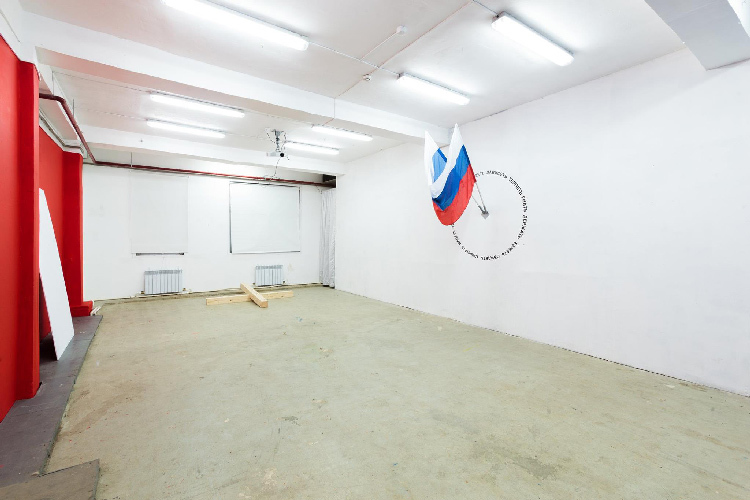
In this context, the exhibition of Vitaly Bezpalov “Eleven” looks completely different. The artist paints the walls of the center in the Russian tricolor and puts a state flag hanging in a closed loop on the walls. Around the flag loop, the verbs-exclusive of the Russian language are printed: "Hear, see, hate, drive, breathe, endure." All these verbs are amazingly built into the relationship of power, forcing your letter to stumble about them every time you write: the letter makes you stutter around significant exceptions. Bezpalov’s exhibition is very important not so much “within itself” as in relation to the entire institutional context of Moscow. Bezpalov shows that the Krasny Center in something is no different from, say, the arena with the odious exhibition “Romantic Realism”, because we are all immersed in the expanding of modern political speech on equal terms, we all find ourselves in it already at the level of the notorious verbs-exclusives. That is why he places a patriotic tricolor in the very center of supposedly alternative, supposedly a different space.
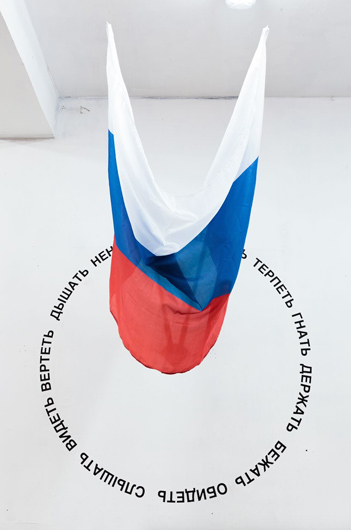 Vitaly Bezpalov. "Eleven"
The autonomy, so zealously defended by small institutions, is a myth designed to hide the kinship of small artistic parties and the main bastions of cultural policy: “garage”, the tender -eyed, mamm ... We should not have the illusions that neoliberal cultural policy flies “from above” with a queue of bills. In fact, it is supported and reproduced in small initiatives, even if they are deprived of a vivid “festival” corruption or wrecks of financial interests - and the “eleven” project was able to safely declare this. I especially attracts me in this project, as a phenomenon of neo -reaction can be realized as a language that seized modernity, not “from above”, but “from the inside”, in the most everyday life, for example, in the form of a conservative populism. A flyer, also with a tricolor, visually indistinguishable from popular patriotic products, spread at the exhibition. It is at such exhibitions that we can evaluate reactionary rhetoric as part of modernity, and not as a flashback from the Russian Empire of the 19th century or from Stalinism.
The “Factory” was held by the N - Teo exhibition , which I cannot skip in a conversation about neo -reaction and its languages. At the exhibition, a retrospective of the political activity of Enteo, a widely known obscurantist Orthodox activist, was presented - the opportunity to look at him “like an artist”. Personally, in this gesture I feel something outrageous. About the same way I felt when Matvey Krylov was preparing an exhibition about Bourn, offering to evaluate a radical political event in terms of neutral aesthetic criteria. The Enteo exhibition presents us with an excellent lesson in anti -Essentialism: no artistic means and strategies are “by nature” right or left, progressive or reactionary. In each case, it is necessary to pay attention to the tactical alignment of forces and the results achieved. The corporals of the 2010s (Pavlensky and, according to curators, Enteo) are a kind of maierists who bring the art formats of the 1990s to the absurd, but referring to them as a quote of powerful impact. In fact, Pavlensky is much closer to Enteo than it seems. They correlate with each other as pseudo -opticality of “progressive” liberalism and the highway of conservative liberalism.
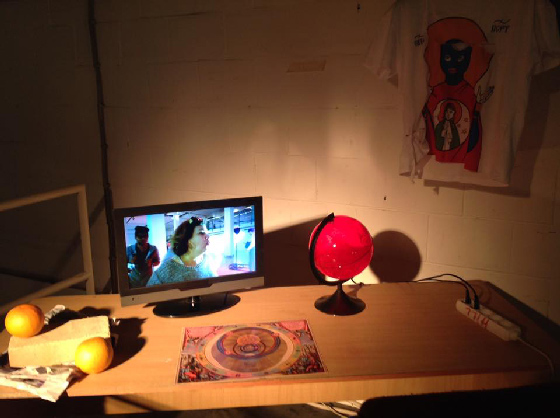 N-teo exhibition
The principality of Bezpalov’s exhibitions and Enteo is that they do not turn a blind eye to the official language of ideology and neo -reaction, but try to find a place where disagreement is possible in a common field. These exhibitions show that we are all affected by a single ideological continuum of our time and that ignoring this fact simply postpones a meeting with problematic challenges of reality. That the influence of the cultural and political climate can be comprehended not only in museums, but also on small sites. These two projects are opposed by a tendency alarming for me: a tendency to self -conference of small institutions and the revival of “art for art”, “exhibitions for exhibitions”. I will allow myself a bold, but subjective forecast. Neoanarchist autonomies will gain popularity, but that is why they will turn out to be far from a fundamental cultural and political contradiction, which will make their works and exhibitions momentary, ephemeral. Small institutions, of course, compensate for this momentary to the number of events, which is similar to a constantly renewable linging, constant self -examination before the public . (These problems were discussed in the last issue of “Disagreements” in terms of Welt and Umwelt , the “big” world of art and its subcultures. - Ed. )
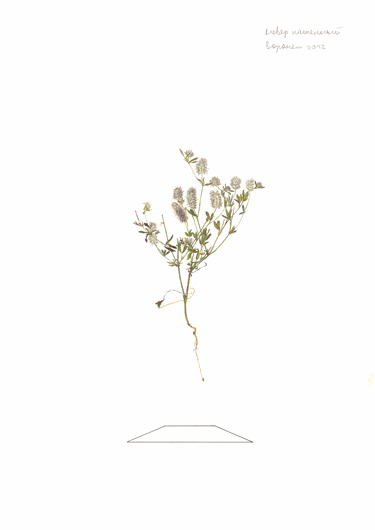 Ilya Dolgov. Sunny sucks. Series "Herbarium". 2013. Acryl, pencil, marker on paper. Assembly of the author
And - to finish on an optimistic note - an exhibition of Ilya Dolgov was opened in the Gallery of Peresvetov Lane as part of the “only paper” series . Circle of young naturalists - Dolgova, Ivan Novikov and Urban Fauna Lab is my beloved in Russian art. But to love some direction of art does not mean to realize it in an expanded institutional context or “understand” in a theoretical sense. There are many social issues around this art, but, unfortunately, they are still formulated quite flat and trite, whether it is a discussion of the significance of the parks, the popularity of picnics or the role of “nature” in entertainment initiatives. But in relation to Ilya’s art, it does not even make sense to talk about it. His method itself, his deep understanding of natural philosophy and direct, uncomplicated contemplation make a very pure and vivid impression. And, most importantly, I do not consider the approach of Ilya escapated and purely “romantic”: his graphics can tell about the possible public coexistence much more than any projects about “work and solidarity”.
Download the entire issue of the magazine "Disagreements" (No. 2) "Museums. Between censorship and efficiency ": PDF , MOBI , EPUB