
Translated material
Memory. Fedor Rostopchin
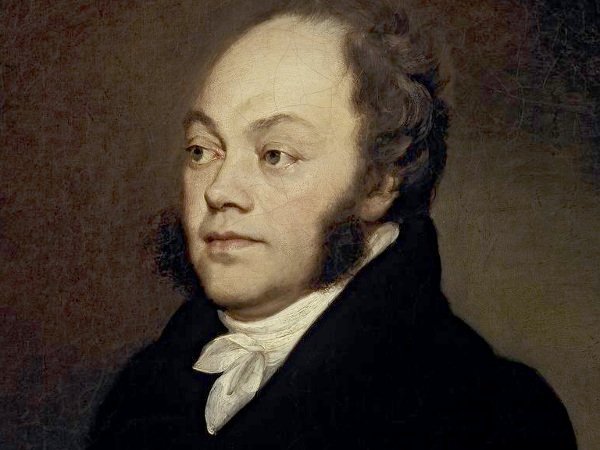
On March 23, 1763, Fedor Rostopchin, Governor-General of Moscow, was born.
Personal business
 Fedor Rostopchin
Fedor Vasilievich Rostopchin (1763–1826 ) was born in the village of Kosmodemyanskoye Oryol province in the family of the landowner of retired Major Vasily Fedorovich Rostopchin. Together with his younger brother, Peter received a home education.
At the age of ten or twelve years, he was enrolled in the service in the Preobrazhensky regiment. In 1782 he received the rank of ensign, in 1785 - the second lieutenant.
Two years - from 1786 to 1788 he spent in Europe. He visited Germany, England and Holland; He listened to lectures at the University of Leipzig. In London he was addicted to boxing, went to the fights of famous English boxers and even took lessons.
He returned to Russia by the beginning of the Russo-Turkish war. The first year of the war, Rostopchin was in the main apartment of the Russian troops in Friedrichsgam, participated in the assault on Ochakov, after which he served under the command of A.V. Suvorov; He participated in the battle of the Fokshany and the battle of the Rymnik.
After the end of the Turkish campaign, he participated in hostilities during the war with Sweden, during which he was under the Prince Nassau for diplomatic correspondence: since that time he was seen by Empress Catherine II, who "often deigned to have fun with his readers and honored his honor to participate in its selected society."
In 1790, the patron saint of Rostopchin in the army, Prince Victor Amadeus Angalt -Burnburg - a distant relative of Catherine II and the general of her army. Around the same time, his only brother died in a sea battle. And the military career of Rostopchin, who commanded the grenadier battalion, during the Swedish campaign, did not work out too well. Rostopchin decided to leave military service and break to the court.
As a protocolist, he took part in the Yas Peace Conference, at the end of which he was sent to St. Petersburg and in February 1792 was presented to the rank of chamber-junker “in the rank of foreman”.
Count Panin, embittered by Rostopchina, subsequently said that he played the role of Buffon at Catherine’s court; With the light hand of the empress, the nickname "Crazy Fedka" was attached to Rostopchin.
In 1793, he was seconded to the “small court” of the successor to the throne, Grand Duke Pavel Petrovich in Gatchina, in which he was almost irrevocably and whose location managed to conquer.
In February 1794, Rostopchin married Ekaterina Protasova, the niece of the chamber-plants of the Empress Anna Protasova. In the same year, the conflict with his colleagues from the encirclement of the Grand Duke led to the annual exile of Rostopchin to the birth estate, where his firstborn Sergei was born. This short opal even more placed Paul to him, which, in his own words, Rostopchin became necessary like air. In 1796, shortly before the death of Catherine II, he was awarded the Order of Anna of the III degree.
After the death of Catherine II, Emperor Paul I, after an accession to the throne in November 1796, appointed Rostopchin with an outbuilder. Over the next few days, he was already produced in the major general and awarded the Order of St. Anna of the 2nd, and then the 1st degree. Among the instructions given to him by the new emperor was a new, Prussian model, the editorial office of the military charter, in which he made a number of changes that reduced, in particular, the powers of the field marshals by strengthening the role of troops inspectors - also one of his new duties. In April next year, he received from Paul the Order of Alexander Nevsky and the estate in the Oryol province with more than 400 serf souls.
Rostopchin with varying success fought against the party of Empress Maria Fedorovna. In March 1798, he suffered a temporary defeat in this struggle - he was deprived of all posts and sent to his Voronovo estate near Moscow, but already returned to the capital with the rank of lieutenant general and headed the military department.
Over the next three years, he was made by the Cabinet Minister for Foreign Affairs, a valid secret adviser, the third present at the College of Foreign Affairs, the Count of the Russian Empire, the great chancellor of the Order of St. John of Jerusalem, director of the postal department, primary overwards in the College of Foreign Affairs and, finally, a member of the Council of the Emperor.
Another opponent with whom Rostopchin waged a consistent struggle were the Jesuits, in relation to which he spent several rigid laws through Paul.
Against his will, taking the place of the primary survey of the foreign collegium, Rostopchin contributed to the rapprochement of Russia with the republican France and the cooling of relations with the UK. His memorandum, confirmed by Paul on October 2, 1800, determined the foreign policy of Russia in Europe until the death of the emperor.
The alliance with France with the participation of Austria and Prussia, according to Rostopchin, was supposed to lead to the section of the Ottoman Empire, which he first called "hopeless patients." For the implementation of the sea embargo against the UK, Rostopchin was instructed to conclude a military alliance with Sweden and Prussia (later Denmark joined the Union). He also prepared the ground for the accession of Georgia to the Russian Empire.
As the chief director of the postal department, Rostopchin authorized the expansion of the network of postal stations in Russia; Under him, new fees were introduced from postal items and the transfer of money by mail abroad was established. Since March 14, 1800, Rostopchin entered the Council under the emperor.
In February 1801, Rostopchin was secondly settled from service and left for Moscow. It is assumed that this opal was the result of the activities of Count Palen, who at that time preparing a conspiracy against Paul, crowned by the murder of Paul in three weeks.
Under the new emperor Alexander I Rostopchin, known for Paul's personal devotion, for a long time could not continue the political career.
Only in 1809 did he attempt to return to the court, enlisting the support of Princess Dashkova and Grand Duchess Ekaterina Pavlovna, the sisters of Alexander I. He was allowed to appear before the emperor, after which he received an instruction for the revision of Moscow thrashing establishments.
A thorough report made a good impression, but Rostopchin’s request was not satisfied to return to active activity: on February 24, 1810, he received the rank of chief chamberlain, but he was ordered to be “on vacation”.
Only a brewing war with the French led to the vocation of Rostopchin, as one of the ideologists of the course of the "old Russians", especially influential in the old capital.
On May 24, 1812, Rostopchin was appointed military governor of Moscow, five days later he was promoted to infantry generals and appointed commander in chief of Moscow.
At a new post, he developed violent activity, including punitive, and even suspicions were enough for repressive measures. Under him, secret supervision of Moscow Masons and Martinists, whom he suspected of subversive activities, was established. In general, however, during the period of its management in Moscow, carefully guarded calm reigned.
After the publication of the manifesto on July 6, Rostopchin personally controlled the collection of the provincial militia, which was held not only in Moscow, but also in six neighboring provinces. From the emperor, he received only general instructions to strengthen Moscow and to evacuate state values from it if necessary.
In just 24 days, Rostopchin formed in the first district 12 regiments with a total number of almost 26 thousand militias.
Rostopchin received information about the promotion of the Napoleonic troops to the country through his representative at the headquarters of Barclay de Tolly since August 2. It is he who owns the idea of the release and distribution of printed leaflets, reports and propaganda proclamations written in simple folk language in Moscow. The Rostopchinsky leaflets were carried home and stuck on the walls like theatrical posters, for which they were nicknamed the “posters” - and remained in history under this name.
When the French came close to Moscow, Rostopchin began the evacuation of state property. In the last decade of August, only ten days were taken to Vologda, Kazan and Nizhny Novgorod the property of the courts, the Senate, the Military College, the archive of the Ministry of Foreign Affairs, the treasures of the Patriarchal Resta, the Trinity and Voskresensky monasteries, as well as the arms house. 96 guns were also taken out. However, the evacuation was started too late, and some of the values did not manage to take out. When wagons with the wounded began to come to Moscow, Rostopchin ordered to withdraw the barracks in the former Golovinsky Palace and form a staff of doctors and paramedics under the hospital. Kutuzov, who headed the Russian army, had hopes for the second wave of militia, the so -called Moscow squad, which Rostopchin was going to organize, but did not have time in connection with the mass flight of the population from the city. Rostopchin himself sent Kutuzov alarming letters, inquired about his plans for Moscow, but the answers received the evasive ones that continued even after the Borodino battle, when it became clear that he was not going to defend Moscow. After that, Rostopchin finally sent his family from Moscow.
On August 31, Rostopchin first met at a military council with Kutuzov.
Having received the official notice of the prepaid surrender of Moscow the next day from Kutuzov, Rostopchin continued the evacuation of the city: an order was given to leave the city of the police and the fire team and the export of the three miraculous icons of the Virgin, Iverskaya, Smolensk and Vladimir.
At five thousand, the supply of 25 thousand wounded in Moscow were evacuated. Nevertheless, the city remained from two (according to Rostopchin itself) to ten (according to French eyewitnesses) thousands of wounded, who were not able to take out. Many of them died in a Moscow fire, for which contemporaries and part of historians are inclined to lay responsibility on Rostopchin.
Before leaving, Rostopchin went to the inhabitants who had remained in Moscow who gathered in front of the porch of his house to hear from him personally whether Moscow would really be surrendered without a fight. On his orders, two prisoners were delivered to him: the merchant son of Vereshchagin, arrested for the distribution of Napoleonic proclamations, and the Frenchman Muton, who was already sentenced to beat with Batogami and exile in Siberia. Rostopchin accused the first of treason, announced that the Senate sentenced him to death and ordered the dragons to chop him with sabers. Then, wounded, but still living Vereshchagin, according to eyewitnesses, was thrown to pieces by the crowd. The Frenchman Rostopchin let go, ordered to go to his own and tell that the executed was the only traitor among Muscovites.
The Russian biographical dictionary suggests that with these actions he simultaneously fueled the hatred of Muscovites to the invaders and made it clear to the French what fate could wait for them in occupied by Moscow. Nevertheless, later Emperor Alexander, generally pleased with the actions of Rostopchin on the eve of the fall of Moscow, considered the bloody reprisal against Vereshchagin unnecessary: "It would be better to hang or shoot."
On September 2, 1812, units of the imperial army of Napoleon Bonaparte entered Moscow, left without a fight, Kutuzov. Remaining after the fall of Moscow under the army, Rostopchin continued to compose leaflets and personally traveled around the villages, oratory in front of the peasants and calling for a full -scale partisan war. Passing during the army’s movements of his estate Voronovo, he dismissed the serfs and burned his house with the horse factory.
Immediately after the French departure from Moscow, Rostopchin returned to a ruined city to establish police guard to prevent the plunder and destruction of a little surviving property. He also had to deal with the delivery of products and prevent epidemics in a burned city, for which emergency export and destruction of corpses of people and animals were organized. During the winter, more than 23,000 corpses and more than 90,000 human and horse corpses on the Borodino field were burned in Moscow alone. Work began on the restoration of the development of the city and, especially, the Kremlin, which the departing French tried to blow up.
On the proposal of Rostopchin in Moscow, a commission was created for the building, which allocated five million rubles. Earlier, two million rubles were allocated by the treasury to distribute benefits to the victims, but this amount was not enough, and the Moscow Commander -in -Chief became the object of charges and reproaches from the deprived. These complaints, as well as the opinion that he was the culprit of the Moscow fire, was outraged by Rostopchin, who seemed that his merits were unfairly forgotten and everyone remembered only failures.
He began health problems, expressed already in September 1812 in repeated fainting. He suffered from the spill of bile, became irritable, emaciated and hidden. Alexander I, returning from Europe, accepted the resignation of Rostopchin at the end of July 1814.
In May 1815, he left Russia with the aim of taking care of hemorrhoids in Karlsbad, but in the end he spent eight years abroad - until the end of 1823. During his stay abroad, he was awarded audiences from the kings of Prussia and England. Since 1817, Rostopchin donkey in Paris, leaving periodically in Baden for treatment, as well as to Italy and England.
Life abroad did not bring joy. The eldest son led a rampant life in Paris, even falling into a debt prison, and Rostopchin had to pay his debts. The wife, Ekaterina Petrovna, turned into Catholicism and turned her daughters to this faith, and the youngest daughter Elizabeth seriously fell ill. All these circumstances forced Rostopchin to return to his homeland.
Having sent his daughter to the rebuilt Voronovo, Rostopchin himself lied in Lemberg, where the next course of treatment was held, and returned to Moscow in September 1823. Upon his return, he filed a request for a complete resignation, satisfied in December. The Ober-Camerger was resigned.
On March 1, 1825, the daughter of Rostopchina, his favorite Elizabeth died in Moscow from consumption. This grief finally undermined the health of his father: in addition to hemorrhoids and spilling, his goner developed asthma. On December 26, paralysis broke it; He almost lost the ability to move and could not speak, although he remained in full consciousness. He lived for almost a month, compiling a new will, in which he deprived his wife in favor of younger children and his son.
Fedor Rostopchin died in Moscow on January 18, 1826. He was buried in Pyatnitsky cemetery.
What is famous
Fedor Rostopchin is a famous Russian statesman, favorite of Emperor Paul and the head of his foreign policy, and later the Moscow mayor and governor general of Moscow during the Napoleonic invasion.
It is Rostopchin who is considered the organizer of the Moscow fire in 1812. Presumably, during his first meeting with Kutuzov, he invited him a plan to burn Moscow instead of handing it to the enemy. He repeated the same idea to Prince Eugene Württemberg and General Ermolov.
On the very first night after the capture of Moscow, Napoleon troops in the city began fires, by the third day that covered him with a continuous ring. At first, the French were inclined to blame their own looters in this, but after several Russian arsonists were caught, and it was also found that all fire extinguishing means were taken out of Moscow, the opinion of the French command changed.
Napoleon, realizing that the first of the burning of Moscow would be accused of him, in his proclamations made sure to take away suspicions, accusing Rostopchin of arson, whom he called a heroostrate, in a in a in a in a in a in a in a in a in a in a in a in a in a in a in a in a in a in a in a in a in a in a in a in a in a in a in a in a in a in a in a in a in a hen By September 12, the commission appointed by him prepared a conclusion that found guilty of arson by the Russian government and personally Moscow Commander -in -Chief. This version gained popularity both abroad and in Russia, although Rostopchin himself at first publicly denied his involvement in arson, including in letters to Emperor Alexander and his own wife. In the future, he, however, stopped denying it, although he did not confirm, since this point of view surrounded him with a halo of the hero and martyr. Only in the essay “Pravda of the Moscow Fire” in Paris, he again categorically rejected the version connecting his name with this event.
What you need to know about
Fedor Rostopchin is also known as a writer and publicist of a patriotic sense who, following Fonvizin, ridiculed Gallomania.
In addition to the already mentioned posters, he owns a number of literary works, many of which were written during disgrace and forced inaction after the death of Paul I. At the same time, Rostopchin did not consider himself a professional writer and composed between it. It is known that living in his estate Voronovo in Moscow, he wrote a large number of satirical comedies, which he personally destroyed after reading close friends in the circle.
As a publicist, he acquired loud fame thanks to the success of his pamphlet “Thoughts aloud on the Red Porch” (1807), which contained a sharp criticism of the Russians tendency to Frenchmania and glorified the original Russian valor.
Самыми известными произведениями Ростопчина являются «Правда о московских пожарах», «Последние дни жизни императрицы Екатерины II и первый день царствования Павла I», комедия «Вести или убитый живой» и большая повесть «Ох французы!».
Последняя была напечатана в «Отечественных записках» в 1842 году и преследовала цель изобразить идеальную русскую семью, построенную на старозаветных национальных началах в противоположность модным увлечениям и французским распущенным нравам.
Сохранилась также обширная переписка Ростопчина с императором Александром I, Бантышем-Каменским, Воронцовым, Румянцовым и многими другими деятелями той эпохи.
Direct speech
О себе: «Сердцем прям, умом упрям, на деле молодец».
Екатерина II о Федоре Ростопчине: «У этого молодаго человека большой лоб, большие глаза и большой ум!».
Из статьи о Ростопчине в ЭСБЕ: «Несомненно, Р. был умный человек, хорошо сознававший слабые стороны увлечения всем французским в тогдашнем русском обществе и видевший недостатки политики Александра I после 1815 г.; но в то же время он был крайний консерватор и ревностный защитник крепостного права, нередко прибегал к насильственным, мало извинительным мерам, был запальчив и мстителен».
Историк М.В. Горностаев о Ростопчине : «Кипучая патриотическая деятельность Ростопчина во время наполеоновского нашествия могла бы стать образцом ревностного служения на благо Отечества, однако была негативно оценена отечественными историками и к сегодняшнему дню практически забыта».
5 фактов о Федоре Ростопчине
- В изданных Смирдиным в 1853 году «Сочинениях Ростопчина» год его рождения был указан 1765. 1763 год выбит на надгробном камне на Пятницком кладбище.
- В числе приготовлений к обороне Москвыстопчин финансировал проект Леппиха по сооружению боевого управляемого аэростата, предназначавшегося для бомбардировки вражеских войск и высадки десанта. Однако несмотря на большие средства - более 150 тысяч рублей, затраченные на проект, он оказался несостоятельным.
- Покидая Москву, Ростопчин сознательно оставил на разграбление французам своё московское имущество стоимостью около полумиллиона рублей, опасаясь обвинений в преследовании личных интересов. По его собственным воспоминаниям, он уехал из города, имея при себе 130 000 рублей казённых денег и 630 рублей собственных. Также ему удалось вывезти портреты своей жены и императора Павла и шкатулку с ценными бумагами.
- Ростопчин был счастлив в браке. Он женился на 19-летней фрейлине Екатерине Протасовой, дочери калужского губернатора, рано оставшейся сиротой. У них было восемь детей - 4 сына и 4 дочери. Брак был счастливым до того момента, как жена Ростопчина тайно от него перешла в католичество и способствовала переходу в католичество младшей дочери Елизаветы. «Только два раза ты сделала мне больно», — писал жене Ростопчин незадолго до смерти. Оба случая касались смены вероисповедания жены и дочери.
- Перед смертью Ростопчин распорядился, чтобы распорядился, чтобы его похоронили рядом с дочерью Елисаветой. Он хотел, чтобы его положили в гроб в простом платье без орденов, чтобы могила его была совсем простая и чтобы ее покрывала мраморная доска с вырезанным именем, без обозначения чинов. На его могильном памятнике написано «Среди моих детей покоюсь от людей».
Материалы о Федоре Ростопчине
Биография графа Федора Васильевича Ростопчина, составленная А.Ф. Брокером в 1826 году
Генерал-губернатор Москвы Ф.В. Ростопчин: страницы истории 1812 года. Горностаев М.В.
Статья о Федоре Ростопчине в Энциклопедическом словаре Брокгауза и Ефрона
Статья о Федоре Ростопчине в Википедии