
Translated material
Andrey Lankov: Non -proliferation
Andrey Lankov  Andrey Lankov
 Korean transition Natural death of Korean Stalinism
 Andrey Lankov
On March 2, the UN Security Council adopted (as expected, unanimously) a resolution of 2270, which imposes additional sanctions against the DPRK. The adoption of the resolution was a response to the testing of a nuclear charge and a ballistic missile. What does this resolution mean and what consequences it will lead to - this is the following short theses. This is a new, expanded, editorial office of a text originally published on the TTKKK blog . Livejournal . Com .
Measures provided for by resolution 2270 are unprecedented in their stiffness. For many years you can hear statements that "the DPRK is in the economic blockade." Before the beginning of March, these statements were very small in reality. Some restrictions on both the UN (after 2006) of the UN, and introduced by the United States, South Korea and Japan in a dignit about the Ronnem, acted against the DPRK. However, in practice, these restrictions were mainly symbolic ritual. In fact, trade with North Korea was banned by those countries that would not have traded with her for purely economic reasons. However, now the situation, alas, has changed: the sanctions that have adopted the Security Council are creating a situation that is really close to the same “economic blockade”.
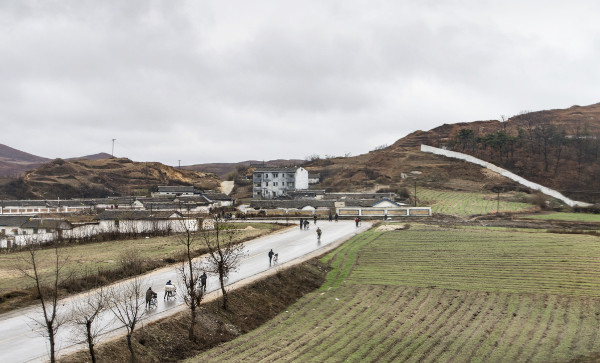 North Korea, Hwanhe-Namdo Province Photo: Nviktor / Flickr.com / CC BY-NC-ND 2.0
The resolution of 2270 prohibits North Korea a lot, however, the main of these prohibitions is the ban on exporting minerals, which, in fact, make up about two-thirds of the total North Korean exports (and, accordingly, about the same share of foreign exchange earnings). The resolution completely prohibits the export of gold, titanium and vanadium ore and rare earth minerals. Theoretically prohibited the export of stone coal and iron ore, but in practice, as we will see later, the situation with these two types of goods is not so unambiguous.
To this, one -sided sanctions introduced by South Korea and the United States should also be added. South Korea, in particular, closed the Keson industrial zone, a joint project of two Kores, which was subsidized from the South Korean budget and brought the DPRK from 30 to 100 million dollars a year. For its part, the United States announced sanctions against those companies in third countries that hire North Korean workers or conduct financial affairs with North Korea. The purpose of the sanctions is to complicate the export of labor (an important source of income for the DPRK budget recently) and exclude North Korea from the international financial system. These unilateral sanctions are quite capable of causing tangible harm to the North Korean economy - but they are not introduced on their own, but in a package with the UN unusually harsh sanctions.
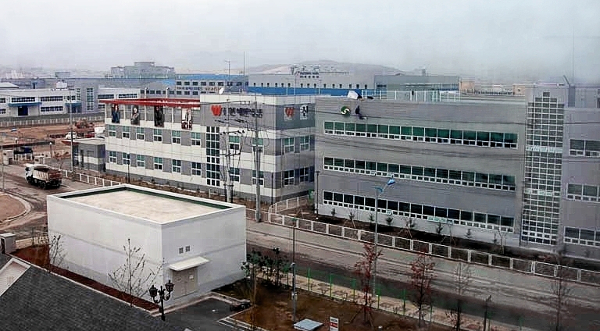 Factories of the industrial region Ceson photo: hic et nunc / commons.wikimedia.org / cc by-sa 3.0
Such a turn of events became unexpected, until mid -February ago nothing portended him. There are two surprises: Washington’s unexpected acute reaction to Pyongyang’s rather routine event, and Beijing’s unexpected readiness to support this reaction.
It is unclear why it was the fourth (not the first, not the second, or not third) nuclear tests that led to a similar reaction in Washington. Perhaps the second -Korean satellite was added to the fire to the fire to the fire, which demonstrated that North Korea took another noticeable step in working on full -fledged nuclear weapons delivery systems.
However, the main surprise was China's decision to support the rigid resolution of the Security Council. Even until mid -February, the Chinese did not have any enthusiasm about the planned sanctions. Chinese experts and officials confidentially said that China would not support serious sanctions against the DPRK, since stability in North Korea for Beijing is more important than non -proliferation of nuclear weapons. In China, they agreed that it was still necessary to answer a nuclear test, but they believed that these measures should be semi-symbolic.
By the beginning of February, Washington realized that the Chinese were not eager to maintain a new rigid regime of sanctions, and they began to lay the hope that Beijing could be pressure. Simplifying somewhat, the Americans began to believe that they should increase their military presence on the Korean peninsula and around it in every possible way, explaining this by the behavior of North Korea. In Washington, it was believed that the Chinese side, faced with a rattle of weapons on the outskirts of Beijing, would make concessions in its North Korean politics, agreeing to put pressure on Pyongyang together with the United States.
The plan worked and the Chinese succumbed, which became clear after the meeting of Obama with Van and (the Minister of Foreign Affairs of the PRC) at the end of February. Apparently, the Chinese decided that they could not allow the deterioration of their strategic situation in North-East Asia and for this are ready to make concessions on the North Korean issue. A significant role was played by the fact that without any American pressure in the Chinese leadership there are enough people who want to put Pyongyans in place, and to stop dangerous (including China) games with distribution: neither the North Korean regime nor its nuclear program in Beijing cause sympathy.
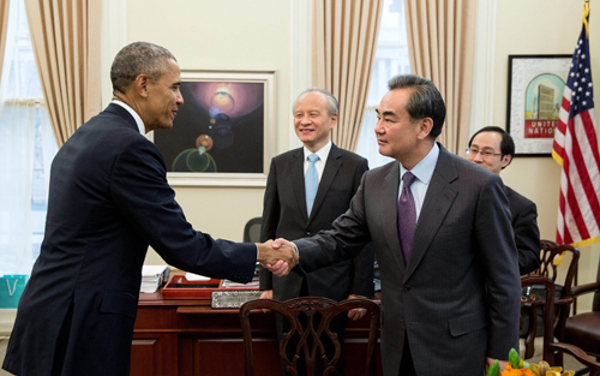 Meeting Barack Obama with Van and February 25, 2016 Photo: PRC Foreign Ministry
It is not yet clear whether China is going to really fulfill all those rigid conditions that are provided for by resolution 2270. However, if we assume that China’s consent to participate in the current sanctions was given in exchange for the promise of Americans not to create additional problems of a military-strategic nature, that is, the reason to think that the Americans will control the situation for some time. If China begins to sabotage, then the United States, having learned about this, can do what they promised not to do.
However, in the text of the resolution of 2270, a loophole was deliberately left, which will allow China - from the silent (or direct) approval of the remaining members of the Security Council to resume trade with Pyongyang and not to finally drive it into a corner. In paragraph 29, which prohibits coal and iron ore exports, there is a funny reservation that makes sense to bring it entirely: “This provision is not applied in relation to: (...) b) transactions that are established exclusively for the purpose of ensuring existence and are not related to receiving income for the DPRK for nuclear weapons and ballistic missiles.”
It is clear that when you look at the carriage with an angle, there is no way to determine whether the profit from this transaction will be used for “For the purposes of ensuring livelihood”, or, on the contrary, for the purposes of the villains. This is especially true in relation to such a country as North Korea, in which - despite the entire development of private business - the state, by and large, can order everyone to say only what it is necessary and to draw any papers. In fact, the decision of the issue of whether to allow coal and iron ore supplies is left at the discretion of the buyer. Moreover, almost all deliveries Coal and iron ore go through China. It is China in recent years that is almost the only consumer of coal and iron ore from the DPRK. At the same time, coal in recent years is generally the basis of the North Korean exports, in which it is approximately 40%. If China decides that coal from North Korea can and should be exported, then it can do this without violating the resolution of 2270. If China goes to continue to purchase North Korean coal, this will mean that for North Korea a resolution of 2270 will lead to unpleasant, but not catastrophic consequences. If China will not purchase coal, then the blow will be completely serious - the DPRK will lose at least half of all currency revenues.
It is difficult to assess the influence of what is happening on North Korea, but most likely it will be negative. Most likely, sanctions, even if they are not carried out very conscientiously, will lead to a deterioration in the economic situation of North Korea. Improving the economic situation, which was achieved over the past 7-10 years (and in particular - for 4 years of reign of Kim Jong -un), will be suspended or reinforced. Living ordinary people will become worse, perhaps worse, and reforms are likely to be suspended.
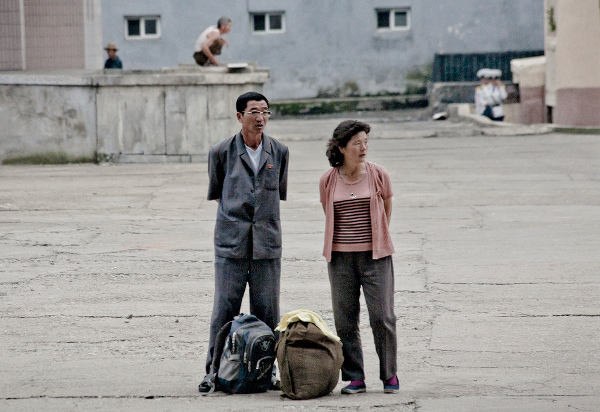 Married couple in Pyongyang Photo: Matt Paish / CC by 2.0
Of course, this deterioration, from which the overwhelming population of the country will suffer, will have no influence on the policy of the North Korean leadership. The North Korean leadership has long and with considerable grounds believes that the preservation of nuclear potential is the most important condition for the survival of the state/regime. Even if people begin to die again, as it was already in the middle and end of the 1990s, the North Korean leadership will not surrender nuclear weapons, and I repeat this position, I can understand somewhere (I hope that the fate of Gaddafi is memorable).
In the situation, it is impossible to exclude the fact that the North Korean leadership, a clamped in a corner, who now really has nothing to lose, will go to a further aggravation of the situation (will shoot somewhere and drown something). I repeat, I repeat, North Korea now has nothing to do, and such measures give a certain hope that one of the interested parties will flinch, will be frightened of the consequences and make concessions, weakening that strangle, which was completely unexpected on the throat of North Korea. The more tougher they will put pressure on the DPRK, the greater the likelihood of such a development of events.
Korean transition Natural death of Korean Stalinism