
Translated material
Has Historical Russia won?
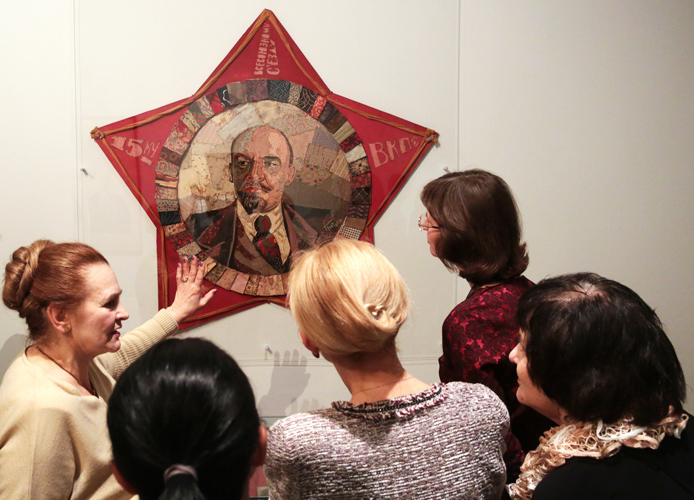
- The source of the current state of historical museums in Russia can be seen in perestroika. In provincial museums, there are almost almost anywhere there are no more expositions of the earlier Soviet time, but you can still find the expositions of the perestroika period. Perestroika became the time of activation of the lower socio-political life in the Soviet Union. How much did this activation affect historical museums?
-The period of perestroika and the awakening of the society of the late 1980s were associated with an explosive increase in interest in history. This interest was generated by a unique intersection of two factors. On the one hand, institutional forms of Soviet science have been preserved: all academic institutions continued to work, increased the circulation of historical magazines, the Soviet culture of reading and the general accessibility of information was preserved - that is, all those non -capitalist economic conditions that gave the general public the opportunity to work with the opening historical material. On the other hand, ideological control was practically eliminated during this period and barriers to study history were practically removed for the first time in the USSR.
The enthusiasm of museum workers, who first felt freedom at their workplace, was associated with this. During the period of perestroika and in the early 1990s, opportunities for innovative exhibitions were opened. This innovation was primarily associated with the discovery of documents. The beginning of the 1990s entered historiography as an archival revolution, when a huge number of new materials were revealed, including prohibitions from huge collections of historical museums, such as the State Museum of the Revolution in Moscow (now the Museum of Modern History of Russia) or the former Leningrad Museum of the October Revolution (current Museum of Political History). This made it possible for their employees to make some exhibitions related to the search for historical truth, as they imagined it, with the expansion of ideas about the events of 1917 or the little-known pages of Soviet history.
The Soviet Museum acquired the forms of the "museum after the end of history."
In addition, it became possible to reconsider the concepts of conservative and ritualized historical and revolutionary museums. There was an idea that the museum needs to be an open space through which society can know itself. For example, in Leningrad in 1989, a completely new concept of the Museum of the October Revolution was adopted, which was based on a revision of linear Stalinist narrates of Soviet history, concentration on various political positions, on repressions, and internal conflicts. That is, an attempt to present Soviet history as a dramatic one, which contained not only the grounds for the development of socialism, but also its replaced injuries.
The Soviet Historical Museum, as a result of the last powerful wave of museums in the 1970s, associated with the Lenin Century and the anniversary of the 1905 revolution, finally acquired the forms of a kind of “Museum of History after the end of history”, in which the revolution was represented as a complete and unique event. The identity of the visitor to this Late Soviet Museum was the identity of a citizen, which is no longer faced with the problem of the choice made for him by the previous heroic generation. Its civic duty is only to confirm the loyalty to this selection, to ritually join which in the museum. It is no coincidence that in historical and revolutionary museums there was a reception in pioneers.
The perestroika museum narrative, on the contrary, is associated with the return of history, with the idea that Soviet people who are aware of the crisis of their country and community lies responsible, comparable to the responsibility of the revolutionary generation of the beginning of the 20th century. And in order to make their choice, they must know the story, the terrible truth of the past and the nature of the modern social crisis.
At some point, many museum workers were covered by civilian pathos, the feeling that they not only keep history, but also live in historical times.
For example, employees of the Presnya historical and memorial museum in 1991 during the events of the White House went to him to select leaflets, stones, collect any artifacts. Despite the fact that they did not understand how it all ended, they perceived themselves as witnesses, chroniclers whose professional duty is to maintain this event in people's memory.
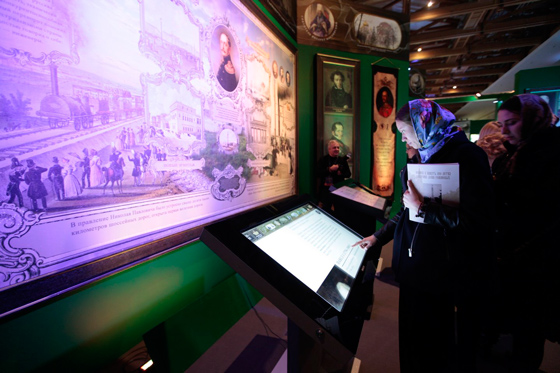 © Myhistorypark.ru at the Romanov exhibition
-What changes have occurred in historical museums in the 1990s?
-If we talk about the beginning of the 1990s, then, of course, it is connected with an attempt to give at least the main of the historical and revolutionary museums, a new content associated with the representation of updated democratic Russia. For example, the Museum of the Revolution in Moscow was renamed the Museum of Revolutions: it was meant that the events of August 1991 were also a democratic revolution that needed the historical foundations associated with the struggle of the Russian pre-revolutionary liberation movement-but in its liberal-democratic, anti-communist interpretation.
However, so to speak, the basic and superstructure components, whose combination gave rise to a unique situation of universal interest in the history of perestroika, quickly parted with each other in the early 1990s. Museum financing was sharply reduced, employees of many of them could no longer survive their salaries. That is, museums faced those restrictions on the freedom of their activities, which already created the capitalist, and not Soviet, society, namely, with the lack of money. Civil feelings of museum employees and in general any intangible motivations to work in this situation dulled and disappeared.
As a result, the situation that I encountered, working at the branch of the Museum of Modern History of Russia on Presnya: the logic of the museum as a bureaucratized institution begins to dominate the minds of a historian and researcher. A museum employee lives in the same coordinate system as an employee of any other budget institution: he has a limited area of responsibility, plans, reports, a cyclic mode of life, reproducing the museum as an institution. Such an employee, holding on to survival in this institution, is the keeper of the museum not in terms of content, but from the point of view of form; A person turned off from history.
Such an understanding of the museum crings the idea of Putin's stability as an “eternal present”.
-At what point can we state the turn after the 1990s to the active design of the ideology of history by the state? At the third period of Putin’s presidency, in the early 2010s?
- Yes, and this turn is associated with the desire to strengthen ideological control over society as a whole. The educational task of the museum is updated - the introduction of the visitor to a certain great story, the continuation and completion of which is the order of things that exists here and now. Unlike perestroika, today's museum policy does not appeal to the awakening of public self -awareness. On the contrary, the type of responsibility proposed to the visitor is a passive responsibility similar to the late Soviet, when the basis of civil identity is patriotic devotion to the past (“We must be worthy of our ancestors”).
Such an understanding of the museum crings the idea of Putin's stability as an “eternal present”. That is, the current era is not just a page in history, but a resulting page. If we want to understand why the victory of the Soviet people was needed in the Great Patriotic War, why were the victims of industrialization and so on - then it was all necessary for us to see a peaceful sky above our heads and experienced confidence in the future, which the modern Russian government gives us. The power, which is a continuation and expression of what is called “historical Russia”, which state functionaries are increasingly talking about . On the other hand, this growing interest in history at the third period of Putin is connected with an aggravated desire to find out the relations of the current state with its own historical identity once and for all. All the 1990s and 2000s, this issue remained delayed largely: the Putin rule presented itself as a pragmatic, technocratic, focused on the depolitization of the population: something like "there is enough history from us, let's live normally, without stories." Within the framework of this approach, liberal and conservative versions, Orthodoxy and curtsies towards the Soviet past - since they were not fundamentally important coexisted with each other. And in the third period of Putin, and especially with the beginning of the Ukrainian conflict, there is an acute need to systematize these previously rhetorical and decorative elements of ideology. This systematization is necessary for the state apparatus, since the situation in which almost every bureaucratic position is used for personal enrichment leads to a crisis of goal -setting. Now, almost any corruption in Russia is simultaneously an excited Orthodox and considers himself a statesman, and if such people did not find the highest meaning of their existence in belonging to phantom “historical Russia”, the processes of internal decay of the state would be much more intense.
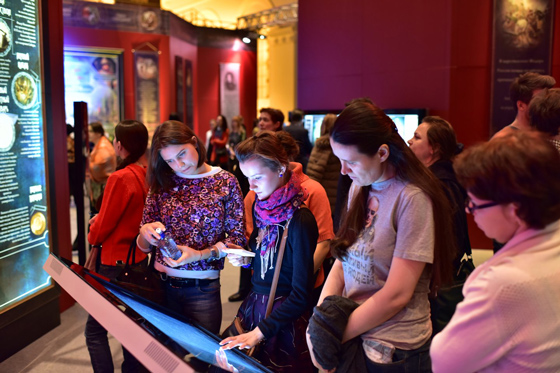 © Myhistorypark.ru at the exhibition "Rurikovich"
-Is it also possible to say that the meaning of this construction of history is to contrast something with issues for state power, voiced during civil protests of 2011-2012?
- Yes, of course, the idea of “historical Russia” contains a conservative message: there is a thousand -year tradition of the Russian state, which cannot be changed by strong -willed or revolution, but is revived from all cataclysms due to the fidelity of tradition and the Orthodox faith, understood as an ethnic, tribal Russian religion. This anti -revolutionary ideology is really associated with the call of rallies in 2011-2012, and with the obsessive fantasy of the ruling class about the “orange threat” - external forces that prepare the overthrow of the regime from the inside. This idea of the threat is overturned into the past: at each stage of Russian history, we see both the revival of the mystical structure of the Russian centralized state and conspiracies, the purpose of which was to awaken the dark forces of destruction and rebellion.
The quintessence of such an ideology is a series of exhibitions “My History” , which was held in the arena and now accommodated at VDNH. One of its main motives is the criminalization of not only the 1917 revolution, but also any protest. These are not only well -known conspiracy narratives about the Freemasonry of the Decembrists or the financial support of the people's volumes with American bankers, but also the allegations that foreign intelligence was also behind the uprisings of Razin, Bulavin or Pugachev. According to the concept of this exhibition, since the 19th century, external forces move to another tactics, using as a tool no longer peasants, but traitors within the elite, “educated Pugachev” (using the definition of Joseph de Mestr). The logical development of this line may be, for example, the assumption that this kind of traitors ruined the Soviet Union and organized this “largest geopolitical catastrophe of the 20th century” and so on.
All landmarks of modern state power find their confirmations in these exhibitions in an arbitrarily remote past. This goal is, for example, the posters accompanying the entire exposition with explaining quotes by Vladimir Putin, Sergey Lavrov and Patriarch Kirill. So, in the section dedicated to the Decembrists and populists, there is a poster with Putin’s statement that throughout our history we were too often faced not with the opposition to power, but with the opposition to Russia itself. In another place, Sergei Lavrov explains that Alexander Nevsky laid the foundations of “multi -vector Russian diplomacy”, as he was ready to interact with the East - the Golden Horde and at the same time confront the ambitions of the West in the battle on Lake Peipsi. In connection with the Mongol invasion, Patriarch Kirill says that the Horde turned out to be a less serious threat than the crusaders: the former claimed only the earthly government, while the second attempted to encroach on the soul and tried to change the civilizational code of the Russian people.
Sergei Lavrov explains that Alexander Nevsky laid the foundations of "multi -vector Russian diplomacy."
-It is interesting that the form of an entertaining multimedia exhibition-show outside the historical museum plays the role of Alibi here in order to construct an anti-fan narrative. The museum, no matter how conservative, must follow the facts and documents, and there is practically no document at this exhibition, only sacred relics like icon - and that is why this exhibition was held so important for modern state ideology in the arena, and now they were transported to VDNH.
- Such an exhibition is a manifestation of the degradation of society, when most visitors are more convenient and easier to perceive of Russian history as a multimedia project, representing a combination of advertising elements, video games and entertainment cinema. It is significant that when these exhibitions took place in the arena, there were huge lines on them, which are completely unimaginable for the State Historical Museum, located literally in just a few hundred meters. In addition, to conduct experiments with such a sharp increase in an ideological degree, as in these exhibitions, it is really better at the experimental site in order to present them not as the establishment of the state in relation to the entire museum policy, but as a certain landmark for the future. Any professional criticism is powerless before these exhibitions, since they do not claim to be scientific.
- Is the museum of modern history of Russia today in the branch of which you worked, the center for constructing the ideology of historical memory?
- Undoubtedly. For example, a large exhibition “Soviet Nuremberg” dedicated to the courts over Nazi criminals after the Second World War was held there recently, and the Orthodox churches were destroyed there in the occupied territory of Russia, they tried, acting as one of the incarnations of this timeless West, to change the soul of the Russian people. And they suffered a well -deserved and inevitable punishment for their anti -Russian activity at trials, including in Nuremberg. This exposition ends with a large photograph of the Maidan in Kyiv 2014. The subtext of this move is obvious: there are still unfinished criminals, and thus, the struggle against the Maidan and against Ukraine is a struggle that continues the Great Patriotic War. The radical decrease in the bar also attracted attention at this exhibition: there were very few artifacts and documents, there were few exposition moves that could pose problems or show the visitor the ambiguity of events. The museum is simultaneously trying to correspond to the tasks of propaganda, and use its tendency to simplifications in order to increase traffic, focusing on voluntary and compulsory school excursions.
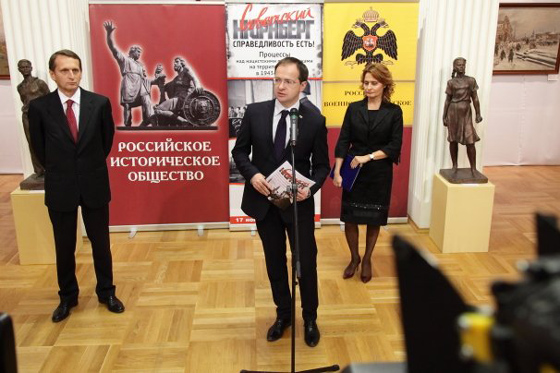 © mkrf.ru Opening of the exhibition "Soviet Nuremberg" at the Museum of Modern History of Russia
The museum took such a direction after the change of its leadership, which was connected precisely with the turn to active historical policy. The previous director, Sergey Arkhangelov, received the director of the director as the nomenclature Sinecura, and the period of his activity in the museum was associated with the conservation of the current interior situation. It was obvious that the museum of modern history was an important strategic place, but its new ideological tasks were not formulated for a long time. The situation changed when the energetic Irina Velikanova came to the place of Arkhangelov, who immediately received the mandate of trust from above to the museum transformation into the main institution, which tells about Soviet history from the conservative positions of “historical Russia”.
Immediately after her arrival, the financial capabilities of the museum obviously increased. This has its own positive points - for example, the dying diorama in the Presnya museum dedicated to the 1905 revolution was restored. But at the same time, most of the old exposition was dismantled in the same branch, including the events of 1991-1993. Now her place was taken by a new exposition with an emphasis on life, everyday life, pre -revolutionary Moscow, etc.
This is natural: after all, it is the reminder of 1991 and 1993 that he returns to those pages of post -Soviet history that are able to give a different idea of the genealogy of the modern Russian state, which does not go to the times of Yaroslav the Wise and Catherine the Second, but to the collapse of the USSR, the violence of the initial accumulation of capital and the execution of parliament. These are precisely those pages of history that are most difficult to normalize and explain.
It is easier to perceive Russian history as a multimedia project.
- The end of the Soviet Union is not such a controversial point for the identity of most other countries of the former social unit?
— Для большинства восточноевропейских стран после распада СССР было принципиально важно сразу же недвусмысленно сформулировать свою идентичность, построенную на признании того, что социалистический период был исключением из национальной истории, когда нация не имела власти над собой, а ее государственная традиция была прервана. Поэтому социалистический период становился объектом музейного внимания как травма, через которую нация осознает себя как единое целое не в меньшей мере, чем через память о победах и успехах. Место музея скорби, музея социалистического преступления практически сразу было заполнено в восточноевропейских странах: таковы, например, Музей геноцида в Вильнюсе, Музей оккупации в Таллине, Дом террора в Будапеште. Социалистическое прошлое понимается в этих музеях как чуждое и внешнее. Подобный подход в России просто невозможно реализовать. Так долго откладываемый вопрос о государственной идентичности в России во многом связан как раз с этой сложностью с советским: как оно может быть интегрировано в новую модель самосознания?
— Тем временем как раз приближается юбилей 1917 года, который, конечно, не обойти никаким институциям, связанным с историей. Как могут реагировать и с чем сталкиваются здесь консервативно ориентированные институции?
— Наиболее подходящей объяснительной схемой тут является упрощенное заимствование сменовеховского взгляда на 1917 год: это был триумф антигосударственных сил, катастрофа, вопреки которой тысячелетняя русская государственность все равно смогла возродиться, пусть и в другой форме. Большевики, несмотря на свои криминальные антигосударственные установки и порочные догмы, вопреки своим связям с западными разведками воссоздали тысячелетние русские традиции. Что, конечно, самих большевиков никак не оправдывает. Недавнее высказывание Путина о том, что Ленин заложил бомбу под государственный фундамент своими идеями равноправного союза советских республик, вполне укладывается в эту схему.
Но для современной России, претендующей на преемственность с СССР, невозможно открыто солидаризироваться, например, с антибольшевистскими силами в 1917 году и в период Гражданской войны (которые как раз воспринимали происходящее как заговор и бунт хтонических антигосударственных сил, вполне в соответствии с концепцией выставки «Россия. Моя история»). В этом контексте выходом из сложной ситуации становится идея министра культуры Владимира Мединского о том, что в результате революции проиграли и красные, и белые, а победила пресловутая «историческая Россия» . Поэтому, по Мединскому, именно с путинских позиций можно разглядеть объективное, действительное значение 1917 года. Эта претензия на объективность подкрепляется самой объективной монопольной возможностью власти устраивать экспозиции вроде «Моей истории». С подобной объективностью, кстати, может уживаться и взгляд на советское прошлое как на миф, проект или утопию, который заимствован из антикоммунистических постмодернистских нарративов и обеспечивает деполитизацию конкретных исторических явлений.
Каждый получает ту дозу приспособления, которая соответствует его взглядам: вполне рыночный подход.
— Можешь привести пример такой деполитизации в музейных выставках?
— Например, выставка «Миф о любимом вожде» , шедшая на протяжении года в Государственном историческом музее. Она показательна как пример современной стратегии этого музея, который сохраняет респектабельность и высокий научный уровень экспозиций и не может позволить себе таких брутальных идеологических интервенций, как серия выставок «Моя история».
На «Мифе о любимом вожде» было представлено множество документов и предметов из огромной коллекции музея (в которую перешло также собрание Музея Ленина), и экспозиция не только не носила ярко выраженного идеологического характера, но, наоборот, имела характер деидеологизирующий. Выставка как бы призывала: давайте посмотрим не на то, какими были Ленин и Сталин, а на то, как складывались их культы, как миф Ленина и Сталина стал частью ушедшего советского проекта. Опыт этой выставки будто бы не политичен, потому что политика связана с действительностью, а советские мифы к действительности не имеют уже никакого отношения. Мы смотрим на них где-то с безразличием, где-то с любопытством, где-то с теплотой, где-то с ужасом, но мы к ним тем не менее не можем относиться политически. Как не можем относиться политически к Ленину, поскольку Ленин — это, прежде всего, культ Ленина, образ Ленина.
Выставка в Мультимедиа Арт Музее «Отоваренная мечта» также воспроизводит подход к советскому как к герметичному, завершенному проекту. Эта выставка, смешивая все периоды советской истории от 1920-х до 1980-х, изображает советскую потребительскую повседневность как подчиненную законам, принципиально отличным от тех, в которых мы все живем сегодня. Определяющим законом «реального социализма» являлся закон дефицита, перманентного неудовлетворения базовых человеческих потребностей, который создавал советского человека, воспринимаемого из сегодняшней реальности в качестве носителя специфического ушедшего опыта, непонятного «другого».
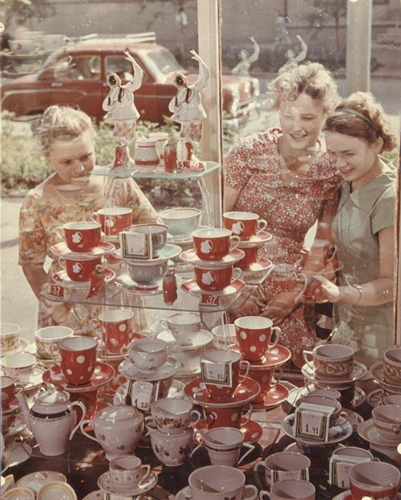 © Собрание МАММ/МДФ «Отоваренная мечта». Роберт Диамент. Перед витриной. 1954
— Показательно, что эта выставка проходила именно в Мультимедиа Арт Музее — месте почти демонстративно капиталистического потребления культуры.
— Происходит четкое разделение: посетители «Моей истории», посетители Государственного исторического музея и Третьяковки, посетители Мультимедиа Арт Музея и «Гаража» или Музея истории ГУЛАГа — это разные среды, которые обладают разными системами исторических референций, культурных предпочтений, способов восприятия. И эти среды должны сосуществовать и получать те дозы приспособления к нынешней государственной исторической политике, которые соответствовали бы их взглядам. Вполне рыночный подход.
— Мы наблюдаем здесь работу глобальной логики маркетинга и менеджмента — логики распределения целевых аудиторий.
— Да, и если мы пытаемся оценивать всю современную российскую выставочную политику в целом, она нам может показаться противоречивой: в одном месте говорится о том, что Сталин продолжал тысячелетнюю традицию русской государственности, а в другом рассказывается о репрессиях. Но если мы встраиваемся в одну из этих целевых аудиторий, все эти противоречия исчезают: мы просто не идем на одну выставку, а идем на другую. И в сумме все эти разные аудитории создают то общество, которое должно соотносить себя только с теми элементами прошлого, которые так или иначе могут примирить его с настоящим.
— Принцип эффективности, таким образом, оказывается одной из объективных основ идеи о вечной «исторической России».
— Эффективность управления становится одним из способов оправдания нынешней властью своих непопулярных решений — как и действий своих предшественников, которым она претендует наследовать. Более того, эффективность можно оценить лишь с исторической дистанции — лишь со временем становится понятно, насколько высокая цена и жертвы были оправданы значительностью результата. Можно вспомнить знаменитое высказывание, что Сталин был «эффективным менеджером» — то есть действовал по тем правилам менеджмента, которые были характерны для его времени. Подобным образом оправданы могут быть как Сталин, так и все цари и императоры: главное — не разрушать, а строить, и каждый строит как умеет, не нам их «подвергать сомнению» .
Download the entire issue of the magazine "Disagreements" (No. 2) "Museums. Between censorship and efficiency ": PDF , MOBI , EPUB