
Translated material
The right to silence
Drama of Grigory Gorin returns to the stage - at the Moscow Theater named after Pushkin they put a "house built by Swift"

Artists in conclusion: Songs of protest are singing already in a car
The play of Gregory Gorin was not lucky: the beginning of her stage fate was at the end of the Brezhnev era and a string of Kremlin funeral. Suslov, Brezhnev, Andropov, Chernenko died, as on a schedule, “as usual - at five hours” (it is from this replica about the next death of Swift that the play begins). Gorin adored this play, rushed to every production, wherever it happened, at the first invitation. “House” is a very personal thing, confessional, in which the author appears before the reader to what he was actually: not a popular successful Soviet comedic and satirist, but a deeply suffering artist, philosopher, and seer. “House” is a comedy of disappointment, fatigue, despair. Putting this play today in modern Russia means to hear its silent cry.
Times do not disappear
For the artistic director of the Pushkin Theater Evgeny Pisarev, this prime minister is a kind of debut, the first contact with the domestic drama. And the meeting clearly happened "out of love." The director and playwright connected in time, coincided, as reflection - in intonation, in humor, in images and metaphors. Gorin was a little over forty when he wrote a “house”, Pisarev - the same. After generation, they became one generation. So time is collapsed or a person closes it on himself. Gorin seemed to the writer topical, momentary, but turned out to be a classic.
“House” is a comedy of disappointment, fatigue, despair. Putting this play today in modern Russia means to hear its silent scream
The time in which he placed his hero - Swift was later called with rash, deaf stagnation. The time in which the concept of “internal emigration” has become a moral category, when silence and non -participation were equated with thought crime. “Walking separately”, not coinciding with a common march, disappeared from the information stream, people seemed to be erased with an eraser - both living and the dead. The events of the past and present were lifted from the collective memory, replacing them that were non -existent, as in the play by Gorin, members of the city administration recognize the comet approaching the city “non -existent object”. Polival machines washed off flowers from the asphalt on Taganskaya Square on the day of Vysotsky's death. With the posters of the Taganka, they erased the name of the founder and director of the theater Yuri Lyubimov, deprived of Soviet citizenship. From the rental, the films of the "Stone" Andrei Tarkovsky removed the films. The first non -certificate almanac "Metropol" for years deleted the names of its participants from the literature. Academician Sakharov, who protested against the entry into Afghanistan, was sent to Gorky. And from Afghanistan, “zinc boys” returned to their homeland.
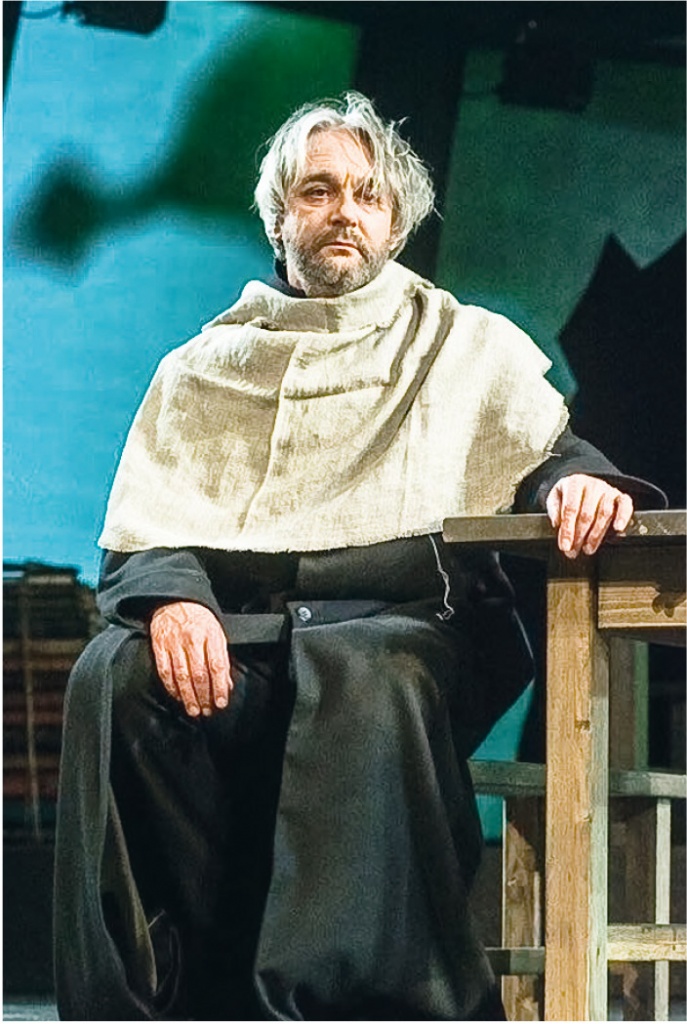
According to the plot, Swift (Andrey Bustayuk) pronounces the first words in the final scene, going to his last death
The TV tirelessly rumbled with heroic victories, sports achievements and stigmatized American aggression. This is all - the eighties of the last century. After more than thirty years, only the scenery changed. We are still like a red-haired constable (the character of the “house that built Swift”), we are standing in the same area in the same pose and are only surprised: we'll be here again!
Under the dome
The world of “the house that the Swift built” is narrowed to the size of an inverted cup (artist Zinovy Margolin). Here, under a gray glass dome, people are driven, liliputs and giants, nurses and lackeys, patients and doctors. Behind the cloudy glasses, through which neither sunlight nor the radiance of the stars penetrates, the Black Sky is hardly guessed. You can only sip air through broken windows. To the finals of the performance, such holes in the dome are becoming more and more.
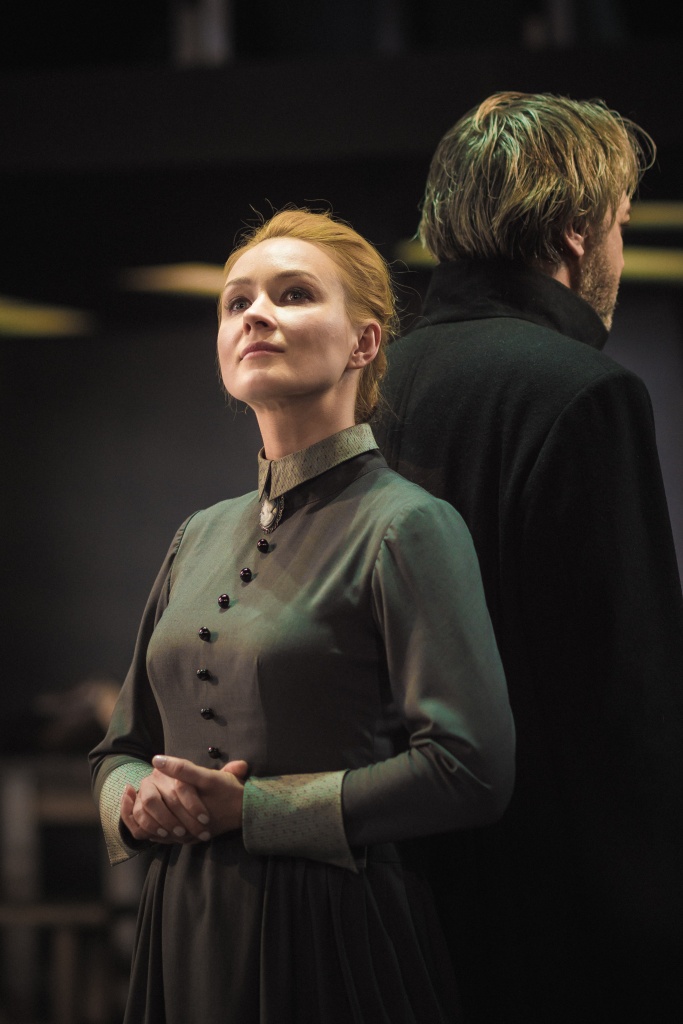
Swift women fight for him without sparing strength (Anastasia Panina)
You won’t take a lot in the glass house, so the giants (giant Glum - Grigory Siyatvinda) do not straighten up: they are used to living twisting and gradually sank to the level of lilliputs. Liliputs (Igor Teplov and Alexei Rakhmanov), on the contrary, measure their growth, stretch on tiptoe and put secret insoles in boots. Liliputs are sure that they are the main characters of the play, and the world that they see from the height of a teaspoon is the Universe. Police are arrested on the square of protesting artists, and they sing in chorus in Avtosak. The red constant (Alexander Matrosov), with the help of the immortal someone (Alexander Dmitriev) penetrates into the depths of his own consciousness and horror understands that all his past lives he was guards in the market square. The raid of the guide is one of the key episodes of the performance, incredibly subtly and piercingly played by the sailor. A small inconspicuous man in front of his eyes becomes a hero committing an act changing the trajectory of his fate. A madman who has changed the future.
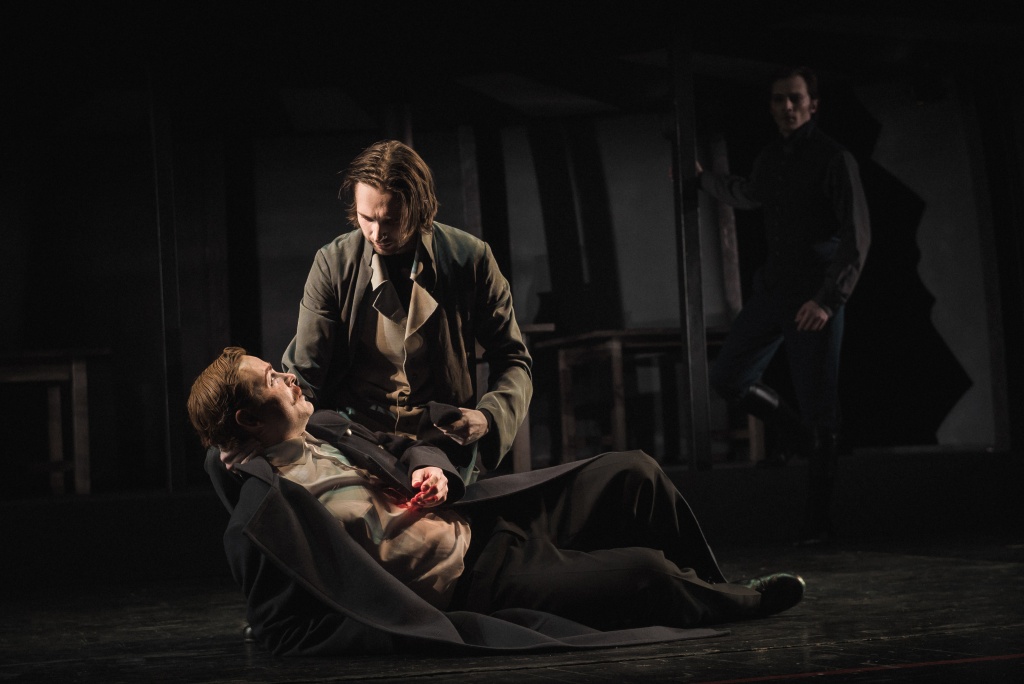
Real blood is not distinguished from the cranberry immediately (Alexander Sailor and Alexander Dmitriev)
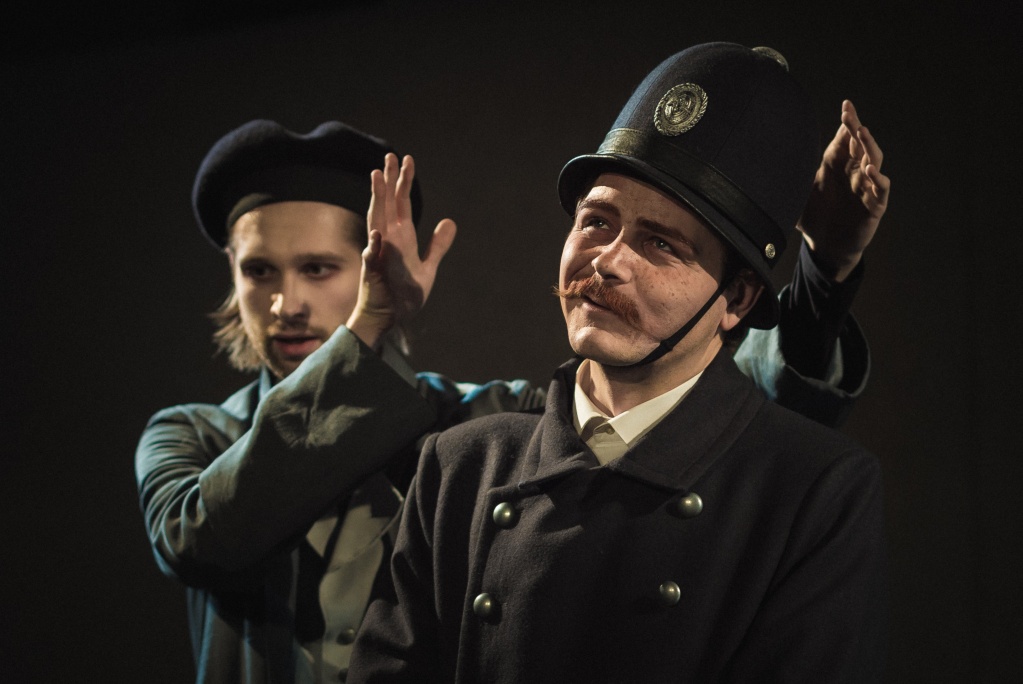
Red constant (Alexander Matrosov) with the help of the immortal someone (Alexander Dmitriev) horror understands that all his past lives he was a guide
A similar metamorphosis will occur with one of the main characters - Dr. Simpson (Anton Feoktistov), sent by the authorities to control the “survivor of the mind” of the swift. It is impossible to tame, shorten the consciousness of a thinking person. It can be made to shut up, and then silence will become more eloquent and more dangerous than any words. The role of Swift in the famous film Mark Zakharov was brilliantly played by Oleg Yankovsky. By that time, the artist was already a star, a favorite of millions. Yankovsky is a close -up master: his silent face even with a black bandage in his eyes attracted like fire, it could be looked at him endlessly. Evgeny Pisarev gave the title role to Andrei Bustayuk, an actor with a romantic appearance and soft bright charm of a large child. According to the plot, Swift pronounces the first words in the final scene, going to his “last death”. Almost the entire performance is silent. Here, a saving video camera could come to the aid of the director, the main instrument of the modern theater, but as it turned out, a close -up can be created without an operator, a movement of thought and inspiration. And the Bustayuk does it perfectly: his swift really preaches in silence. Looking at his crazy unblinking eyes, you believe that the parishioners after such “sermons” will go to storm the governor’s residence.
People, Liliputs and giants, nurses and lackeys, patients and doctors are filled under a gray glass dome. Behind muddy glasses, through which the light does not penetrate, the Black Sky is hardly guessed
Freedom of silence
The metaphor of silence as a scream is a phenomenon that is familiar to the Soviet man. It was such images that the censors were most careful - what could be worse than the “uncontrolled subtext”? During the years of stagnation, not one Gorinsky Swift fell silent to be heard. In the cult novel of Vladimir Orlov “Altist Danilov”, one of the heroes invented a whole musical direction - “Silence”, the essence of which in the rejection of notes and sounds, in music arising within a person. In Eldar Ryazanov’s film “Garage”, the hero Andrei soft tails, which had lost his voice, became the most active and irreconcilable fighter behind justice. In the prologue of the brilliant film, Tarkovsky “Mirror” the hypnotist heals patients from stuttering, relieves dumb from their lips. "I. Can. Speak." - With difficulty, patients are pronounced their first words, stuck in silence for many years. "When?" - Swift interrupts his vow of silence with this question. "When will I die, doctor?"
Grigory Gorin died sixteen years ago. Today, his plays are returning to us, in which he, like a real doctor, made joyless diagnoses to society and was never mistaken.
Photo: Yuri Bogomaz, Galina Fesenko