
Translated material
Andrey Zorin. "The appearance of the hero"

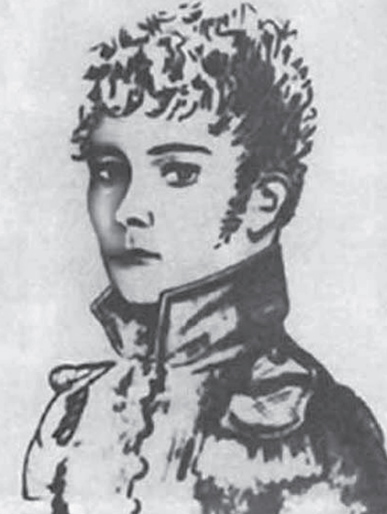
The publishing house "New Literary Review" is published by a new book by Professor of Oxford University Andrei Zorin "The appearance of a hero." The book is dedicated to the history of Russian emotional culture of the late XVIII - early XIX centuries: the time of competition of the court, Masonic lodges and literature for the monopoly on the “symbolic images of feelings”, which an educated and Europeanized Russian person had to reproduce in his internal everyday life. In the focus of the study - the story of love and death of Andrei Ivanovich Turgenev (1781–1803), the author of the confessional diary, the gifted poet, a kind of “pilot copy” of a man of a romantic era, who failed to bring his life and his personality in accordance with the samples on which he was brought up.
Chapter Three
Prodigal son
Not afraid of anyone criticism
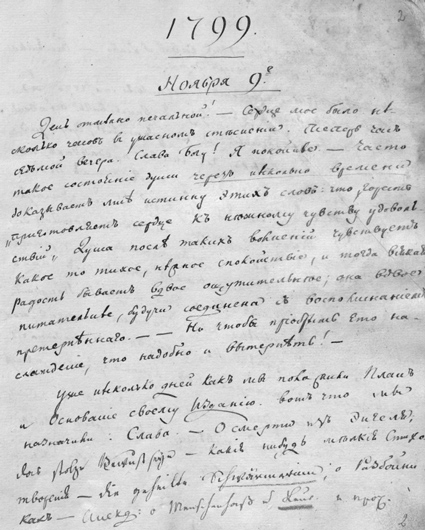
On November 9, 1799, eighteen -year -old Andrei Ivanovich Turgenev, a novice writer, a passionate fan of Schiller and Goethe, a recent graduate of Moscow University, who had just received a service in the archive of a foreign affair, finally decided to make a diary. On the first sheet of a small notebook of bluish cheap paper in brown binding, he with calligraphic handwriting deduced the date and two epigraphs in German - a stanza from the Oda “to the joy” of Schiller and the line from the poem of Viland “Oberon”. On the second sheet, the date is repeated, the year and the number are written and emphasized, and then the first record follows, which begins with the words "The day of excessively sad!" (RORLI. F. 309. units hr. 271. L. 2) [1] And it ends with a maxim showing how a significant event was the beginning of the diary:
So, now what I wanted for so long. Here I will enter all my thoughts, feelings, joyful and unpleasant, I will talk about the objects interesting to me, not afraid of anyone criticism (271: 2 vol.).
 © UFO
© UFOIt is not quite clear what prevented Andrei Ivanovich from realizing his long -standing desires earlier. The acquisition of a notebook could hardly represent practical or financial difficulties for him. Perhaps Turgenev believed that now the diary would not fall into the wrong hands, although there were no noticeable changes in the external circumstances of his life. As it is already evident from the first record (“The Father intends to be a whole evening at home” [ibid., 2]), he still lived with his parents. A month later, thinking about what exactly he lacks for literary creativity, Andrei Ivanovich wrote:
Jetzt Träum Ich Mich Sehr Offt in Jene Angenehme, Ruhige, Genußvolle Lebensart. Wenn Es Doch Einmal Geschähe, So, So Ich Es Mir Vorstelle. Ach! Das Kann Nicht Seyn, Eben Weil Ich Es Mir so Einbilde. - Ich Stele Mir Mein Einsames Zimmer <Vor>; Da Morgens Arbeite Ich in Geschäfte, Oder Sitze Bey Mir, und Lese Oder Schreibe [Now I am very often immersed in dreams of a pleasant, calm, complete enjoyment of life. If one day everything would be the way I imagine. Oh! This cannot be, precisely because I imagine all this for myself. “I imagine my lonely room.” In the mornings, I would have gone there in a position, or simply sat when reading or writing ( German )].
I would like to write something more authentic, for example, some kind of novel; Just to make some CANEVAS , and there will already occur to different thoughts, jewelry, position, and little by little can come out. -I am very able to invent when I walk in the morning or go somewhere in a pleasant place on foot; Sometimes a great abundance of thoughts, enthusiasm comes, but soon passes. But such a novel must be written for yourself (ibid., 26-26 vol.).
 The first page of the diary Andrei Turgenev
It is difficult to say why the first part of this recognition is written in German. Perhaps in a dream to have his own room was something so cherished and unlucky that Andrei Ivanovich had to switch to a foreign language. His soul demanded solitude - the “great abundance of thoughts” came during lonely walks, but he could not convey them to paper, and most importantly, it was difficult to preserve from extraneous eyes. Young Turgenev dreamed of literary glory and ended up ultimately to see his works printed, but the future novel should initially “write for himself ”, otherwise the author could not truly reveal his soul in him.
This paradox becomes clearer if you turn to the experience of such an important turbenery thinker for the family as Lafater. In 1771, his “Secret Diary of an Observer after himself” was published ( “Geeimes Tagebuch von Einem Beobachter Seineer Selbst” ), which included records for January 1769 and opened by the intention by the author’s intention to analyze all the movements of his own soul daily. Lafater claimed that one who “is not sincere with himself could not become a friend of God and virtue,” and emphasized that a person cannot be sincere when others are watching him, and, on the contrary, “is always sincere when he observes his own heart.” The author made a promise to no one to show his records ( Lavater 2009: 79).
The philosopher later wrote that the “Secret Diary” was published without his consent, but he did not explain how this kind of document could be in the hands of the publisher. Moreover, in 1773, the second volume was followed by the second - “Unveiled fragments ( Unveränderte Fragmente ) from the observer’s diary,” the author of the author to the publisher with permission for publication ( IBID. , 749–764). Thus, it was possible to propose an interested reader to the reader, provided that initially such introspection was carried out without calculation for distribution.
Back in 1797, in the early notebook, Andrei Turgenev reproduced this course of thought:
I try and I want this notebook to fall into my hands, and so she would come across to someone, it is not possible to blame me that I did not feel what I wrote, and only for that I wrote to write something (276: 58).
 Unknown artist. Portrait of Andrei Turgenev. Vienna, 1802
In the environment in which Andrei Ivanovich was brought up, keeping the diary was not only approved, but also directly prescribed. It was assumed that, giving himself to thoughts and feelings, a person subjects the court his bad deeds and sinful thoughts, thereby working on his own moral correction. Andrei Ivanovich’s father Ivan Petrovich himself kept a similar diary, performed by severe self -expression (see: Rykova 2007: 145-157).
Turgenev Sr. translated into Russian one of the most popular manuals on moral self-improvement-John Mason’s book “On Cognition of himself”. The author advised to use a notebook in which “everything should be briefly depicted and read it every year” (Mason 1800 I: 147), and the recordings in it should be kept with possible regularity:
“We are obliged to go through and experience different acts of a spent day, various opinions and thoughts of the state in which we were and search for their reasons” (ibid., III: 230; see: Ginzburg 1971: 38–40).
The third edition of this translation was published in Moscow in 1800. I.P. Turgenev gave him to his children, accompanied by a letter, which said that he owed a lot to this book with his morality. ” The translator urged his sons to follow the instructions prisoners in the work of Mason and “acquire funds” in order to go a difficult path of self -knowledge (RGALI. F. 501. Op.
The children of Ivan Petrovich saw in the diary a means of not only moral, but also intellectual self -improvement. In 1803, after the death of Andrei Ivanovich, his younger brother Alexander recalled in his diary a thought from the collection “Secret Philosopher” compiled by the German writer Iohan Johan, Johanno Joan.
Here's what a kind and smart father entered the white book, which he gave for the new year of his daughter, so that she from time to time led her magazine and recorded her thoughts, feelings in him, or try to express in the letter what she read in the author; Thus, he says, they clarify and turn into your property for you; Often even others grow in you and develop the ability to think. - Isn't that what the father advised me? Did he ask me to keep a magazine during his voyage <...>. Is it not that my brother, my guardian angel, my model, which I now decided to follow everything (ABT: 252), advised me.
Alexander Turgenev is guided by an open form of conversation with himself - the White Book, which the father of Engel gives his daughter, is intended for family reading, according to it, older members of the family judge the progress of children.
Andrei Turgenev had a similar notebook until November 1799 - in the strict sense of the word, it was not yet a diary, but rather a notebook. Turgenev began to fill it out with extracts from the books read and his own thoughts back in 1797, a score, without a chronological sequence (see: 276).
With the beginning of the new period of introspection, he divorced these two notebooks in terms of functions, giving the early preliminary, “delinic” status. He did not leave the old notebook for another two years until his departure from Moscow in November 1801, but made only rare, scattered records, often not confined to specific dates, while the history of his mental development was reflected in a new diary.
Travel magazines similar to those about which Alexander Ivanovich wrote are preserved in his archive - diaries in letters intended for reading in a narrow company of dedicated (272: 93–00; 1240). However, such practices did not quite satisfy Andrei Turgenev - he dreamed for a long time about a systematic diary, for which he began on the “excellent sad” day on November 9, 1799. Most likely, speaking of the performance of what he “wanted for so long”, Andrei Ivanovich had in mind a kind of strong -willed installation, the decision to remain alone with himself and write about himself and for himself.
The author could not withstand the daily regime. Already on November 15, he writes that “two days, it seems, I have not been taken for this book,” but on the 22nd, after the next three-day break, he reproaches myself: “I have not taken it for my magazine for a long time! This is not good ”(271: 7 vol., 10). In the future, breaks inevitably become even longer. And yet, for three and a half years before his sudden death, Turgenev continued to keep a diary with a high degree of regularity, details and frankness.
On the pages of the diary, Andrei Ivanovich constantly indulged in self -flagellation. Nevertheless, it was unlikely that his father would be pleased with this document, not without reason in the first record the young author of the diary rejoices the opportunity to reason, "not afraid of anyone criticism." He was very close to the older generation of Moscow Rosicrucians - with his father and I.V. Lopukhin, and with M.I. Nevzorov, but in the diary he tried to shield for himself a special intimate sphere, where there was no access to others and where he himself was supposed to be his only reader, acting simultaneously as an object and as a subject of introspection. Already in the second record, Turgenev reminded himself that he strictly follows the covenants of Lafater and writes only for himself: “I began a lot - but no one will read this. - It's time to sleep ”(271: 4).
If the Rosicrucians judged themselves from the standpoint set by their common affiliation with the “internal church”, then the “autocity” of Turgenev Jr. was formed in the field of interaction between various “emotional communities”. The symbolic models of feelings learned in the family retained their significance for him, but at the same time he was the leader and legislator of the fashion in a small circle of fans of modern German literature, which later took shape in a friendly literary society.
Two days after the first entry in the diary, Turgenev makes lines from the preface to Viland’s poem “Grace”, dedicated to three poets (Viland himself, I.V. Gleym and F.Kh. Jacobi), which were connected by tender friendship and worship of museums. "May this be a frozen" Lyakov>, Zhukov "and I!" - he explains further the secret meaning of the quote. Turgenev conceived to publish with his friends the magazine M-Zh-T, they also planned joint translations of their favorite works: Schiller and the “suffering of the young Werther” by Goethe. Such translation enterprises had not only literary significance for young authors - work on the same book helped them set up souls in unison, and the creation of the beloved writer played the role of a kind of tuning fork.
The fragment contained in the Turgenev diary contained the famous formula “Schöen Selen” -“beautiful souls”, which was apparently used, apparently, Viland and developed and explicated by Schiller and Goethe. This expression became a universal designation of an ideal human person, which was sought to educate in themselves writers belonging to an early -romantic culture (see: Norton 1995; Curran 2008).
Turgenev also recalls the impressions that brought him closer to this ideal:
Not everyone can achieve, but everyone can strive for a goal. - The best and most capable of good decisions I had a minute, maybe in the theater. -There, it was ignited, my beneficial fantasy raised, inflamed my soul pure love to science, for literature. Seeing the beautiful works of great minds, I felt in myself a strong, dominating desire to produce something like that and even accepted a firm intention to strain all the forces, all the abilities of the mind and heart. There I felt a lively gratitude to my educators and, firstly, for Bat <Yushka> (271: 4 vol.).
Andrei Ivanovich is trying to internally reconcile various “emotional communities” to which he belonged. He emphasizes that the theater taught his gratitude to the educators, despite the fact that it was in their circle to the theater that it was customary to treat a considerable degree of suspicion. It was important for the author of the diary to convince himself of this, since he had to experience other strong feelings in the theater, which his mentors could not approve.
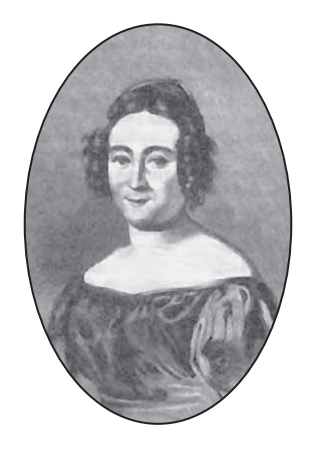
Turgenev wanted to have freedom to speak with him about the topics interesting for him. The circle of these topics is already detected on the first page. These are the movements of his own feelings and moods, as well as his literary and theatrical impressions. However, most of all, the author of the diary, his growing love in the famous actress and singer, recognized by a beauty with a striking fate and dubious reputation. The subject of the youthful passion of Andrei Ivanovich was Elizaveta Semenovna Sandunov.
 Unknown artist. Portrait of Elizabeth Sandunova
 [1] Most of the archival materials that are cited in this book are stored in the Foundation 309 (Turgenev) RO IRLI. Further references to this fund are given only with the numbers of the storage and sheet unit.
Andrey Zorin. The appearance of the hero: from the history of Russian emotional culture of the late XVIII - early XIX centuries. - M.: New Literary Review, 2016. - 568 p .: Ill. (Series "Intellectual History")