
Translated material
Why did trust in the media fall?
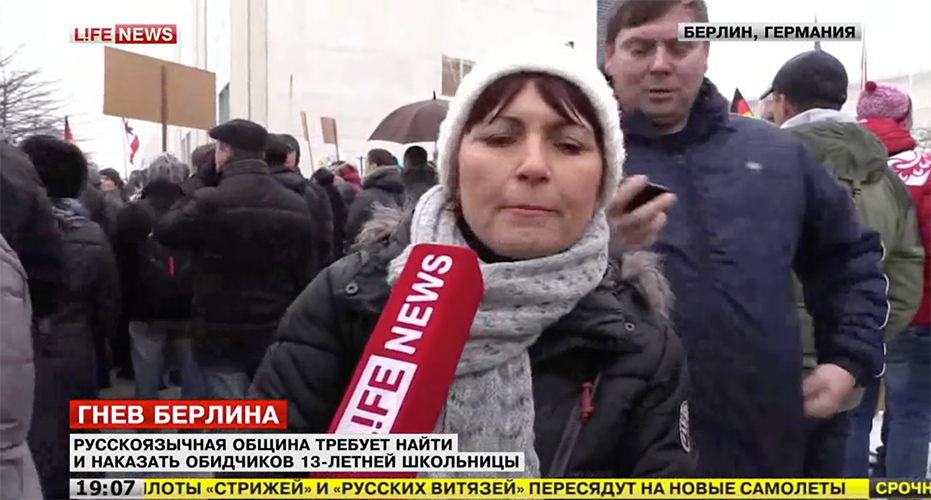
Colta.ru, in collaboration with the journalistic Union of the N -ost and Telekritika .ua site, continues the new project “Stereoscope” , the task of which is the task of giving a word to reporters from Russia, Ukraine and the countries of the European Union, people of different views and representatives of different camps. This time, five journalists from different countries - from Germany, Poland, Ukraine and Russia - are discussing why confidence in the media has fallen everywhere.
Participants in the discussion:
Alexander Baunov, editor -in -chief Carnegie.ru;
Pavel Penenzek, freelancer from Poland, has been illuminating Ukrainian events for the past few years;
Christian Ash, correspondent of the Berliner Zeitung newspaper in Moscow;
Ivan Yakovina, observer of the magazine "New Time" (Kyiv);
Natalia Zotova, correspondent of the Russian Novaya Gazeta.
Natalia Zotova: In Russia, the golden years of journalism were perestroika years and the beginning of the 90s, and then the trust and the significance of the media were declining, but let's talk about the last years that in Russia-and Ukraine-went under the sign of Crimea. In Ukraine, trust in the media, especially Russian, has decreased. Moreover, dramatically: if last year 37% trusted the media and did not trust 29%, then this year the situation is the opposite-only 25% trust the media, and 47% do not trust. In the west of the country, the media do not trust 24%of respondents, in the center - 39%, in the south - 50%, in the east - 57%, in the Donbass - 68%. And how are things with the Ukrainian media? Does trust fall too?
Ivan Yakovina: Ukrainian counter -propaganda was perceived normally for a long time, without a sharp rejection. More than half of the people believed that it was normal to pursue a counter -propaganda media policy. Because of this, many journalists have established a new standard: you can sacrifice some data, some objectivity in order to present “their own” in a more profitable light than the enemy. A new norm has appeared: journalism with a raid of propaganda. This is the costs of war, but the war will end sooner or later, and this norm can be preserved. And I think that the understanding of this is growing in society and therefore trust is reduced to journalism.
Zotova: Do the journalists themselves realize that this is not a very good norm?
Yakovina: Yes, of course, but, unfortunately, this has already become a reality. And now there is a painful process of getting rid of this - which not everyone was supported. An important role here is played by foreign journalists who work in Ukraine. They affect Ukrainian colleagues, pushing them to comply with global journalism standards. There is a side point - in the conditions of war, a huge amount of different unverified information from all sides, from the many sources. And people begin to closely close from her, because it is very difficult to get something worthwhile out of this white noise, something reliable. This is also a problem.
Zotova: And besides, people close from the war, from these horrors?
Yakovina: Indeed, the news is not pleasant - war, economic crisis. Distrust of the media in this sense - like a shield from negativity.
A new norm has appeared in Ukraine: journalism with a raid of propaganda. This is the costs of war, but the war will end sooner or later, and the norm can be preserved.
Zotova: It is interesting that in Russia the situation is opposite: propaganda is stronger, but they believe it. I have a question for Alexander. Why does we have confidence in television, propaganda does not turn anyone away?
Alexander Baunov: It seems to me that the problem is not at all that people do not believe the media. And the fact that they believe them - but only to those who want to see the source of information. We do not live in information isolation, it is easy to find other sources of information - but for those who are not looking for any sources, there are these voices from the TV. As the radio with the rise used to be included in the recreation house, and turned off after dinner, and now television is functioning: it is not so much information as filling the void in the head so that something does not creep there yet. Unfortunately, not only Russian journalists are perceived by the audience in this way. So the problem is that people do not trust the media that carry something that does not correspond to their picture of the world. And this is a global problem.
Zotova: Why global?
Baunov: Because a person does not want to feel like a fool. Because he, according to Pelevin, often searches for the media not information, but a roof over his head. If he has a certain set of ideas about the world, a picture of the world by some age, why will he destroy this equipped house?
Zotova: In general, I have the feeling that it is customary to not believe in Russia in Russia. Everything lies to you, but we will never find the truth, there is nothing to try. It should be harmful to society?
Baunov: When we are talking about distrust of the media, of course, we must share a healthy and unhealthy distrust. A critical attitude to simplifications that are inevitable in packing information is a healthy distrust. And unhealthy distrust is a conspiracyology, when the reader comes up with a presumption that they play a performance in front of him. This attitude to the media does not help. Any free policy in the head of readers turns out to be a performance, which steers is unknown. And we will not participate in this performance, we won’t go to the elections and we won’t stand on any side - this is all the deception. A person is trying to raise his self -esteem due to general distrust of everyone, denies simple explanations in favor of the complex ones, and when there is no confirmation complex, he says: “Yeah, it is well disguised.” And this is another confirmation for him that everything is not so simple. This attitude is approximately evenly in the world. If you read the Chinese Internet, they are very conspiral about their agenda. But in the West, all this is also.
Zotova: Christian, in your opinion, is Alexander right and this applies to the whole world?
Christian Ash: That a person wants to see what is somehow combined with his picture of the world-I believe. Maybe in today's Russia there is a difference: to some extent, the whole society participated in a lie. You ask people if there were Russian troops in Ukraine - and everyone understands that yes, they were, but I do not want to talk about it. This is strange: it is not propaganda on top, but the whole society is involved in one specific lie. There is no such situation in Germany. A completely new phenomenon in our country - the anti -immigrant, anti -Muslim movement PEGIDA appeared. They began to shout a new slogan - more precisely, it was very old, used during the First World War, then under the Nazis, and they pulled it to the surface. “Luegenpresse” - “Press that is lying”. And this is something completely new for journalists: thousands of people stand in the square and scream the slogan against journalists. It seems to them that the migrant crisis is not shown as it is: a gap between what the main media write, and what they find on social networks. Here the conspiracy picture of the world is added: if there is a gap between what I consider reality, and what I see in the media, this is not because journalists are mistaken or think differently, but because they are indicated from above. The average Russian, of course, is more prone to conspiracyology than German. And the Russians are right in this: in a society where corruption is common, really much disguised. Corruption, in fact, is a conspiracy. Where does the conspiracyology come from in Germany, it is not clear to me: we have more transparently.
Television is not so much information as filling the void in the heads, so that something does not stick there yet.
Baunov: For the Russian intellectual, the distrust of the European intelligentsia to his own media is amazing. We live in the conditions of an authoritarian state, and it seems to us that all media problems have roots in the authoritarian nature of the authorities. Look at how the season of the series “Card House” ends, works of American intellectuals: all Islamism is adjusted in the White House - well, at least the White House uses it with pleasure . After all, such a finale was not invented in Russia. I faced the fact that the Italians, the Spaniards read the English version of RIA Novosti and enjoy watching Russia Today ; When the whole press expresses one opinion on some question, they say: everything cannot be so simple! We want something else! And where else to get others?
Zotova: But where did the intellectuals get the conspiracy views on the world?
Baunov: The journalist is not enough to know the information. It must be sold, packaged in such a way that the reader bought it. If the reader was brought something unfamiliar, incomprehensible, he will not have a point of entering the text. And if the text is about Russia, then the journalist does not have so many of these entrance points. It can be Putin-KGB-Gazprom, Ukraine-aggression, but you cannot start with something, the reader is incomprehensible. Therefore, when we look at what they write about Russia in the Western press, it often seems to us: Fu, how flat and monotonous! But we ourselves do the same when we write about America. There are generally few of these points in the entrance to someone else's life. If you pack the news in a universal plot - for example, “The people are against tyranny,” you will be clear all over the world. On the other hand, when the reader comes to this information supermarket and sees about the same kefir under different brands, he has doubts. He goes to look for a fundamentally different product ...
Zotova: And finds Russia Today .
ASH: Two years ago, a hundredthold was carried out in Germany: they asked how people trust how the strikers of locomotives are presented in our media - and conflicts in Syria and Ukraine. And there was a clear difference: people believed that the conflict with the trade union was objectively covered, but Ukraine - no. Ukraine is far away. It is important what Alexander said: we need points of entering someone else's life. People had the feeling that Ukraine and Russia were about the same thing, and they were surprised when they began to represent as a conflict between fundamentally different players.
Baunov: This is an example of too new: it seems like silence and emptiness, and suddenly a new information ball is inflated, and with this information it is not clear what to do. You have been living in Germany all your life either in America, and Russia, and Ukraine merge into one somewhere in the distance. And suddenly it turns out that your government, your military bloc in this region is extremely interested, and suddenly we have allies, opponents ... there is a dissonance: if this is a vital question for us, where were we before? And immediately it seems that someone took from above and arranged a conflict there.
The problem is that people do not trust the media that carry something that does not correspond to their picture of the world. And this is a global problem.
ASH: There was a case in Germany, when even my journalists' colleagues infected conspiracyology. Remember the story of the girl Lisa, who was allegedly abducted and raped? Then it turned out that the girl disappeared just of her own free will - she had problems at school and, possibly, at home - and came up with a story about rape. But my German colleagues were then tended to talk about the hybrid war that Russia wanted to use Lisa’s case to destabilize the government of Angel Merkel ...
Baunov: Well, this is a big world plot - the restraint of Russia. Why is Putin’s several titles-a counterintelligence officer, vice-mayor at Sobchak-is always the “KGB Colonel”? Western media use this plot as a point of entering any information, it is simply more interesting.
There is an understandable plot in Europe: the struggle with Russia for liberation. For the same Poland, this is a two -hundred -year -old story. And when something begins to happen in the post-Soviet space, it is very convenient to explain this to journalists with the help of the good old plot-and if the event does not fit into it, then it will not be particularly noticed. In Armenia in 2009 there were mass riots, but it did not really sound anywhere, since it turned out that power and the opposition were not divided into pro -Western and pro -Russian.
Zotova: Let me ask Paul about Poland: I saw that in Poland, on the contrary, there was a noticeable increase in trust in the media over the year - from 30% to 42%.
Pavel Penenzek: Yes, maybe people with us trust the media. The problem is in strong polarization. There are groups that trust the left and liberal media, others trust the conservative media, but these groups do not speak among themselves in principle. Platforms for discussions are smaller and less: people live in their environment, and they are not interested in other arguments. This has been going on for quite many years: in full force, this polarization began after the Smolensk tragedy . We have a strong movement of football hooligans who are against the liberal-left media, this is one of their main slogans. There were several attacks on journalists during an independence march that nationalists organize. Journalists could not even seem to be there with the logo, for example, the “newspapers of the sample”. However, football hooligans do not like the media as such.
Yakovina: In America, the same trend: people who listen to conservative radio stations and watch Fox News , as in Poland, almost do not watch NBC and do not read the New York Times . Two parallel reality. And these two media camps, liberal and conservative, no longer even ideological platforms of another camp criticize, but simply throw each other's mud. “Why watch Fox News , there are also all stubborn fascists.” “Look at these unfortunate liberals, probably everything is on Obama’s salary.”
Baunov: Remember, there were the first democratic elections of the president in Egypt? First the most entertaining candidates were the leader: one was former The Oonian official, the other is a Muslim, but not at all a “Muslim brother”. But their media so diligently destroyed each other that the third person won, the same Mursi, who was then overthrown by the military.
You ask people if there were Russian troops in Ukraine - and everyone understands that yes, they were, but I do not want to talk about it. This is strange: it is not propaganda on top, but the whole society is involved in one specific lie.
Yakovina: In Ukraine, this is also partly happening. The newspaper Vesti, which seems to be published with the money of the Russian oligarch, is constantly accused of the fact that she is a jupor of the Kremlin. Many people literally do not read, but condemn this newspaper. In Ukraine, media owners are generally a big topic. Everyone knows that such and such a channel licks such and such an oligarch and waters his opponent. And the reader has a relationship: they are all there in shit, all corrupt.
Baunov: It’s easier for us: there is no political struggle yet. All media are more or less shared On honest and propaganda, and the question is not in the owners: where the owner admits freedom, and you can believe. But when the political discussion to Russia will return, the situation of the 90s will return. It will be everywhere: you work for this, you are for that ...
Penenzhek: In Poland, this is very noticeable. The media was more or less under the influence of politicians, and the new government is trying to make its version of Russia Today . Support the conservative media is the priority of the new government, now they receive a lot of money through ministry grants. Right journalists used to work in the Polish version of Fox News , and now they are seriously engaged in propaganda in state media. State media are trying to marginalize protests - I saw the same thing during the "swamp protests" in Russia. But because of this, state media are very losing confidence. When you say things about which it is easy to find out that this is a lie, people reveal it and do not want to watch stupid propaganda.
Zotova: Still, it’s a shame that in Poland or Ukraine people are repelled by propaganda in the media, and in Russia, on the contrary, attracts and forces to believe in everything unconditionally.
Penenzhek: Well, if propaganda in Poland worked for 20 years, people would also trust her.
Yakovina: After all, in Russia, too, at first they went to rallies in defense of the NTV.
Zotova: PR -agency Edelman conducted a survey about trust among an educated public with high income. So, among them are the tendency: no one to trust, except for Internet search engines. But in general, is it right to trust the media? Isn't it better to check the information on your own using search engines? People, according to the study, come to this. Of course, we want to influence, but maybe the society is so better?
Yakovina: I think this is not a way out. From the media, you still can’t go anywhere. One person, even super prepared, will never be able to filter out of a huge amount of data, white noise, and relevant information to him. This is too much work, for this we need journalists. Another thing is that different media from this “white noise” choose different things. But therefore, there are different media: you choose and read something, something is not. And the media will change, adjusting to this pattern. They themselves are slowly cut down on this path of development in order to match the expectations.
When there is very bad between the liberal and conservative media instead of dialogue, it is very bad.
Penenzhek: Yes, now is the period of transformation. The media woke up: it turns out that there are some social networks, we must cooperate with them. Previously, they were ignored. And now there is a change in the model of work with information: everyone is studying this technology. Even journalists themselves are caught on some fakes and cannot sometimes understand where the truth is. It is impossible for one person to figure out all the topics. Two journalists will come to one rally and see different things. We are all people, we are different. But when there is no platform for discussion, when there is one mat between liberal and conservative media instead of dialogue, this is very bad.
Zotova: Journalists themselves can somehow change the situation with confidence, break it?
Baunov: Information hygiene should be. О том, что соцсети и гражданская журналистика заменят бюро новостных агентств, заговорили не так давно, лет десять назад. Мол, зачем нам держать бюро в Кабуле или Москве, если там есть блогеры? Выяснилось, что это так не работает. В отличие от блог-платформ, у СМИ есть институт репутации. Над ним и надо работать. Как вы покупаете товар? Часто важна лояльность марке, представление о том, что эта марка много лет держит качество. Над этим надо работать. Объяснять людям, почему не любую ссылку с интересным заголовком можно открывать.
Яковина: Я слышал точку зрения, что ситуацию может спасти жесткая фильтрация новостного потока и в СМИ, которое ее проводит, должно быть минимум журналистики мнений — надо завоевывать доверие чистой информацией.
Баунов: Не согласен. Люди лезут в СМИ за объяснениями. Дело в том, что мнение не должно быть просто эмоцией, запакованной в слова. Долой, позор, возмутительно, ха-ха, ух ты — как ввели недавно в Фейсбуке. В центре должно быть новое знание, а не эмоция. Если вы объясняете новость, то «добавленной стоимостью» должны быть новое знание, свежая аргументация, проведенные параллели.
Пененжек: Только проблема в том, что эмоции привлекают больше внимания. В Польше мы с 1991 года живем в стране, где нет эмоций — нам все пытаются объяснить аргументами. Но, как бы мы ни пытались работать на сухих фактах, мы проиграем. Зато популистcкие СМИ становятся все более популярны, потому что там эмоции есть.
Эш: То, что предложил Иван, — чистый поток информации без добавления мнения — по-моему, никто не будет читать. Это разделение — тут информация, а тут мнение — больше не работает. Важно то, что сказал Александр, — вопрос репутации.
Я вот недавно писал репортаж с процесса Савченко. Получаю отклики читателей, и один пишет без всякой вежливости, без всякого «здравствуйте»: опять этот антироссийский Эш, он даже не знает, что Донецк находится в Украине! Раньше я бы не ответил: на электронные пощечины я не отвечаю. Но тут написал в ответ: понимаете, есть два Донецка, как есть два Франкфурта. Мне важно, чтобы читатель понимал: я не карикатура, я человек, и на его слова будет реакция реального человека. Так и можно защищать свою репутацию. А кроме того, общество распадается на разные, не пересекающиеся между собой круги, и надо их опять соединить. Этот человек ведь явно не общается с людьми с другим мнением.
Баунов: Нужно расширять мир. Нужно просвещать народ, возвращаемся к теме XIX века. Граница между честной и нечеcтной журналистикой проходит не там же, где граница между свободой и несвободой. Не обязательно та информация, которая создана в стране свободной, лучше той, что создана в несвободной. Естественно, мы выносим за скобки все, что заведомо является пропагандой. Российское ТВ — это вообще какая-то другая профессия. Беда в том, что, с точки зрения зрителя, это та же профессия.
Другие материалы проекта можно прочитать здесь .