
Translated material
Break and forget
The “Oscar -winning” film “Son Saul” is released about the member of the Auschwitz Sonderkomanda - an important reason to ask a question about how to show the Holocaust on the screen
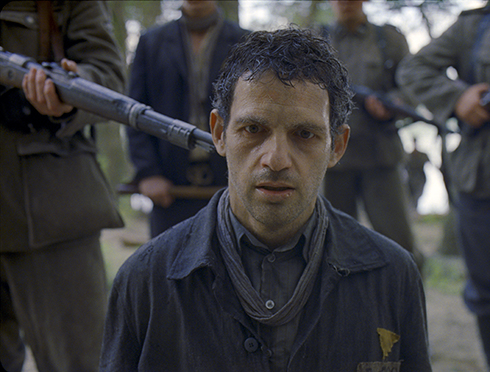
Geza Roerig, the protagonist of Saul's Son, is a member of the concentration camp of the concentration camp
One of the main and most shocking films of the season is the debut of the Hungarian director Laszlo Nemesh, Saul's Son. Last spring, he received a Grand Prix in Cannes, just recently-Oscars as the best film in a foreign language. The former ally of the Guru Hungarian cinema, Bela Tarra, took up almost the impossible, deciding to show the Nazi “death camp” through the eyes of a member of the Sonderkanda. The hero of the film is a Jew doomed to death, who delays the inevitable end, driving his own kind into gas chambers, and then pulling out their bodies from there.
Hell from the inside
Naturally, the “son of Saul” caused a variety of reviews - some consider it an impressive humanistic monument, others call the calculating and speculative. It is impossible to deny only that this film is impressive. Once, seeing, forgetting him will not be easy. It’s difficult to even believe that we are debuted - with such formalistic skill it is made.
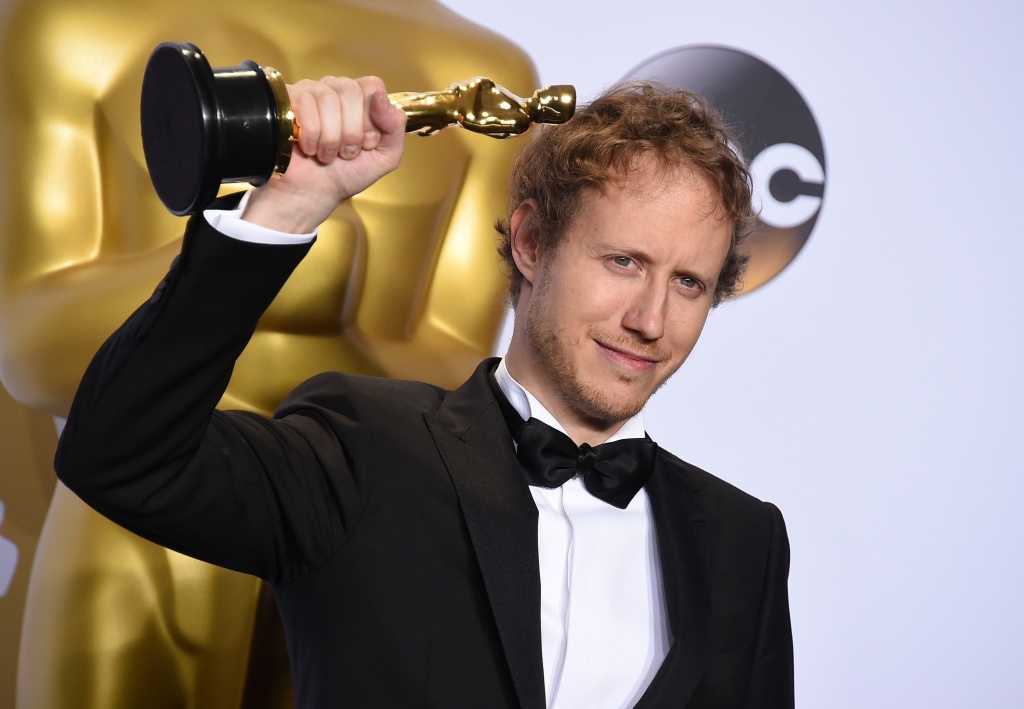
Laszlo Nemesh-the director of the Department, who brought Hungary last year the Cannes Grand Prix, and this is also Oscars
The painting begins in reservous. The main character enters the frame, and until the very end we will no longer part with him. It is (it seems, for a long time) in the very heart of darkness, serving the Aushwitz death factory. We meet him at the time of the arrival of the next echelon, but at first we guess about what is happening only by voices: the surrounding world we see in fits and the world - we, like the hero, are concentrated on the saving “here and now”, which allows us to at least temporarily forget about the terrible context. People got off the train, lead them to the locker rooms, promise soup, work and even salary - but first a shower. The striped naked is being brought into special rooms, the door closes, a knock and screams are habitually heard outside the door. Then they subside. Saul and his Sonderkommand's comrades under the screams of Oberkapo take out “things” (euphemism for corpses), and then retire the floor and walls for the new batch of victims.
The surrounding world is seen in fits and fits - we, like the hero, are concentrated on the saving “here and now”, which allows us to at least temporarily forget about the terrible context
Like the Dardenn brothers, whose influence in the "son of Saul" is obvious, Nemesh and his operator Matyash Erdey do not recede from his hero one step. A complete illusion of the frightening, perhaps the documentary reliability of this world is created, but it is not shown in details. Saula escapism, for him, an employee of the survival strategy, happily closes with the squeamishness and fear of the viewer (although the imagination works more efficiently than any images; so Alexei German did not show the scene of the Arkanar massacre itself, limiting itself to its consequences). Even masterfully long plans taken in the incessant movement have a psychological, and not aesthetic background: "If only not to blink, otherwise you will not want to open your eyes again."
Saul did not want to, but still saw a teenager who miraculously survived after the gas chamber. The doctor approached, checked, and alerted the work everyday. Looking into the face of a dead boy, Saul recognized him. Or did it seem to him that his son was lying on the bench? Everything is unsteady in this everyday hell, no one wants to remember the past. Saul seemed to be married, but there were no children. And this is a son from another woman, but is it really so or did you like? And is it possible to find out a grown child who has not seen for many years? The viewer will not receive answers to these questions. He is not up to the answers, like Saul: it is necessary to steal the body from the morgue and betray it to the earth. And before that, find a rabbi that the Kadish will agree to read. Saul is obsessed with this idea so much that he almost does not notice the main thing - prisoners are preparing to escape from the camp.
Removers of memory
The long -awaited “Saul Son”, of course, will be accompanied by a public discussion, they will break through to his premiere - and this is normal. But a couple of weeks before him came the thriller of the Egoyan atom to “remember” on a similar topic that almost no one noticed. Although the Canadian Egoyan is also a laureate of the Cannes Grand Prix, a wonderful master in its own way, and the elderly superstars played in his picture-Christopher Plammer, Jurgen Shkhnov, Bruno Ganz and Martin Landau (this is not an unknown Geza Roerig, the amazing chief actor of Saul's Son). The plot "Remember" paradoxical. A losing memory, the old man runs out of the nursing home, where he was placed after his wife’s death, and goes in search of the killer of his family - a German hiding under a stranger to the United States. The hero constantly forgets about his goal, but the closest friend - in his right mind and solid memory, but in a wheelchair - instructs him on the phone.
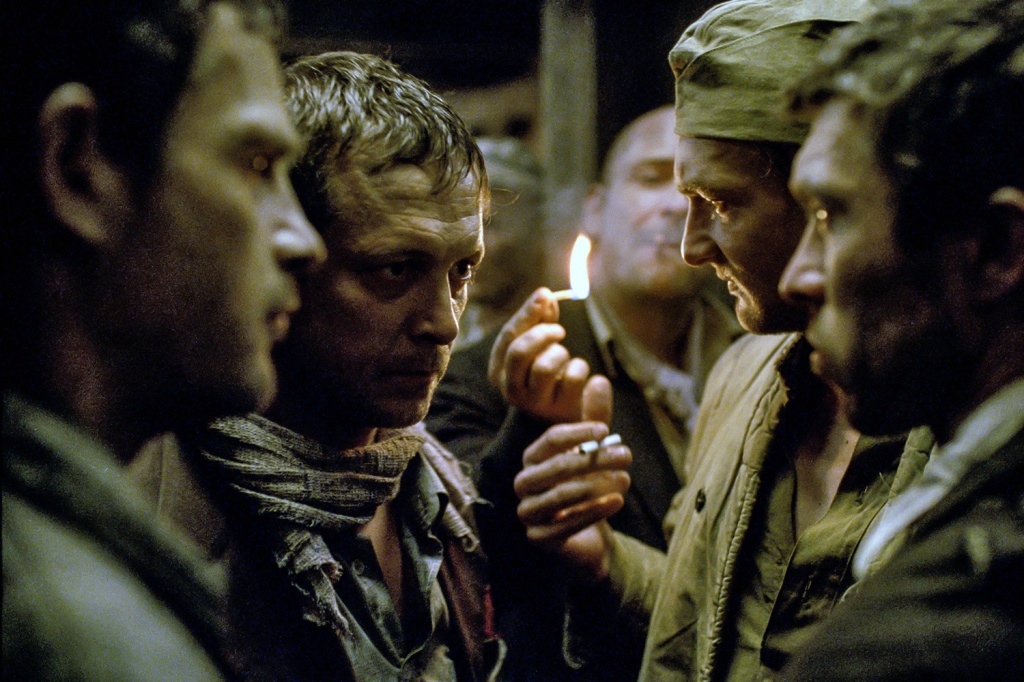
There are no famous actors among the heroes of the “son of Saul” - in particular, therefore the film looks like a documentary
The denouement of "remember" is too unexpected to hint at it. It is enough to pay attention to the fact that updating the events of the Holocaust in the cinema, avoiding stylization or genre games, is becoming increasingly difficult. The characters are getting older, the plots are more and more uninhabited ... Maybe the topic is out of itself? The whole life has passed since the end of the war and the Nuremberg process, will it be enough? The obvious answer is given by one film after another: the Holocaust is the stone from which a modern person, like a Sisyphus, has no right to refuse. No wonder Amnesia overtakes the hero “Remember”, for a reason cannot recognize the face of his son Saul. New films about the Holocaust are not an order, not a ritual, not a convention. They are necessary for art as the most effective antidote from oblivion.

In the film “Remember” friends (Martin Landau and Christopher Plammer) are preparing to escape from the nursing home and avenge the surviving SS
There are two extremes in the cinematic canon of the Holocaust. One is connected with the legacy of the Spielberg Schindler list - the topic obeys the conventions of the genre, allows itself to play a fairy tale and sentimentality, which trivializes it, but also makes an affordable wide audience. The second goes back to the ten-hour documentary of Claude Lancman “Shoa”-a series of heartbreaking evidence that intentionally avoids any illustrativeness (there are not even archival personnel: only shooting the wasteland, where the concentration camps were once located). The component of "entertainment" is excluded - it is only about the transfer of extreme experience. In both cases, however, it is most important not to allow you to forget about what happened, even if it happened for a long time, far and not with you.
The Saul son is in the middle. Like the “Schindler list”, this is a kind of attraction, albeit extreme, but bewitching. Like Shoa, he refuses compromises and defaults, inviting the audience to look into the most epicenter of darkness and not allowing him to turn away.
Tsar and his heirs
The easiest way is to blame the “son of Saul” in some unconvincing - the told plot pulls on a nasty joke. Who will become among the mountains of dead bodies with manic stubbornness to achieve the burial of one corpse, risking his own life? The naturalism of the picture is leveled when you understand that we are not talking about a real situation, ”Nemesh operates with symbols. Seeing his son (or the one in whose features he felt a son) among the people in whose murder he involuntarily participated, the hero feels the need for atonement - albeit a meaningless, but balancing act. Thus, the “son of Saul” answers the question of the measure of responsibility for the collective evil, even if you were forced to commit it, and you agreed for self -preservation. The most important topic is solved in the film somewhat speculatively. On the other hand, in the audience “I do not believe” there is also a therapeutic effect. If you fully connect to what is happening on the screen fully, even the strongest psyche cannot withstand.
The inevitable pain that can not be cured by anything, at least dulls when the body is in motion - away, from barbed wire: if you die, then in the will
The body that can not be devoted to the earth, as if it is rejected by it - and the unsuccessful burial player, the heir to the ancient antigon: powerful images that speak for themselves. The hero’s name works in a similar way, chosen, of course, no coincidence. After all, Saul was called the Old Testament king, who wanted to kill his adoptive son and future heir - David, and in the end he died himself, and almost all his many many offspring disappeared with him. The Lightmotif of the funeral rhymes with the parallel plot of the shoot from the camp, which other prisoners are preparing. The inevitable pain that cannot be cured, at least dulls when the body is in motion - away, from prickly wire: if you die, then in the wild. But, of course, a real escape is impossible anywhere except in dreams. The gloomy ending of this saga is predetermined. It recalls that hell is arranged concentrically, there is no way out of its circles. If you can get out of it, then only after passing through, as Dante once did. The same path of the Hungarian director offers to go to his viewer.
Here, inevitably, you will remember that in Russian cinema, which left the world, samples of strong and original films about the war, there are practically no paintings about the Holocaust. And even a game tape about Babi Yar, who was conceived by Sergei Loznitsa, could not take place. There is some kind of doom in this, something like the bad infinity of movement in a circle. But to us, like Saulu, who rolls a wheelbarrow loaded with corpses by order of the authorities, there is no time to think about it.
Photo: YouTube.com