
Translated material
The intrigue of the presidential meeting
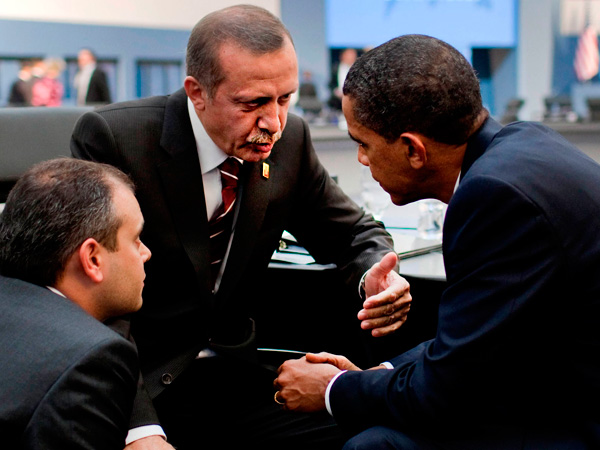
On March 29, Turkish President Recep Erdogan, who will participate there in a nuclear security summit, should come to Washington. Wall Street Journal wrote on this occasion that the Turkish side is very interested in Erdogan during this visit to meet with US President Barack Obama. The American side has not yet expressed much enthusiasm about the organization of such a meeting.
In another material, Wall Street Journal , published on the eve of Erdogan's visit, the specifics of American-Turkish relations are discussed. The author notes that until recently, Obama and Erdogan were closely collaborated on some international issues, but then fundamental disagreements began. First of all, this concerns the Syrian conflict. From the very beginning, Türkiye insisted that the root of all evil in Syria is President Bashar Assad, so it must be shifted, the United States should support its opponents. The United States did this, but in a much smaller volume than Erdogan expected, so the result came out unsatisfactory for Turkey.
Further, an important direction of interaction between Turkey and the West is a migration crisis. Türkiye has now accepted more refugees from Syria than other countries: about 2.6 million people. For European leaders, this is not enough, and they try to ensure that Türkiye accepts new refugees. In particular, the assistance of Turkey from Europe in the amount of $ 6.6 billion is discussed to stop the further influx of refugees to the EU countries. The United States, although they have not encountered such an influx of refugees as Europe, also expect that with the help of Turkey it will be possible to soften the international crisis. Meanwhile, in the West, suspicions are widespread that Türkiye wants to use this migration crisis as a lever to achieve EU membership.
Another problem is Turkey’s attitude to Syrian Kurds. The United States consider them its main allies in the struggle against the “Islamic state” (IS, a terrorist organization, is prohibited in the Russian Federation), and Erdogan considers them terrorists who help Turkish Kurds. In this regard, Erdogan is trying to impose an ultimatum to the United States: either they collaborate with the Kurds or with Turkey.
In addition, Türkiye insists that a safe zone was created in the north of Syria where it would be possible to place refugees who are now in Turkey. The United States systematically reject such proposals, because for this the United States and its allies will also have to declare a useless zone there, and this is fraught with misunderstandings with Russia, which no one needs.
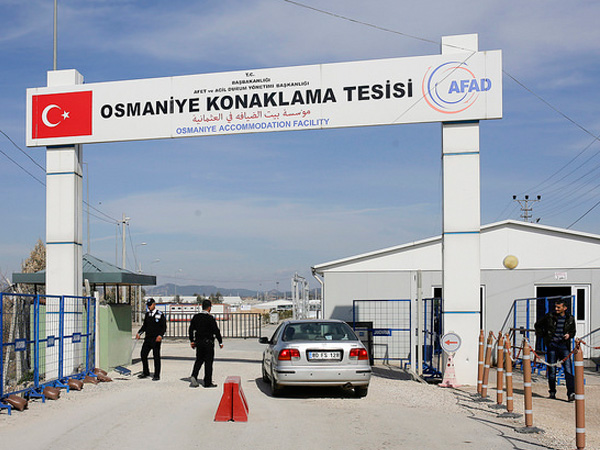 The border of Syria and Turkey. Photo: Flickr.com//european_parliaments
In turn, the United States wants Turkey to block the border with Syria, which IS uses to replenish its forces and reserves. To do this, the United States achieve that the Turkish side collaborates with the Syrian Kurds located on the other side of the border, which, from the point of view of Turkey, is completely unacceptable.
WSJ also notes that the war in Syria is not the only source of tension in American-Turkish relations. Another source is the domestic political situation in Turkey. The United States is unhappy with a new wave of arrests (including the detention of journalists) and violations of freedom of speech in Turkey. This, in turn, is due to the fact that Erdogan is trying to arrange an unspoken political coup in the country, changing the balance of powers in favor of the president.
Finally, another part of the agenda in the relations of the United States and Turkey is a conflict between the government and the Turkish Kurds. Officially, the United States recognizes the Kurdistan working party with a terrorist organization and does not mind the use of military force against it. At the informal level, the United States is striving to ensure that Ankara avoids victims among the civilians.