
Translated material
Threats on the southern border
Experts of the Valdai club called the main foreign policy threats for Russia in 2016. All of them are somehow connected with the southern neighbors of Russia, even Washington poses a threat not directly, but through China.
The Valdai discussion club was created in 2004 and united Russian and Western experts on foreign policy, since 2006, Vladimir Putin has traditionally meets with its members annually. The director of the Center for Political Technologies, Alexei Makarkin, explained in a conversation with RBC that in the framework of the club “there is a run -in and discussion of ideas that may be interesting to the expert community”, but the club’s point of view is neither official nor official. According to Makarkin, even if a third of the proposals of the expert document are subsequently implemented, this can already be considered a good result.
The report “International Threats-2016” emphasizes that “Russia has always been under pressure from competitors from the west and south, and this pressure is growing.” The document, however, was ready back in January, but was completely published only on March 28 and on Tuesday, RBC writes , and will be presented to the discussion site of the Valdai club.
 Opening of the Kastamonu plant in Elabuga, 2014 Photo: Kastamonu.ru
The authors of the report are sure that today the main challenges for Russia represent “dynamically developing Türkiye, Iran and China”, which “make plans for the Caucasus and Central Asia.” The United States conduct a “multidimensional war” against Russia in order to weaken Moscow. After that, according to the logic of the authors, Russia will be able to force the United States partner in the deterrence of China, which, according to the authors, is for Washington the “main project of the 21st century”.
It is to achieve this goal that the United States does everything to "create a sense of hopelessness, the inevitability of collapse in the population [of Russia], to provoke dissatisfaction with power." At the same time, around Russia to isolate Washington's efforts, a “pen of pro -American regimes” is created.
Designating threats to countries, experts notify that after a fairly successful military campaign in Syria, the Russian leadership may have a “dizziness from success”, which can lead to a direct military clash of Moscow and Ankara. With a different scenario of this war, there will still be no, but the conflict will result in a confrontation in space and on the Internet.
Another important threat is the retraction of Russia into the intra -Islamic conflict between the Shiites, led by the Iranian leadership and the Sunnis, the main force of which is the Saudis regime. The problem is that if Russia is still involved in this conflict, then on the side of Iran, and the Muslim population in the Caucasus and in the Volga region professes the Sunni version of Islam.
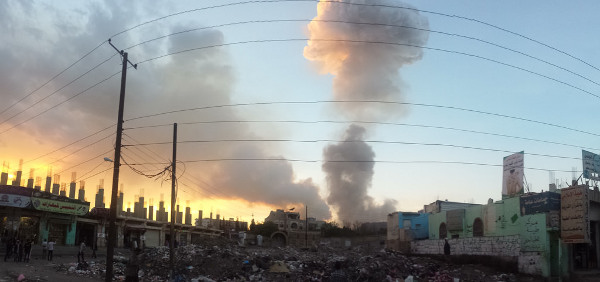 Air plaque on the bathroom, Yemen. May 11, 2015 Photo: Ibrahem Qasim/Flickr.com/CC by-SA 2.0
Do not forget that the Islamists in Syria are not completely defeated, which means they can soon regroup and focus their forces on the destabilization of the situation in one of the post -Soviet republics, for example in Tajikistan. At the same time, Russia, in connection with the recession, has reduced resources to support partners in Central Asia.
But Ukraine does not really bother experts. According to the authors of the report, the Donbass in the near future will remain a zone of unresolved conflict, but there is no need to wait for armed clashes.
Moreover, due to the fact that Russia is not capable of effectively counteracting Western sanctions, the main goal of Moscow is to “translate the game to a field more distant from its goal”. It is within the framework of this strategy that there is a “turn to the east”, contacts with the BRICS countries and even interference in the Syrian Civil War. It is the Syrian campaign, according to the authors of the report, that is the most successful of all of the above. Russia, most likely, will retain the friendly regime in Damascus, as well as the Navy and Air Force base in Syria, which will allow you to play an important role in the Middle East and, possibly, even conduct expeditionary military campaigns.