
Translated material
"The game is a political instrument"
The head of the Association of the Children's Product Industry - on the prohibition of the anti -communist game "Queue"
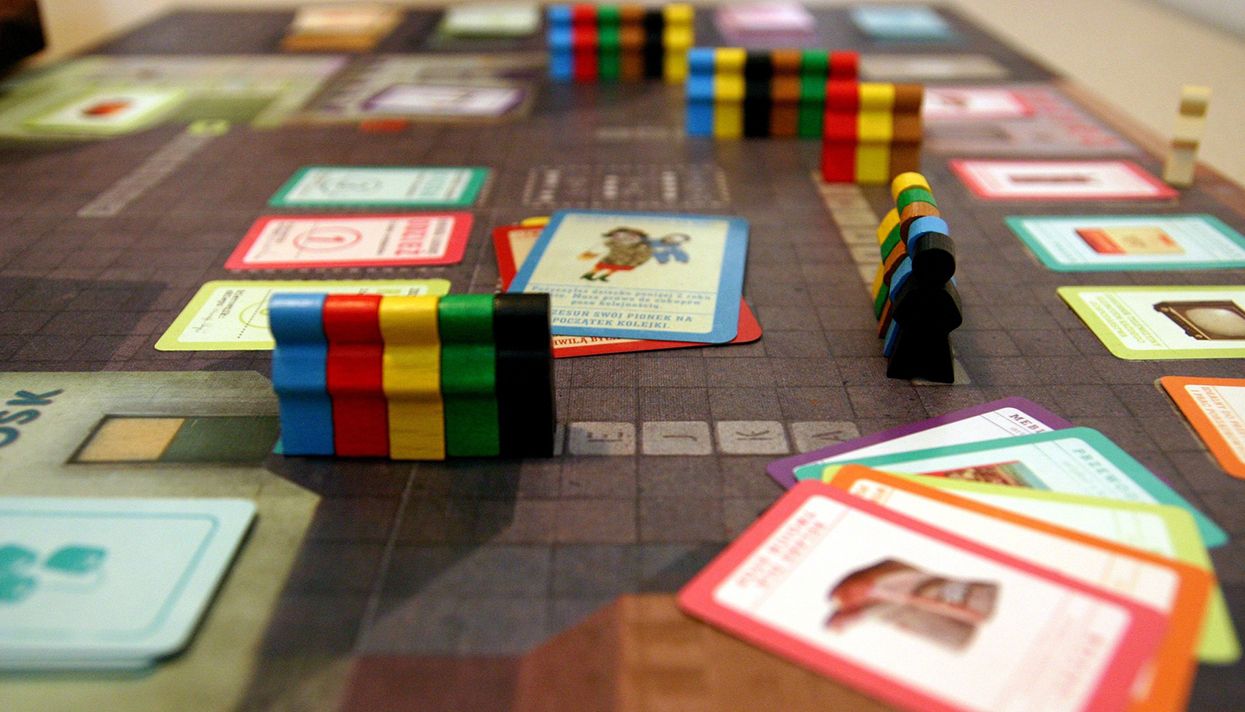
On March 17, the creators of the Board Game "Queen" from the Polish Institute of National Memory complained that Rospotrebnadzor threatens a ban on its sale in Russia-due to anti-Soviet maintenance. Later it turned out that the initiative did not come from Rospotrebnadzor , but from the distributor of the game in Russia - the Unitus company. Medusa talked with Antonina Tsitsulina, president of the Association of Industry Enterprises of Children's Products, which includes Unitus - why, in her opinion, Russian children should not play such games.
The board game "Kolejka) was released in 2011 by the Polish company Trefl. The idea belongs to the Institute of National Memory of Poland - an organization that is engaged in the study of crimes of Polish, Soviet and German security agencies against Polish citizens. The game takes place in the communist Poland of the 1980s. Overcoming all kinds of obstacles, players should be the first to “get” goods from the list. According to the creators, the “queue” is a training manual for youth, designed to show what, in particular, led the communist regime imposed by Poland. In November 2015, the game was released in Russian. On March 17, the Institute of National Memory reported that the Russian distributor - the Unitus company - warned Polish partners that the game in Russia is perceived as anti -Russian, and Rospotrebnadzor threatens to ban it. The agency’s claims allegedly caused a historical certificate to the game, which briefly set out the history of the attack of the Third Reich and the USSR on Poland and the establishment of a communist regime in the country after the war. In Rospotrebnadzor, Medusa was assured that the initiative came from Unitus, and not from the department. The Unitus was refused comments.
* * *
Before the conversation, Antonin Tsitsulina asked her to give her time to study the “turn” game - shortly before that she was brought a set.
- I watched the game. Have you seen her yourself? No? Well, see: "On September 1, 1939, Germany attacked Poland, and on September 17 - the Soviet Union."
- So.
- For example, I do not agree with such an interpretation. Therefore, I believe that in Russia our children should not play such a game.
- Wait, do you think that in 1939 the Soviet Union did not attack Poland?
- I believe that the Soviet Union did not attack Poland, but freed it from the German yoke. If not for Russia, part of Europe would have remained under Germany. But this is my understanding, I grew up on this.
-Some other points in the text of the introduction to the game confused you?
- There is a lot of this. I believe that any country has the right to say that it does not want to talk about it in a derogatory form. And any country has the right to ban on their territory to bring to children derogatory information about the country in which they live, and which, I would like to love. If I lived in Israel and wrote this about Israel, I would say the same.
-In Russian history textbooks, it also says about the attack of the USSR on Poland in 1939.
- Let it be written. I'm talking a little about something else. Understand, I respect Poland. They developed such a game for Poland. This is their understanding, their right. Their children have the right to play this game. I would like the games that Russian children play with Polish play in themselves what will contribute to friendship between our countries.
You see, I believe that childhood should be out of politics. Even if in 1939 or some other we had such a situation between our countries, we must put a line and try to play our children tolerant games that will show, for example, what a wonderful geography or some things in history that will contribute to the world. No need to draw the next generation of children into that conflict.
Sometimes the historical truth is very harmful to future relations. The [previous relationships] must be forgotten about them. It would be very correct if we would now study Poland from the point of view of cultural values, contribution to science, innovation and inventions, some medical technologies-how creative it is, what wonderful artists and musicians they have there. And that would be wonderful. It would be much more important.
- Antonina Viktorovna, what do you think, is it worth the children, for example, about the crimes of the Nazi regime, or also need to forget, so as not to spoil relations with Germany?
- Of course, we must talk about all historical events. There are facts that are discussed with children, because it is important to know. Including that, for example, in Russia, Latvia, Lithuania, Estonia - well, all countries that have in the world - there was a difficult relationship at a certain historical stage. They are difficult to clearly interpret, we were not there. From this you can make hatred today. For a children's game, it is very important that good defeats evil, so that when discussing complex issues, we find options for cooperation. Well, you know this is a child - they don’t shoot in the back, they don’t beat the lying, quarreled - made up.
If in this game [“queue”], despite everything, there was something that unites us-then, of course, you can discuss both repressions and all sorts of other problems. But we must go to positive: we must keep the world, we must cooperate, we must cross [through previous disagreements]. It is for children that this is very important.
I always say: the game is a political instrument. This is the management of consciousness, the management of the opinion. Then we do not understand where hatred was where, but it is from such [sources]. There are a lot of countries - for example, France, England - who used [games] during the war. The child is very susceptible to this. And you have to be very, very accurate.
-Will the association of the children's toy industry will use any measures so that the game “queue” is not sold in Russia?
- The first who raised this problem were the distributors themselves, who are an exclusive supplier of such games to the Russian market (we are talking about Unitis - approx. Medusa) . I think they will make the right decision. We will in no way crush, we are ready to discuss the situation with both the distributor and with Trefl. I believe that Trefl has a huge number of wonderful games. And Poland has a huge number of those that it can share with Russia, and we will be happy if such games are sold in Russia.
- Does the Association have a legal opportunity to ban the sale of "queue" in Russia?
- The association has no legislative powers to ban this game, but we can give such a recommendation. Talk to the participants [Association, convince them] to remove the game from the sale - we can influence this.
-What, in your opinion, should Trefl do so that the game “queue” is sold in Russia?
- I think that Trefl needs to expand its line aimed at friendship and interaction between the children of Poland and Russia. It will be a very good contribution to social capital between our countries. But this is their business. If for them it is fundamentally that the game “queue” is sold in Russia - well, we have legislation for this. I know that now the military-historical society of the Russian Federation is quite seriously related to the situation around the game "Queue" and is already engaged in this problem.
Can you ask: what is your opinion?
- My opinion? It seems to me that it is unconditional that prohibitions to protect children even from the most unpleasant aspects of the past ...
- No, yes. Certainly. We must talk with children about suicide too, and about everything else, but it is important - what to go further. From the point of view of psychology, the creators of the game did not bring her to positive. I think that colleagues simply did not have enough a child psychologist who would understand what such a game should be taken to. Then there would be no such reaction.
Alexander Borzenko
Riga