
Translated material
Eat such a party
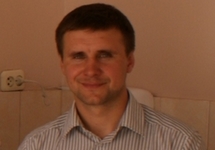
The Moscow District Military Court at the exit meeting in St. Petersburg sentenced a citizen of Roman Ivanov to 13 years of 4 months of strict regime, declaring him one of the leaders of the local cell "Hizb Ut-Tahrir". It is reported by TASS. The 36-year-old Ivanov, prescribed in the Pskov region, was found guilty under Part 1 of Article 205.5 of the Criminal Code (organization of activities of a terrorist organization).
As we might assume, Ivanov fully pleaded guilty, made a deal with the prosecutor’s office and his case was considered in a special order - without interrogations of witnesses and analyzing evidence. Three circumstances indicate this.
Firstly, Ivanov’s case was allocated into separate production. Secondly, the trial of it was only in one meeting - the day before it was reported that the case would only be considered, and not that the consideration would continue. Thirdly, Ivanov received a term below the lower limit - under part 1 of Article 205.5, the Code provides for from 15 years of the colony to a lifetime imprisonment.
The convict’s lawyer said that the verdict would be appealed. However, since Ivanov went to the pre -trial agreement, he will be able to appeal only the appointed deadline, but not the conclusion of the court regarding the circumstances of the case.
On Wednesday, a trial took place over other persons involved in the Hizb Ut-Tahrir case-34-year-old plumber Sergei Yablokov, the father of three children. He received 12 and a half years of the colony and the year of restriction of freedom after serving the deadline for the same part of Article 205.5 of the Criminal Code. According to the lawyer, Yablokov "pleaded his guilt and repent." Most likely, he also made a deal with the prosecutor's office.
In August 2015, two more defendants in this case were convicted. On August 14, a 23 -year -old student of the St. Petersburg Marine Technical University was sentenced to a citizen of Kyrgyzstan Mahamadimin Saliev - he received 5 years of strict regime under part 2 of article 205.5 (participation in the activities of a terrorist organization), the sanction of which is from 5 to 10 years of the colony.
On August 17, 25-year-old Dagestan Gapur Magomedov was convicted on the same charges. He also received 5 years - but not strict, but a general regime.
Saliev and Magomedov also concluded transactions with the prosecutor’s office and collaborated with the investigation.
Meanwhile, the investigation in relation to the five other defendants in the case, of which one is charged with part 1 of article 205.5, and the other part 2, has not yet been completed. This, in particular, is 32-year-old Eldar Ramazanov and 53-year-old Karim Ibragimov. They, as well as Saliev, Magomedov, Yablokov and Ivanov, have been in prison since the summer of 2014.
In April 2015, two more defendants were arrested - Russians Isa Ragimov and Dmitry Mikhailov, and in June - Ilyas Kadirov, who, like Saliev, studied at the St. Petersburg Marine Technical University.
The six defendants arrested in 2014, initially, along with Article 205.5, was also charged with 282.2 (the organization of the activities of an extremist organization or participation in it). However, later, as far as you can conclude, this article was excluded from the case. In any case, she was no longer charged with Ragimov, Mikhailov and Kadirov. In addition, it was not discussed in messages about sentences to the defendants who chose a special order.
In Russia, Hizb Ut-Tahrir was banned in 2003 by a decision of the Supreme Court. Since then, a number of processes in the cases of members of this party have already passed, at which the defendants received deadlines up to 17 years.
At the same time, Russia is the only country in which this organization is recognized as terrorist. In some countries of Central Asia, Hizb Ut-Tahrir activists are also pursued, but on charges that are not related to terrorism. In Germany, the party’s public activity is prohibited for non -recognition of Israel, but members are not subjected to persecution. In other European countries, as well as in America, the organization acts legally. This also applies to Ukraine - in the Crimea, until its annexation of Russia, there were also legal party cells. Meanwhile, after the annexation, two cases have already been fabricated against the actual or imaginary activists of the party.