
Translated material
Ordinary barbarism
The militants of the Islamic State* have two main targets - people and monuments
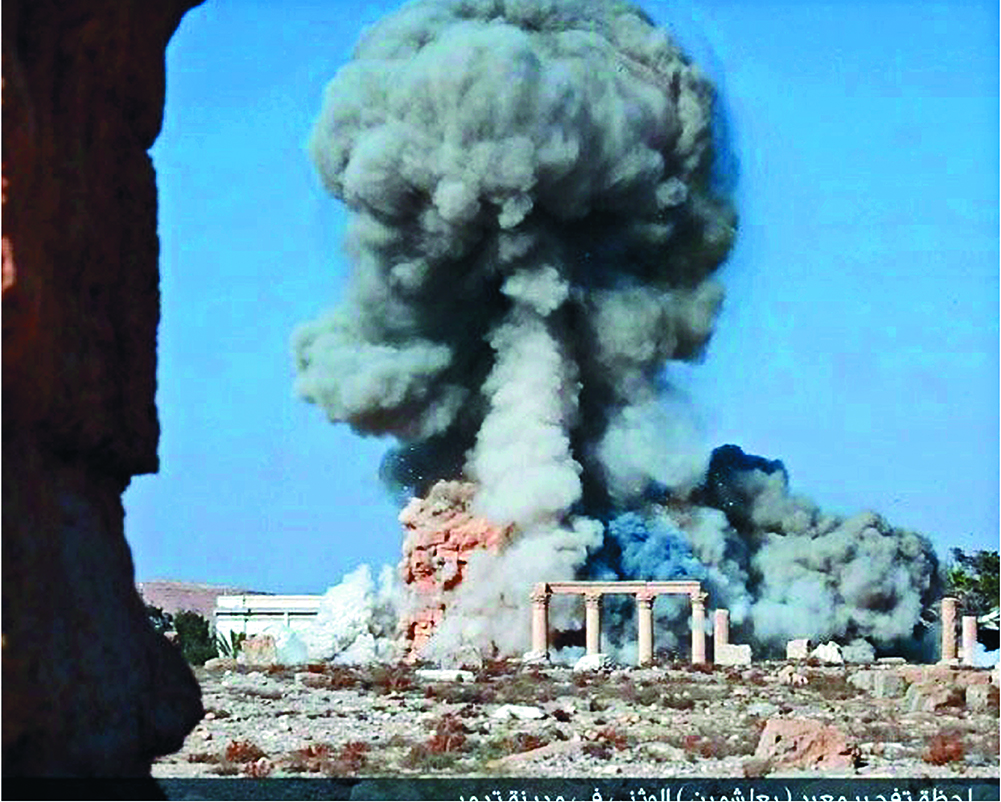
The fighters of IG* undermine one of the ancient relics - the temple of Baalhamin, Palmyra, Syria, August 25, 2015
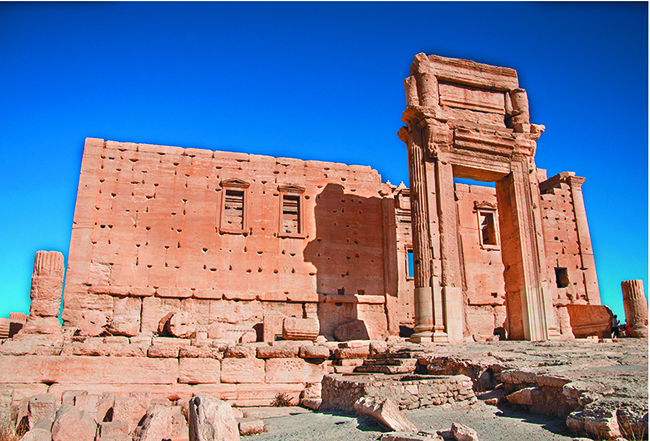
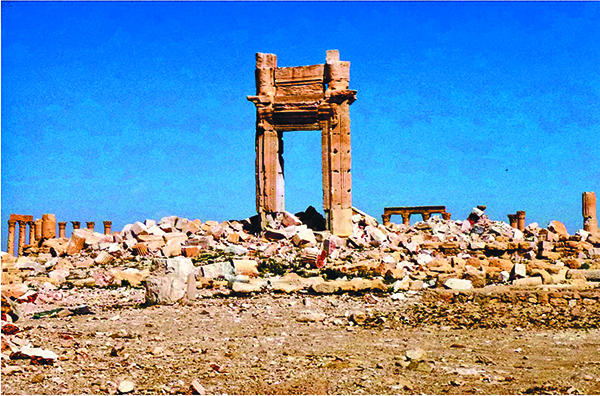
Palmyra. The ruins of the Bel Temple before IG* (above) and after (below, the picture was taken on March 27, 2016)
This week in Paris, at the UNESCO headquarters, experts from different countries gather at the call of the Group of Friends of the World Heritage, ready to help ancient Palmyra-to be born again. This is a difficult task. Someone, for example, the famous Spanish archaeologist Hesus Hil Fuensant, believes-almost impossible: they will not help, they say, nor money (the emergency fund UNESCO in Syria has already raised almost € 3 million), nor the human mind. Because there is pristine beauty, but there is carefully recreated. And between them - the difference between the lengths of the centuries.
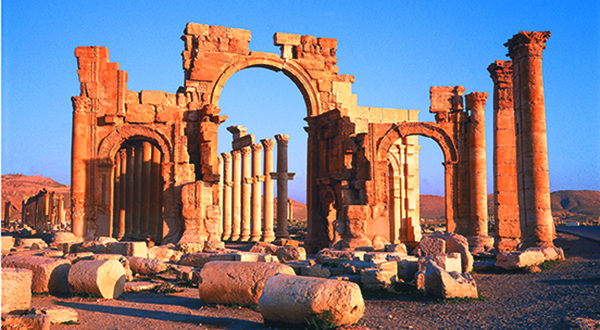
Triumphal arch of the time of the Roman Empire: above - it looked before the arrival of the barbarians from IG*, below - after undermining miraculously several columns survived (the picture was taken on March 27, 2016)
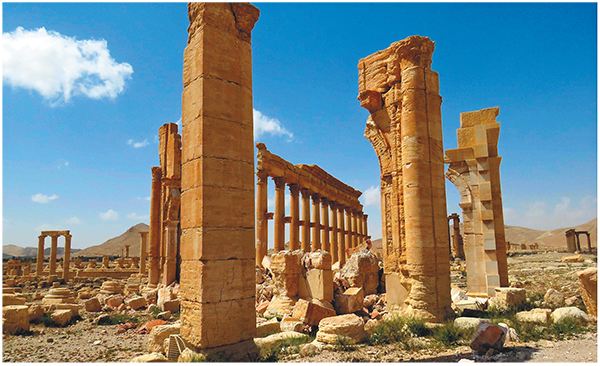
Palmyra, one of the richest cities of late antiquity in the oasis of the Syrian desert between Damascus and Euphrates; Palmieri, founded, according to legend, by the biblical king Solomon, the city whose ruins, which once decorated the covers of Soviet textbooks of the ancient world, are included in the UNESCO World Heritage List - this pearl of Syria and all human civilization was captured by the militants of the “Islamic state”* in May last year. Until the day of liberation-March 27, 2016-several ancient monuments destroyed by vandals from IG*: the statue "Leo Allat", which two thousand years old, the temple of Baalhamin (I AD) and the largest building of the city-the temple of Bela, built in the 32 of our era under the Roman Emperor Tiberia. In addition, three burial towers and the famous triumphal arch were destroyed - also the era of ancient Rome. The barbarians would have diluted a lot more, if it were not for the feat of the 82-year-old keeper of museum values of Palmyra Haled Assad, who refused to give them caches with artifacts and for this decapitated. But they managed to turn the ancient theater into a place of public executions, and in the historical museum they placed the Sharia court. True, a little later they realized that, due to ancient monuments, it was possible to replenish the budget of their “caliphate” not only in Iraq, but here, in Palmyra, and stopped blowing up the relics. Many objects of ancient decor vandals managed to sell on the black market, now experts are cherishing the hope that they can be found.
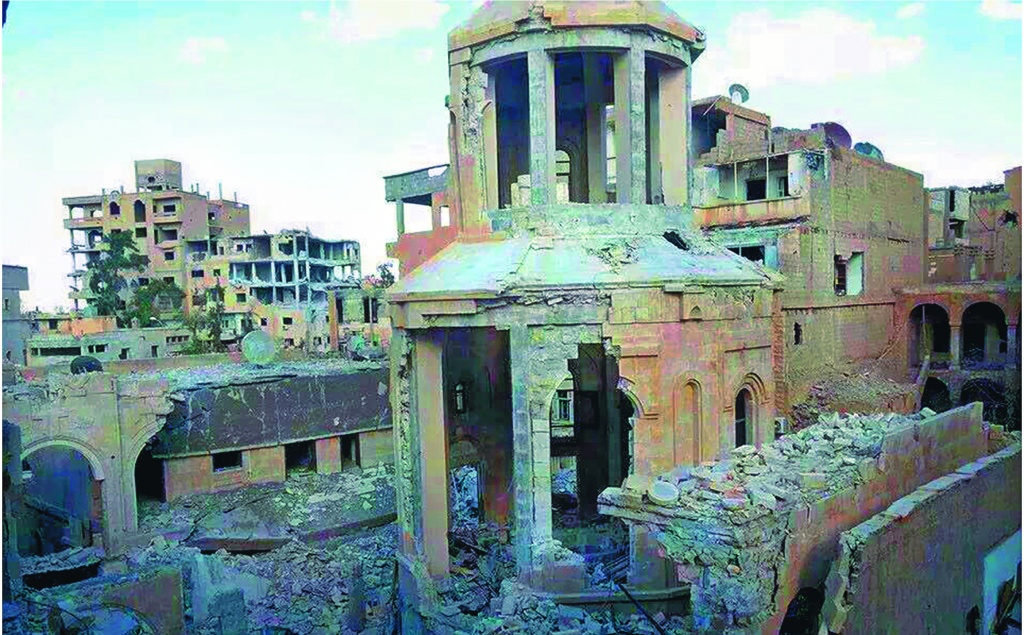
The Armenian Genocide Memorial is almost completely destroyed as a result of the artillery steering from IG*, Deir Ez-Zor, Syria, September 2014
When leaving Palmyra, the IG fighters* mined almost half of the city, but the remote control bombs did not work. There is a version: with the help of Russian electronic means, it was possible to create a “dead zone” around Palmyra, where electromagnetic signals were suppressed. But the work of the arrivals to cleanse the Palmyra of Russian military sappers from this no less-the militants literally stuffed the city with ministers mines.
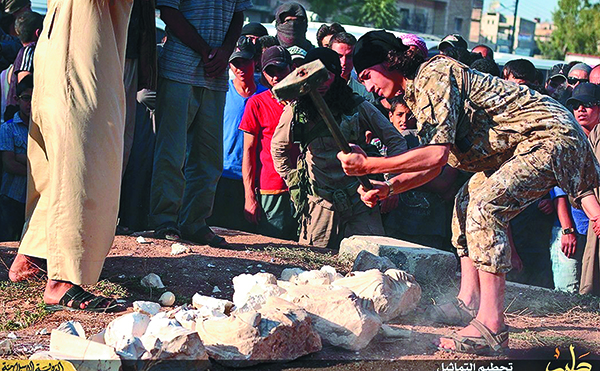
A picture common through online channels of IS propaganda*: a young jihadist breaks with a hammer ancient artifacts stolen in Palmyra, Manbij, Syria, July 2015
Optimists assure that 80% of Palmyra monuments are in good condition, and the destroyed will be able to restore without much difficulty. The main question is where to start. Some UNESCO experts believe that it is better to restore ancient monuments not in real form, but in the form of a computer model in 3D or 4D-format, and to leave the city itself as it is-in memory of what is experienced during the Civil War and in the edification of descendants.
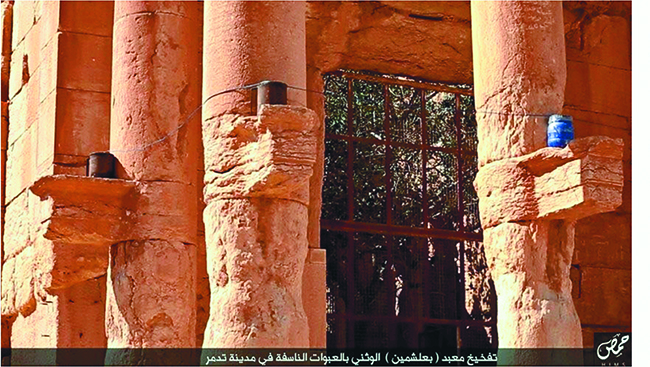
The mines installed on the columns of the Baalhamin temple, the “execution” of the ancient relic of the Islamists showed the whole world, Palmyra, August 2015
But these recipes, with all the nobility of motives, look at least premature. Over the four years of hostilities in Syria, more than 300 archaeological and historical monuments were destroyed, except Palmyra - in Hama, Aleppo, and other cities. In Homs, the Church of the Virgin Belief (1st century AD) was blown up in the city of Deir ez-zor on Euphrates, whose inhabitants are now blocked from all sides by IG* fighters and are desperately waiting for help, an unique museum of the Armenian genocide is blown up. Despite the military defeats, Hydra IG* has not yet been destroyed. And this means that the world cultural and historical heritage, as the already mentioned Spanish archaeologist Fuansant, “threaten two hundred Palmir”.
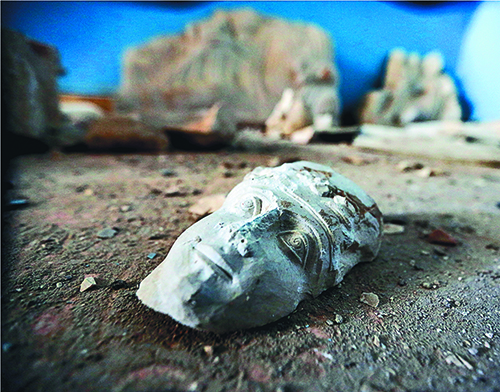
The head from the destroyed ancient statue. There are a lot of such finds in the liberated Palmyra, March 27, 2016
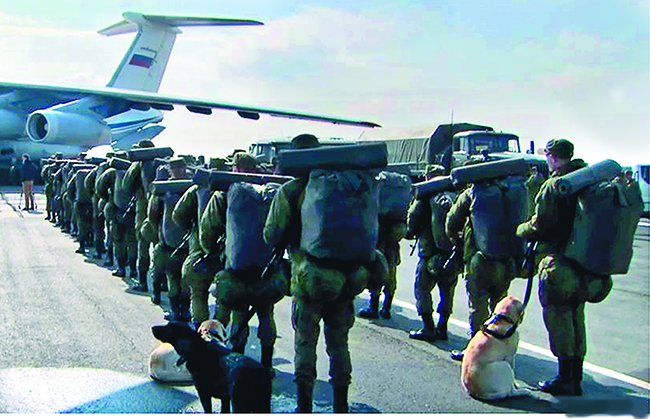
The first group of Russian sappers flies out to mine palmira: the task will take several months, the Military airfield Chkalovsky , March 29, 2016
* “Islamic State”, IG - a terrorist organization banned in the Russian Federation.
Photo: Action Press/East News, AFP/East News, Erdal Akan/Shutterstock.com, Album/Oronoz/East News, Armenweekly.com Joseph Eid/AFP, Golos --Meriki.ru