
Translated material
"Listen. Speak"
Book about family sexual violence
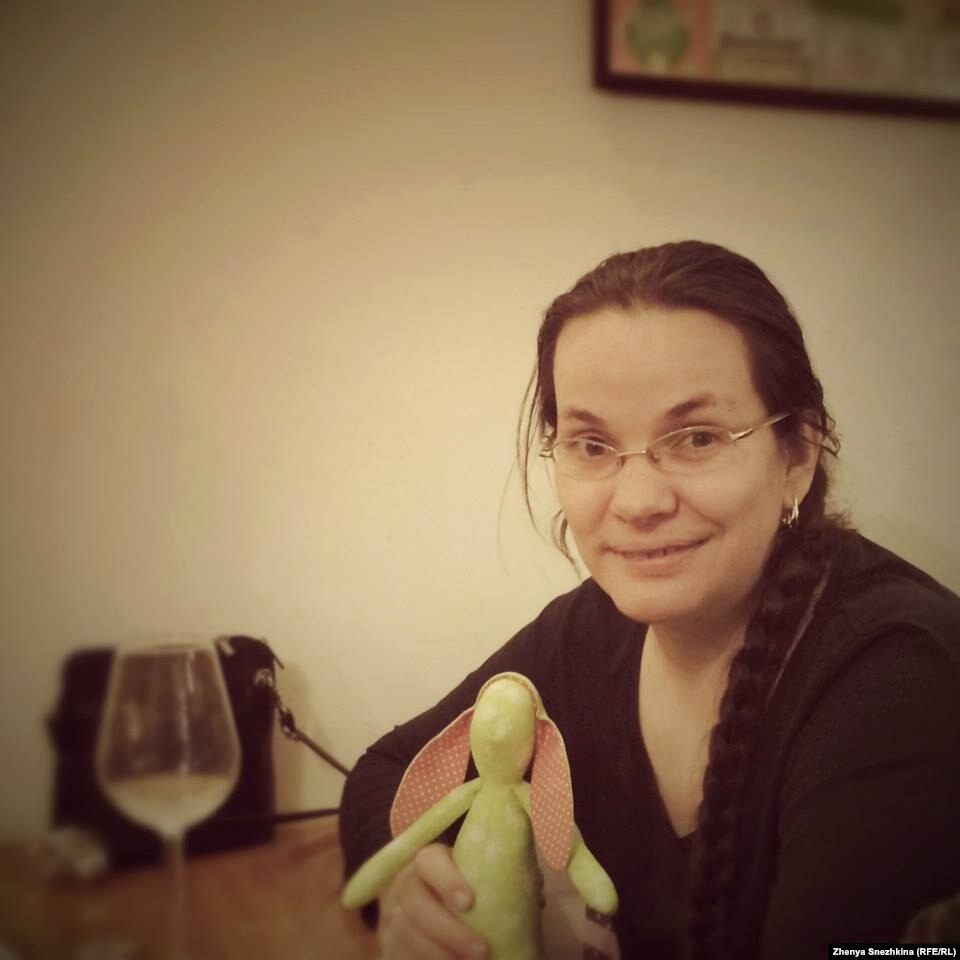
The book called “Listen. Speak” is published by the Internet resource of Ridero. For more than two years, the documentary story of a young woman, the victims of many years of home sexual violence, could not find the publisher: the publication was refused for reasons of the socially taboo topic, excessive frankness of the heroine, the presence of episodes by which the book could be accused of promoting children's pornography. She recorded and processed the material for four years Eugene (Zhenya) Snezhkin , journalist, blogger, psychologist.
- A book about family violence, and about one of the terrifying forms: about sexual violence, which lasts many years over the heroine and two of its young sisters, with complete connivance, indifference, completely incomprehensible position of the mother, which cannot but guess what is happening. Your heroine turns out to be a winner, so to speak. Despite the terrible circumstances and difficulties, she through education, through work, seems to win the situation.
- She certainly wins.
- Your negotiations with publishers were very difficult, even with publishers who understand the importance and complexity of this topic in the global context and the context of Russian. Are these fears? Why didn't they want to publish this book?

- I think that in the current Russian publishing world there is, if not a ban, then self -censorship regarding books socially directed, and on complex and acute topics that can be described in these books, especially with regard to the topic of violence against children. The Publishing House of KOMPAP-Guide tried to release such books: immediately repression began in relation to this publishing house. Therefore, social non-fiction, or social books that have been published recently in Russian publishers, were all translated. “Burned alive” was a confession of an Afghan woman who talks about how hard it was to live in a traditional Afghan society. There were no such materials on Russian material. I am not sure that there are no such texts, I think that we are talking about the self -censor of publishers.
- That is, publishers are afraid to be accused of propaganda of pedophilia, let's call a spade a spade?
- Including. For example, my heroine finds out that she is gay. Then there is a family story of a gay pair: this cannot be accepted by the Russian publishing house.
- How did you meet this girl?
“She is my old acquaintance.” I would not have known anything if I had not written for the Inliberty resource a cycle of columns devoted to the rights of the child, protecting the rights of the child, the rights to life and so on, about the circle of topics associated with children, violence against children, the issue of ownership of children, their independence and so on. At some point, I noticed that she reacts in a very special way to these of my notes.
- reacts on social networks, or is it a person from a close circle?
She was terribly brave, she could retreat at any time and shut up
“She is from my close circle, and she began to privately comment on what I wrote.” At some point, we met, I remember, it was “Coffee House”, she began to tell me the story of her life: “Understand why I write it to you, why I react like that.” Naturally, I opened my eyes wide and said: “No, Stop, you and I will do it differently. I will come, sit next to you, and you and I will write this book, you will tell me all this.” I wrote on the recorder. It was a painful story, in the process of creating this text we lived a great development of our relations. It is clear that when it came to very complex moments of her life, she resisted, we cursed, then we understood that we were not gathered for this, that we did not find out the relationship, but we need to bring this story. She was terribly brave, she could retreat and shut up at any time.
- I was amazed at the courage of both of you, incredible courage. You went to such zones that a person would hardly tell, I don’t know, a priest, a psychoanalyst, a psychologist, to whom he could trust. Let's honestly, these are terrible episodes of daily rape, if not daily, then regular, constant.
- Violence is generally a rather complicated story, especially the violence that occurs daily. We were able to track the story of how it arose, the first episodes, how it developed, how it was deepened, as it already led to extreme forms of violence. The time that hugs action in this book is the end of the 80s and approximately the middle of the zero, a lot of time.
- This is a lot. How much did she live in the family with this violence? This is her stepfather?
- She left, as soon as she could legally do this, at the age of 18.
- Previously, she is trying to leave home, going to study?
- She leaves the house to the neighboring city to school. She does not live in this city, she returns home every day. But this road, a long road to school and from school, is the time of autonomy that it can afford, and at that time no one pursues it. This is the main factor during the choice of his life, during the choice of study.
- How did she socialize further?
These children, like my heroine, are known about this and for other cases, try not to attract attention
- She graduated from school. In this school, she met a teacher, such a sixties, a lyricist, heir to those avant-garde teachers of the 60-70s, “The key without the right to transfer”, we know, a film about this, who was the only one who paid attention to her. These children, like my heroine, are known about this, for other cases, try not to attract attention. She says about it: that she, as a teenager, made great efforts, even more effort than the rest of the teenagers to be noticeable, she made three times more effort to be invisible. And he saw her, began to talk to her. She did not tell him about violence, he did not ask. It is clear why: this would put them in very difficult conditions of communication. The main question was not affected in their conversations. But he explained to her the value of education, he explained that in addition to physical inviolability, there is an inviolable spiritual world, that the knowledge she will receive is inseparable from her. He began to give her books, Machiavelli. Girl from the village, what is Machiavelli? He began to expand her horizons, discuss literature. Actually, this was the first important step in its spiritual development, intellectual.
- What profession does she then choose?
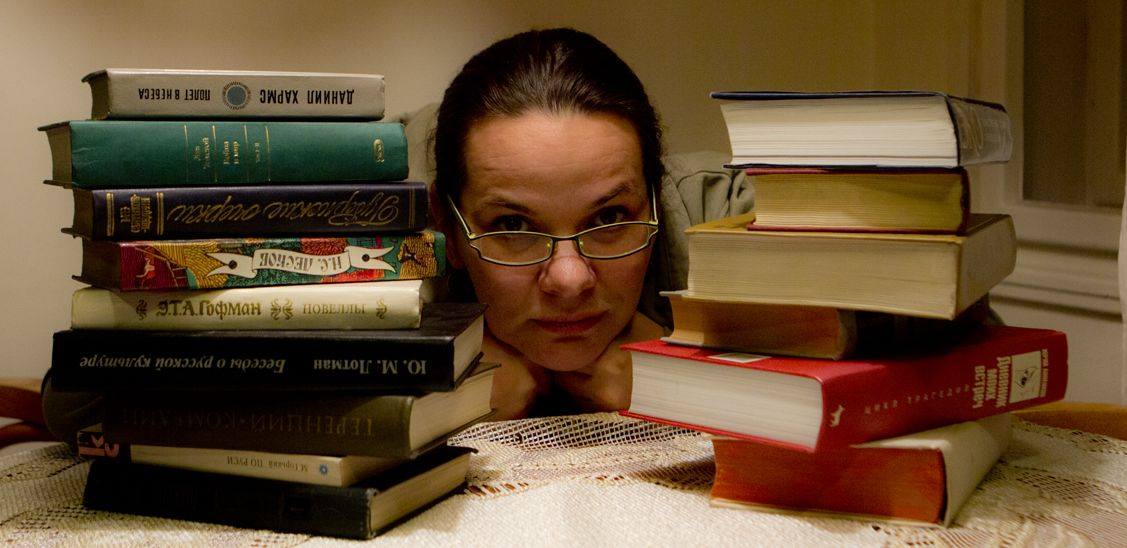
- She is a philosopher. She enters the Faculty of Philosophy, and acts quite by accident. She and her friend go to the University metro station, find themselves in the first humanitarian corps for need, forgive forgiveness, and she sees a schedule in which a philosophical and plaintiff, looks at a set of exams, requirements-and then begins to take exams in a square-in-gas method in two streams. As a result, it does not enter the History, but enters the philosophical one.
- And there she has another fateful meeting.
- Yes, there she meets the beautiful prince - this is important. She meets a foreigner who ended up in this group, or an exchange student. It is important that this was a man from a completely different world for whom there was no local grid of the idea of decency, on the one hand, and on the other hand, there was a clearly formed idea of good and evil, about what homemade sexual violence is, what crime is and so on. It was already a clearly formed complex, a European view of this business. She begins to trust him.
- And he, by the way, explains to her that what has been done with her is a real crime. He formulates this for her so because she opens to him, tells him what was happening to her.
She thought it was the same hard work as milking a cow. That is, she had no idea that it was criminal
- And for her this is a complete discovery, what happened to her. She never thought about it in the framework of a crime or something like that. She told me, the book tells about this that she thought it was the same hard work as to milk a cow. That is, she could not imagine that it was criminal, that it was impossible, that it was impossible to violate the boundaries of bodily. There was nothing for her.
- At what age was she subjected to violence?
- From fourteen.
- After a conversation with her prince, she did not go to law enforcement agencies?
- No, it happened much later.
- Let's talk about the prince first. Was this story ended well, or were it crashed hopes?
- I do not think that here, if we are talking about a beautiful prince, then the plots are important here. This story ended well because it healed it. He did not play as a wonderful prince, who needs to marry and kiss on the camera, but he played an important role - he outlined her scope of existing, he outlined her scope of life. She survived this story with him, he helped her gain freedom, he took her, in fact, from the house. When she received freedom, she experienced terrible depression, because she did not know another world, and he pulled her out of this depression. He helped her establish an independent life, provided her with work at some point. And on this, in general, his role in her life should be exhausted, she was exhausted. It is important that she understood this for Christmas.
- Did you understand it myself?
- Yes.
- Does this person now live in his homeland?
- Yes, he is a Russianman.
-Do they have a correspondence, some kind of connection?
- Yes, it persists.
- Who is her close person now? Did you say that she feels like a homosexual being?
- She, I would say, partner, they have been living for a very long time. These are people who made themselves, they built their house in a large sense of the word. They have a child.
- Adopted?
- No, their dear. They live like a family, as a happy family, as a big family. The family, inscribed in a large social context, at the level of family and friendly relations, they do not face rejection. In this sense, this is a very happy story.
- Let us return to some tragic episodes of this biography. We spoke that the moment came when she nevertheless turned to law enforcement agencies. Was there an investigation and what this led to?
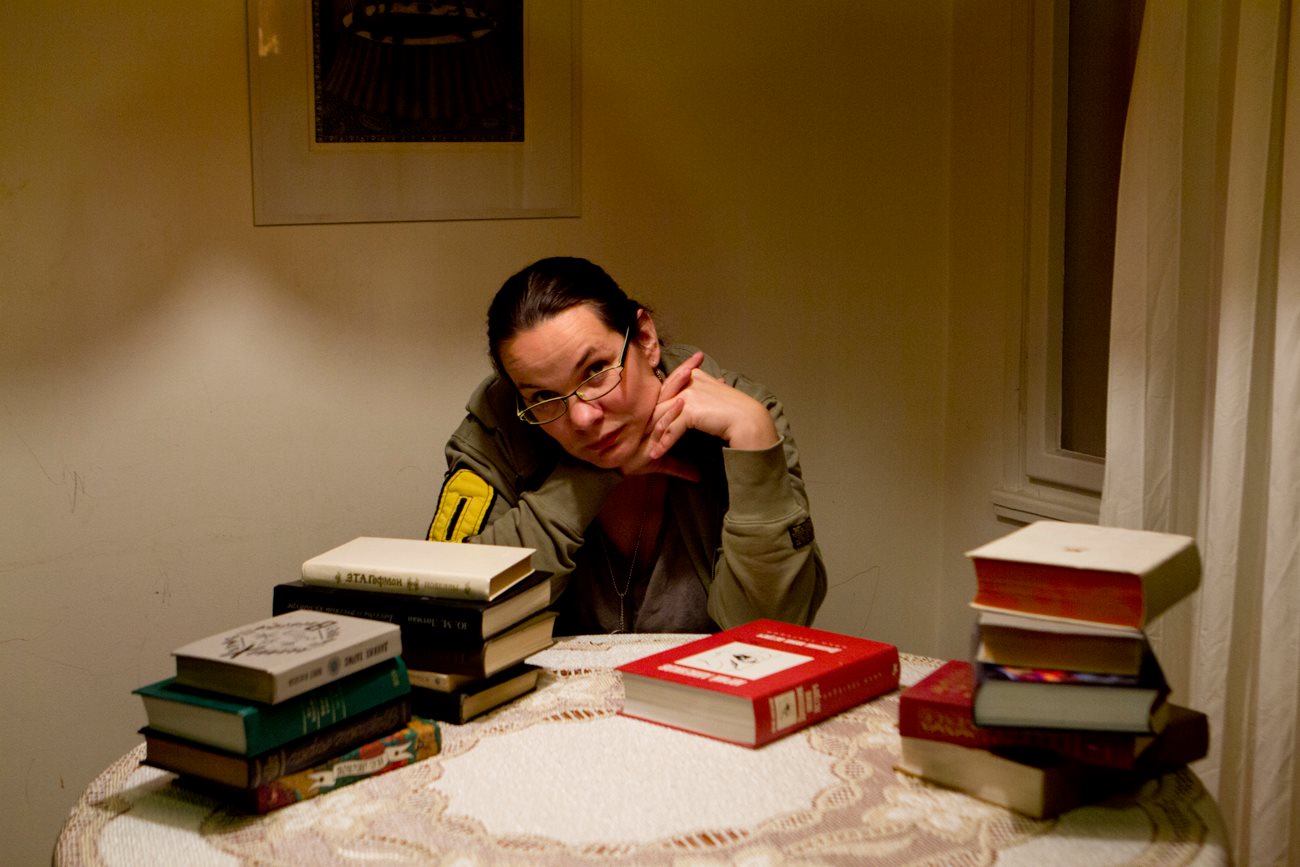
- Yes, this happened at the moment when she began to defend the sisters when it turned out that the same story was happening with her sisters, the youngest of whom was her own daughter.
- Native daughter of a rapist.
The rapist specifically builds such a picture of the world for others, so that it is impossible to break there
-And at that moment she, as an older sister, as a more independent member of the family who had already broken these ties, she did not need to go over to her mother, take some position in order to stop it all, she talked with her sisters. They went to the police, filed an application, and were interrogated. But the problem is that our investigative and law enforcement agencies, by and large, do not know how to investigate such cases. There are no system examinations - this is a separate big problem, there is no system of verification of evidence, especially when it comes to closed family history where there are no witnesses and cannot be. Because the rapist specifically builds such a picture of the world for others, so that it is impossible to break there or that the people who were there, they did not pay attention to it. This is actually not specifically Russian history-this is a European story, because in Germany, in Poland or England periodically someone finds some girl or several girls in the basement, whom their own father rallies.
- There are even filmed documentary stories about how it can last for years.
- It lasts for years, no one notices, because this is such a special way of behavior of the rapist, it is quite described. But in Russia no one can work with this, there is no evidence system, there is no methodology for investigating such cases. Investigators, even if they wanted to investigate this matter, they are lost. Until the fact that investigators proposed to arrange a provocation, that is, putting a police car, specially put up the younger victim as a live bait, wait for the rapist to start its black deed.
- And how did the heroines react?
- The heroines refused, thank God, because they understood that this was an unlawful way of obtaining evidence. At least my heroine understood this, and she dissuaded the rest. But the story with the investigation did not end, they could not investigate this matter. They tried to close it, it somehow drowned. The story ended that the rapist just died.
- Is mother alive?
- Yes.
- And what are the relations with her daughters, more precisely, what is the attitude of her daughters towards her?
- This is a difficult relationship, ambiguous. In one case, there is no communication, in another case, where there was more affection and connection, less an idea of the mother’s involvement in this whole story, more communication, in the third case it is very close communication. That is, these are different stories. Depending on how people thought about it, how they reflected, how they talked, and depending on the age of the heroines are different distances.
- Zhenya, the girls had special psychotherapy after it ended when, roughly speaking, father and stepfather, he was a rapist, died, and when freedom came to a certain extent? In theory, they would need serious corrective therapy.
- This is an individual question that we did not discuss and should not have been.
- The fate of the younger sisters, they are now adult girls. Do they study, work?
- They all studied and study. They all consist in one way or another in a relationship, they all have children. Another thing is that we can treat children differently and the fact of their birth. Here I will probably stop.
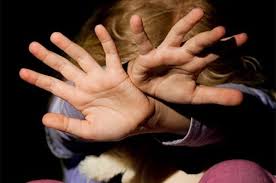
-In this dialogue of your dialogue, which sometimes seemed to me almost a monologue that could not be stopped, although I understand that it was quite difficult to pull out, on the contrary, I was struck by one thing. Your heroine said when the youth companies were discussed, the time of her students: “There are many of us. You, all the rest, just don’t understand how there are many of us. And I always see the girl in the company the same as me, who has undergone family violence.”
- Yes, this is a specific vision, which is apparently given only to them. This book had the second invisible part, I did a lot of interviews with psychotherapists, psychologists, police officers, prosecutors, sociologists, I did 50 interviews and realized that I could not stuff them into the book.
- It's a pity.
- It seems to me that this book should be a start for discussion, not a completion. When I talked with psychotherapists, psychologists, they confirmed this fact to me that we really do not imagine what violence, family violence, domestic violence are, what violence against children is, because it all happens in families in a closed mode.
When trying to start this language, we immediately got pedophiles so -called pedophiles
We know from foreign statistics that most of the 80% sexual violence against children comes from their close relatives - and this is what the victims never talk about, there is no way to say, there is no language for discussing the problem, the more in Russia. Because when trying to start this language, we immediately got the so -called pedophiles, a huge part of which, due to the lack of a methodology for investigating such cases, turned out to be false, but people are already sitting. None of the journalists can and does not want to further develop this topic, only so as not to substitute people.
- That is, the specifics not only in the hypocritical moral structure of society, but also simply in the absence of tools, does everything rest on it?
- Not all, but to a greater extent - yes.
- In your opinion, that can shake this pathological situation with the impossibility of analyzing it, with the inability to touch it even?
- It seems to me that the only way out of this situation may be the way out of my heroine offers: when the victims can testify about themselves. These are the only qualified people who themselves can speak as they can afford it. The courage of my heroine is also that she forms this language in which these people could talk about these problems.
-Did you have some special training when you asked her questions? Still, a very difficult work to ask questions correctly and ensure that a person answers them. Or was it an intuitive path?
-On the one hand, professional: after all, I am a psychologist by education, I understand what to do. But I would not want to be considered a manipulator. It was a difficult adjustment every time. We spent a lot of time nose to nose with complex conflicts, with complex pauses, during these pauses of painful, when she tried to formulate it all, it was hard.
The speech of the victim will pour exactly at the moment when she feels that you are ready to listen to her when you have no your own cliche, there are no prejudices
Моя задача была в данном случае просто молчать и слушать. Неслучайно слово "слушать" первое в заглавии этой книжки, а уже потом "говорить". Потому что нарратив, речь жертвы польется ровно в тот момент, когда она почувствует, что ты готов ее слушать, когда у тебя нет собственного клише, нет никаких предрассудков, нет никакого собственного мнения по этому поводу.
– Она счастлива сейчас?
“I think yes.” По крайней мере, она счастливее многих других людей, потому что это человек, который обрел свое самостояние, который ответил на эти вызовы, ей есть что сказать перед Господом.
– После книги она как реагировала? Вы остались друзьями? У нее были какие-то вопросы, недовольство?
– Это была сложная история. Через три года, когда было понятно, что все написано, текст, я с ним помучилась, я все это время говорила ей: “Я тебе пришлю текст”. Она говорит: “Да, да”. И я не присылала.
Это было такое вытеснение. Я не могла ей прислать окончательный вариант текста, не могла и все. Я это вытесняла, говорила – да, обязательно. Я не могла нажать на эту кнопку. Потом все-таки я сосредоточилась, нажала эту кнопку, в ответ получила: “Знаешь, я не могу это прочитать”. И она тоже очень долго собиралась для того, чтобы прочитать то, что мы сделали. В результате она обнаружила неточности в тоннах картошки. Но мы с ней просто договорились, это отпустили: существует героиня и как бы прототип, мы их развели, теперь я говорю о героине, а о том человеке, который существует в реальном мире, я стараюсь теперь не говорить, потому что мне необходимо сохранить ее анонимность, ее частную жизнь, и поберечь ее.
– Женя, у вас существуют подобные героини? Кто-то из женщин, подвергшихся сексуальному насилию в семье, рассказывал вам о нем? Вы будете еще работать с таким материалом?
– Если бы я сейчас могла найти какие-то ресурсы на то, чтобы сделать книжку, а у меня есть такая книжка, я бы очень хотела ее написать. Я бы не хотела сейчас раскрывать содержание, но такая тема есть. Есть очень важная героиня, историю которой я бы очень хотела рассказать.
– Вы реакции какой-то ожидаете от публикации?
– Проклятий. Я понимаю, до какой степени это чувствительная тема, как к ней не захочется прикасаться. Поскольку моим если не учителем, то примером была Светлана Алексиевич, я прекрасно знаю, какая критика была на ее работы. Давать слово жертвам – что это такое, вообще? А если вдруг все начнут? Тут я все прекрасно понимаю.