
Translated material
Pavlensky appealed arrest in the ECHR
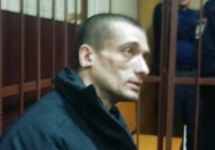
The actionist artist Pyotr Pavlensky, accused of arson of the door of the FSB building on Lubyanka, appealed to the European Court of Human Rights. According to Kommersant, the complaint says that his arrest is excessive pressure of the state, since first of all he performed an art action during which no one was injured. In addition, according to Pavlensky, he did not try to hide from the policemen who were detaining him.
The complaint also notes that the court limited the artist’s right to criticize state power. "Pavlensky should not be responsible for the disapproval of his artistic work by police or FSB officers," the document says.
“The court, considering the arrest, did not try to take into account that Pavlensky is an artist, going to the issue formally,” said Irina Khrunova, a representative of the artist in the ECHR. In her opinion, the arguments of the court that Pavlensky intends to hide is also not wealthy.
“Pavlensky was always in sight, he was not hiding. In addition, the severity of the consequences is small, no one was injured during any action,” she added.
On March 31, the Tagansky District Court of Moscow extended the arrest of the artist until May 5. Before the meeting, Pavlensky said that he was recognized as sane at the results of a psychiatric examination in the Serbsky Center. “Otherwise, I wouldn’t be here, I would go from Serbian to another place at once,” the artist said.
At the meeting, Pavlensky again asked the judge to re -qualify his case to terrorism. After that, he continued to remain silent.
On the night of November 9, 2015, Pavlensky doused the front door of the entrance No. 1 of the Russian FSB building with gasoline and set it on fire. "The burning door of the Lubyanka is a glove that society throws into the face of a terrorist threat ... But terrorism can exist only due to the animal instinct of fear. To go against this human instinct forces an unconditional protective reflex," the statement of Pavlensky said. He called his action "threat." The corporateist was immediately detained. During interrogation, he refused to testify.
On November 10, the judge of the Tagansky district court of Moscow Marina Orlova satisfied the request for the arrest of Pavlensky ( 
The case against the artist was also instituted under the Freedom action. February 23, 2014, the next day after the victory of the Ukrainian Revolution of Dignity (
The action lasted 15-20 minutes. Then firefighters arrived and put out the tires. Immediately after that the police arrived. Three participants, including Pavlensky, were detained.