
Translated material
Economic Presidium and closed data
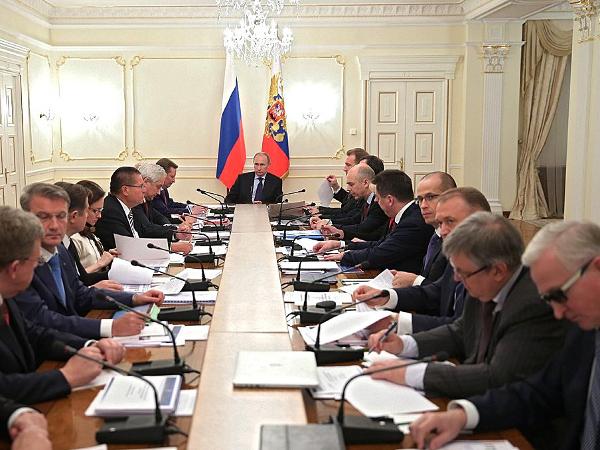
The Kremlin is going to revive an almost forgotten format for discussing economic problems with the presidium of the Economic Council under the President. The last meeting of this body passed two years ago, now it becomes obvious that within its framework you can discuss various reform options.
The Economic Council under the President is personally headed by Vladimir Putin. He was completely gathered only twice - the president did not like that the experts included in him use the opportunity to speak to the head of state not to present their ideas, but for self -promotion. Then the Presidium of the Council was created, which includes the heads of specialized ministries, as well as the Chairman of the Central Bank Elvira Nabiullina, Sberbank President German Gref, chairman of the civilian initiative committee Alexei Kudrin, the rector of the Academy of State Service (RANEPA) Vladimir Mau, the President’s Economic Assistance Assistant and the Economic Advisor to the President Sergey Glazyev. But in this composition the Presidium was last gathered in 2014.
In the Kremlin, according to Vedomosti , many are unhappy that the Ministry of Finance dictates the economic agenda, for which the main goal is to reduce the budget deficit to 3% of GDP and the preservation of reserves before the 2018 elections.
Moreover, Alexei Kudrin German Gref at the last time demonstrates more and more actively that they are ready to take responsibility for reform, which means it is advisable to use them to develop some solutions.
 Alexey Kudrin photo: kremlin.ru
The head of the Economic Expert Group Evsey Gurvich believes that the regular meetings of the Presidium of the Council will allow you to quickly coordinate and make decisions, and the government format is more standardized, there is a presentation of ready -made decisions.
Meanwhile, how it is now planned to slightly change the order of work of the government itself. According to RBC, the Ministry of Justice has already prepared amendments to the Constitutional Law “On the Government”, according to which many issues, including an economic nature, will cease to be considered at the cabinet meetings.
If the document is adopted, the government will receive the right to approve state borrowing plans, the sale of federal property, the projects for the provision of financial support for the amount of less than 100 million rubles, as well as the conclusion of international treaties to be ratified.
The amendments, on the one hand, look purely bureaucratic, and on the other, the reduction of the published information cannot be avoided. Now the agenda of the meetings and the transcript of the open part are always published - thanks to this, you can compose at least an approximate idea of which topics are now most concerned about ministers. If the amendments are adopted, then the open information will become an order of magnitude less.