
Translated material
"According to Camus, Sisyph is doing well"
Four questions were asked to members of the Council of Science under the Ministry of Education and Science:
- "What do you dream of as a scientist, author of books and articles, as an enlightener?"
- “Does your work in the Council of Science have a sisyphus work?” How do you like the Sisyphus? "
- "What scientific projects are most inspired by you now, what are you working on now?"
- “Work in the Council for Science carries a contradiction: its members are advisers to bureaucracy without independent powers. Do you perceive yourself as representatives, a kind of delegates from the entire scientific community or exclusively as the “ best among the best ” ? ” We publish the answers received.
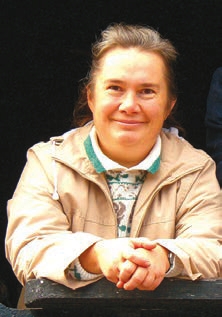 Elena Boldyreva, ch. scientific. sore. Institute of Chemistry of solid and mechanochemistry SB RAS, professor:
1. I hope to survive until the day when the flow of the best scientists will be sent to Russia, and not from it, our best scientists will consider to stay in the country for happiness, and this will not interfere with their self -realization as scientists. I hope to live to the time when a scientist, as once long, will characterize what he did, and not where he published it. I hope to survive until the time when active and inquisitive children will dream of the profession of a scientist, and not a banker or developer and not be disappointed, acquiring this profession.
I hope to live to the time when the knowledge of scientists will be in demand by those who want and can do something real in their homeland, and we will not run after those who can finance the implementation of our developments, and those who solve practical problems will run after scientists and compete with each other for the right to finance us. Dreams are perhaps unrealistic, but to the best of my strength I try to work in such a way that their performance is brought closer. At least in his immediate environment.
2. Our whole life is Sisyphus labor ... Other images are closer to me: "A drop sharpen a stone ..."; The frog in the roof of the cream, knocking down oil and jumping out.
3. I continue that I once began one of the first in the world and the first in Russia-detailed diffraction studies of molecular crystals of organic compounds and biological molecules in high pressures. We also actively study the photographic effects in molecular crystals - the phenomenon that we first discovered thirty years ago when I did the thesis. Since then, the Japanese rejected him, and there is now a real public boom around him.
We returned to this area and were able to show that we can still lead in it if not according to the number of articles, then in the depth of penetration into the problem. The development depth, by the way, has always characterized precisely Russian and German science - and my scientific career was realized in these two countries and cultural society. We also develop methods for obtaining new dosage forms, including for targeted delivery to the brain, based on methods of hard -body chemistry. I hope that someday these works will be in demand and supported.
4. I am not the "best of the best" in any way. I agreed to work in the council only because I believed that this would make it possible to tell those who make decisions about what consequences these decisions bring in practice. And about what is strangled and does not allow to work. I perceive myself as an absolutely typical, average representative of the scientific community, which, unlike most others, can at least convey information about our real life “upstairs”.
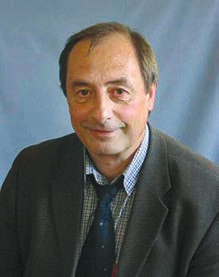 Ruslan Valiev , Director of the Research Institute of Physics of Promising Materials, Professor, Head. Department of Nanotechnology of the Ufa State Aviation Technical University:
1-2. I would like the level of Russian science and its role in society to be noticeably higher than we currently have, as well as that Russian science would enjoy greater respect both in the country and abroad.
3. The direction of my research is physics and mechanics of volumetric nanomaterials, and I am glad to note that this direction in recent years has been gaining wide international recognition. I hope that these developments will soon find large -scale practical application.
4. Yes, there are certain contradictions in the Council for Science, since this is only an advisory body under the Ministry of Education and Science. As the results of two years of work showed, more than 50% of the recommendations of the Council were adopted by the Ministry. This is a good figure, and, of course, it can grow if the information and the scientific community pay more attention to the work of the Council and support it.
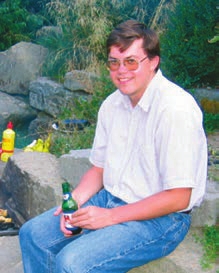 Vladislav Izmodenov, professor at the Department of Aeromekhaniki and Gas Dynamics of the Mehmat MSU, Professor of the Russian Academy of Sciences, Head. Laboratory of the Institute of Space Research of the Russian Academy of Sciences, Vedas. scientific. sore. Institute of Problems of Mechanics of the Russian Academy of Sciences:
1. I dream that: a) my scientific group had a stable and sufficient financing for the development of the group (with the possibility of planning for 7–10 years ahead); b) for “near -scientific” bureaucratic activities (compiling all reports, accounting documents) took a minimum of time (not more than 5%); c) so that my students quickly become full -fledged scientists who can conduct independent research, formulate and solve new problems.
2. According to Camus, Sisyphus is doing well and he is a happy person. Seriously, I do not consider the work of the Council for Science Farm. The Ministry takes into account the opinion of the Council on many issues. The exchange of views between the Council members and the Ministry of Education and Science usually passes openly and constructively - this impresses.
Unfortunately, a number of our proposals to improve the certification system of scientific personnel were not reflected in the documents trained by the ministry and accepted documents. Here the work of the Council resembles the Sisyphs. This is upset, but we understand that the ministry is obliged to coordinate the issues of certification with the Presidium of the Higher Attestation Commission (which, in most cases against our proposals), corresponding to the government in the government.
3. I was very lucky, since in the field of my scientific interests - the study of the global structure of the heliosphere and astroxfer of other stars - a scientific breakthrough is now taking place. It is associated with the exit of the Voyager-1 into the interstellar space, and with the expectations of the same for Voyader-2, and with new data obtained on the Interstellar Boundry Explorer device. So, in 2015, this device first discovered the so -called secondary component of the interstellar atoms of oxygen, the existence of which was predicted in my candidate dissertation.
4. I perceive myself as a representative of that part of the scientific community that has not yet lost the last hopes that the above dreams will become a reality for all normally working scientific groups.
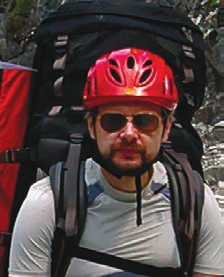 Eduard Hirsch, Vedas. scientific. sore. St. Petersburg Branch of the Mathematical Institute of the Russian Academy of Sciences, professor of St. Petersburg Academic University of the Russian Academy of Sciences:
1. I would like to create a normal scientific environment in St. Petersburg in the science in which I work (theoretical computer science). This is necessary to attract foreign students, graduate students, researchers. Unfortunately, such opportunities are still somehow available only in Moscow (like much more, which is related to financing).
2. The efficiency of our activities, of course, is very low. However, something manages to achieve. It is most successful if (a) we need to slow down some unsuccessful initiative (it is always easier to slow down than to promote something new, although not so interesting; but if we have accidental wandering to the straight line and the steps in the wrong direction sometimes manage to prevent, then the particle gradually moves in the opposite direction), (b) our actions are related to someone else (for example, trade unions, wounds, and other).
3. Of course, I would like to prove a nonlinear assessment of the schematic complexity of the clearly set function, but dealing with difficult issues - the work is ungrateful, according to new trends, they can inadvertently deprive funding and generally expel for a small number of publications ...
4. We will be “delegates” by the will of fate, so it remains to do what should, and whatever happens.
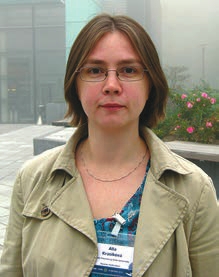 Alla Krasikova, Cand. Biol. Sciences, Associate Professor of the Department of Cytology and Histology, Associate Professor of St. Petersburg State University:
1. As a scientist, I would like science in our country to become one of the main incentives for the development of education, contributing to the emergence of new talented specialists in various fields of knowledge.
2. A section of young scientific councils on science has been formed recently. But my first impressions of work in the Council are positive - representatives of the Ministry of Education and Science and Scientific Funds listen to the opinion of the members of the Council. At present, our section is actively working on the problems of graduate school, and is also engaged in the development of tools aimed at developing the personnel potential of Russian science. There is hope that this work will positively affect the development of scientific research in Russia, a decrease in bureaucratic barriers to scientists, and reducing the outflow of promising youth from the scientific sphere.
3. One of the most interesting areas in cellular biology seems to me the problem of the role of various regulatory and architectural RNAs that do not encode proteins and are discovered recently. Some of these non -dodging RNA proteins in combination with certain proteins, as it turned out in recent years, participate in the formation of pronounced functional domains in the cytoplasm and core nucleus.
Currently, we are also working on the problem of the structural organization of the genome in the cell nucleus - we are interested in understanding how active and inactive chromatin* is organized in the nucleus space and what mechanisms support the ordered three -dimensional organization of the genome. In the future, these studies will make it possible to understand how the work of the genome is regulated and how to aiming at the activity of certain genes.
Our certificate: chromatin (from other Greek χρώμα-“color saturation”) is a complex of macromolecules consisting of DNA, various proteins participating in its packaging, and RNA. It got its name from the ability to intensively stain when using special dyes. It was first identified and described by the German biologist Walter Flemming in 1881. He discovered that chromatin contains filamentary structures, subsequently named chromosomes (“painted body”, from other Greek. Χρώμα-color and σώμα-body). This term was proposed in 1888 by the German histologist Henry Valdeir.