
Translated material
Televiations: Nikolai Svanidze
Interview of the former head of VGTRK
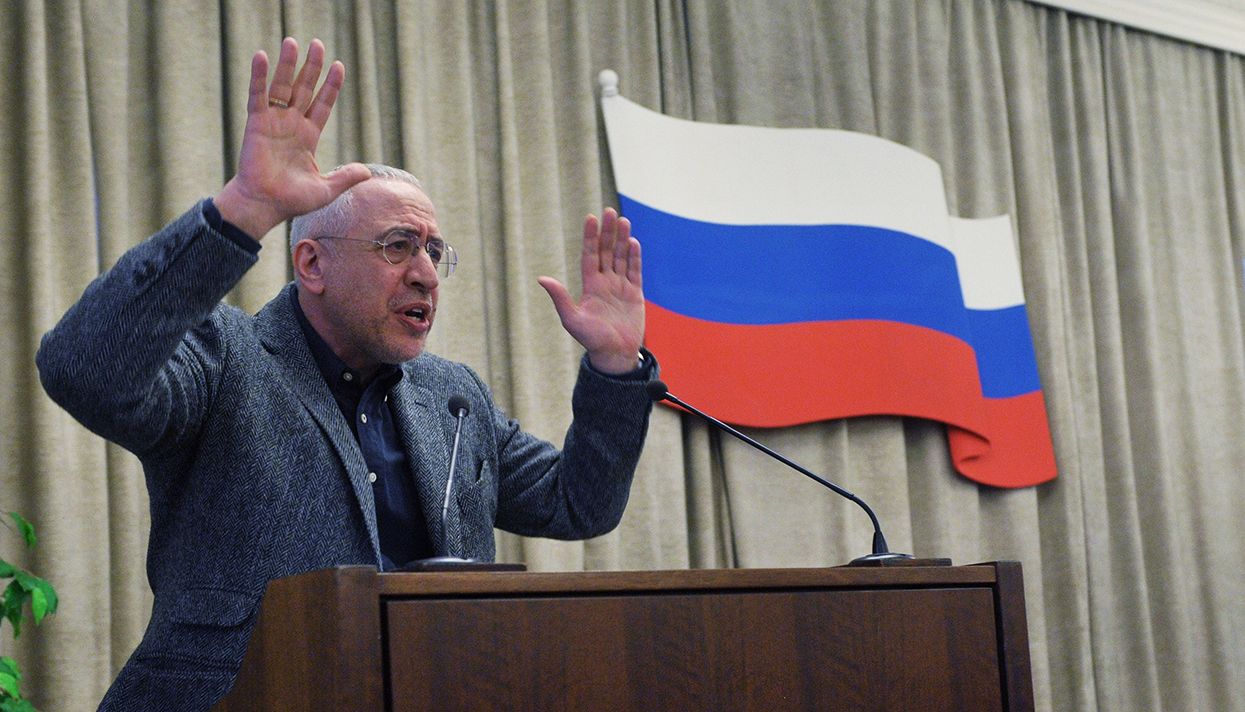
In May 2016, he has been the 25th anniversary of the release of Vesti, the first program of Russian television. From the very beginning, the Vesti employee was journalist Nikolai Svanidze; He later headed the VGTRK, and then left this position to make copyright programs and documentaries. In an interview with Natalia Rostova Svanidze, he spoke about his television career, attitude to Boris Yeltsin and Vladimir Putin, as well as why the employees of the current TV “burns the eyes”, despite the fact that they have not been engaged in journalism for a long time.
- Before television, you were an employee of the Institute of the United States and Canada, the very institute from which another large television star came out - Igor Malashenko.
- And Malashenko went out. And for some time Oleg Dobrodeev spent some time at the institute, whom we met there. In addition, the institute had people who became famous in other areas. [Co -founder of the Yabloko party] Vladimir Petrovich Lukin, for example. Or Andrey Afanasevich Kokoshin, my supervisor. At one time, he was the secretary of the Russian Security Council, and before that, the first deputy minister of defense.
- How did television appear in your life?
- I never thought about television, I did not dream of him, because it just did not occur to it. With the same success, I could invite me into space to fly, say. Moreover, in Soviet times on television it was difficult to imagine a person with my physiognomy, with my last name, with my system of views, and with my education. I did not dream of journalism. In childhood, however, it occurred to it that it would be nice to become a sports journalist. I loved sport as a sight, especially football, versed in it. And many Soviet journalists went to sports journalism because it was free. When Spartak won Spartak, you won’t lie, on the contrary: the scorers are visible. As for domestic policy, there was no topic as such on Soviet television. And in the external everything was in one gate: "The sun rises above the Capitol, but there are no smiles on the faces of ordinary Americans." But I cannot say that sports journalism was my dream.
Zhenya Kiselev called me to television. He offered to meet him and Oleg Dobrodeev. In the university years, Zhenya and I were friends, in one company we were hanging out; Of the famous people who later became television, Mikhail Osokin was also there. I then worked at the Institute of the USA and Canada, and taught at the historical and archival university, the future of the Russian State Humanitarian University, which was headed by the perestroika star, Yuri Afanasyev, at a half-time. He was at the department then not so famous, but very bright and talented, brilliantly educated by Natalia Ivanovna Basovskaya. And besides, he rehearsed - history, social science, and it was good money at that time. I was going to go to Basovskaya at the full rate, and for this it was necessary to defend the dissertation. She was written two -thirds, candidate minimums were handed over, but to finish this third was a thing - the topic was boring, the age was rather not to protect the candidate, but to protect the doctoral ... I was 33–34 then.
And here is a call, a meeting on the ground floor of Ostankino. They tell me that Russian television is organized and they go there. Dobrodeev, apparently, will lead the information, and Kiselev will be his right hand and the host of the information program. At that time, Dobrodeev was a big man - the deputy editor of the Vremya program, the main one was Eduard Sagalaev. I thought, thought and told myself not. Of course, the drive, of course, is the money that allows you not to work in three jobs, but to receive it in one place, but I promised Basovskaya, I must fulfill a promise. But then he thought, consulted with his wife, who said that this was a chance. I was called to bring cartridges, I had to serve the air with some kind of information, analytics, and collect the group. In short, I thought, thought, discarded reflection and agreed. It was the autumn of 1990.
-And only in May 1991 the first program of the new channel appeared-“News” ... Your career is amazing in that you were on the same channel all the time, this is a rarity.
- This is true. I was not only on the same channel, I made a rapid career on it. And so I did not need to go anywhere.
- How did state television have changed during this time - compared to what it was at the beginning?
- It's hard for me to say. Then I was in the information - at first I brought cartridges, then I began to write comments, then voiced them behind the scenes, then appeared in the frame, that is, all the time was in the thick of information events. Then I led the information, and then the entire VGTRK - and I was aware of how the whole machine was functioning. And now I don't know. Now I am quite autonomous, I have a different profession. I have been making documentary cinema for a long time, I have no programs. Only once a week I have a replica on the Russia-24 channel, from four to seven minutes, on the topic that I choose. These replicas are also made by people who have no relations to television at all. I, say, changed the [writer of Alexander] Prokhanov. So it’s hard for me to compare: then I was from the inside, and now I look from the outside and see it just like you.
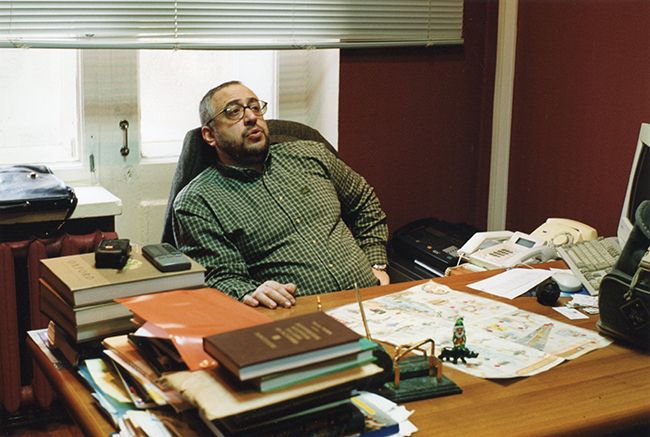
- Are you sure we are looking the same?
- Maybe not the same, but from the same distance.
- Okay, I will ask differently. How did the state’s attitude towards journalism change, which represents the state?
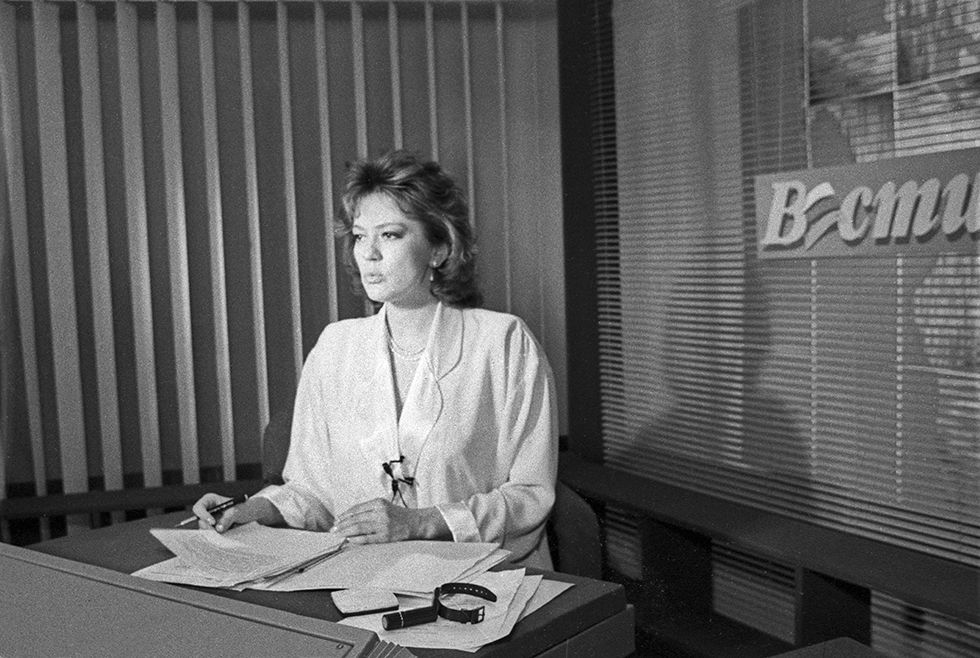
- Here, of course, the difference is very large. When I came to television, it was the Yeltsin Canal - and it was freedom. Behind my back, the censor never stood, I did not know what it was. One could say everything you want, within the framework that were limited by the laws of the country. In a professional sense, it should have been responsible, interesting. You should have been different from others, you should have not had a common facial expression. The first team of the hosts in the "Vesti" was very bright, and now only the old -timers remember this. There were Svetlana Sorokina, Evgeny Kiselev, Vladislav Flyarkovsky, Alexander Gurnov, Yuri Rostov, and on the patch - Sergey Dorenko, an undoubtedly talented person, with all the attitude to him; and I. There were very serious, bright, talented, qualified people, and they actually commanded the ether. Yes, this was discussed with the chairman of the VGTRK [Oleg] Poptsov, but there was a freeman of the Cossack.
The state did not require any oaths in loyalty and love, it did not require anything at all. It was easy to work. It happened that when I already led the “details”, I went on the air and said something against Poptsov’s desire. Since 1994, we have been conducting this program first with Dorenko, and then I kept it alone ... The head of Vesti did not know what my topic was, and the company chairman found out about the topic at the time of the air. Sometimes he argued with me, sometimes - to screaming and throwing the tubes, but nothing changed from this.
Now, of course, the system is completely different. Now, as I see this in the role of a viewer - I have nothing to do with the decision -making system - there is a rigidly built vertical. Of course, the presenter does not manage anything, the producers are guided, and the line between the leading journalist and the host-Dictor erased. Today again, the presenter must not be a journalist again. Now, as in Soviet times, in my opinion, this is an announcer-a girl with a voice staged or a boy, properly intoning, clearly fulfilling instructions. I see girls, boys who read information on the souffler, and sometimes I have no confidence that they absolutely understand what they read. I see this on different channels, I can evaluate equally what I see on the channel on which I work, and on the first, on the TVC, on the NTV ... Then, of course, the presenters were journalists.
- If we talk about the beginning of the channel’s broadcasting, then this was the time of the tough confrontation of Gorbachev and Yeltsin. The channel appeared as a result of this struggle, he supported Yeltsin. When he became the president of the Russian Federation, the RTV channel became official?
- He was official as much as he could be at all. He became official in the absence of officialdom, he simply was not there. It’s just from the channel, who expressed the position of the opponent of the authorities, as Boris Nikolaevich Yeltsin was in relation to Mikhail Sergeyevich Gorbachev, turned into a channel that expressed the position of the head of state. But, I repeat, the head of state did not require any loyalty.
The maximum loyalty was manifested in the 1996 election campaign and was not in fear at all, but for conscience. All journalists and channels understood that if Gennady Andreyevich Zyuganov, the Communist Party leader won, this party would not go to the next normal elections. This is not the party that, coming to power, then gives it in accordance with the laws of the Russian Federation. This is a party with a totalitarian ideology, which was already quite Stalinist. It was clear that if they come, then there would be no journalism in Russia, there would be no freedom of speech and so on. Therefore, we helped Yeltsin, of course. I do not agree with the assessments of the 1996 elections as dishonest, which, they say, was the wrong count. Then, with the calculations, they did not fly.
- Or maybe they were not so.
- Far from! It just didn’t even lie next to it! Journalists, of course, helped Yeltsin and did not help Zyuganov, this took place. I am one familiar foreign journalist at the end of 1996, when Boris Nikolaevich was already sick, there were already heart attacks, they already made a shunting, asked me: “Nikolai, and during the election campaign did you know that Yeltsin was not healthy?” I guessed, of course, and then I knew, I said. “Why did you help him,” she asked, “if you knew that he was an unhealthy person and he had problems with his heart?” And I answered her that the sick Yeltsin suited me more than a healthy Zyuganov. She looked at me in surprise. Not being a fool at all, she did not understand me. And for me it was clear. And for all Russian journalists it was clear.
This was the only episode until the very end of the 1990s, when the will of power was fulfilled, or rather, when the position of journalists coincided with the position of the current government. And the rest of the Kremlin, they hung Yeltsin in vain. There is less on Russian television - it was simply indecent to do this, and I did not want to do this when I was a boss. And they did not spare at others. There was no official, formally - yes, but in fact it was not. We had the leading Svetlana Sorokina. How could this lady, the most popular leading in the country, force anyone to sing praise?
- And you are still sure that the Russian spectators, who were simultaneously voters, did not have the right to know that one of the main contenders for the main post in the country is seriously ill?
- Natasha, this is the technical question - they had the right to know, they did not have the right to know ... I was not interested in what they have the right to. They had the right to a lot. Then they had the right to know what the communist came to power means, and then it would be necessary to talk about it around the clock, to engage in anti -communist propaganda around the clock. Why did they need to talk about Yeltsin’s heart attack, but about what historically means Yeltsin’s arrival, it was not necessary to tell? The question of law is fair, but he pulls many other questions.
- That is, you have not changed your attitude to that ...
- I did not change the attitude to what I did in 1996, and to my then position. I believe that I and those who helped Yeltsin were historically right. As for the attitude to the country. And with regard to his future.
- It was at this time, correctly, I remember that Oleg Poptsov was dismissed from the post of head of the channel? At the very beginning of the campaign, right?
- He was fired even before the start of the campaign, but not for lack of loyalty. In general, he was amazing as the head of the company, I retain the warmest memories of him. He, a non -means of a person, knew how to not command his personnel, but to close him. He behaved like a real consistent democrat - he took all the cones on himself. He could swear with the leaders, with journalists, but never passed them. He did not have the habit of a weak leader to transfer arrows into his subordinates. He was a great fellow in this regard. As, however, and all the bosses with whom I had a chance to work.
But Poptsov was dismissed not for a lack of loyalty, but for writing the book on time - “King Boris” was called. There were people who did not treat him very well in the Kremlin; After all, the Kremlin was different. And these people, as far as I know, at some point showed Yeltsin fragments torn from the context of the book and persuaded him that the head of state television should not write such books, and at all should not write memoirs, heading television. And he was gone. Instead, Eduard Mikhailovich Sagalaev was appointed.
- You were one of the first analysts on our television, competing with Evgeny Kiselev. How did analytical programs differ at this time?
- Not much, in fact. They were distinguished by opportunities. The NTV had a very high class of journalists, analytical work, very good funding, Zhenya Kiselev was a very strong presenter. And with regard to positions, there were few differences.
Here it is necessary, however, to take different years. When [between the oligarchs] the information war began in 1997, we had very different positions. And in the late 1990s, the Second Information War unfolded-this is when not only Yeltsin, but also Putin on the one hand, but the party “Fatherland is the whole of Russia”-Luzhkov and Primakov on the other hand; Here our positions were very different, we were just on different sides of the barricades. And in the early 1990s and in 1996, we were on the same direction.
- You basically did not work on oligarchic television? Or maybe the life was so formed that they did not offer?
- It depends on when. Offered. Both in 1992, and in 1993. When I became a great boss, it was already strange to offer. Yes, and I didn't want to. I was already a journalist with a name, was a boss, then I stopped being a boss. And then they did not call. Berezovsky did not call his channel, and I would not go. And Vladimir Alexandrovich Gusinsky had his own team, and I had nothing to do there.
I was satisfied with the place where I worked. I did not want to change what I like, to the fact that I do not know. It was my television, in which I was from the first brick in which I felt everything I needed. This was a significant place and role, and there was no reason or desire to go to other channels.
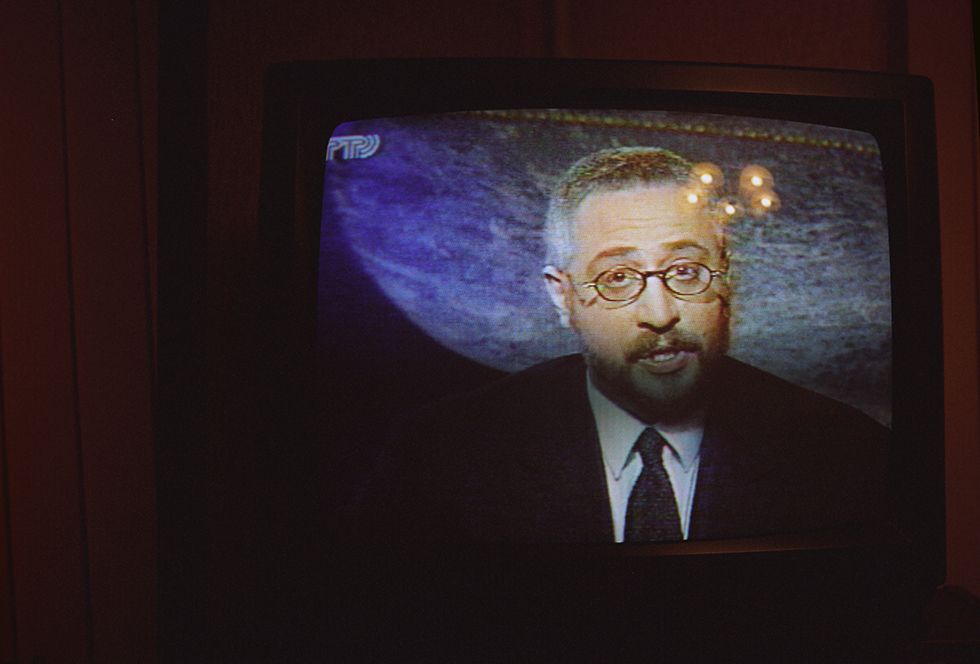
- When you started, the presenters tried to express their opinion, to show their attitude to the news. What do you think about this problem - the emotionality of the news presenter?
- These were not emotional issues, but copyright, emotional they could be dependent on the author. We had “News” from Sorokina, “Vesti” from Kiselev, Gornov, Rostov ... Everyone had about one political position - for freedom, for new Russia. The word "liberalism" was not abusive then, however, it was not at all. Then, for opponents of this worldview position, the word "democracy" was with a jugle. The political position was about one, but the characters are different! Everyone brought something to this program, depending on him. And the programs of Sorokina or Kiselev were very different, not only in terms of facial expression, but also on layout. Sveta Sorokina had such ends in the program, which, you know, now Pozner has ...
- Farewells.
- Yes, the same farewells, emotional and very short were Sorokina. She was then insanely popular. All these information programs were copyright and very different.
It was a manifestation of time. Now it would be impossible. People expressed themselves after the cold and granite of Soviet political information. In my opinion, it was right, it smelled of freedom.
- Surely always, when it comes to you about television and the time when you headed VGTRK, they remember that it was you who fired Sorokin.
- Yes. Only I did not fire her, and it is enough to ask Sorokin about this. She used this verb then, but I did not fire her anywhere. I removed it from the Vesti program and offered to conduct any author’s program that only she would come up with, and to provide her all kinds of assistance. She outgrown the information, it was already the end of 1997 - and her absolutely copyright news looked strange. All others worked more uniformly, and it seemed to me that her program was sagging. The news should still be news, this revolution has already ended, has already stood on the wing. Yes, you do not need to be shy of your faces, but first - information, and then the face. Her face was fine, she was loved by people, there was no reason to hide him, I decided that she was better off showing her face in the author's program.
She did not want to think about it then, she wanted to stay in “Vesti”, she was offended yet, because we were friends, and in this resentment there was also personal. As a woman, as an emotional person and with character, she decided: “Oh, so? Тогда вообще уйду». And left. На НТВ. Хотя, когда уходила, мы уже помирились и коньяк выпивали при прощании. Since then, a lot of water has flowed. В последний раз при мне на санкт-петербургских «Диалогах» ей задали этот вопрос, и она, не дав открыть мне рот, стала меня защищать…
— В те годы, когда вы возглавляли ВГТРК, «Телевидение России», откровенно сказать, было слабым — по сравнению с НТВ прежде всего. Это было из-за того, что бюджет не мог финансировать, или по каким-то другим причинам?
— И бюджет не мог финансировать, и зарплаты были другие. Была и определенная скованность в том, что мы считали для себя неприличным долбить правительство и президента. Мы были единственным государственным каналом, и если бы еще и мы долбили, то это не лезло бы ни в какие ворота. Наши конкуренты пожинали приятные плоды своей оппозиционности. Ельцин и Кремль были тогда непопулярными — и критиковать их было одно удовольствие. Это сейчас вы попробуйте Путина покритикуйте, а тогда критиковать Ельцина было легко, приятно, никто не мешал этого делать, да еще рейтинг рос. Мы вроде как пытались его вяло защищать; защищать всегда сложнее, чем атаковать.
Если сейчас запустить машину критики президента Российской Федерации, смазать ее, сделать легкой, то сразу же выяснится, что атакующая позиция перспективнее, чем защитная. Защищать легко, когда никто не атакует, а как только о власти говорится что-то правдивое, что власти не нравится, то это нравится людям — они всегда недовольны своей жизнью. По причине всего этого мы казались более вялыми, слабыми, невнятными. Да, это было.
— Увидев и информационные войны, и это новое олигархическое телевидение, вы не изменили все же отношение к позиции в 1996 году? Это ведь был слабый президент, которым, наверное, манипулировали?
— Я пересказал уже свое объяснение. Физически слабый Ельцин меня устраивал больше, чем физически сильный Зюганов.
— Несмотря на олигархов, информационные войны и прочее?
— Несмотря на все это. Все было неприятно, опасно для страны, но это было несравнимо с угрозой тоталитаризма, который бы неизбежно пришел. Это все равно, что сравнивать ссору жены с любимым мужем и изнасилование бандитом на улице.
— А лично вы с Ельциным встречались? Могли бы об этом рассказать?
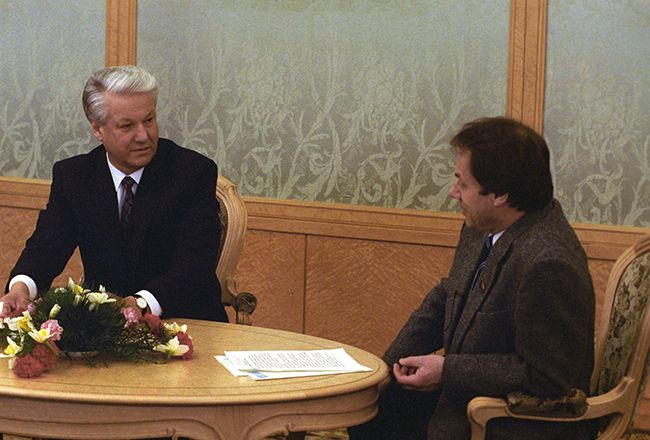
— Многократно. И будучи журналистом, и будучи начальником, и будучи снова журналистом. И когда он был президентом, и когда уже не был. Встреч было энное количество. What are you interested in?
— Как он относился к прессе, конечно.
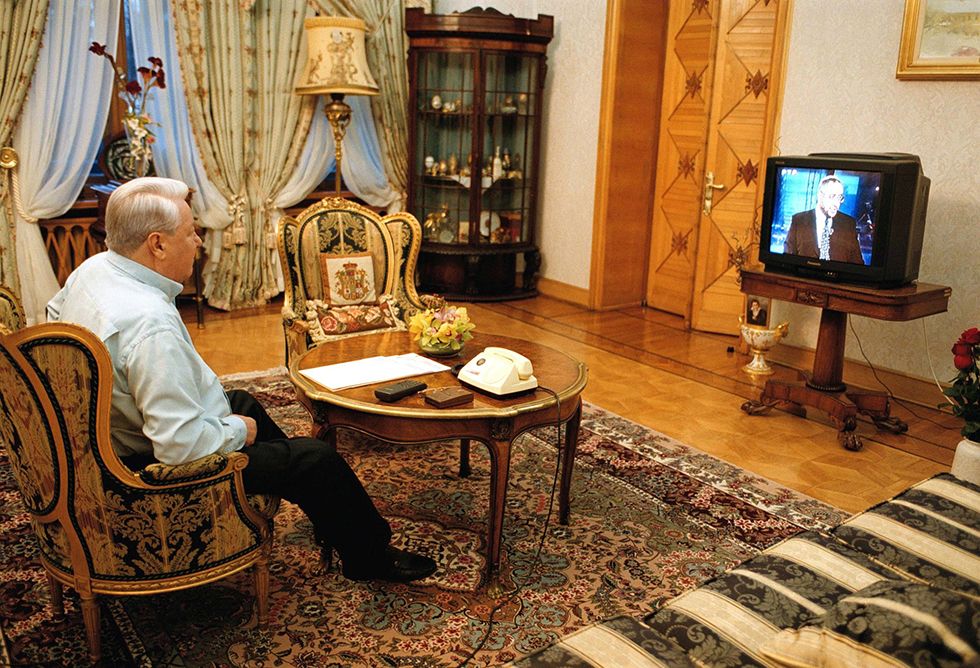
— К прессе он относился идеально. Как можно только мечтать, чтобы относился глава государства к прессе: он ее терпел, что бы ни говорила о нем, как бы ни относилась к нему. Он считал для себя долгом не трогать прессу. Он обижался, дулся, страдал, кряхтел, скрипел зубами, не ругался только матом; в принципе никогда не ругался матом…
— Интересная деталь.
- Never! Я не был с ним в чисто мужской обстановке, выпивая в бане, но те, кто был, говорили, что и в этой обстановке не употреблял матерной брани. Never.
Конечно, он очень страдал, когда его ругали, критиковали, иногда заслуженно, иногда незаслуженно. Иногда правду говорили, иногда врали, но он никогда не сделал даже попыток заткнуть кому-либо рот. Возможности такие были, многократно. Они были и после 1991 года, когда был фантастический, поднебесный, реальный, не надутый рейтинг. У него были такие возможности после 1993 года, после подавления путча. Такого рейтинга уже не было, но возможности были огромные. И никто бы слова не сказал. Он не только выпустил из тюрьмы всех, кто повесил бы его за ноги, приди они к власти, он позволил им продолжать карьеры.
Скажем, [один из участников противостояния в октябре 1993 года Александр] Руцкой смог стать губернатором; а теперь он ходит с канала на канал и поливает его грязью. Он мог заткнуть и журналистов, закрыть любое СМИ и учредить лояльное. Газета «День» была закрыта, но чуть ли не на следующий день появилась как «Завтра», а газета была — святых выноси. По многим параметрам она не соответствовала законодательству РФ. Но она открылась как «Завтра», и больше ее никто не трогал. А другие газеты не тронул вообще, не говоря уже о телеканалах, программах, ведущих. Он никого ни разу не тронул. Это вызывает и будет вызывать нежные воспоминания всех, кто связан с журналистской профессией.
— Простите, Николай Карлович, но не могу вас не поправить, потому что помню тех, кого он тронул, — ряд коммунистических газет он закрыл указом после путча 1991 года. Правда, после протестов демократической прессы вернул их обратно.
- So I say.
— И увольнял он все-таки — например, Егора Яковлева из «Останкино» в 1992 году.
— Знаете, увольнять начальников — его прерогатива, но он не менял позицию канала. Мы не можем лишить президента права менять министров, менять руководителей телевидения, это его право. Это он делал не потому, что его не устраивала степень лояльности.
— Его не устраивал конкретный фильм, о чечено-ингушском конфликте, показанный на канале. И изначально даже в указе это прописал, а потом, после протестов Яковлева и журналистов, текст указа был изменен.
— Может, ему было некомфортно работать с конкретным человеком? Никакого давления ни на одно СМИ он не оказывал.
— То есть Ельцин был идеальным для прессы президентом?
- Absolutely. Почему так все за него горой встали в 1996-м? Было ясно, какой он ни будь, со всеми его выкрутасами, финтами — невинными, за исключением чеченской войны, другого такого президента для прессы придумать было нельзя. В этом смысле он был идеалом президента демократической страны. Это, конечно, не могло не пленять. Да, чеченская война была большой трагедией и большой ошибкой Бориса Николаевича, и он это признавал. Но даже во время войны он позволял журналистам работать свободно. Позиция журналистского сообщества, и мы с вами это помним, была абсолютно не такой, как во время второй войны. Она была пацифистская, миролюбивая. В конечном счете можно за это критиковать или этому удивляться, поскольку она была пацифистская, она была прочеченской, антифедеральной. И Ельцин абсолютно ничего с этим не делал. Даже на федеральном канале, на котором я работал, моя программа «Подробности», при моих личных отношениях и очень уважительном личном отношении к Ельцину, была пацифистской, антимилитаристской. По нынешним временам эти выпуски были бы оценены как антипатриотические. Но ничего, ни одного слова упрека из Кремля. Может, их и получал Попцов, но мне этого ни разу не транслировал.
— Не могу не спросить еще про походы к Чубайсу. Правильно ли я понимаю, что именно он возродил традицию общения глав кремлевской администрации с прессой, которые потом стали, по сути, давать указания?
- Don't know. Я как раз в это время стал начальником. До того и приглашать меня было некому. Действительно, когда Чубайс был руководителем администрации президента, к нему стали приглашать глав основных каналов или руководителей служб информации основных каналов. This is true. Потом эту традицию продолжил Валентин Борисович Юмашев, а потом не знаю, что было, — я перестал начальником быть. Но, насколько знаю, ходили и ходят.
Однако должен сказать, что при Чубайсе, так же как и при Юмашеве, были сходки не императивно-административного характера. Никто никому ничего не приказывал. Я даже больше скажу, никто никого ни о чем даже не просил. Меня можно было бы попросить, как руководителя государственной компании, но просить о чем-то руководителей НТВ было бы странно — они занимали самостоятельную позицию. Нет, нас звали не как подчиненных, нас звали как стратегических союзников. Там давалась дополнительная информация. Было понятно, что, ругаем мы Ельцина или нет, мы одинаково смотрим на будущее России. Россия должна быть свободной, демократической страной, с ценностями, которые придумала человеческая цивилизация, и возвращение назад невозможно.
— Кто персонально принимал участие в этих «сходках»?
— От нас был я. Сначала был, наверное, Сагалаев, не помню сейчас. Был руководитель службы информации, Эдуард Гинделеев, который ушел потом с телевидения. От НТВ это был, как правило, Олег Борисович Добродеев. От Первого канала Ксения Пономарева. Точно не помню, но кажется мне, что появлялся в какое-то время и Игорь Малашенко. Потом появлялся и Андрей Васильев, тогда он работал на Первом.
— И при Юмашеве стилистически это было то же самое?
- Absolutely. Мягко, дружелюбно, абсолютно не командно. Никак на накачку не походило.
— Выпивали?
- No, never. Чай — бывало, но никакого алкоголя.
— А при Путине вы бывали на таких мероприятиях?
- No. При Путине уже не мог — ничем не руководил, кроме собственной программы. У самого Путина, впрочем, был. Я брал у него интервью, когда он был премьер-министром и было уже ясно, что он будущий президент. Бывал у него самого, но на летучках уже никогда не бывал.
— У вас изменилось отношение к Путину за эти годы?
- Yes, sure. Of course.
— Правильно ли я помню, что вы его поначалу поддерживали?
— Совершенно однозначно. Когда он только шел в президенты и долгое время после того, как он стал президентом, мне нравились его действия. Я считал, что он — единственная альтернатива Юрию Михайловичу Лужкову, прихода которого на верхнюю ступеньку государственной власти я всерьез опасался. Я считал, что эта вероятность была велика, и выбор Ельциным Путина мне нравился.
Каким-то первым звоночком, который вызвал у меня вопросы к нему, стал выбор гимна Советского Союза в качестве российского гимна, но тогда я решил, что он хочет успокоить значительную часть избирателей для того, чтобы делать вещи, которые им не понравятся. А следующим звонком, очень серьезным, стала посадка Ходорковского.
— То есть с 2004 года вы изменили отношение к президенту?
— Я постепенно менял отношение к Владимиру Владимировичу Путину. И долгое время в собственных глазах оправдывал и защищал его, он был симпатичен мне по-человечески, по-мужски. И когда мне, скажем, покойная Валерия Ильинична Новодворская говорила: «Он же гэбист», мне это казалось смешным, формалистским подходом. Я знал людей, которые служили в разведке. Я знал, скажем, покойного Гелия Алексеевича Шахова — отца Маши Киселевой и тестя Жени Киселева. Этот человек производил на меня впечатление, был интеллигентным, умным и очень независимым человеком, хотя формально его тоже можно было назвать гэбэшником. Но это же не топтун у подъезда? Не стукач? Мне казалось, грести всех под одну гребенку невозможно, разведка ведь — другая штука. Опасения мне, словом, казались смешными.
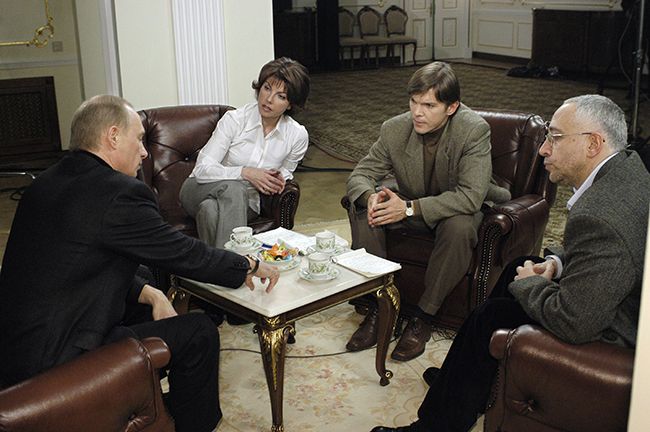
— А потом вы поняли, что они были правы?
— Дело не в том, где человек служил. Конечно, наши биографии оказывают на нас влияние. Если биография связана со школой КГБ, то это оказывает влияние, разумеется. Но здесь вопрос не в личности, не в биографии. Со временем выяснилось, как это ни смешно говорить о президенте моей страны, что у нас — несколько разные взгляды на то, что такое хорошо и что такое плохо в России.
— «Перестройка 2.0» возможна?
- Not now. В принципе — да, и она неизбежна. Если она не произойдет, страна погибнет, сейчас у нее инерции меньше, чем у Советского Союза. Казалось, он — нерушимая стена, а рухнул в один миг, под гнетом своей неэффективности, импотентности, невозможности развиваться, неконкурентоспособности. Я думаю, что если «перестройка-2» не произойдет, то страна обречена. Это может длиться годами, даже десятилетиями, но стратегически обречена на отход на все более дальние позиции, на превращение в страну третьего мира. У нее не останется из аргументов влияния в мире ничего, кроме боеголовок, да и те будут ржаветь. А в конце концов напрямую встанет выбор между пушками и маслом, и плохо все кончится. Поэтому «перестройка-2» неизбежна, но в обозримом будущем я ее не вижу.
— Почему мы снова в той ситуации, что как будто и не было этих 30 лет? Вновь политзаключенные, вновь пресса несвободна и контролируема Кремлем?
— Долгий ответ, и он не относится к телевидению, а к ситуации в целом. Здесь придется обращаться к очень многим факторам. К историческим традициям. К взаимоотношениям между бюрократией и бизнесом, к тому, как еще советская бюрократия пыталась получить доступ к частной собственности и, получив, совершенно не хочет с ней расставаться. К особой роли силовых структур, что уже во многом связано и лично с Владимиром Владимировичем. И это как раз один из пунктов, по которому мы расходимся, если можно говорить о расхождениях между журналистом и президентом страны. Штык, знаете ли, хорошая и полезная штука, только на нем сидеть нельзя. Силовики — неглупые ребята, очень умные, но ум у них другой, направленный на то, чтобы кого-то ловить. А если нет тех, кого ловить, то придумывать тех, кого ловить. А заниматься развитием страны они не могут, это не их работа, не для этого они созданы. Поэтому делать ставку на эту социальную группу, которая уродливо влиятельна сегодня в стране, — деструктивно. Но поскольку у них есть это влияние, они пытаются его оправдать — поиском врагов или, если их нет, их созданием. Поэтому враги, и внешние, и внутренние, будут множиться.
— Вины медиа в создании этой ситуации нет?
— Я бы здесь не стал говорить о вине, я предпочитаю констатировать факты. Возлагать вину на кого-то — просто, с одной стороны, а с другой — сложно. Здесь виноватых нет, так ситуация сложилась. Все ведь работают в своих интересах — и силовики, и медиа. И потом… Мы же видим настрой сегодняшних журналистов. Их же никто не бьет, их же никто не пытает, у них самих горит глаз. Им приятно делать то, что они делают, хотя их работа с трудом может быть названа журналистикой. Так что я бы не стал говорить о вине. Таковы обстоятельства.
Natalia Rostova