
Translated material
Time begins to break up
Nadezhda Weiner - About the new Quantum Break shooter
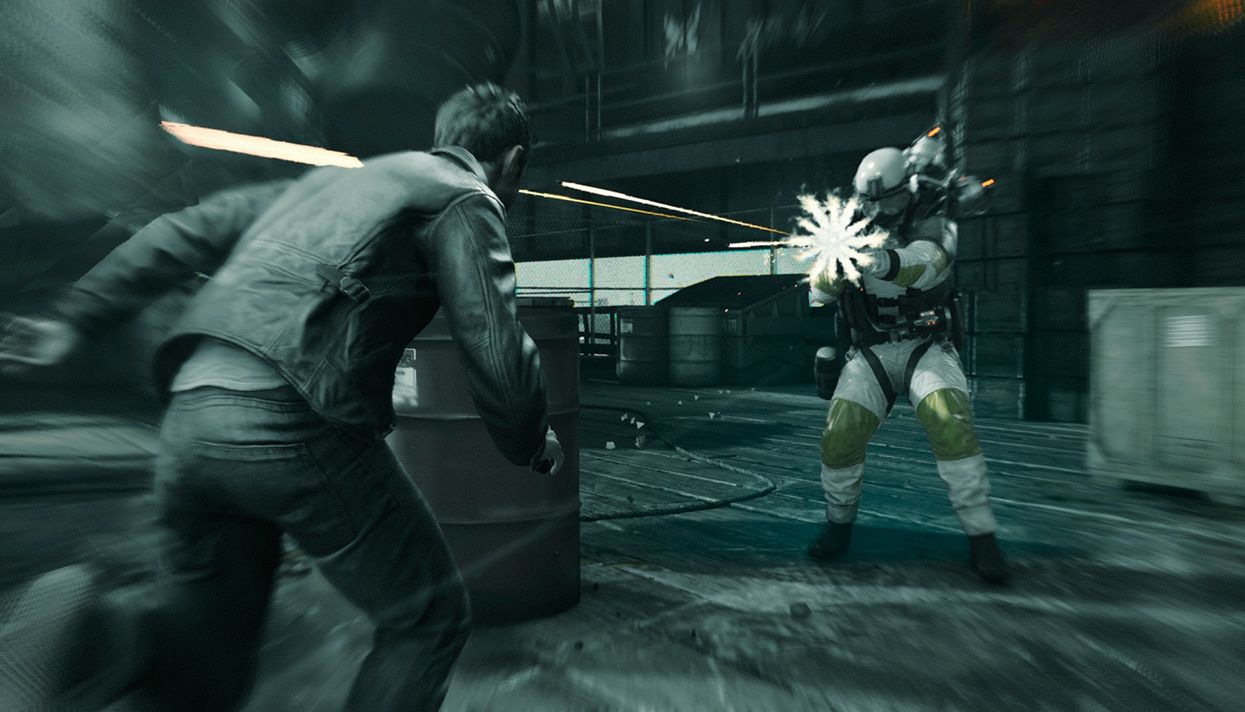
On April 5, the PC and Xbox One came out of the third -person Quantum Break - the new game of the Remedy studio, which once came up with Max Payne and Alan Wgee. Quantum Break talks about experiments over time and the struggle of the protagonist with Monarch Corporation. Journalist Nadezhda Weiner, at the request of Medusa, talks about his impressions of the new game.
Imagine that at a party where you are quietly missing on the couch with a glass of wine, a guy with the appearance of Max Payne sits up to you and says: listen, I will tell you such a story now, you will just fall! There will be movements in time, quantum physics and mechanics, ambiguous characters, and some pieces are just a series, and you can see all this on my mobile phone! And he begins to tell.
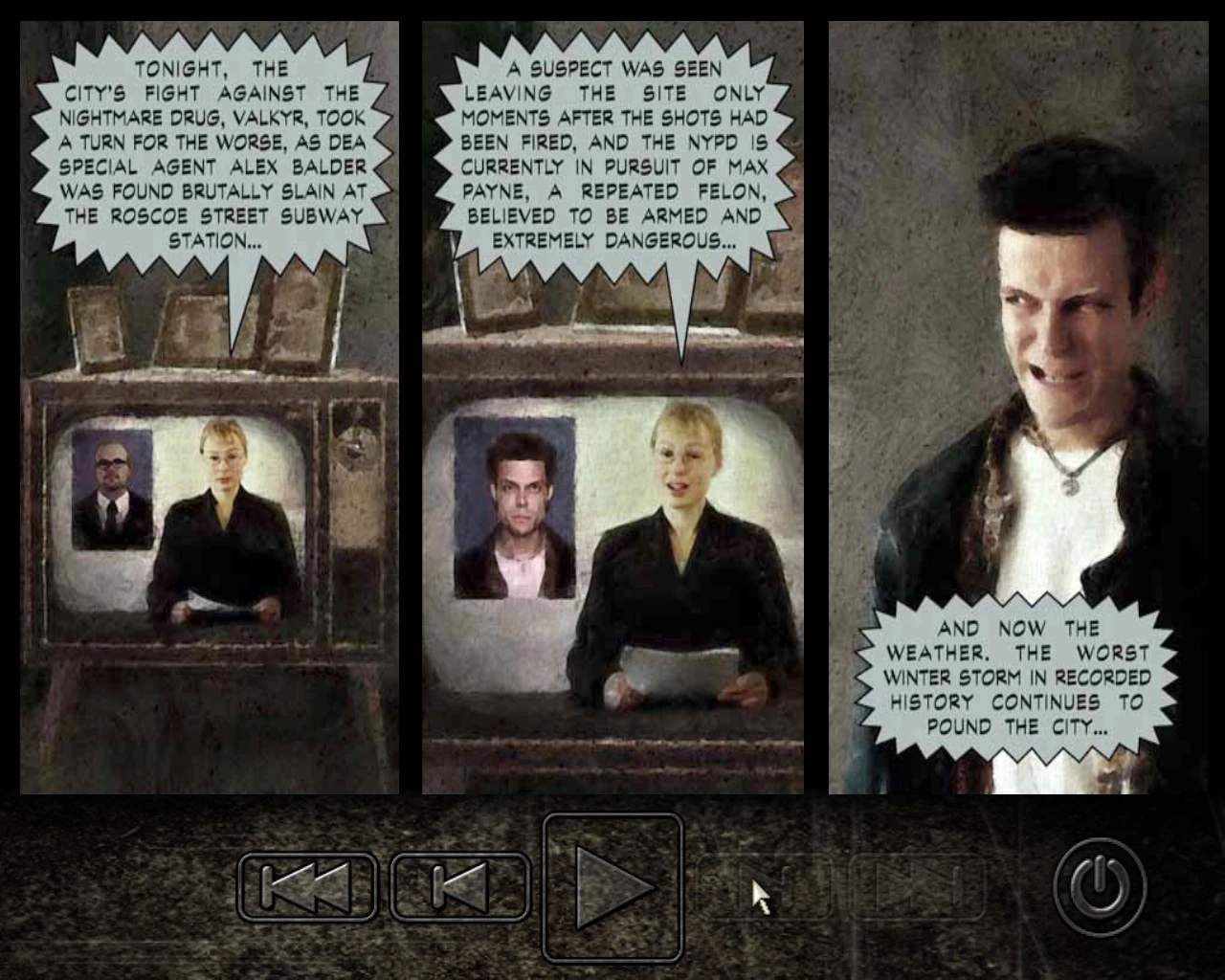
And yes, in his history there are ambiguous characters - and the most interesting of them are similar to Sheldon Cooper with Megalomania. There are controversial decisions, quantum physics, time travel and hacker tricster. Quantum Break, the new game of the Remedy studio, which created both Max Payne and Alan Wash, promises a lot. But to her finale, after overcoming some hours not only of history, but also very ordinary and rather boring shootings, I want to turn to her authors and ask: Damn, are you sure that you wanted to tell me that?
Do not participate in doubtful experiments
Brief Sinopsis: Simple guy Jack Joyce returns to the city of his youth. He was called by an old friend Paul Siren, who needs little help in a scientific experiment. The experiment is not so, time begins to break up into pieces, and Jack Joyce receives several funny abilities with which he needs to overcome the evil Monarch corporation and save the world (well, a couple more people).
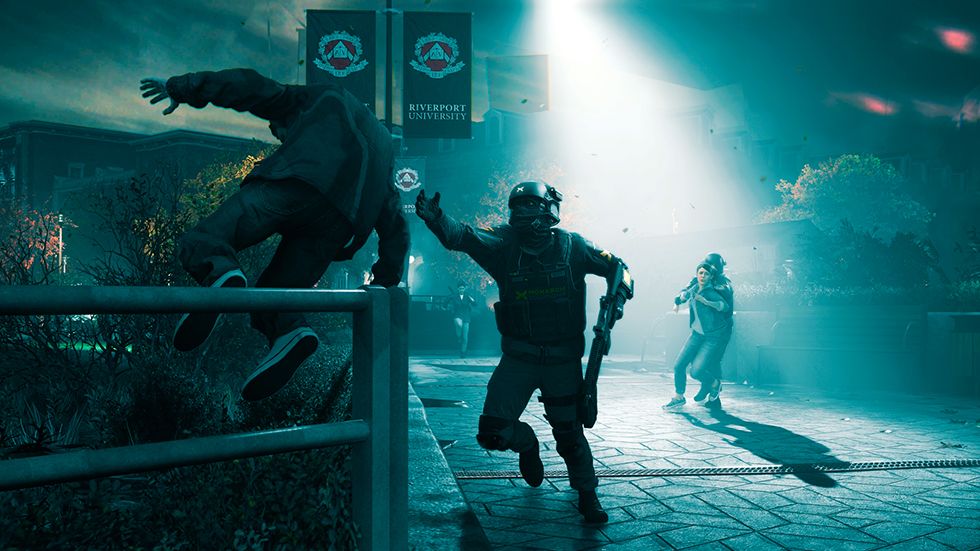
The game is divided into several acts, after each of which there is a series of a mini-series, shot as an complementary part of the story. If the focus of attention is in Jack Joyce, then the series is devoted to the second -plan heroes: the employees of the Monarch corporation, who are full of their own problems. There are three main characters there: a scraper paired with a desperate woman-scientist who understands what, in fact, their corporation is doing and what is happening over time, as well as a local cleansing specialist, burdened with concern for a pregnant wife. They and Jack are two forces that go to meet each other so that the world is saved. But the player controls Joyce, and only looks at them.
The story in the series can be influenced, but only indirectly. The game has several forks with different options for the future that determine the fate of the heroes. But, as far as I can judge, these changes are cosmetic. Everyone who must die will die. Just like that - or otherwise. Here, probably, a wow factor should work-look, my decision in the game influenced a whole series, but this does not happen. The media has been so successfully merged in recent years that it would be possible to achieve truly deep amazement by releasing this game ten years earlier.
At the same time, the series Quantum Break is pleasantly watching. He does not try to get away from the stamps of modern sai-fay, does not dig too deeply, but the motives of his heroes, as well as how they act, are clear. The heroes themselves are banal, but pretty. Their emotions look convincing - but you can’t say this about the characters directly.
Not Max and not Alan
Jack Joyce has the appearance of Sean Eshmor , the ability to shoot, a fraternal brother and a complete lack of personality and history. Even when he says something, it is a banality or cliche. In the game there are scraps of his past, but they do not characterize Jack. Even if there were terrible tragedies in his life, they did not affect how we see him. The only thing that can be said about him is the stubborn. He really wants to save the world and time from destruction. But this, in general, is a characteristic feature of any hero of the game about the salvation of the world.
And against the backdrop of Alan Wage, and against the backdrop of Max Payne (even a third part, already created not Remedy, but Rockstar), Joyce seems faded to pain. His story, like the global plot of the whole game, especially in the last part, looks like the entire budget had gone to the fees of actors, and there was no money left for screenwriters.
And this is also disappointing. The story of Max Payne was transparent. The story of Alan Washka was confusing, but interesting. The story of Quantum Break hints at the sequel, but even for the first part of the large series there are too many questions without answers. Especially in the last act of the game in which I constantly tried to understand what was happening. Why is he doing this? And here what happened? Excuse me, can I slow down a little time and find out what is going on at this level, would I have at least a couple of explanations? They will not be? It is unfortunate, then I did not understand what you wanted to say.
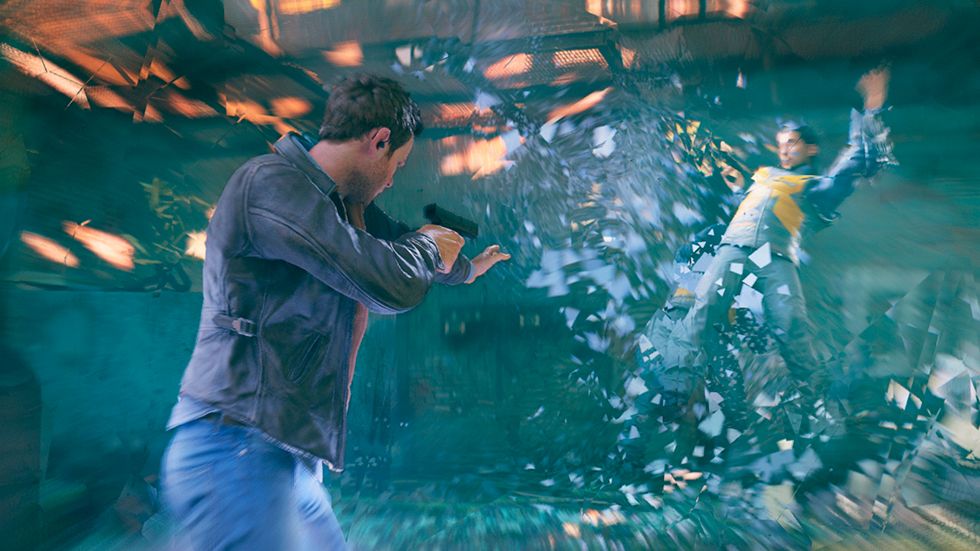
The game part in places looks as if there was not enough money for it. The temporal anomaly endowed Jack Joyce with all sorts of interesting abilities like the opportunity to freeze the enemy, hide behind a shield or move very quickly on the map, but Quantum Break does not cease to be an honest linear shooter, in which you just have a little more ways to kill enemies. A little more fun to do it. Sometimes, of course, the ability to slow down time is vital: for example, when Monarch fighters come across, who also know how to jump around the room very quickly. Or when - a couple of times per game - you meet with particularly heavily armed fighters who can be killed only by shooting in a certain place in their armor. But it is impossible to say that this dramatically distinguishes Quantum Break from the gameplay of standard shooters.
And there was no time
Destroying after an unsuccessful experiment, time freezes and begins to flow again, which is why the world comes to chaos. Many fragments of the game are small labyrinths in which you need to get from point A to point B and, if possible, not die from the walls falling in the present and rising into the past. They are interesting; And if where in Quantum Break and the drama is felt, then it is in them. This is how time breaks up. This is how the usual things become enemies and kill you where you do not wait for this. There, when you do not wait for this.
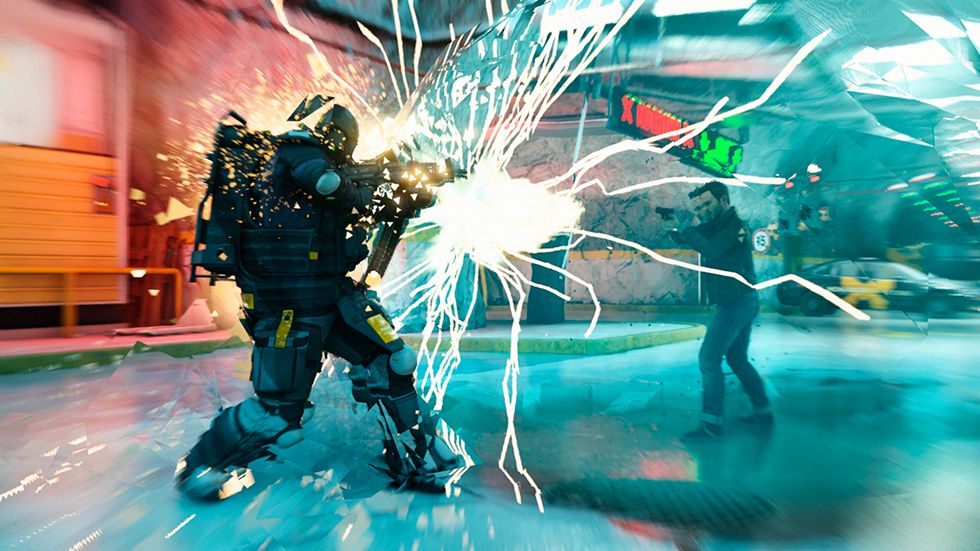
Quantum Break actually has something to talk about with the player. What is the time? What is a trip to the future? If you can get there, does it mean that everything is predetermined, and we can’t change anything else? Do we really have a choice? What can we do with our life if there is no choice? But these questions are built into the fabric of the game so that we cannot find the answer on our own or at least take time for thought. Heroes seem to ask them for themselves, but the answers have no logic - only foggy hints that they will tell us about this in the next parts.
Although the player receives one answer. Whatever the time is, the past is unchanged. All attempts to change it lead to the result that has already been. Therefore, I can’t return to the beginning of the party, sit with a glass of wine next to a guy with a malicious smile and say: listen, let's better tell me how you were a cop in New York, worked in the drug fighting department, and then something went wrong?
Nadezhda Weiner
Moscow