
Translated material
Latvia against Russian propaganda
The bill on counteracting the hybrid war was stuck in the Sejm
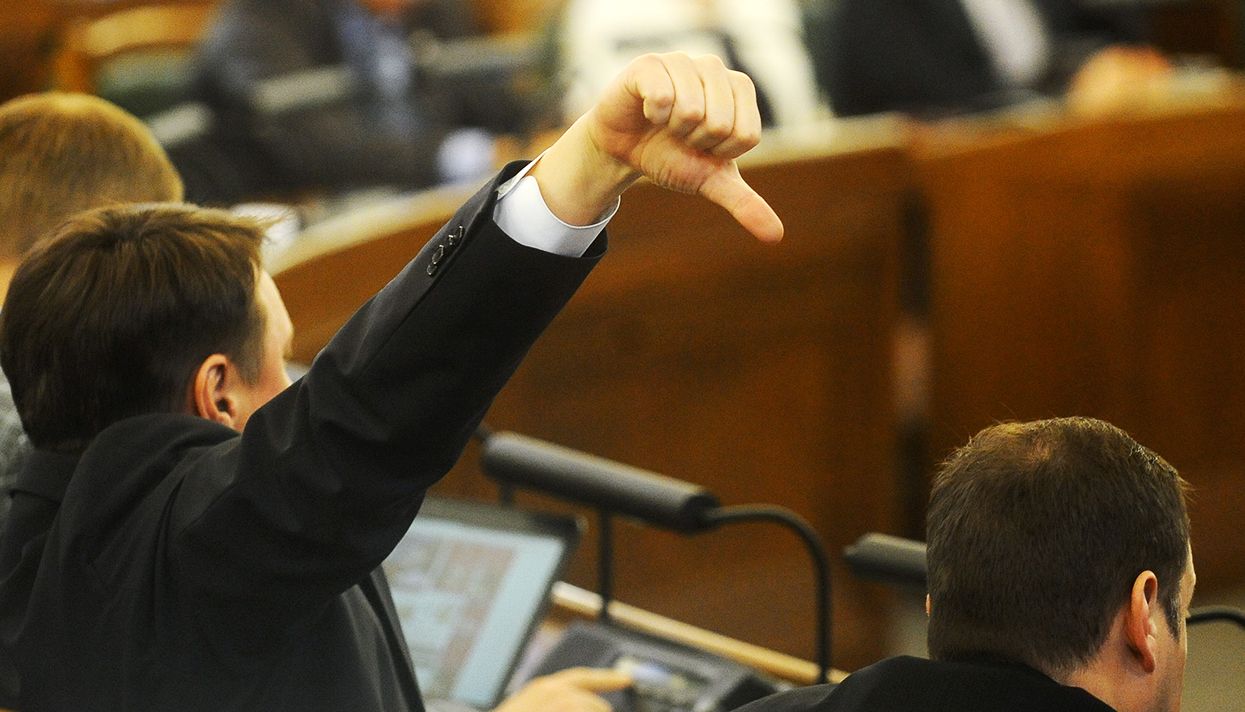
In Latvia, the struggle against Russian propaganda has intensified-over the past month the Russia-TRA channel (for calls for war and inciting hatred) was banned here and blocked the Latvian domain of the satellite news agency (for violation of the sanctions regime). In addition, Graham Phillips blogger, a former employee of Russia Today, detained for disobeying the police on the march of the SS legionnaires on March 16, was expelled from the country. At the same time, amendments to the criminal law of Latvia are discussed in the Sejm - they are aimed at counteracting the hybrid war and introducing criminal liability for "information crimes" against the country.
“Any opposition activity will be excluded in Latvia,” the Latvian political scientist Einars Graudinsh says on the air of Russian television. Graudinha was called as a guest to the program “Special correspondent” - along with the editor -in -chief of the MIA Russia Today MAMA Margarita Simonyan, the head of the Politics Foundation Vyacheslav Nikonov and other Western information warfare specialists against Russia. After the story of Simonyan about how the Employees of the "satellite" called to the "local KGB", the Latvian expert takes out a sheet of paper from the inner pocket and reads the text of the amendments, which have been discussing the Latvian parliament since March 2016.
Ainars Graudins reports that under the new law, the Latvian authorities will be able to arrest anyone for the help of a foreign state or organization in the implementation of actions that harm the security of the republic. According to him, even for the appearance on Russian television, Graudins himself will be able to arrest for five years.
Einars Graudins in Latvia has an ambiguous reputation (Medusa interlocutors unanimously say that his statements are better to double -check), but the bill he is talking about, and the parliament really tries to adopt it according to an accelerated procedure. This procedure provides for almost no improvements; For example, the country's president cannot return such a bill to the Sejm. It is not surprising that part of the Latvian society - and especially journalists - criticized the initiative of the parliament.
* * *
Amendments to the criminal law of Latvia were made to the Sejm on March 2. Throughout 2015, they were being prepared throughout 2015 by Latvian special services (security police and the Bureau for the Protection of the Constitution) with the assistance of the Sejm Commission for Legal Affairs and invited experts. The Chairman of the Udinity, the former Minister of Justice of Latvia Solvita Aboltin , introduced the amendments to the amendments parliament.
The purpose of amendments is to protect Latvia’s security in the conditions of hybrid wars. The explanatory note notes that the legislation has not changed since 1999 and in the new conditions Latvia is vulnerable.
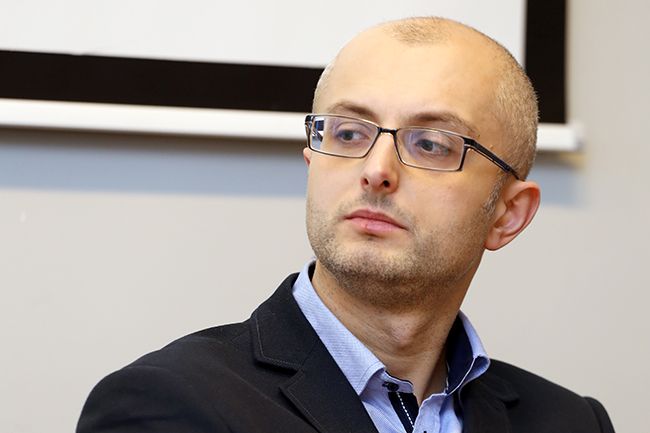
“With whom we are fighting,” explains Anatoly Golubov, editor -in -chief of the Russian -speaking version of the Latvian edition Delfi . “The law does not say a direct text about Russia, but a lot is said that the need for its adoption arose after events in Ukraine.”
The main claim to the amendments is the blurring of the formulations (detailed analysis in Russian can be read here ). In the current form, the bill proposes to introduce criminal liability (and five -year prison terms) for statements against independence and territorial unity of Latvia, and not even associated with violent actions. In theory, this means that under the new law it will be possible to blame anyone, and for completely harmless statements - for example, for the call to transform Latvia into a presidential republic. In addition, the amendments introduce a new article - the very “help of a foreign state”, as well as criminal liability for the illegal receipt of secret information that may be dangerous for the state. What information can be recognized as such, again, is not very clear.
Nevertheless, the Sejm by a majority of two -thirds of the votes decided that the amendments would be considered urgently.
* * *
According to Anatoly Golubov, the main idea of amendments (expanding the powers of special services, so that they can more effectively fight threats to the country's security) is clear to everyone and in general in Latvian society is supported. However, the form in which this is realized, that there was no discussion, cannot but raise questions.
“Special services are trying to facilitate their work: to create a legislative framework in order to be able to realize everything in case of anything,” the journalist suggests. “And under the counterpart of the anti -hybrid war, anything can now be carried out.”
The head of the Center for Investigative Journalism of Re: Baltica Sanita Yemberg also agrees with Golubov: “This is a classic case: on the one hand, there is a desire for security services to get as much influence as possible, and on the other, freedom of speech. The law is so widely formulated that it prohibits the demand of completely normal things. ”
The authors of the amendments categorically deny that the bill threatens freedom of speech in Latvia. The head of the Sejm Commission on Legal Affairs, Gaidis Berzins (unification “everything for Latvia”, along with “unity” is included in the ruling coalition) assured the “Medusa” that all the wording fully comply with the requirements of the European Commission on Human Rights. Speaker of the Sejm Inara Mournie (also a member of the unification “everything for Latvia”) stated that the amendments were aimed at strengthening the state, freedom of speech did not contradict, and called opposition in society “organized campaign against the criminal law”.
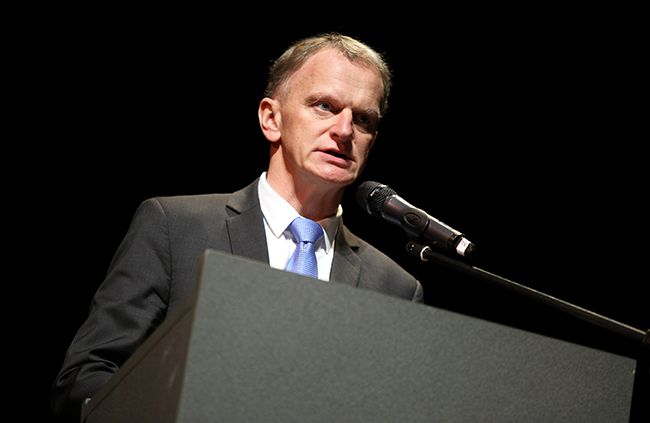
The campaign was organized, obviously, at the highest level - shortly after amendments to the Sejm, it turned out that not only part of the ruling coalition, but also President of Latvia Raymond Weionis , as well as the Minister of Internal Affairs Richard Kozlovskis , opposed the bill. The President, in particular, said that "it is not in the interests of national security to violate the constitution and freedom of speech." Amendments, according to him, must be finalized.
* * *
Yemberg’s sanita is not too concerned about the behavior of the Latvian authorities. In her opinion, special services around the world act the same way: they try to seize as much power as possible. “But for this, there is a civil society to limit their appetites,” the journalist concludes.
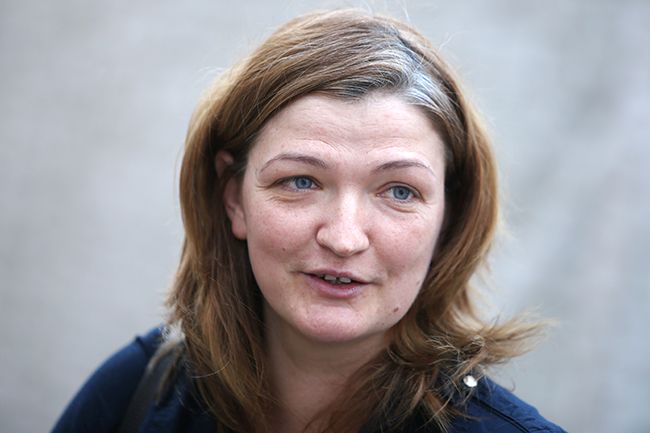
Her Russian -speaking colleagues are less optimistic. “You can not notice to the noise of a hybrid war, as by tightening the laws regarding civil freedoms, your own country will mirror the one from which it is so embarrassing, inept, and sometimes it’s ridiculously shooting off,” says Olga Proskurova, editor -in -chief of the Russian broadcasting of the LTV7 television channel.
Both Proskurova and Golubov agree that recently the opposition of the Russian media in Latvia intensified. Nevertheless, none of the journalists surveyed by the Medusa is connected by the temporary closure of Russia-TRR and the blocking of the Satellite website with “spy amendments” in the Sejm.
The discussion of the amendments, meanwhile, is not moving as fast as the authors of the bill would like. Initially, it was assumed that the Latvian parliament would approve the amendments until the end of March, but the adoption was repeatedly delayed. According to the deputy of the Sejm Andrei Yudin (party "Unity), they edit literally every article. Yudin refused to comment on the nature of the improvements, but admitted that the general trend is the mitigation of amendments, and in some cases the final edition comes out almost softer than the current legislation.
“The goal was set at the first reading: to make sure that security services can work more effectively,” said Judin Medusa. “Now, after changes, I am afraid that they will work less effectively than now.”
On April 12, the Sejm commission once again refused to approve the amendments to the criminal law. The next consideration is scheduled for the 19th.
Konstantin Benyumov
Riga