
Translated material
Not a word, oh my friend, from the Doha
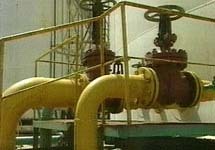
Representatives of the largest countries - oil exporters following the results of six -hour negotiations in the capital of Qatar Doha could not come to an agreement on freezing the volume of production for a period until October 1 at the level of January 11 of this year. It is reported by RBC with links to the Western media.
18 countries participated in the negotiations - members of OPEC, with the exception of Iran and Libya, as well as Azerbaijan, Bahrain, Kazakhstan, Colombia, Mexico, Oman and Russia. The meeting, planning on Sunday morning, began late for several hours.
During the wait, the draft agreement was rewritten - the item on freezing the volume of oil production at the January level was replaced by the condition to hold the prey "at an acceptable level". One of the representatives of the OPEC noticed relatively the new edition of the document that "I am not sure whether it could be called frost."
Actually, negotiations stalled on the question of whether to extend the agreement on Iran, who ignored the meeting. On such a condition, in particular, Saudi Arabia insisted. It was not possible to come to a consensus on this issue.
As a result, the OPEC countries told partners who are not included in the cartel, which will first discuss the possibility of freezing production at their summit, which is scheduled for June. Only after this will the question negotiate with countries that are not part of OPEC, including Russia.
A preliminary agreement on freezing production volumeswas concluded in mid -February by Russia, Venezuela, Qatar and Saudi Arabia. Such a measure was supposed to be accepted in order to avoid oversaturation of the market, and therefore the fall of prices. Meanwhile, it was noted that Iran, after the recent lifting of the sanctions, sharply increased the prey and refuses to maintain any restrictions before it does not bring its volumes to the pre -collection level.
It was indicated that it is the actions of Iran that will become the key issue of the meeting. At the same time, the head of the Ministry of Energy of Russia, AlexanderNovak, last week stated that the Iranian delegation would arrive for negotiations in Dokhu.
Then Reuters said, including with reference to the Russian Ministry of Energy, which in Moscow is called acceptable oil cost equal to $ 45-50 per barrel. It was claimed that Russia considers such a value to be optimal for achieving a market balance. In Moscow, they fear that at higher prices, shale oil production can be activated, the agency noted.
In January of this year, the cost of North Sea oil Brent fell below $ 28 per barrel; The Russian Urals, which quotes below, was worth even cheaper. The fall of oil prices entailed a significant reduction in the ruble. At the same time, the ex-vice-prime minister and former Minister of Finance Alexei Kudrin did not exclude that the cost of oil would decrease to $ 16-18 per barrel.
However, by March, oil prices began to grow again. At the end of last month, Brent barrel cost about $ 40; On Sunday, at different times of the day, Forex was given from 42.4 to 44 dollars per barrel.
In October 2014, Vladimir Putin said that at a price of $ 80 per barrel, the world economy will collapse . Shortly after Putin’s performance, oil prices fell below $ 80 and over the next one and a half years have never reached this significance.