
Translated material
Syria: elections, negotiations, stabilization
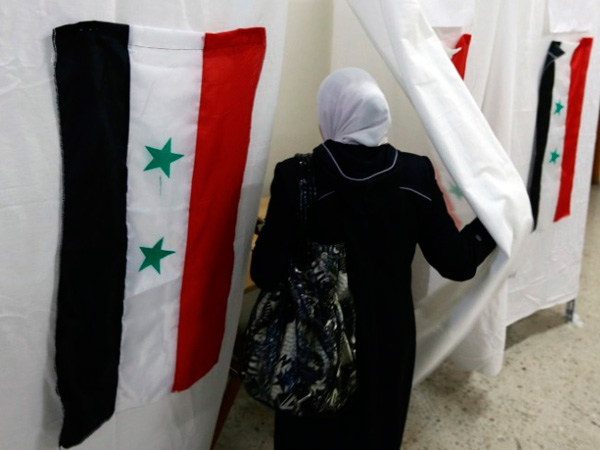
On the weekend, the press appeared that the ruling baath party and its associates won the parliamentary elections in Syria. The elections were held only in the territories controlled by the government, which gave the opposition to call this procedure a farce, and its results are illegitimate. This has become a complicating factor for conducting peace negotiations in Geneva.
The results were predictable. Last week, the media already livelydiscussed the topic of legitimacy of the Syrian elections and their significance for resolving the situation. Now Ny Times has published a large material of the specialist in the international relations of Tanassis Kambanis that neither the election in Syria, nor compromises between the Assad regime and the opposition in Geneva do not play a great role in resolving the conflict.
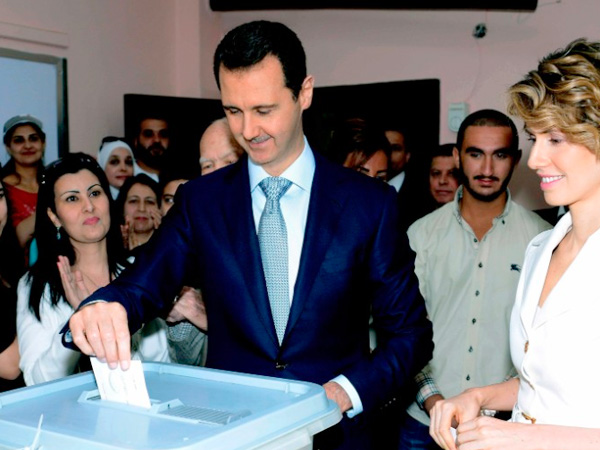 Bashar Assad votes in the elections. Photo: YouTube.com
Last fall, Kambanis writes, after Russia intervened in the Syrian conflict, the course of the civil war has changed: it ceased to be dead -end, and a dynamics appeared in it. However, this does not mean that the country is ready for reconciliation. The new round of peace negotiations in Geneva began in an atmosphere of moderate optimism: there was a hope that the opposition was now finally ready to discuss the transaction. Russian and American diplomats supporting different sides pursued a common goal - the direction of their customers to negotiations. The opposition said that they now managed to achieve a consensus on a number of issues, so their readiness for compromises with the government increased.
But among these encouraging features, Kambanis continues, the main one is absent: Syria, one of the most important states of the Arab world, is chaos, and no peaceful settlement will unite it. No matter how much they say now about the confrontation between the two forces of the “regime” and “opposition”, in fact, Syria is a “mosaic from tiny associations”. Government territories are now trying to control Iran, Russia and Hizball. Their opponents are represented by a whole spectrum of forces, starting with the “apocalyptic“ Islamic state ”” (IS, a terrorist organization, is prohibited in the Russian Federation) and ending with small rebel groups led by local leaders supported by foreign donors. Now that these leaders felt power, they will have less incentive to return to the centralized government of the government.
Political collapse in Syria poses a threat to stability throughout the Middle East. Syria since World War II played an important role throughout the Arab world. You can regard her contribution in different ways, but he is undeniable. Syria supported the development of Hizballs, covered Hamas's leaders, gave asylum to groups recognized in the West by terrorist. In addition, Syria was simply one of those few Middle Eastern centers through the mediation of which regional interaction was established. Now Syria also affects the whole region, but not as a puppeteer, but as a “black hole” that draws everyone into the war.
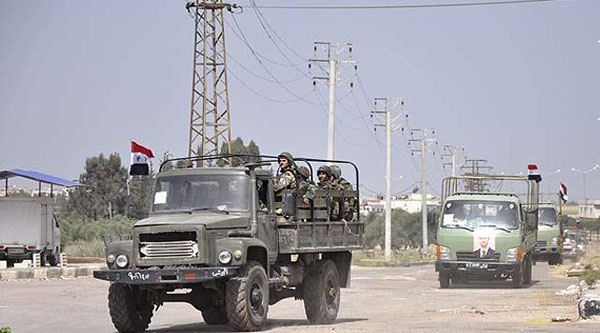 Government troops. Photo: wikipedia.org
The next stage may be even worse. Even if some opposition groups manage to agree with the regime, the territory over which they will establish power will be dilapidated. Before the war, Syria had production, education, and a healthcare system, which were completely functional by regional standards. Now this is not, and it is hardly possible to restore it. It is much more likely that these fragments will become a nursery of extremism.
In this sense, negotiations in Geneva will not play a big role. They are more likely to be of interest to international relations as a geopolitical game of the superpower of Russia and the USA and its allies. From this point of view, the mutual claims of Assad and the opposition can be led to a compromise. However, from the point of view of real normalization in Syria, these geopolitical games are useless.