
Translated material
"The plot is not important to us here at all"
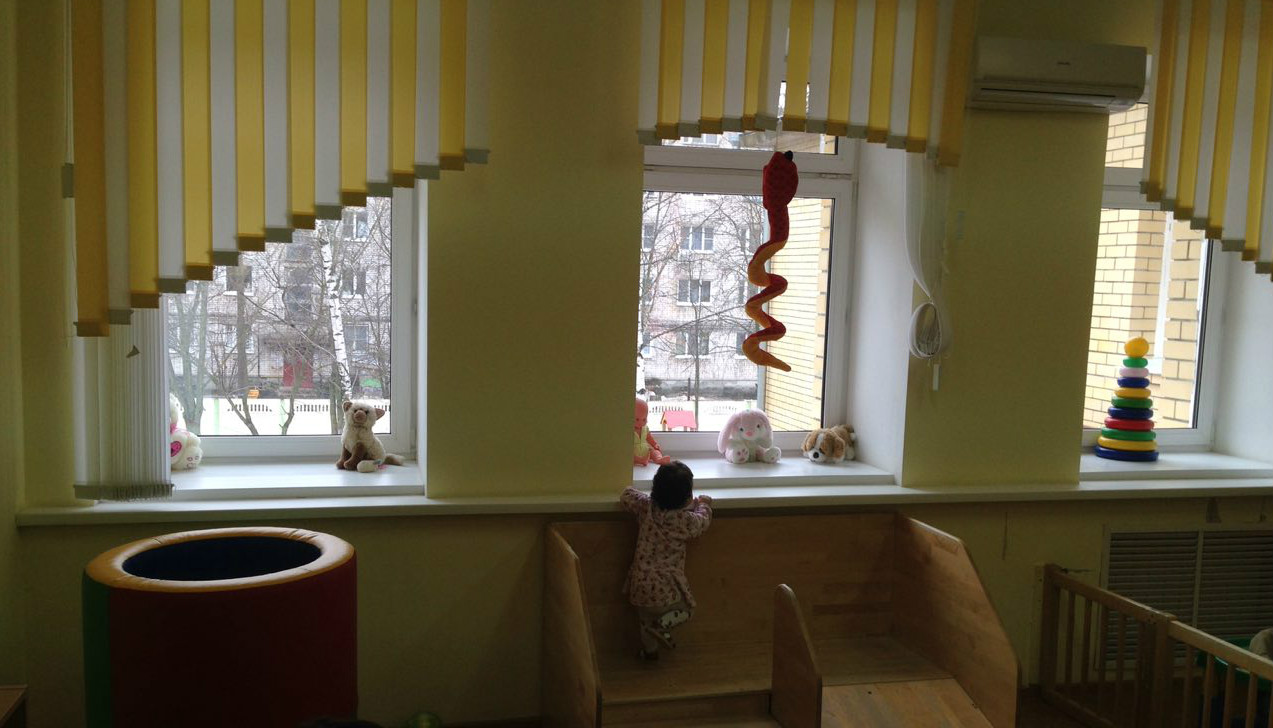
Representatives of charitable organizations who stood at the origins of the decision to create family groups designed to improve the lives of orphans, went with the inspection to the orphanages of Nizhny Novgorod and Dzerzhinsk. The TD correspondent also went with them, who was convinced that so far this decision was executed mainly on paper
In the corridor of the Avtozavodsk orphanage for mentally retarded children (DDI), several pupils play, in appearance for four to five years. The space for the game is fenced with children's chairs. Rusik crawls out for them all the time. Rusika, like a puppy, with a cry “to me, to me, to me”, educators are caught and returned to an improvised corral. He has a plastic machine in his hands, on his head - a stain of green. Where the sore is coming from, the educators do not know, they only say that she herself "periodically opens and closes."
DDI is on the outskirts of Nizhny Novgorod at the very end of Ilyich Avenue. Institutions of this type are included in the Ministry of Education or, as in the case of the Nizhny Novgorod DDI, the regional ministry of social protection. The boarding school is headed by Mikhail Zhinko - a large man and a strong business executive.
Children play by the TV, on the screen alternate shots of Russian and foreign cartoons. A child is sitting near the sofa. He is constantly swinging.
“Blind,” one of the educators explains.
“And also a decep,” adds the second and summarizes with a smile, “in short, the whole bouquet.”
In the Teleke, Simba from the “King of the Leo” runs around the jungle with a friend, the words “Chung-Changi” come from the speaker. Educators explain that these are just shots from cartoons with children's songs imposed on them.
“The plot is not important to us here at all,” they smile.
 Nizhny Novgorod orphanage photo: Pavel Nikulin
At the beginning of April this year, seven experts from charitable organizations decided to find out how it was performed in children's orphanages in Nizhny Novgorod and the neighboring Dzerzhinsk government decree No. 481. This document should provide the opportunity for pupils of orphanages to spend more time in contact with adults.
Compliance with the resolution, which, according to Oleg Palmov, the associate professor of the department of mental health and early support of children and parents of St. Petersburg State University, should positively affect the development of orphanages of orphanages, seven people checked.
In addition to Palmov, a member of the Council under the Government on the Social Sphere, Elena Alshanskaya, a member of the Public Chamber, Julia Zimova, the psychologist of the Foundation “Volunteers to help orphans” Julia Kurchanova, her colleague Elizaveta Yasnevich and the Coordinator of the Mercury movement under the Nizhny Novgorod diocese, participated in the audit. Shlyapin.
“If earlier in the orphanage there were (in the group) 15 people, now no more than eight. If the child was 12, now no more than six. The number of children is reduced, due to which the possibility of individual contact increases. This is the first advantage. The second is that the resolution provides constancy and stability, ”Palmom explains the essence of the document.
The groups created during the implementation of PP No. 481 are often called “family”. After all, the integration of children in terms of development, age is supposed. At least where it is possible.
“In the houses of the child to replace staff in connection with vacations or sick leave, they could send an employee from another group to the children. And for the child this is new contact, stress. Now this resolution regulates the greater stability of adults around children. Minimization of stress positively affects the general condition of children. If the child is tense, if everything is unpredictable around, including constantly new adults who wash and feed him, not knowing his features, then, of course, this is a great tension for the child, which prevents his development, ”says Palmov.
***
The inspectors of Zhinko proudly and importantly talks about the material and technical base of the boarding school, listing the sources of extra-budget financing and new buildings built under his sensitive leadership.
“The department was made at the expense of extrabudgetary sources,” says Zhinko. - I created a structure that makes repairs with minimal costs. ”
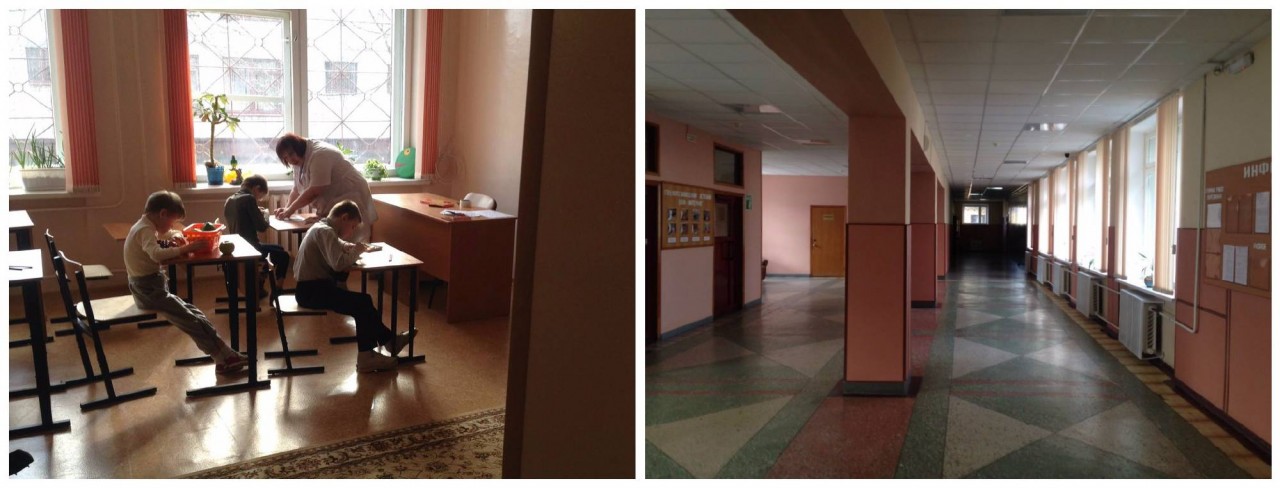
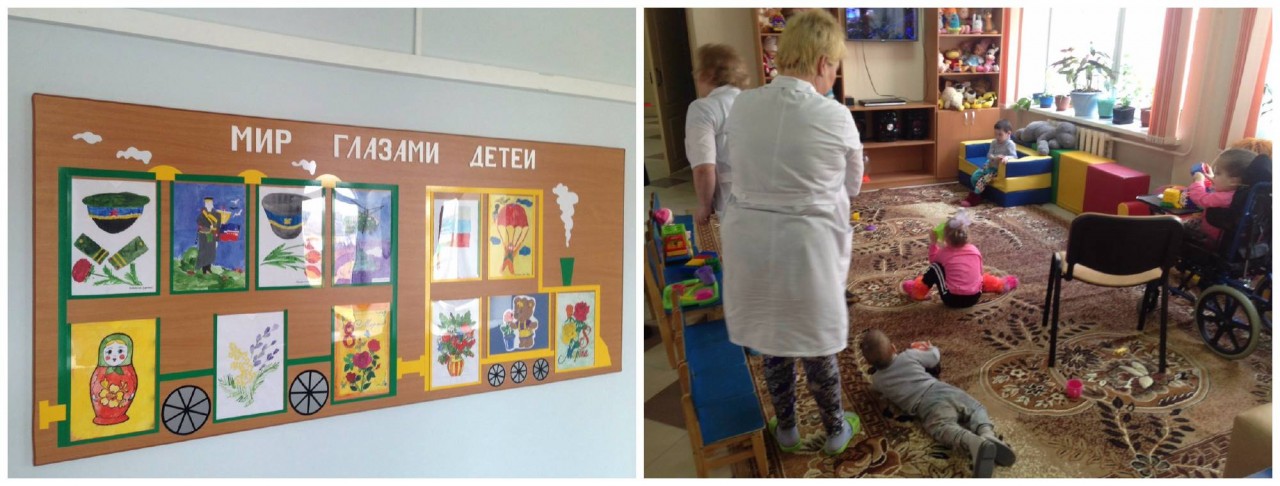
In his stories, he is more concentrated on his achievements as a builder and a merchant than the head of the children's institution. By limping, he paces along the corridor and wonders: you still need to make repairs in two compartments, change the floor, lay a non -combustible linoleum. Zhinko shows corridors, cabinets, toilets, classes for classes. In an empty class on the walls, drawings dedicated to the Day of Cosmonautics and Easter hang on the walls. The children themselves are in the game.
 Nizhny Novgorod orphanage photo: Pavel Nikulin
“Lesh! Lesha! Wash the floor! Where is the little mop? " - He turns to one of the children with about the same intonations that they usually talk to pets.
Lesha breaks down and begins to violently sweep the carpet with a toy mop. After 10 minutes, he changes the mop to the vacuum cleaner.
While he is working, the head of the department shows soft toys. The dolls, she says, are sewn right away in older girls, because "purchased toys quickly spoil, but these are not a pity."
In the next class we meet elegant children: white top, black bottom.
- Hello, please go through. My name is Ira Volkova, - the girl from the class greets. It is felt that she rehearsed, but forgot what should be said after greeting.
- What is your name? - the teacher tells her.
Ira Volkova obediently repeats the question. Represent. In response, the child reads a poem.
- Do you love songs? We will give you songs! - DDI employee rejoices, addressing us with absolutely the same fingering intonations with whom the pupils usually speaks.
On the shelves - textbooks, pedagogical literature, fairy tales, science fiction and many religious books. The librarian sighs: a child who could specifically read something for the inspectors, “was not allocated” to her.
 Dzerzhinsky Specialized House of the Child No. 2 Photo: Pavel Nikulin
After visiting DDI, the commission remained in the hands of a thick manual report, and, as the head of the “children of our children” Varvara Penzova says, the boarding school is completely honored on paper 481.
“It is written, for example, about 33 groups, six to eight people each, but really there children live in rooms and 15 people there. Small groups exist only on paper. That is, in fact, everything is completely wrong. They transfer children from group to group to five times during their stay in the institution and do not see any problem in this, ”the expert said.
***
The cabinet of the head physician of the Dzerzhinsky House of the Child Mikhail Bushuev is decorated modestly: a little family photos, children's toys, a figurine with the inscription Super Father, a couple of calendars from the FSB and the icon of the Mother of God. Children from zero to three years old enter the child’s homes. Such children, as a rule, need control by doctors.
481 resolutions in the child’s house cannot execute for objective reasons. Firstly, more children come there. Secondly, they do not want to do anything in the regional Ministry of Health (it is the child’s home) until all the controversial issues that are at the junction of the interests of different departments are resolved, Varvara Penzova explains.
“The Ministry of Health of the Nizhny Novgorod region is sure that the child should not observe his home,” the head of the childhood and obstetric care of the regional Ministry of Health Tatyana Borovkova mints in an ice voice. Experts are unsuccessfully trying to convince her.
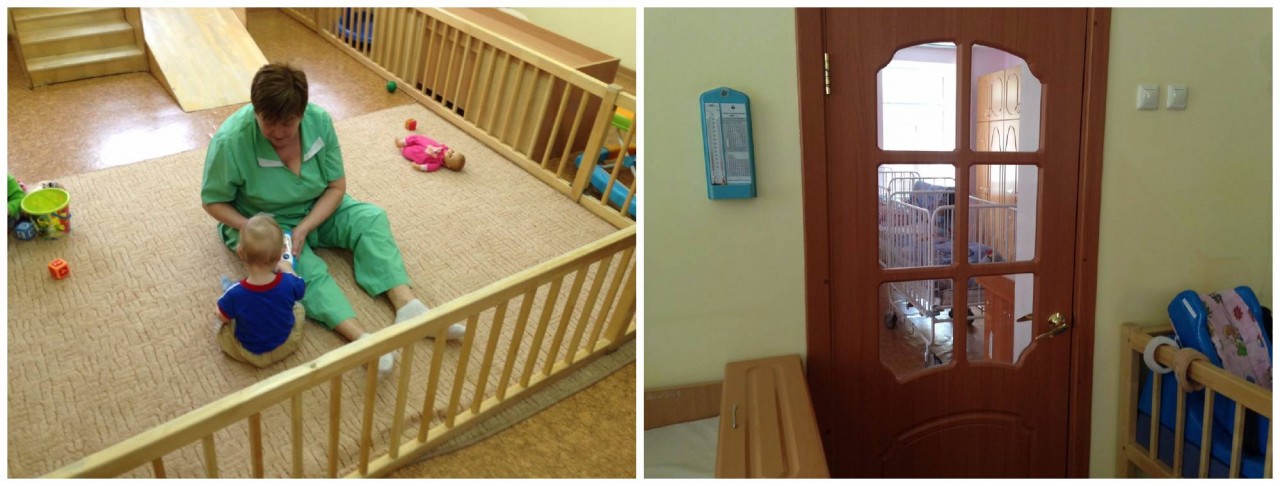
The building of the child’s building was built in the 70s. Initially, a kindergarten was located there, and then it was re -profiled and converted to an orphanage. I had to supplement all the exits with ramps, as the head physician Bushuev says: "They loaded the children and went."
In one of the branches, Alshanskaya notes the inconsistency of the internal schedule with reality. On the schedule, children should play, but in reality everyone is sleeping. It is worth saying about this to nurses and educators, as they immediately bring two children from the bedroom. One of them - a visually impaired boy with dysplasia - is immediately put in a walker: "Look, we taught him to walk."
- Is he standing? - Alshanskaya is carefully interested.
“He can even without strokes,” the employee of the child’s house joyfully replies. She pulls the child out of the stilts and puts it on the floor. The boy does not look very satisfied.
The third institution - a children's specialist medical rehabilitation for children of a neuropsychiatric profile - is also under the leadership of the Ministry of Health. Heads are headed by the head doctor Alexei Tsvetkov. Tsvetkov leads a commission on offices. Game, wards, an empty rehabilitation hall in which there are untouched children's simulators.
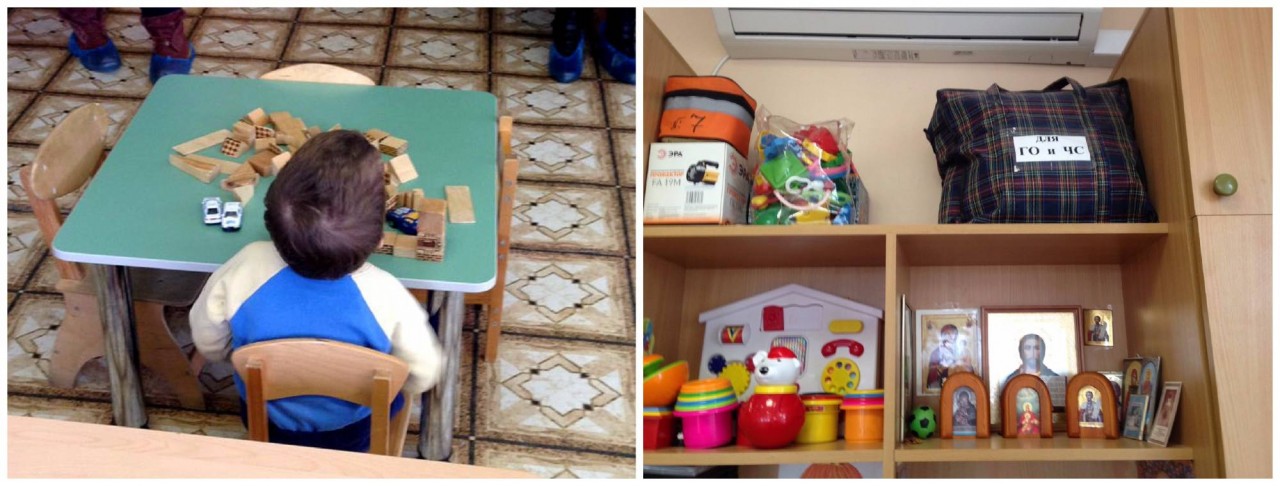 Children's specialized hospital for children of a neuropsychiatric profile, Dzerzhinsk photo: Pavel Nikulin
Outwardly, the institution is not much different from the previous two: the children in the game room are drumming through the xylophons, in the arena of a lonely blind girl swing and screams. Her cheeks are red and covered with shallow scratches - she tears her face, and mittens help little. Another girl plays in a neighboring arena - he bites a plastic toy and carefully looks at the inspectors. Saliva is slowly dripping slowly. When, at the request of the experts, one of the staff of the child’s house begins to list a bouquet of diseases of the pupil, she breaks away from the machine and begins to laugh fluently.
***
“The Ministry of Education is considered the main initiator of Decree No. 481. The Ministry of Education has issued methodological recommendations to it. And some organizations that are in the department of other ministries do not obey these instructions and believe that the recommendations that they must comply must be issued by the relevant ministry, ”says Elena Alshanskaya, a member of the Council of the Council under the Government of the Russian Federation, the president of the Volunteers to help orphans.
Another reason is the lack of special training for orphanages. The document categorically does not coincide with the practice, which has developed in orphanages, children's houses and boarding schools in decades.
“Some leaders who work for 20-30 years ignore a new methodology. “This simply cannot be, everything should be different, maybe it will somehow resolve.” Close your eyes when it’s scary, and pretend that there is nothing. They did not really participate in the process of preparing the decree. It fell on them from above, it describes not what is, ”she says.