
Translated material
How to become a traitor
Katerina Gordeeva - about the transformation of philanthropists into "foreign agents"
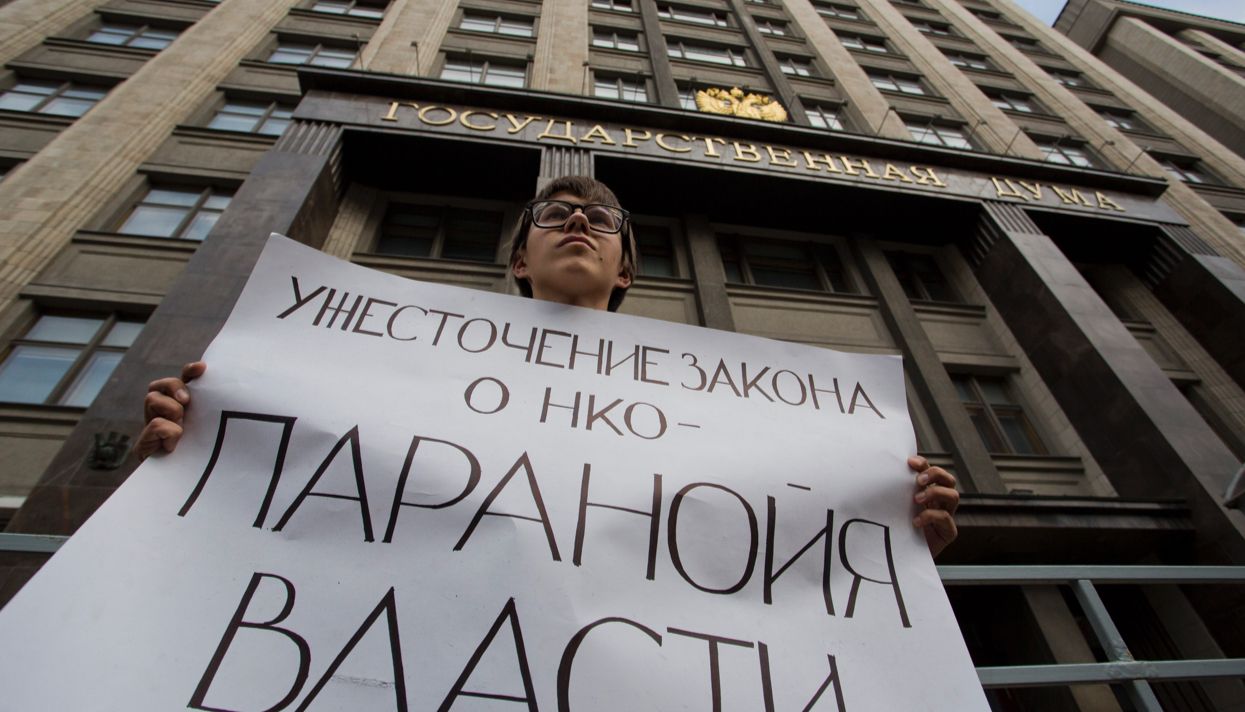
The State Duma on Wednesday, April 20, in the first reading clarified the concept of “political activity” in the law on non -profit organizations. If the amendment is finally adopted in the current form, any charity fund in Russia, which at least once received a donation abroad, may be recognized as a “foreign agent”. This means that each mention of the fund will have to be accompanied by a “foreign agent” marking; In addition, the expenses of philanthropists on the internal - required by law - audit will increase. The ban on the activities of such funds will be only a matter of time-and the degree of perseverance of those who, for some reason, will want to reduce accounts with them. The Special Corps of Medusa Katerina Gordeeva tells how it turned out that the help of the weak and sick in Russia is now considered political activity.
In 2016, almost all major charitable foundations of the country should celebrate a decade of their official activities.
However, we will tell this story in more detail.
The indifferent Russians were struck by the earthquake in Spitak in 1988. In the early 1990s, they were shocked by the highest mortality of children in the oncological and oncogematological departments of Russian hospitals and simply the plight of these very hospitals-in terms of the most elementary: donor blood, drugs, dressings, clothes and linen. In the last decade of the twentieth century, these caring people met each other, made friends, helping fellow citizens - at first impetuously and spontaneously. And then they realized: systemic assistance works much better.
Meanwhile, the native of the industrial cherem, Veronik Krasheninnikova managed to learn a little at the Faculty of Economics and Economics of the Leningrad Shipbuilding Institute and a little-at the Paris Institute of Political Studies, at the Faculty of Finance and Economics. And she went to make a career: since 2001, Krasheninnikova is just an employee, and since 2006 he was the president of the Council on Trade and Economic Cooperation (CIS-USA). People who knew Krasheninnikov in Washington and New York recall her as a freedom-loving woman, adhering to democratic and even liberal views. She critically spoke of any manifestations of censorship, pressure on business or twisting political nuts in Russia.
In the mid-2000s, several funds of assistance to seriously ill children, the Hospice Assistance Fund for helping seriously ill and in difficult life situations appeared in Russia at once. People who came to work in these funds and even headed them learned what systemic charity is, the method of their own trials and errors: nowhere and no one in post -Soviet Russia taught managers of the non -profit sector. No one understood how and where to regularly take money for the inexhaustible needs of patients, projects and even whole hospitals. Consulting with each other, with sympathetic lawyers, legislators and officials, funds wrote their charters, developed protocols of actions in one case or another, created expert advice that allowed to make balanced decisions on the provision of assistance (non -ordering) of assistance. By the end of the zero, the expert level of charitable foundations allowed many of their leaders to seriously talk with specialized ministries and insist on legislative and procedural changes.
It was charitable funds that raised the question of the right to affordable pain relief, the wide development of blood donation in the country, and many others who need orfan (rare) drugs. The main thing that the funds managed to achieve is a change in the perception of Russian citizens such as illness, weakness and weakness. Cancer, especially childish, is no longer considered a sentence; People willingly help, and not even to specific children - system projects of charitable foundations, having issued a regular donation. The right to illness without pain and decent death is no longer considered something incredible; incurable diseases do not make a person outcast. Charity funds gradually accustomed the society to be indifferent to those who are weaker. And this, perhaps, is the most important humanistic achievement of Russian zero.
Veronika Krasheninnikova, meanwhile, practically without interruption from American life, defended a candidate dissertation on the Russian-American dialogue as a problem of political culture (2007) and became a candidate of historical sciences at the Moscow Pedulizer. And at the same time I reviewed her attitude to the entire western system of values.
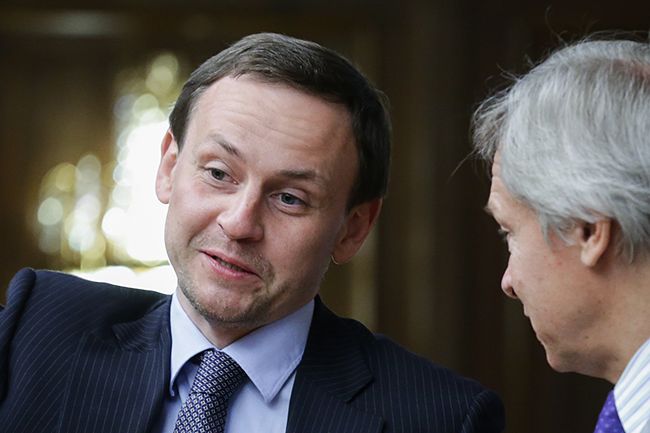
Krasheninnikova returned to Russia with a strong initiative: while some of the citizens in 2011-2012 were frozen in Bolotnaya Square, demanding honest elections, Krasheninnikova published a program article at REGNUM that the country needs a law on “foreign agents”.
“Plans for the liberalization of the political system of Russia, published in the presidential message, are implemented in a special hurry and at the most inopportune moment - on the eve of the presidential election, which some Washington circles together with the Russian opposition are used in an attempt to change the regime in Russia,” wrote Krasheninnikova.
REGNUM recommended the author of the article as the director of the Institute of Foreign Political Studies and Initiatives created at the same time, in 2012 (the article was published on January 20, 2012, the Invissin was registered somewhat earlier, in March 2011; it is worth noting that the structure of the institute Veronika Krasheninnikova is the only member of the board). Krasheninnikov was still known by this moment in Russia. The author of this Law on “Foreign Agents” was the active uniform deputy Alexander Sidyakin. The State Duma accepted it in the summer of 2012.
Veronika Krasheninnikova made a quick career in her homeland: in addition to the Directorate in the Invissin, in 2012-2013 she was a consultant to the editor-in-chief of the Russia Today, the head of the Center for International Journalism and Research by RIA Novosti (now this is the MIA Russia Today), and since March 2013 he became a member of the Public Chamber and an irreplaceable participant in political television shows on all federal channels of the country. From the transfer to the transfer of Krasheninnikov, referring to the hardships of life in the United States, he says that our law on "foreign agents" is exactly the same as American. And in the same way, he is directed against spies and enemies, disguised as non -profit organizations.
A few understand that Mrs. Krasheninnikova has in mind Fara (Foreign Agents Registration Act), an act of registration of “foreign agents” - a law adopted in the United States in 1938 and enjoyed the greatest success in the difficult time of the heyday of macartism as one of the “witch hunting” tools. In 1966, amendments were made in Fara, which turned it from a tool to combat the propaganda into a tool to combat the lobbying of foreign economic and political interests in Congress. In other words, the current Fara is directed mainly not against organizations engaged in non -profit activities (even if they have foreign financing, they simply must be registered), and against foreign lobbyists. And this seriously distinguishes Fara from Russian law.
Until now, the law already adopted by the Duma has written that “the activity in the field of science, culture, art, health care, the prevention and protection of citizens' health, social support and protection of citizens, the protection of motherhood and childhood, the social support of disabled people, the propaganda of a healthy lifestyle, physical culture and sports, and charitable activities, and charitable activities” do not belong to political activity.
But non -profit organizations, as soon as the law was adopted, they themselves asked President Putin (and he, the Constitutional Court) to clarify the concept of “political activity”. It took almost four years to clarify.
By 2016, Russian charitable foundations, and no one argues with this, became the most serious help from the country's medical and social system. About six billion rubles, which annually spend charitable foundations on their wards, only seem a drop in more than the 400 millionaire budget of domestic health care. In fact, it is the funds that today pay all non -treasured bone marrow transplants in Russia, 60% of unregistered drugs, many types of high -tech treatment, and in some hospitals - up to 30% of drug support. It is the funds that “pull out” the one to whom the state is not able to help, covering the rear and allowing people to hope.
It is funds that make dirty work for the relevant committees of ministries and departments: they collect and reduce statistics, study international experience, come up with economically profitable exits from difficult situations. Many laws of the last five years associated with the social sphere and healthcare were adopted in intensive consultations of officials with representatives of the non -profit sector.
Famous and respected artists, public figures and journalists wrote about this in a letter to Vladimir Putin. Patriotic charity, so it happened, has recognized faces: Konstantin Khabensky, Yegor Beroev, Ksenia Rappoport, Chulpan Khamatova, Natalya Vodianova, Evgeny Mironov, Julia Pereshild, Tatyana Druibich, Avdotya Smirnova, Vladimir Pozner.
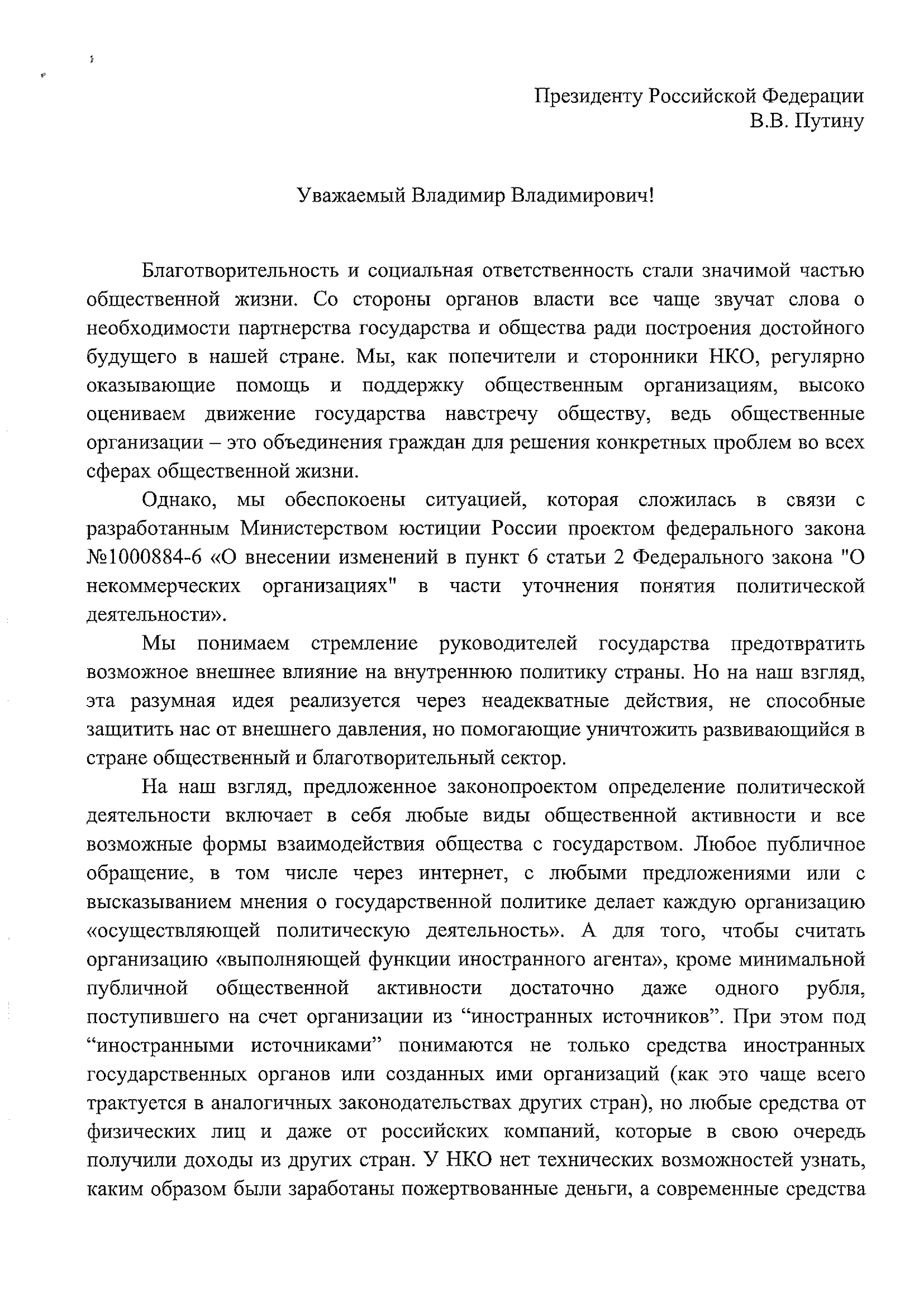
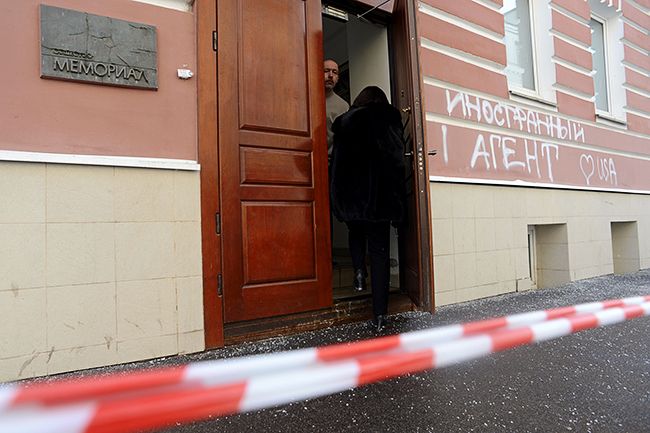
In a letter on three pages, the philanthropists did not criticize the law on “foreign agents” (to which there are many complaints from other, not charity NPOs; precisely because of it, for example, the philanthropist Dmitry Zimin “Dynasty” was closed , but even agreed with Putin: the idea to protect the country's internal policy from external encroachments is reasonable. At the same time, philanthropists asked not to equate the funds of funds with political and social activities. They explained that without talking with doctors and officials, without refinement of laws, without softening morals and the spread of the ideas of mercy, many - already neglected - the processes will stop. And the new ones will not begin.
The letter was sent to the presidential administration on April 9, 2016. On April 11, from the State Duma’s information message, it became known that the consideration of the amendment to clarify political activities in the Law on “Foreign Agents” in the first reading was postponed by the State Duma from April 15 “For a later date”. The acute public discussion around the letter curled up, on April 14, a “direct line” with Vladimir Putin, the question of charitable foundations that would be about to become “foreign agents” in their homeland, did not sound, although they wanted to ask him.
A later term turned out to be April 20. "Clarification" is adopted in the first reading. If the rest of the readings pass in the current form, thanks to the “clarification” of any charity fund in the country engaged in public activities and has ever received a donation from a non-citizen of Russia in any amount, can be recognized as a “foreign agent”.
The day before, when this refinement was discussed in the relevant committee of the State Duma, the representatives of the funds hinted: now Russia has “so many enemies” that “friends can suffer in the fight against them”; But this is nothing, the funds can then in court challenge their belonging to “foreign agents”.
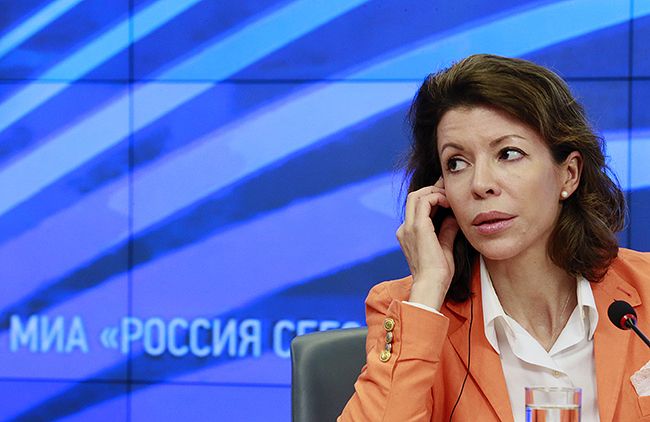
Even during this discussion , the head of the Committee Yaroslav Nilov (LDPR faction) recalled the events in Ukraine, where, in his opinion, representatives of the non-profit sector “swayed the situation”, Mikhail Markelov’s deputy proposed to change the psychological attitude to the formulation “Foreign Agent”, and the member of the Public Chamber Veronika Krasheninnikov called on the Foundation “Give Life” and others philanthropists "do not hide behind children." What does this mean, she did not specify.
Veronika Krasheninnikova, by the way, on February 6, 2016, was elected to the governing body of United Russia - the Supreme Council - and became one of the four co -authors of the ideological block of the party program in the 2016 parliamentary elections.
“Foreign agents”, which are about to, probably, will be reckoned with funds from the walls of the State Duma, from the Executive Committee of “United Russia”, apparently, seem to be foreign. Something stranger: not because enemies, but because they are incomprehensible. Well, how is it - to kill and spend life on unfamiliar weaklings, incurable and nobody - until the advent of these same philanthropists - unnecessary? Unknown, invisible and, therefore, do not spoil the picture of universal joyful existence?
Of course, the funds will fight. Someone will go to court to prove that he is not a “foreign agent”. Perhaps someone will succeed.
However, if the decision on the systemic transfer of charity into a “political field” has already been made, the technical implementation of the law through the State Duma is a matter of time. And it doesn’t matter what charitable foundations will be called after that. It is important that charity in the same form and the former volume will be destroyed. On charges of betrayal.
Katerina Gordeeva
Riga