
Translated material
ATS outside the zone of action
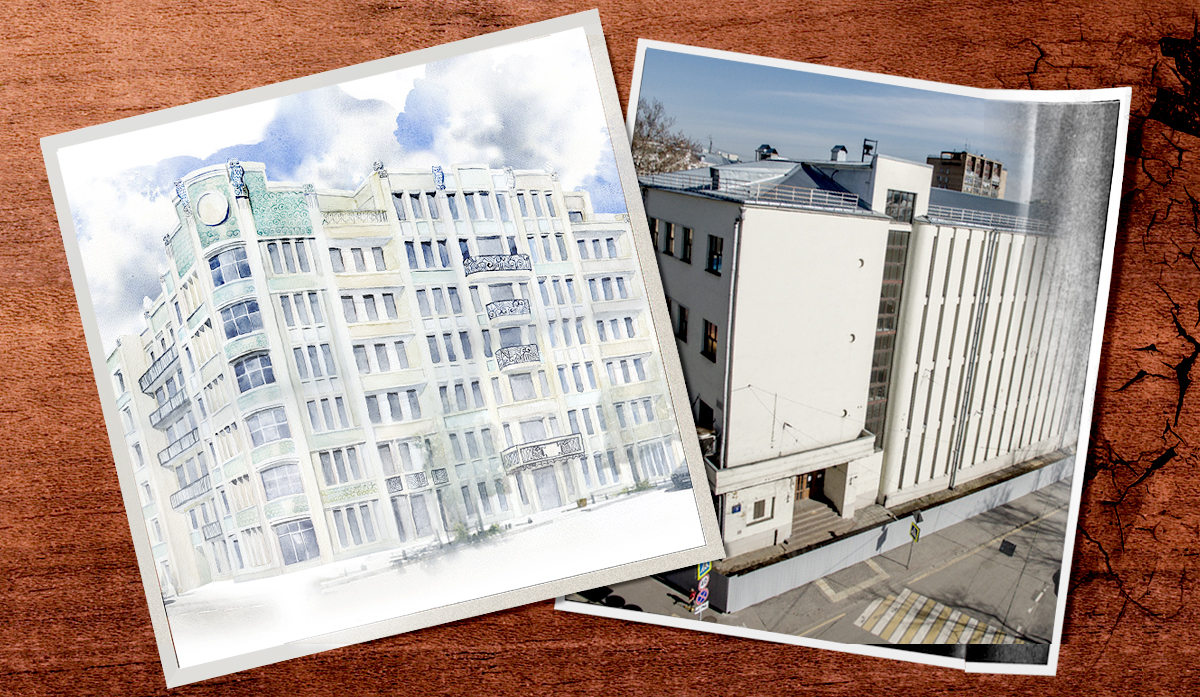
In Moscow, a monument in the style of constructivism is demolished to build elite housing
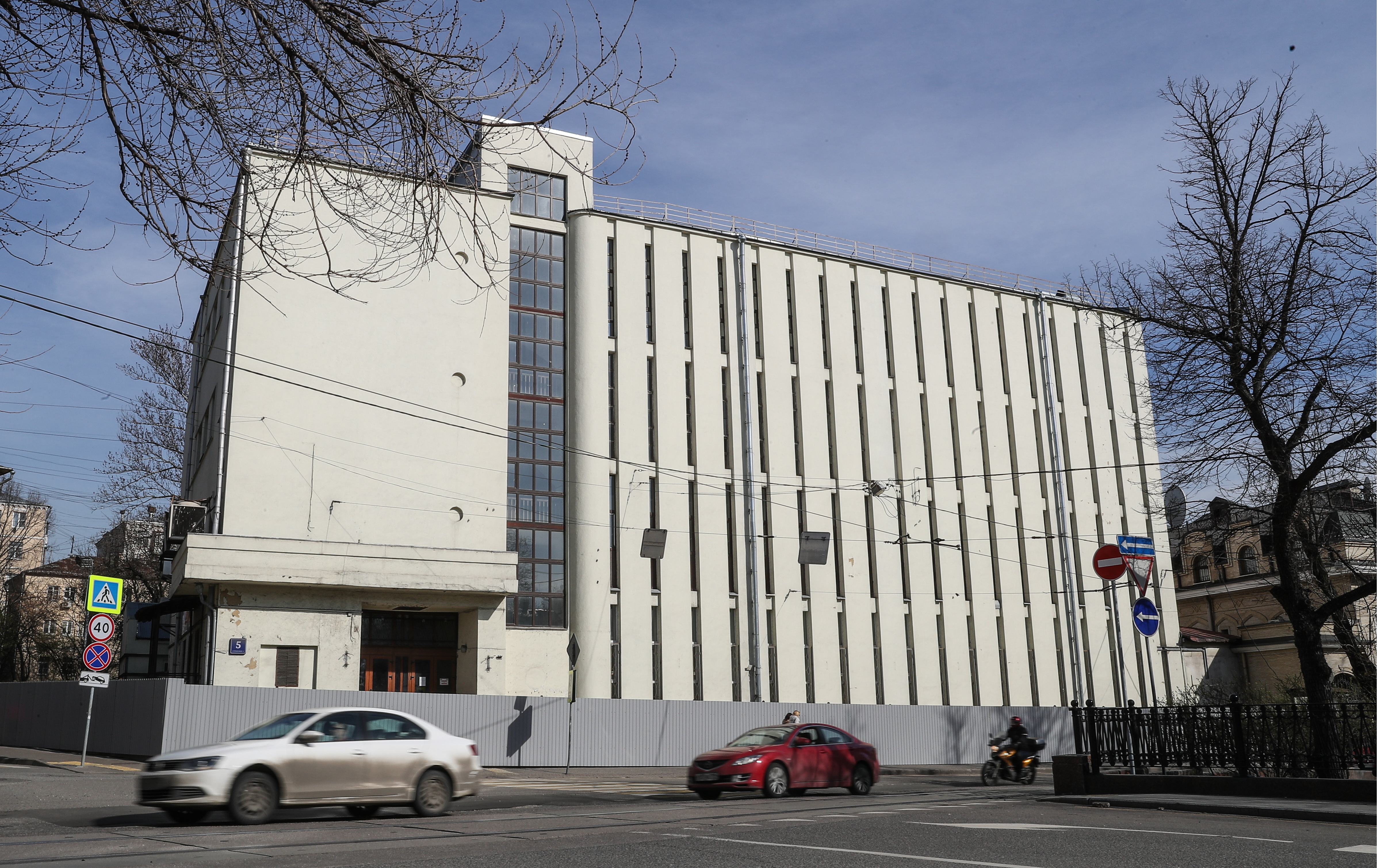
Excavators began the destruction of the Taganskaya PBX on Pokrovsky Boulevard - a building in the style of constructivism, which was built in 1929 by architect Vasily Martynovich. In its place, an apart-hotel will be built-an elite residential complex with an investment cost of 1.3 billion rubles. Apartments with an area of 50 to 140 square meters will cost from 380 thousand to 400 thousand rubles per meter. The city defenders who advocate the preservation of the architectural monument believe that it can still be saved.
Buildings of automatic telephone stations were built in the USSR in the 1920-30s, when the telephone number was no longer required to unite. With the advent of digital communication, the need for them disappeared. In Moscow, the ATS hung for a long time on the balance of the MGTS-a special company of RET-Real Estate CJSC was even created to manage assets. In 2013, the AFC Sistema Vladimir Yevtushenkov began the process of acquiring “X-random-treasure” and 195 objects that were on its balance sheet. By 2015, they all transferred the ownership of the "system".
It is interesting that the developer "Leader-Invest", a subsidiary of AFK Sistema, back in 2012, showed interest in the buildings of the ATS, offering to rebuild them under residential residences. Work on the project on the facility on Pokrovsky Boulevard began in 2014. The competition was won by Mesonproekt LLC. According to the head of the company Ilya Mashkov, many serious design bureaus participated in the tender, and Ilya himself did not see a single project for the reconstruction of the existing building - they all involved demolition and new construction.
One of the architects of the new Apart-Hotel was Alexander Kuzmina, the second founder of Mesonproekt, and since February 2015-First Deputy Head of the Main Directorate of Architecture and Urban Planning of the Moscow Region. Her father, Alexander Kuzmin, was the main Moscow architect from 1996 to 2012, that is, all the time of the unrestrained development of the capital under the leadership of Yuri Luzhkov. Alexandra, along with a partner, Ilya Mashkov, created the Mesonproekt in 1999, she was only 22 years old then. All the time of its existence, the company received a lot of projects in Moscow and the region, built even the ATS of the Dorogomilovo district. However, according to Ilya Mashkov, the company achieved everything with its labor. “Only one who does not personally know Alexander Viktorovich Kuzmin can doubt his decency. This is a person with a capital letter, an architect with a capital letter. Our organization never received orders because we were close to someone. He could advise something, but never dragged our projects,” Ilya Mashkov assures, adding that at the time the decision was made to demolish the engine, Kuzmin already and Kuzmin and Kuzmin and Kuzmin was made. He was completely held by the General Director of the Construction Research Center, controlled by the Ministry of Construction of the Construction.
Draw an ordinary station
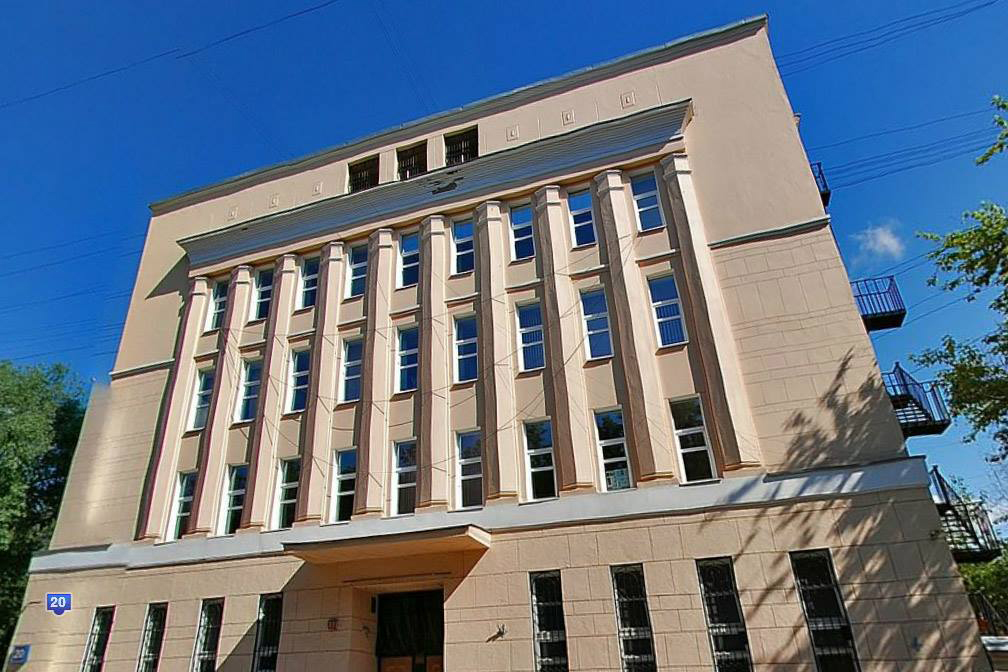
Whether the father of one of the architects of the project helped to put an end to the PSC or not, but preparation for her demolition was like a special operation. Back in March 2015, a constructivist ATS building was demolished on the Serpukhov Valu, built in 1933 according to the project of architect Solomonov, in its place the same “Leader-Invest” Alexander Yevtushenkov is building elite housing. This did not cause public resonance, but activists of the Archnadzor public movement were concerned about the fate of other PBXs, including on Pokrovsky Boulevard. In October last year, the senior researcher at the Research Institute of Architecture and Urban Planning of the Russian Academy of Architecture and Construction Sciences (RASN) Alexander Selivanova submitted an application to the Moscow Cultural Heritage Department with a request to introduce the Taganskaya ATC to the register of architectural monuments. According to the law, the response was supposed to come within 90 days, but the activists received the refusal only six months later. The delay does not seem to be an accident: on December 30, 2015, the Department of Cultural Heritage issued order No. 478 , approving the criteria by which buildings can be recognized as monuments. A point of assessment was introduced, only houses that scored more than 200 points were recognized as objects of cultural heritage. The ATS on Pokrovsky received 176 - according to Alexandra Selivanova, the Department could deliberately delay the decision on the object in order to take advantage of the new rules.
In fact, they just laughed at people, because everything was decided for a long time
Selivanova believes that the point system, although not bad in itself, but the document developed by the Moscow authorities is inherently flawed. “This system is absolutely destructive for architecture in general and especially for the architecture of modernism of the 20th century,” says Selivanova. “The largest number of points is assigned to objects not for their architectural qualities, but for their historical value.” So, for example, for “communication with the historical personality or event of global significance,” the house is given as much as 70 points, regardless of when and by whom he was built, and for the complete preservation of historical facades - only 10. “It turns out that the appearance in the Lenin building is more important than its architecture,” Selivanova complains. Constructivism was not lucky at all: they give 30 points for unique decorative elements on the facade, for other pilasters and friezes - from 25 to 15, and 10 for the “laconic decor” - 10. “Any profitable house of the beginning of the last century with standard gypsum castings that were simply bought, will cost more than a monument of avant -garde, simply because it does not have it. stucco officers. - says Alexander Selivanova.
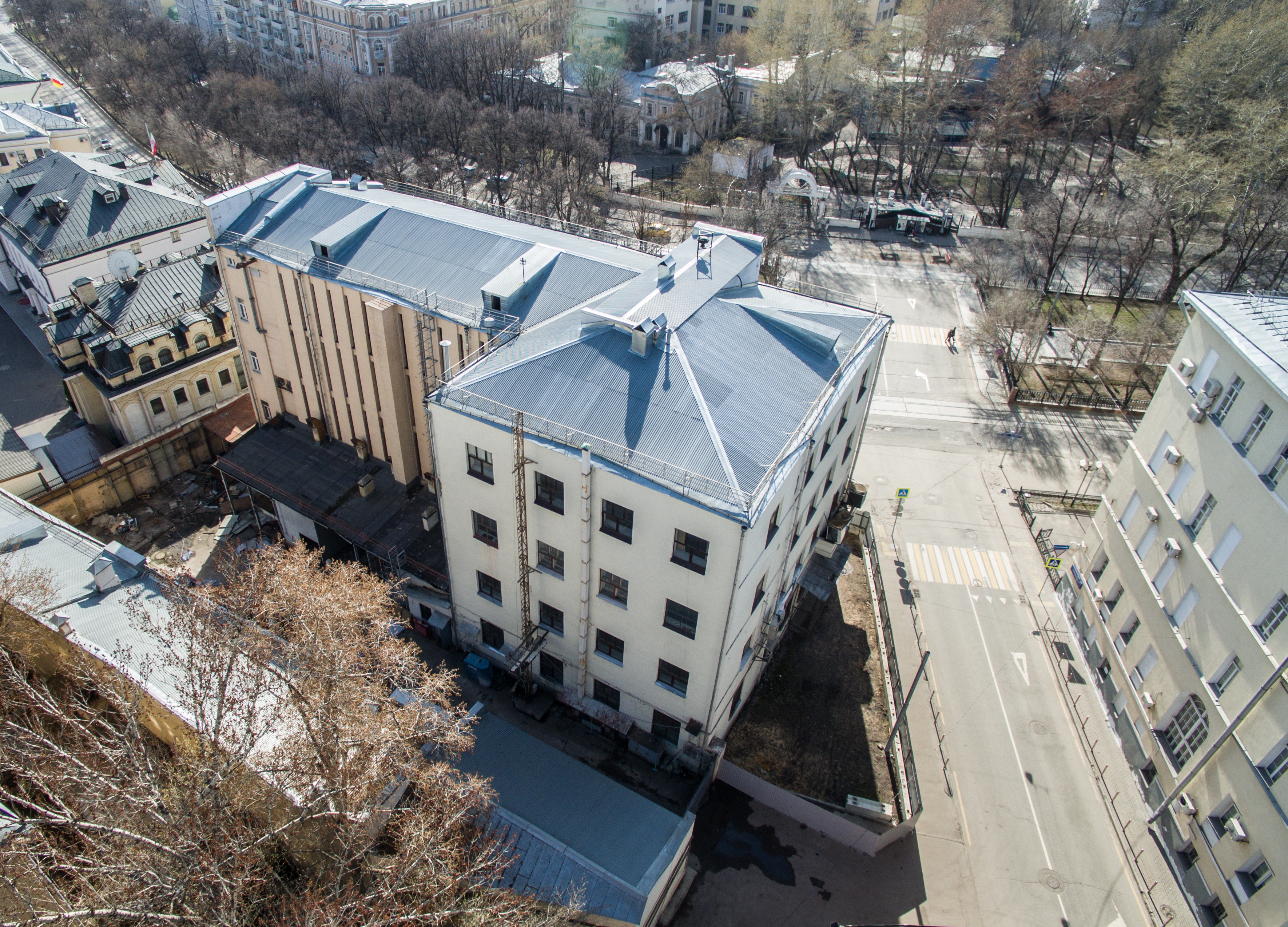
However, despite the fact that the ATS monument was not recognized, it was not a question of its demolition until March 2016. At least officially, because unofficially the developer has long come to an agreement with the Mesonproekt. In March, the commission on urban planning, land use and development in the Central Administrative District held public hearings on land surveying the territory of the quarter on Pokrovsky Boulevard. Activists of Archnadzor visited these hearings, but the theme of the telephone station was not raised. “We asked what would happen to the PBX, we were answered that this question is not posed, and individual hearings will be organized to discuss a particular site,” says the activist of the movement of Yana Safronova. However, they did not hold separate hearings: almost immediately the urban planning plan of the land plot (GPZU) on which the PBX was changed, the new version provided for the demolition of the station and the construction of the apart-hotel. “In fact, they just laughed at people, because everything was decided for a long time,” says Selivanova.
Unrecognized pride
We had a unique social experiment, this architecture served the construction of a grandiose utopia
The buildings of the late 1920s-early 1930s fell into a short gap between the modern beginning of the century and the Stalinist Empire, moreover, according to historians of architecture, constructivism is almost the only thing that Russia can be proud of in the sense of the architectural heritage, because everything that was before it was introduced from the border. “We have passed a unique social experiment, this architecture served the construction of a grandiose utopia, so it causes more interest and enthusiasm than European analogues, many tourists go first of all to watch the Soviet avant -garde,” says Alexander Selivanova. From the mid-1930s to the second half of the 1950s, the USSR fell out of the global architectural process, carried away by a monumental imperial style, so if in the West they love and appreciate the constructivism, we still have preference to stucco molding and columns-that in old buildings, in the new ones: the apart-hotel on Pokrovsky Boulevard will also resemble the fashion of the 20th century. “Abroad, no one needs to explain what constructivism is, the tradition has not been interrupted there. We are weaned,” says Alexander Selivanova. “The problem is that you need to care for the architecture of the avant -garde. It does not look in an incapable, unremarkable form, does not turn into picturesque ruins, unlike other style. But if these buildings are contained in a sparkling in a sparkling. Primordial form, they look amazingly aesthetically pleasing-as in Frankfurt or Lyon, where we come and are amazed that the architecture of the 20s can be so refined and aesthetic. "
The architect of the apart-hotel Ilya Mashkov generally agrees with the defenders of the ATS: “I feel sorry for any architectural creation, I don’t like it when something is demolished in the center of Moscow. My business is the construction of buildings, of course, I don’t want them to be demolished, and I also belong to the creation of any architect,” says Mashkov. “Crocodiles of the tears,” Nalls his pity for constructivism Selivanov, noting that architect Nikolai Lyzlov volunteered to develop an alternative project to reorganize the building for free, but no one was interested in this. Ilya Mashkov, however, assures that the reconstruction within the existing brief is impossible, the windows at the PBX are too narrow, the floors are too large, you can’t open the hotel here or, if you open, it will not attract guests. "We thought about the project-deposit. He did not fall under any business plan of the owner of the building. You can make a museum or exhibition space there. You can make some repository, archive. Many different functions can be placed in this building, but they must correspond to the interests of the investor."
New modern
If this ATS was not in our city, not in our country, such a story would never have happened to it
In the order to refuse to recognize the ATS, the Department of Cultural Heritage writes that it should not be built here: the building was erected in the garden of the XVIII century estate belonging to the merchant Krestovnikov. The main corps (Pokrovsky Boulevard, d. 7) still remained from it. The ATS thereby violated the composition of the estate, and therefore a boulevard, which, obviously, will look better to look more than a “classic” structure. Alexandra Selivanova does not agree with this: “Architect Martynovich very delicately inscribed the building into the surrounding development. It does not argue and does not destroy the ensemble and line of development of the boulevard, he very subtly worked as a facade, these narrow vertical slit windows are corky with a nearby mansions, with columns.” At the same time, Selivanova considers the new building to be anachronism: "In the 21st century, in complete seriousness, to build an iron-concrete building in the style of bad modernity-this is ridiculous, funny and embarrassing. This is work on the customer's requirements." Ilya Mashkov defends his brainchild: “Personally, I like the ATS building less than what we designed. It seems to me that it does not work out the turn of Pokrovsky Boulevard, it doesn’t work on the city functionally. There was such a technological situation that it was necessary to build a telephone network, so it appeared. But there should be something more open-with the public first floors, affordable residents. In our building, these public buildings. There are spaces, there will be some kind of cafes, shops, it will be something more pretty and attractive to me as a Muscovite in the third generation, ”says Mashkov, sweeping all the claims to the appearance of the new house: they say, all the taste and the result of creative work, someone is not, but it is quite suitable for this quarter, which was always a residential area.
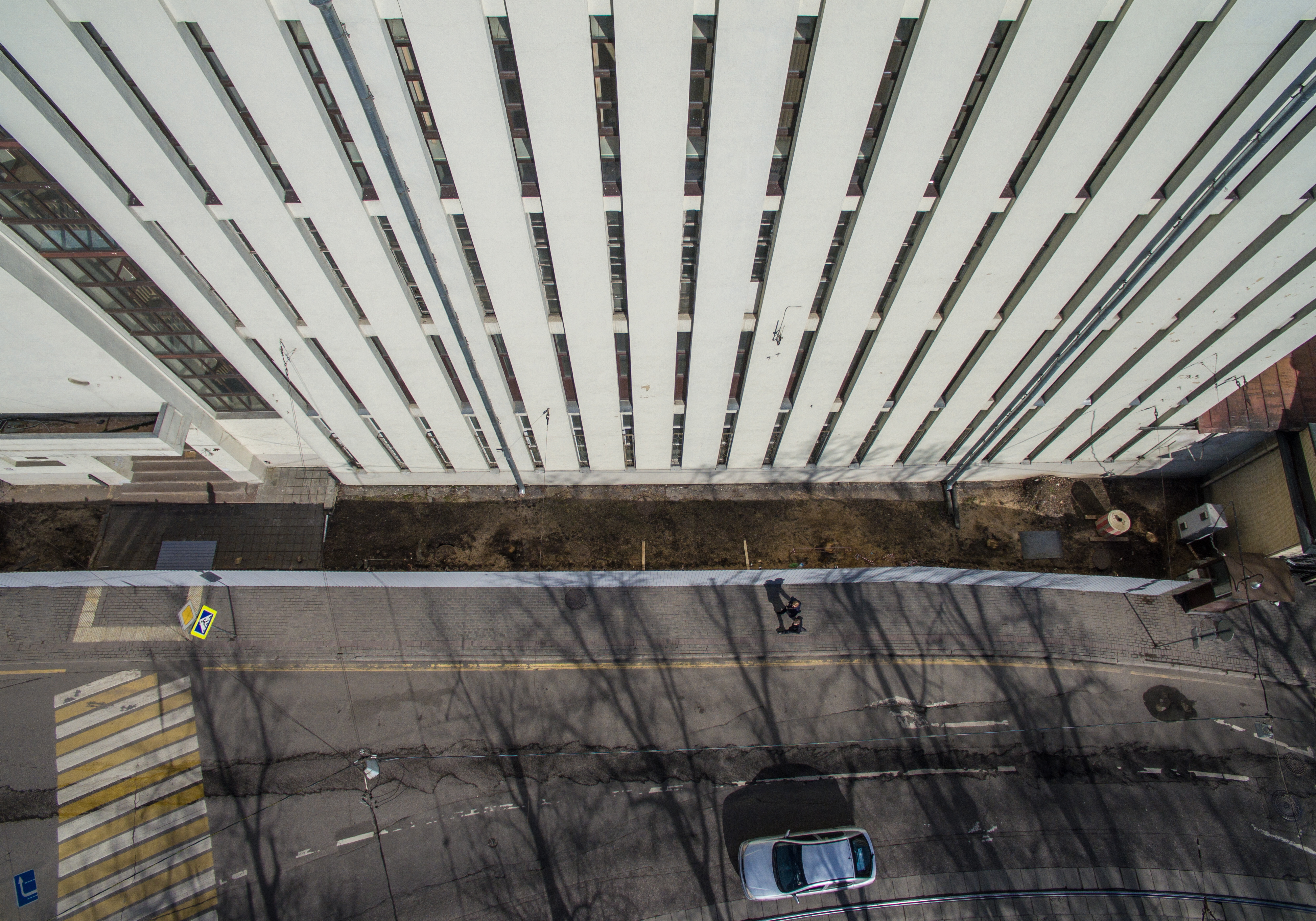
Despite the fact that the dismantling of the ATS has already begun, it can still be saved, Alexander Selivanov believes: it is enough to stay within the framework of the law and conduct public hearings on a new project. After all, maybe soapons and weavers, the suppliers of the imperial court merchants Krestovnikovs and would not be happy with the building of the ATS in their garden and, perhaps, would prefer an apart-hotel, but since there is a monument, it must be protected. “If this ATS was not in our city, not in our country, such a story would never have happened to it,” Selivanova says sadly. “After all, this is such a high -quality modern architecture.”