
Translated material
Pushkin's effect
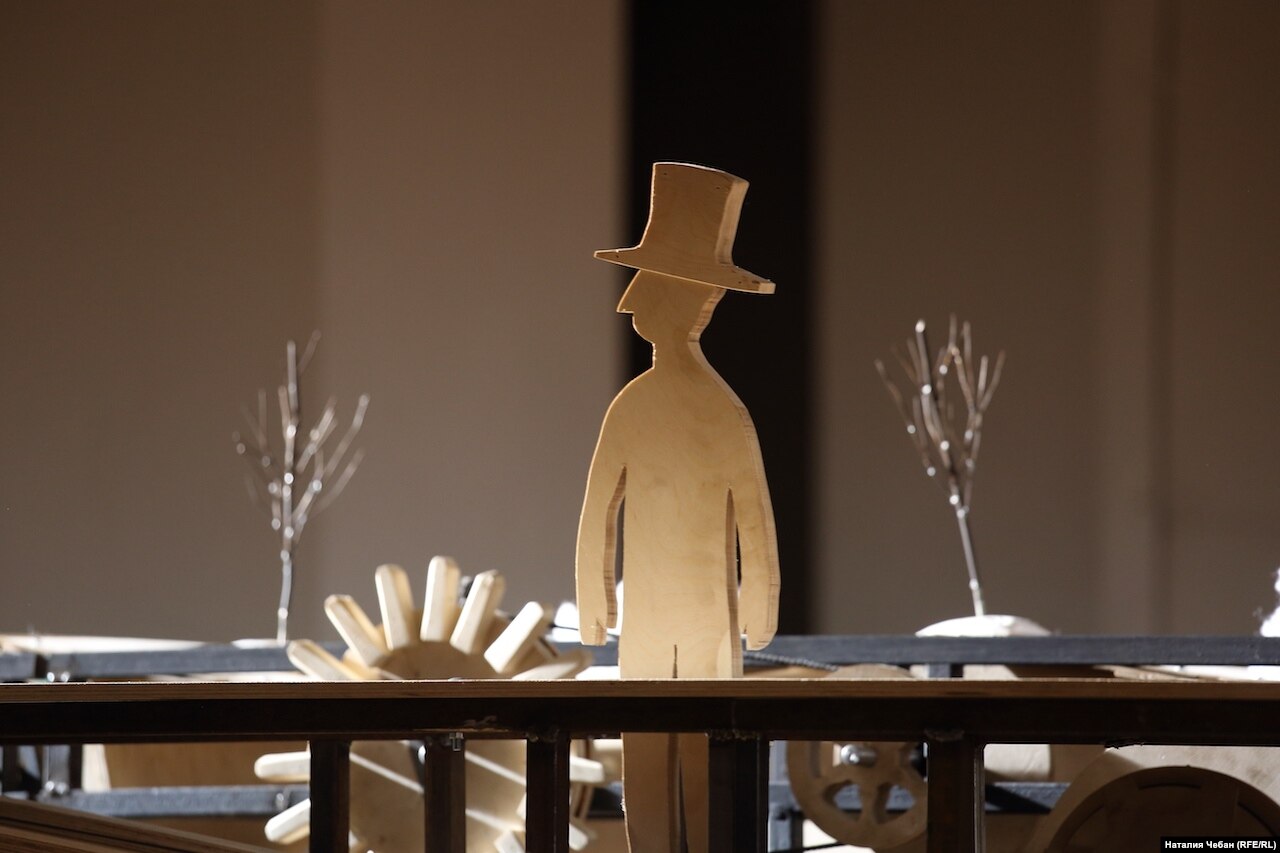
Why Eugene Onegin remains the hero of our time, and Tatyana's experiences do not cause sympathy
The “performance for children”, as the recently opened project of the laboratory of Dmitry Krymov in the theater “School of Modern Art” is indicated. So far, four works have been selected, the "island of Sakhalin" by A. Chekhov, "Dead Souls" by N. Gogol, "Capital" by K. Marx and "Eugene Onegin" by A. Pushkin. According to the director, the theater interpretation of these works will help the younger generation master the classics.
The first was the novel in verses-“in your own words”, in the retelling of foreign characters who gathered from love for the poet here and now, in order to tell the knowledgeable Russian viewer about what he missed, reading Pushkin. Given the age of the original, it turned out to be also not easy, as in the school lesson, when it is necessary to explain not only the attributes of time, but also individual words, not to mention the system of relations. And in this sense, the modern student is not much different from the foreigner who has taken up the Russian text.
Pushkin in "Evgenia Onegin" thoughts thoughts as it were
Another thing is that the performance, despite all the interactivity and the sweets distributed by the dying Pushkin, is addressed to adults not less, and necessarily teachers. Who simply need, according to Krymov - “turn around” and comprehend the path traveled, understand what they still teach and most importantly - to whom.
Because, as it turned out after watching the performance, modern high school students in no way correlate themselves with Tatyana, but Onegin, they believe, a quite common hero of our time. Read more about this - students of Lyceum No. 1525 Maria Kolodenko , Anastasia Makhovskaya , Valeria Megrish , literature teachers Evgenia Ablyuk and Dmitry Mikhailovsky , who read Eugene Onegin himself after graduation.
So she was called Tatyana ...
Maria Kolodenko , student of Lyceum No. 1525:
- It seems to me that we are alien to such experiences as Tatyana's. Probably, we are more like such as in the play, we can also transform this, but in the book - perhaps not. I think that the life of Pushkin times is too far from us.
Valeria Megrish , student of Lyceum No. 1525:
- Tatyana in the novel seemed to me a wise, adult girl. And I would rather correlate myself with Tatyana in the play by Dmitry Krymov. She seems to be a naive girl, very young.
Anastasia Makhovskaya , student of Lyceum No. 1525:
- In the play, Tatyana behaved like Russian girls of that time. In general, she seemed to be a girl not from this world, behaved like a small child. But personally, it seemed to me more lively, more real.
Evgenia Ablyuk , Lyceum literature teacher No. 1525:
- The fact that the girls do not correlate themselves with Tatyana, to be honest, was a discovery for me. I remember when I myself read this novel in my youth, I had some kind of experiences. And in a sense, Tatyana’s behavior seemed even a model, although not accepted. In any case, at the time when I grew up, it was not yet customary to behave like that, to be the first to explain with an adult man. But that directness, that openness, the courage with which she wrote a letter and talked with Onegin, then seemed to me - oh! That's right, it is necessary!
It seemed to me all the time that Pushkin would approve
I really liked the production of a lady with a straight back, ballerina, to the girl. How old is the heroine of the novel? The girl, like Juliet. And she behaves like a girl. And the schoolchildren said that it should not be like that. But Tatyana is alive here, similar to a modern child, who suddenly begins to write letters to an adult man. This is a very interesting sensation, unexpected that the children were more seriously reacting to such a reading than I could have suggested.
I think that when the class and I read the novel, we paid a lot of attention to what is called lyrical retreats - we commented, tried to understand. I often want to get away from a naked plot, from the perception of this plot as everyday history. And maybe too philological has a reading.
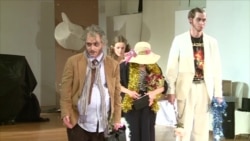
Of course, of course, I did not change my attitude to the novel "Evgeny Onegin". But it is curious that Pushkin then read out what Dmitry Krymov came up with. Because the performance, on the one hand, is buffonous, circus, very theatrical, emphasized ridiculous. And on the other hand, when suddenly intonation registers switch, it turns out to be philosophical. For example, the “wrapping effect”, when it comes to the fact that a person either turns into his past and makes some important conclusion for himself, or goes through life without turning around. This is what Krymov beat, and then the students were subtracted in the text.

Why Eugene Onegin remains the hero of our time, and Tatyana's experiences do not cause sympathy
The text of the copyWidth PX Height PX
The url has been copied to your clipboard
No Media Source Currently Available
0:00 0:11:34 Download the media file- Notice, not only Onegin is taken from the hall. The children were pulled out of the hall and the children-someone froze, someone cut the ice with skates or represented a bug. Such an interactive performance. But, on the other hand, Pushkin is constantly talking with the reader, that is, for his time it is a very interactive novel. And if you can appeal to the reader so, then why is it impossible for the viewer?
For me, Pushkin’s verses, in his prose, are primarily irony and playing, playing with the reader. And in different productions (which, I must say, a lot) this game is precisely emphasized. I remember very well the performance of Yuri Petrovich Lyubimov "Evgeny Onegin", where each stage was played differently. And although there was more from the novel, because there was a lot of text, but it was also a game. A T-shirt on the actor with the inscription "I Love Pushkin", also seems to be unacceptable, from the point of view of the classics, but it was great, in Pushkin. It seemed to me all the time that Pushkin would approve.
Onegin, my good friend ...
Maria Kolodenko , student of Lyceum No. 1525:
- Onegin is more understandable to us than Tatyana. It seems to me that now there are a lot of such Onegins. You can divide the world into Onegin, Lena and some other third, average type. And people like Onegin are now, but such as Tatyana - no. Because, although now people show their feelings quite brightly, they are not as sincere as Tatyana’s.
Anastasia Makhovskaya , student of Lyceum No. 1525:
- Onegin seemed to me an interesting character, unlike Lensky. Because negative characters always attract more attention, especially among a female audience than positive heroes. I perceived him as a person who differs from the crowd. He behaves freely, easy.
Valeria Megrish , student of Lyceum No. 1525:
- For me, Onegin is an independent character. And I very emphasized Tatyana, to be honest, because he did not apply to her. He did not care, but Tatyana was very violently worried. Probably, only this quality of Tatyana I can find in myself.
Dmitry Mikhailovsky , teacher of literature and mathematics:
- A step to Onegin’s understanding can be cynicism. He is still such a cold cynic, and in adolescence, many boys have about this attitude to the world. I don’t know how much they would associate themselves with Eugene, but some features of Eugene Onegin would have appeared in each.
I must say that I myself did not read this novel at school, like many of my classmates. Because there is a certain stereotype of Pushkin’s perception - either with the aspiration of “oh, how beautiful!”, Or “fu, Pushkin is tired”. There are classes where literature is perceived as a monument. It all depends on what kind of literature background in children, how literature reacts in the family, how the literature includes literature, what attitude to literature I show them. If I say some postulates that Tatyana Onegin’s letter is love to the coffin, then they perceive it as a fact. And in order for them to survive this letter, I need to give some leading questions so that they independently enter this text. The production of Krymov is such a "lure" in order to enter the text of "Eugene Onegin". In addition, the performance revives both the language of that time and Pushkin himself, because in order to perceive Pushkin with clean eyes, you need to make a lot of effort.
a step to Onegin’s understanding can be cynicism
Inside the educated student there is a concept of interest. Even about children who are passionate about mathematics, it cannot be said that they do not want to read. If they do not want to read, then they do not like the subject of literature, because they are poorly taught, etc., a lot of facts. But they want to be educated, so they begin to look for information on the Internet, watch video lectures. Children simply do not know how to compensate for the lack of knowledge that they receive. They are in a disadvantage. We can dictate, but potentially, if the child develops and has talent in any of the objects, he understands what deep knowledge is.
Epilogue
Maria Kolodenko , student of Lyceum No. 1525:
- In the play there were many many funny moments that we discovered for ourselves, although when reading did not pay attention to them. And everything was so unexpected. For example, we could not understand who will be the main character. And the main character was an apple. At the beginning of the performance, one girl from the audience was handed an apple and said - this is Onegin, but at the end Onegin was a man invited from the audience. And this shocked and greatly pleased. People from the audience rode skates along the stage, that is, pretended to be rode. This creates an atmosphere of comfort, and the performance is easier to watch, we better understand everything. And Pushkin in "Evgenia Onegin", as it were, confessed thoughts.
Valeria Megrish, student of Lyceum No. 1525:
- Personally, the performance has opened a lot of new things to me. Especially where they talked about the effect of wrapping. And I was very surprised how the plot was served. I wanted to look further - how the director will depict familiar scenes, with which another parallel will draw. And if we come to an ordinary theater and look at what the actors show us, then there was communication of actors and spectators, which allowed us to join the process itself.
Anastasia Makhovskaya , student of Lyceum No. 1525:
- This performance changed my view and attitude to life, because it made me think about many things. For example, about those: how to appreciate their loved ones, their relatives, to appreciate every moment spent with them. Because, as we know, Eugene Onegin did not value at all, meanwhile, what he spent with Tatyana. Probably, this was the biggest mistake in his life.