
Translated material
Moscow is nightmare
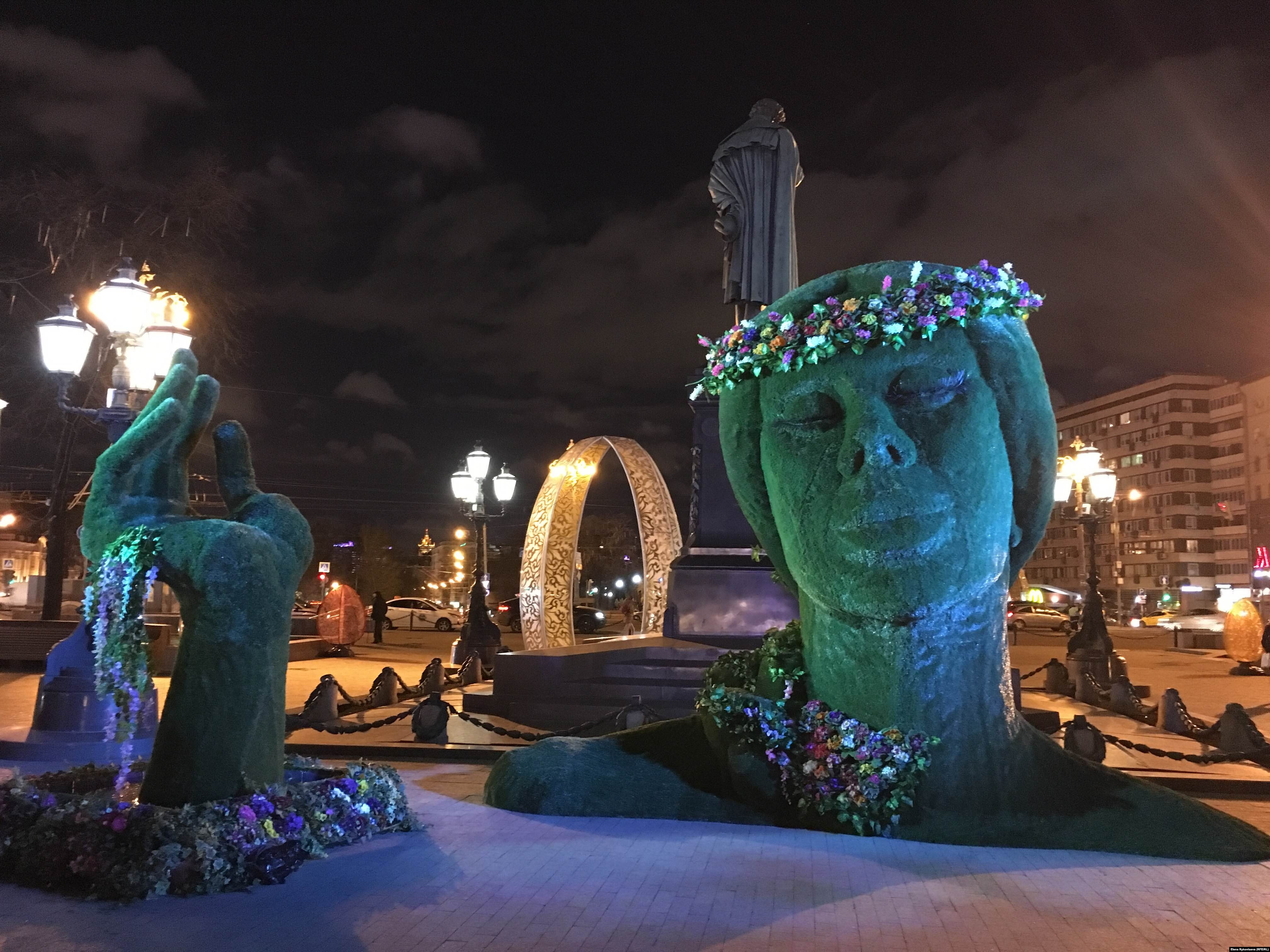
The "pyramid" on Pushkinskaya Square was demolished for aesthetic reasons. How to indicate that the pile was instead of her? What generally appears in the city instead of demolished retail outlets? The program is attended by architectural historian Alexei Klimenko, politician Sergey Mitrokhin, writer Boris Minaev and civil activist Dmitry Kataev. Presenter Elena Rykovtseva.
Elena Rykovtseva: Very funny events formed the basis of our program. Because you remember that at first it was terribly sad, they demolished retail outlets throughout Moscow in packs - these were unforgettable nights, days. The latter remained a retail outlet, the last bastion of all Luzhkov points - this is the "pyramid" famous on Pushkinskaya Square, it was also cleaned. Today, Muscovites in amazement saw something instead of this "pyramid", something so indescribable. Maybe our guests will be able to choose words for what we saw. And all this was the reason for the conversation that Muscovites lost and that they had acquired. Because in the name of the people, in the name of a person, all these transformations are carried out so that you are comfortable, so that you are comfortable, so that you are beautiful. I will make you beautiful! - As the mayor of Sobyanin says. I represent our guests: the politician Sergei Mitrokhin, the main defender of Moscow from Moscow, and the architectural historian Alexei Klimenko, Alexei devoted his life to us to save the city, and we listen to what he succeeds. Boris Minaev, writer with us in touch. Boris went to Montenegro on time from everything that we are now observing. Dmitry Kataev, journalist and public defender of everything that is connected with Muscovites with Moscow, is in touch with us. Tell us about your impressions as a citizen, so you woke up, you saw what was under your window.
Sergey Mitrokhin: Let's start with this design strange, which we see on Pushkin Square on the site of the Pyramid. Let's take an economic aspect. There was an object that brought the city to the city budget. I will not repeat that the object was absolutely legally established, we can criticize, correctly, wrong, but it was formalized by all necessary standards that the law demanded. I will not even touch on this topic. There was a court decision that it was absolutely legally established. And now it is an object that requires the construction, maintenance, service, money from the budget and money very considerable. We have already calculated, the anti -corruption center has been working in Yabloko, we have already taken up these designs.
Elena Rykovtseva: It is very similar to coffin and western coffins.
Sergey Mitrokhin: Another eggs are very popular today in Moscow and much more. We found out that this year the Moscow Spring will cost the city budget 186 million rubles, more than 20 million than last year and 156 million more than the year before last. This object, at first glance, I cannot say how much it costs. How much it really costs is one question, and how much has paid for it who builds it is another question. And whoever builds, we also figured out. There is such an office, called the Moscow Souvenir Plus, it has been winning tenders for the organization of the Moscow Spring, this festival for the third year. It is headed by a certain Irina Sukhotina, or rather, Irina Sukhotina herself, but her former business partners, there are their surnames, I will not give them, I will not give them, no one knows them. She worked with them earlier, now she works as deputy head of the Moscow Fair GBU, that is, she is a customer. The former business partner of this office, which all the time wins tenders, is also a customer. This lady is led by a famous person named Nemeryuk - this is the head of the Department of Trade, who is the chief operator for the demolition of the stalls, the main organizer of the "Night of Long Buckets".
Elena Rykovtseva: That is, you traced the chain to the end.
Sergey Mitrokhin: "The Night of Long Buckets" is already in my memory the fifth decisive business in Moscow is large, now we don’t take trifles now. The main thing that happens. There is a small business that brings income to the city budget, which creates jobs that will reduce price levels in trade, because it is competition, it competes with these retail chains and so on. Do you think the business completely disappears from these sites? Nothing of the kind, as we have already seen, the business is far from disappearing, it simply becomes different. This is a business on the development of budget funds. Comrade Nemyryuk so zealously cleans Moscow spaces so that these designs appear in these spaces and other stalls still appear.
Elena Rykovtseva: On this design, I can only hang, use it as a crossbar. In the previous designs we could go and buy something.
Sergey Mitrokhin: The second type of business is also the development of budget funds, but in other ways, these are tubs in some incredible quantities, these are trees, temporarily in these tubs planted in granite, which will die, of course. This all takes away a huge amount of funds too. We already thought: when we installed the tubs on Tverskaya, we also checked, it turned out that, buying these tubs, these granite benches and everything else, somewhere in three or four, sometimes overestimated prices five times, paid from the budget, which they really cost on the market. And how much they cost, it is easy to check on the Internet. Instead of an honest small business that benefits and brings income, we received a corruption business, a business of officials associated with them of merchant businessmen. And this is all the pleasure we get today. We also found out how much money will be spent on grocery sets to veterans by May 9. All three million rubles are allocated. But these designs, 186 million is released for the entire festival, in addition to these structures, the “donkey in the pen” is expected. We found out that this donkey will be allocated more money than for grocery sets to veterans. The grocery set of the veteran consists of the following set: 100 grams of doctoral sausage, 100 grams of tea and 100 grams of melted cheese, a jar of honey. I specifically when the employees told me that they found out this thing, I asked them to double -check, I did not believe my eyes. Here is such a cynicism today is organized by the Moscow government.
Elena Rykovtseva: Alexey, I wanted to know your professional point of view. After all, there are people who say: yes, you have lost the opportunity to buy a bun on the way home, but how scary, how ugly it was, it was ugly. You can establish some ratio between how much it is lost and how much it is purchased? We now see frankly ugly history on the screens, but maybe something in Moscow, instead of demolished, appeared unusually aesthetic?
Alexey Klimenko: What happened on Mayakovsky Square with these swings, as once on Manezhnaya, so that there is no desire to gather in this square with Limonov’s followers and say all sorts of words. It is impossible on the Manezhnaya and on the lighthouse, and here it is somehow impossible. The very idea of the swing is not bad, I can’t agree that everything that was under the general name “shops and kiosks”, which were demolished, that they were all ugly, but, for example, what was on the Novoslobod, green color in Chinese motives of the trade - it was developed in the workshop of Mikhail Mikhailovich Posokhin, it was completely approved, made by professional architects. Of course, this was a little strange, but in the context of what was already bathed in Moscow it was like that. That here is also probably professionals. But here is the problem of prevention. Such greens need everyday sprinkling to live this greenery. So, it is necessary that there are cars, that water is supplied there. Here serious concern should be about these green spaces. Therefore, it would be nice to estimate the economy what it will cost. I think this is a very expensive pleasure. And the fact that the Pyramid was like a torus, no, everything shone there, it was done by professionals.
Elena Rykovtseva: According to my colleagues, this is artificial greens.
Alexey Klimenko: All the sadder. On the main street of Moscow, making artificial flowers is not at all good. There were a lot of corruption in these shops, kiosks, since many of them stood on city communications, which is categorically prohibited, just on the hatches of communication. By law, this could not be done.
Elena Rykovtseva: That is, there were a lot of corruption in the resolutions themselves.
Alexey Klimenko: Very often, this was done under pressure from the owners, here not the architects decided, but the owners. Nevertheless, it was at least somehow convenient, it was done for the convenience of Muscovites. Students of the Russian State Humanitarian University took me to this green complex on Novoslobodskaya, we drank coffee there - it was quite done for the townspeople. So not everything was so terrible. And this, in my opinion, is not good, I agree with Sergey Sergeyevich that it was an awl on the soap.
Sergey Mitrokhin: There really, probably, there was some threat of communications.
Elena Rykovtseva: But for so many years it stood!
Sergey Mitrokhin: Firstly, so many years. Secondly, if the Moscow government has so concerned with these communications, then you need to start not with such light buildings as a "pyramid". These are all flowers compared to the "European" department store. I remember exactly when he was built, Mr. Mitnol called me, he was then in the leadership of Rosprirodnazdor, asked to help him conduct an inspection of this object. Information was received from the FSB that the object during its construction creates such a load on the metro that cracks went there. This is a monstrous size building. And there are a huge number of such buildings. My question is: if you are so preoccupied with threats with all sorts of destruction and so on, why are you not starting with these monsters then? Or the gut is weak, or what? I do not understand this argument.
Elena Rykovtseva: Boris is a man involved in every historical house of Moscow. Maybe they saw something good from what has happened recently, in all this stripping? The aesthetic component was always present in motivation. Have you seen a good and beautiful place?
Boris Minaev: Firstly, for some reason, for some reason, the "night of long buckets" that we need to demolish everything that we will see the historical landscape of Moscow. On the one hand, I completely agree in theory with this, because these stalls were wildly ugly, they were crazy ugly. But when it all happened, I began to leave the metro and look around very carefully. The fact is that absolutely terrible, ugly new buildings inserted into the historical center of Moscow opened, that is, they became very noticeable. Therefore, here the grandmother said in two whether it became more beautiful or not.
Elena Rykovtseva: This building of Izvestia would not be seen for this "pyramid", what has opened now.
Boris Minaev: Probably today's broadcasting colleague, the researcher and historian will confirm. The fact is that in Moscow this has been happening for a very long time. Those buildings that are considered architecture monuments today, these profitable houses of modern style, once they were perceived exactly as Luzhkovsky ugly multi-story monsters that destroy the historical center of Moscow. People wrote petitions, struggled, created societies of antiquity monuments, they believed that it was a terrible multi -story ugliness, and today these are architectural monuments. This is going on step by step, decades for decades. The Izvestia building arose at Famusov’s place. I read the Moscow legend that when the Famusov’s house was demolished, a lot of people came, they simply sobbed and cried, because for them it was Moscow. This huge Brezhnev monster was erected. But the fact is that this Brezhnev monster is also part of the history of architecture. The ideas about the beautiful are changing all the time. Modern architecture and contemporary art always cause some kind of rejection. Many hate Moscow City, many cannot stand the monument to Brodsky. I really love Moscow City, I think that this is a model of modern architecture from different angles. I love the monument to Brodsky very much. This is a conditional thing.
Elena Rykovtseva: There are conditional things, but there are things with which we will agree with everything - that this "pyramid" that was demolished was no worse than what we received instead of her. Generations will pass, and they will agree with us, I think.
Boris Minaev: I was not there, I need to see it with my eyes. In these forms, I did not see anything terrible. There is contemporary art, it is sometimes very acute. I would like not to be incorrectly understood, immediately go to the second point. Modern architecture is good. Improvement and organization in a new urban environment is wonderful. But the fact is that when this happens in Paris, in London, in Berlin, there are also new forms, people perceive, do not perceive, are indignant - these are rich European cities. When we have wild billions of rubles on the improvement of the urban environment on modern architecture and art - this is good and interesting on the one hand, and on the other hand you think: sorry, they reduce the number of doctors in clinics for sick old people, they reduce everything in the world.
Elena Rykovtseva: This is not that logic. If they reduced and did something that would please the eye, one could put up with it.
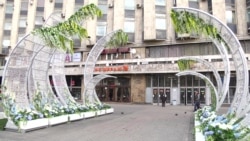
Boris Minaev: What you show on Pushkinskaya is, of course, better than a “pyramid”, in the sense of a form, how it looks. Because the "pyramid" is a typical monument to Luzhkovsky. And this is an attempt to do something modern. But this is not the point, the fact is that, as your guest Sergey Mitrokhin correctly said, the Pyramid paid for itself and brought income, and invested money in this thing, this money was taken from the poor and sick people.
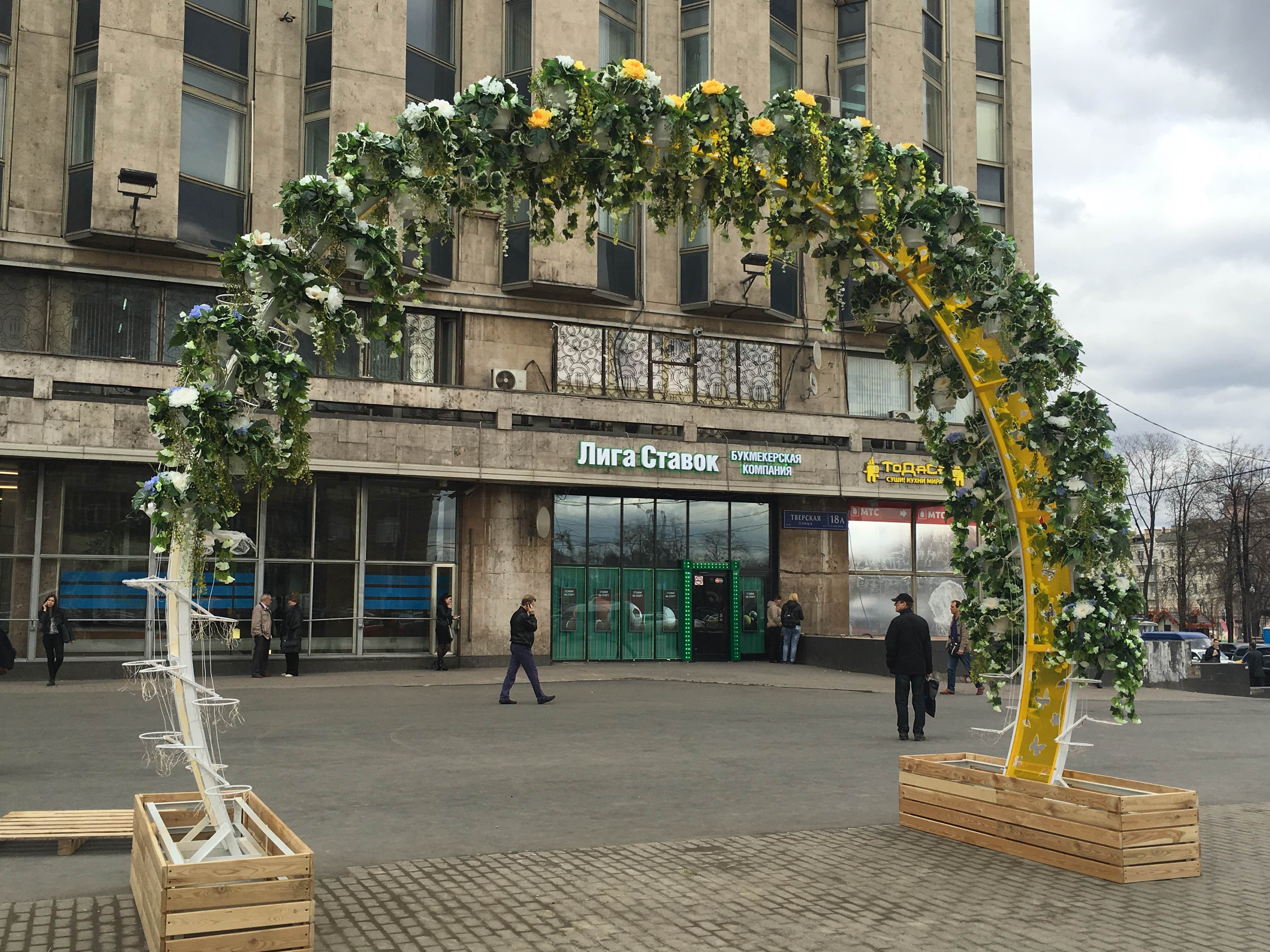
Elena Rykovtseva: It is so funny, these wreaths - it went so. There are not only these feathers stand there, next to them there are gates, stained with stupid wreaths. Boris, do you like it?
Boris Minaev: I don't like it. I just say again: the building of the newspaper Izvestia is ugliness, on the one hand, and on the other hand, this is a monument to Brezhnev architecture.
Sergey Mitrokhin: Can I add about the wreath? There are conditional things-someone's taste, someone's aesthetics, but there are unconditional things. I believe that an unconditional thing is the right of ownership. If they have ownership rights, the city may either agree or pay compensation, laws must be observed for this, there must be a judicial procedure for this. If there is none of this, I think no tastes, aesthetic representations can be used at all, because this can be very far away. Now about the flowers. I have already said how this happens: the tender is played out of the backstage, quietly, one company wins that offers its project of these flowers, eggs. The worst thing is that it happens from the point of view of aesthetics - no one discusses this. For example, Alexei Alekseevich as an expert, artists, architects, designers is not present there. Someone decided for us that we love eggs very much with you, we love some kind of donkeys, we love the fake churches that they want to hide everywhere too for a lot of money. I think this is symbolic - "donkey in the pen." This is shown to Muscovites who they are like them. Here they are something like this to this donkey in the corral. You eat what they give to you, and be satisfied, rejoice, have fun. This is the attitude of the Moscow government today to Muscovites.
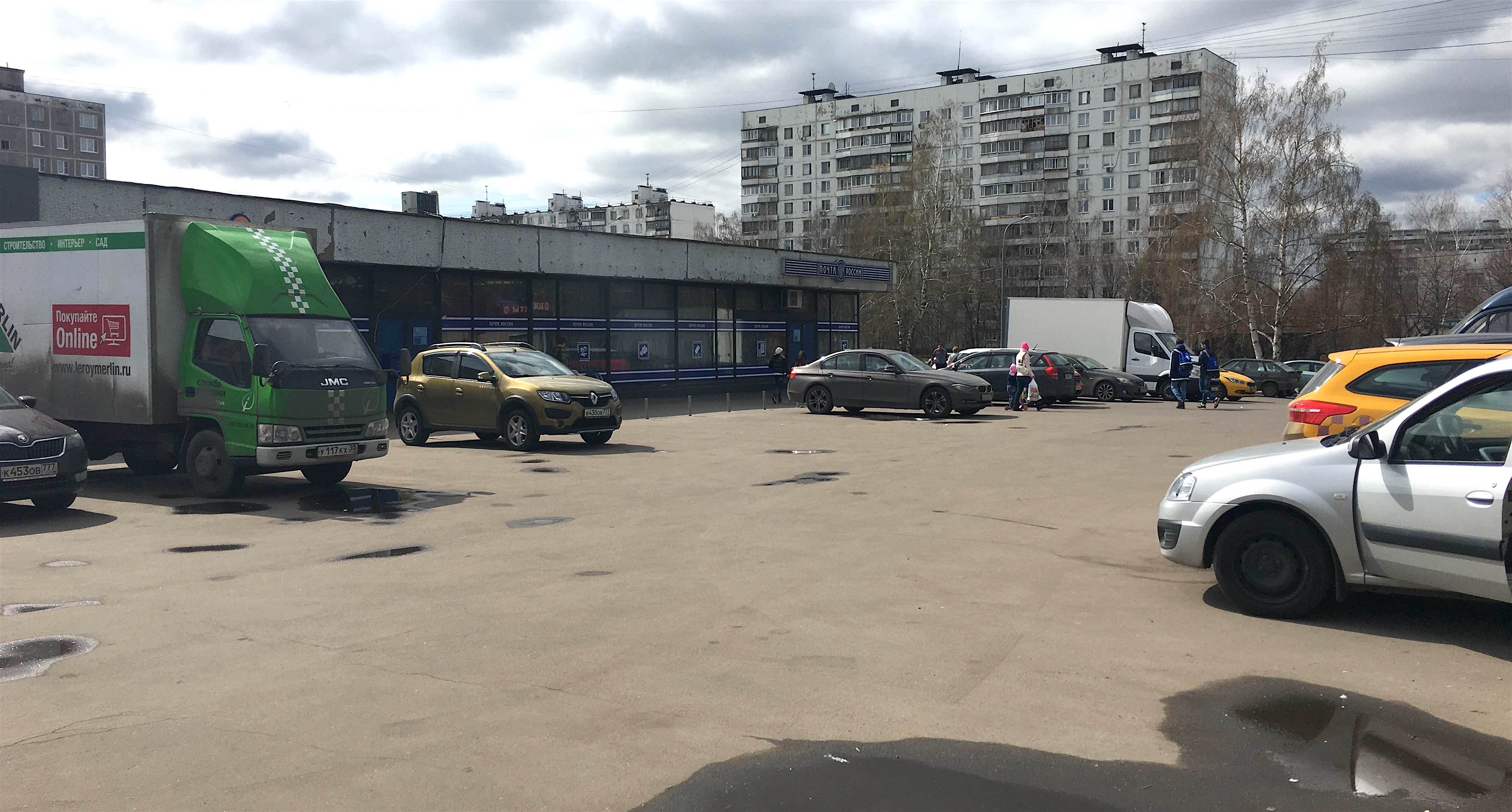
Elena Rykovtseva: A colleague just told me that instead of a weekend fair he had built a temple. You will now see the North Chertanovo, I will tell you what was there before. Here was used to be a concrete market that was demolished for aesthetic reasons so that it did not interfere with love. There were rallies here, the entire microdistrict was going, even the Komsomolskaya Pravda came to protect, did not save. The whole area fed on this bazaar in the very good sense of the word. This market was covered. He was demolished not because of sanitary conditions, but because of aesthetic considerations. And for two years now we have seen this beauty. Now there is parking. Let's ask Dmitry Kataev that he sees the good.
Dmitry Kataev: I see a little good and a lot of bad. I will repeat a little and clarify what Sergey Mitrokhin said. The Constitution, Article 34, part two: "Economic activity aimed at monopolization and unfair competition is not allowed." The demolition of the stalls, and not only the “night of long buckets”, but the demolition of a huge number of stalls in the subway, which did not interfere with anyone and were very useful, who initiated it? Surely I will not say, but by 90% I am sure that this is the initiative of large network universals, their owners. This is clear economic activity aimed at monopolization and unfair competition. Article 35, part is third: "No one can be deprived of their property, otherwise by the court decision." And we already heard that, on the contrary, there was even a court decision, that the object was legal, and it was demolished. "Принудительное отчуждение имущества для государственных нужд может быть произведено только при условии предварительного и равноценного возмещения". Поясню, что отчуждение имущества для государственных нужд – это не какая-то абстрактная формула, а есть законы, которые четко перечисляют, что такое государственные нужды и какое имущество может быть снесено. Случай сноса ларьков абсолютно не подходит под то, что разрешается законом. То есть беззаконие творится у нас на глазах.
Елена Рыковцева: Хорошо, совершено беззаконие, снесены ларьки, что вы получили взамен?
Дмитрий Катаев: Взамен мы получили, не взамен, а в дополнение, мы получили, что в России уничтожается сам институт собственности. Это страшно, это мы вернемся к монополии бюрократии советской, когда вообще во всех ларьках ничего не было.
Елена Рыковцева: Сегодня произошло еще одно событие: утвержден многострадальный проект памятника князю Владимиру, есть уже победитель. Главный архитектор Москвы Сергей Кузнецов сказал: "Боровицкая площадь является одним из ключевых объектов благоустройства в городе, который ведется по инициативе мэра Собянина. Концепция, которую мы представляли в ЮНЕСКО, касалась не только этого места, шла в связке с другими проектами благоустройства Бульварного кольца. Особое внимание было уделено рельефу местности, видовым характеристикам, подземным коммуникациям. Победителю в полной мере удалось это учесть. Была предложена интереснейшая идея: мы видим каплю, которая, будто упав в воду, расходится кругами. Создается ассоциация с ритуалом крещения. Победителем конкурса стало бюро Al-Architecks”. Скажите новость сегодняшнего дня, как вам, москвичам, это?
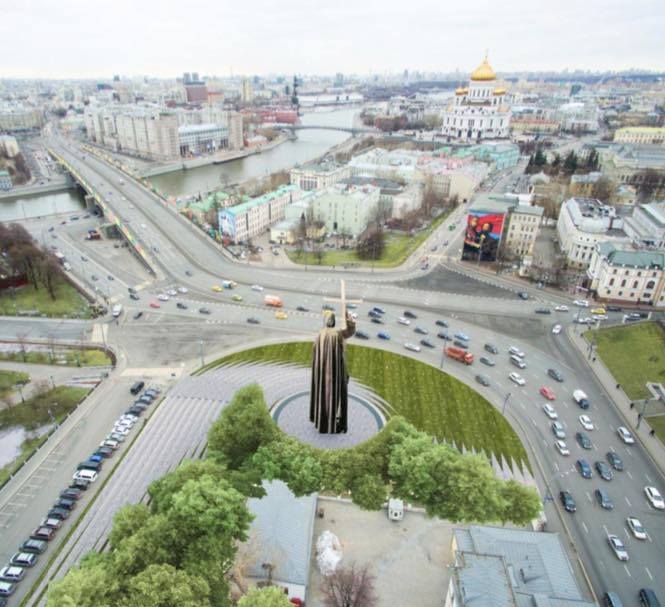
Сергей Митрохин: Вообще искажается серьезно территория вокруг Кремля, вид на Кремль. Это охранная зона, на самом деле, Кремля, здесь должны особые процедуры соблюдаться при возведении новых объектов. В данном случае все это нарушено. Чисто эстетически мне, честно говоря, не очень нравится.
Елена Рыковцева: Мне Родину-мать киевскую напоминает, которую они хотят разобрать.
Сергей Митрохин: Что мы предлагали, я имею в виду партия "Яблоко": если уж так хотите поставить памятник Владимиру, хорошо, поставьте на Лубянке. Там есть две причины, во-первых, чтобы там никогда не возник больше памятник Дзержинскому, и вторая причина, что с этого места начинается Владимирская дорога на город Владимир, который был, по преданию, тоже Владимиром основан, хоть какая-то ассоциативная связь. Кроме того, с Лубянки Кремля не видно, он там ничего не загораживает, само пространство уже приготовлено для большого высокого памятника. К сожалению, не откликнулись на это предложение, в результате поставили здесь. Я считаю, что это неудачное решение, и я не знаю, насколько широко оно обсуждалось.
Елена Рыковцева: Алексей, расскажите нам, как это обсуждалось. И вообще, можно ли хоть как-нибудь влиять на такие решения?
Алексей Клименко: Мы видим абсолютный апофеоз имперской идеологии. Поскольку наши руководящие товарищи бесконечно говорят об империи, о том, какой трагедией был распад советской империи, то здесь мы видим абсолютное господство, торжество той самой православной имперской идеологии. Какой там Пашков дом, какие там всякие глупости вроде библиотеки национальной, не будем уже говорить об именах, с которыми связана окружающая застройка. Вся территория Кремля за последние годы, благодаря неустанной активной деятельности господина Собянина и его команды превратила в такое торжество пошлости. Это апофеоз этого самого китча. Так что можно поздравить Россию, поскольку ее столица получила оформление, страна, где пошлость. Есть у меня статья, которая посвящена как раз торжеству пошлости. Вот мы получили очень выразительное оформление этой схемы – Россия, пошлость, наконец-то империя.
Елена Рыковцева: Борис, защитите памятник, скажите, что следующее поколение его оценит.
Борис Минаев: Конечно, эта вертикаль, тот столб, эта доминанта абсолютно убьет и принизит величайший шедевр Москвы, как дом Пашкова. Как раз недавно ходили на экскурсию, смотрели на дом Пашкова, все узнали про него, кто такой Пашков и как это все делалось. Это действительно в архитектурном смысле и смысле пространства самая главная точка Москвы, и ее довольно сильно сейчас убьют в эстетическом плане, в смысле того, как она будет выглядеть. Но вокруг Кремля это давно уже все происходит. Жгли Манеж, перестраивали Манежную площадь. Вырубили деревья в Александровском саду, устроили там какие-то новые совершенно сооружения. Я хочу не защитить, а сказать вот что: с одной стороны, я против того, чтобы эстетические вещи в Москве решались путем голосование. Дело в том, что проголосуют за массовое и китчевое искусство как раз. Решать все должны профессионалы, историки, искусствоведы. Должны быть мощнейшие экспертные советы и законы, по которым эксперты будут решать, можно это делать или нет. Сейчас этого в Москве, к сожалению, нет. Это чуть-чуть есть по поводу каких-то старых домов, но главные московские точки совершенно не защищены – это ужасно.
Елена Рыковцева: А еще сегодня выросла страшная зеленая голова возле памятника Пушкину. Наш корреспондент ходил по этим точкам, где появились новые объекты, и спрашивал прохожих, нравится ли им это.

Width PX Height PX
The url has been copied to your clipboard
No Media Source Currently Available
0:00 0:02:56 Download the media fileЕлена Рыковцева: Я очень рада, что вы увидели эту прекрасную голову. Мне она напоминает голову Олега Лурье, есть такой журналист, он сейчас разоблачает Алексея Навального по телевизору, его часто показывают, они очень похожи с этой женщиной, как будто с него буквально лепили. Прохожие, как видим, достаточно благосклонно относятся к тому, что что-то меняется, что-то произрастает.
Сергей Митрохин: У меня просто вызывает удивление, когда говорят, что стало больше парков. Я не понимаю, откуда их взялось больше. Наоборот сейчас, к сожалению, проблемы есть. В Торфянках храмостроительство, в других, потихоньку отгрызают парки у москвичей, откуда их больше взялось?
Елена Рыковцева: У нас недалеко от дома было некое пространство, которое мы называли "бульвар", там гуляли собаки и там стояли скамейки. Пришли люди, посадили траву, поставили три площадки, теперь это называется парк. Их стало больше на один точно, я за один отвечаю.
Сергей Митрохин: Еще сказали, что у нас пространство, начинающееся от Воробьевых гор, кончая Центральным домом художника, теперь это будет парк. Раньше никто не мог подумать, что это парк. В этом смысле, наверное, стало больше. Потому что так решили чиновники, что пространство, которое не имеет к парку никакого отношения, теперь называется парком.
Елена Рыковцева: Я прочитаю список хорошего, что появилось при Собянине. Это человек, которого зовут Дмитрий Соболев, – это его комментарий на форуме в интернете. Он сконцентрировал все хорошее, вы, может быть, согласитесь, что появилось: "1. Город стал на порядок чище визуально. 2 Намного быстрее строится метро, делают аналог S-Bahna – кольцо, новые пути на радиальных линиях и тут заслуга мэрии 3. Историческую застройку уничтожают на порядок медленнее. Сейчас это тоже осталось, но каждый сносимый дом это событие, а при Лужкове каждый год десятками если не сотнями уродовали и сносили. 4. Парки и скверы по всей Москве – просто супер. То же с дворами. 5. Благоустройство центральных улиц. Есть вопросы к отдельным аспектам, местами работы не очень качественно выполнены. Но извините, новая Маросейка и старая это небо и земля. Вам приятно было ходить по узким асфальтовым тротуарам с хаотично запаркованными машинами и любоваться на покосившиеся столбы с гроздьями свисающих кабелей? Хотя претензий конечно тоже много – те же турникеты, или неработающие выделенные полосы. Но Собянин однозначно лучше Лужкова, по каким-то аспектам чуть-чуть, по каким-то значительно". Вот человек для себя увидел в Москве хорошее и подвел такой своеобразный итог.
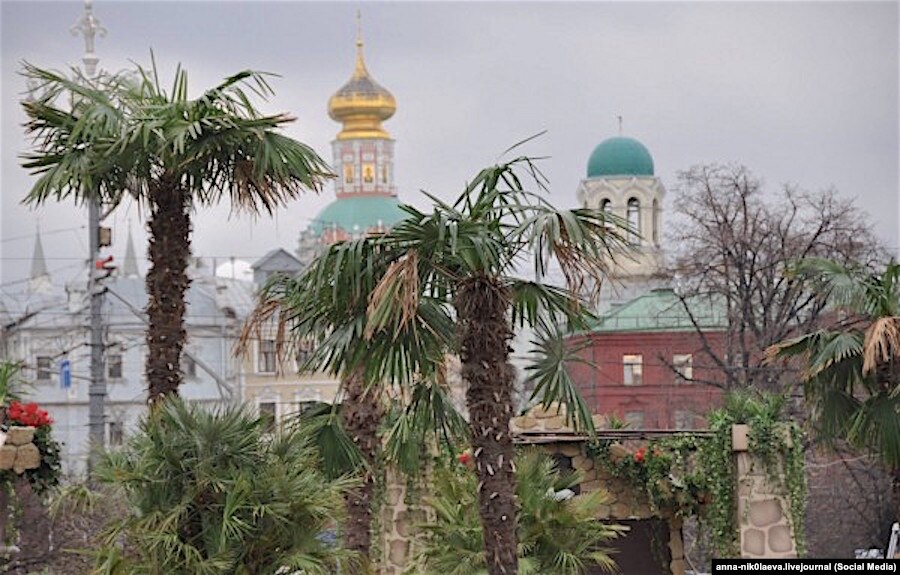
Сергей Митрохин: По всем этим пунктам можно много говорить. Действительно, есть такая вещь, как строительство новых станций метро, – это, наверное, надо отметить как положительную особенность. С другой стороны, посмотрите, что в самом метро творится. Посмотрите, сколько за последний период, особенно, когда назначили нового руководителя, сколько стало перебоев с движением. На моей памяти метро "Фрунзенская" уже второй раз за два года закрывают. Перебои такие, что люди выходят на улицы и приходится организовать движение и так далее. Что касается улиц, разные есть мнения, наверное. Меня больше всего возмущает в политике Собянина – это хуже, чем Лужков был, то, что все эти проекты продавливаются вопреки воле, желанию, мнениям москвичей. Нам в свое время удалось при Лужкове создать такую комиссию межведомственную, ее возглавлял главный архитектор города. Это не только "Яблоко" – это вся общественность, которая боролась с точечными застройками. Как это происходило: проект, люди возражают, люди против, они приходят и обсуждают. Где-то в половине случаев удавалось проект отбросить. Были публичные слушания налажены к концу лужковского периода, мы тоже к этому руку приложили, публичные слушания превратились в более-менее эффективный инструмент. Например, нам удалось всем вместе не допустить реконструкции Комсомольского проспекта, реконструкции Ленинского проспекта. После этого новый главный архитектор Кузнецов сказал, что давайте мы по крупным объектам не будем слушания проводить. Хотя мы видим, что и по мелким сносят без всяких слушаний. В результате институт публичных слушаний в Москве придавили, замяли, он уже ни на что не влияет, нагоняют массовку туда, сотрудников управ, префектур и так далее. Все это превращается в фарс, невозможно через слушания. Придумали ресурс "Активный гражданин". Оказывается, по этому ресурсу 70% москвичей хотят, чтобы деньги тратились не на социальные нужды, а на эти бордюры, чтобы на них четыре миллиарда было выделено. Те элементы обратной связи между властью и городом, которые к концу лужковского периода возникли благодаря огромным усилиям общественности, они Собяниным полностью ликвидированы, уничтожены, обрезаны. Эти люди считают, что они, приехав в Москву откуда-то там, они лучше москвичей знают, как им красивую жизнь устроить, и они ее устраивают. Судя по тем объектам, которые сейчас на этом фестивале "Московская весна", эти яйца, ослы, курятники какие-то хотят ставить бутафорские – это еще одно подтверждение тому, что эти люди считают москвичей просто за дебилов. Они им суют и говорят: вот как ослы стойте и жуйте.
Елена Рыковцева: Дмитрий, вы услышали список хорошего, созданного с точки зрения пользователя социальной сети в Москве. Вы с чем-то согласитесь, что-то вас радует? Например, благоустройство улиц, чище, легче ходить.
Дмитрий Катаев: Улицы стали действительно чище. Бульварчики дворовые появились, и в общем-то это полезно. Но, к сожалению, мы совершенно не привыкли спрашивать, а во что это обошлось городу. Этот вопрос немножко в другой формулировке прозвучал: а если бы в этом "Активном гражданине" предложили москвичам – вы хотите выложить плиточкой дорожку во дворе или вы хотите капитально отремонтировать ваш дом? Я думаю, что большинство бы сказало: давайте мы отменим взнос на капитальный ремонт и отремонтируем дом. Эти объекты, которые мы сегодня обсуждаем, так уж получилось, что это все микромасштаб, микрообъекты – ларек, памятник. Микрообъектами должно занимать местное самоуправление, ему виднее, где что снести и где что поставить.
Сергей Митрохин: Дмитрий Иванович, я с вами не согласен, что если бы поставили вопрос о взносе за капремонт, то по-другому бы ответили. Что такое ресурс "Активный гражданин" – это способ манипуляции общественным мнением. Там сидят сотрудники управ, префектур, они являются активными пользователями этого ресурса, вот они и формируют это самое общественное мнение, которое там отражается. Проконтролировать это никак невозможно. Для того чтобы нормальный человек мог там отразить свое мнение, он должен зарегистрироваться, пройти бюрократическую процедуру, этим нормальные люди не будут заниматься. Но самое страшное, что это придумали вместо публичных слушаний, вместо той межведомственной комиссии, о которой я сказал, которую, кстати, никто не отменял, она должна работать. А вместо этого манипуляция, нам говорят – москвичи все это хотят, любят, к этому всему стремятся, они без этого вообще жить не могут.
Алексей Клименко: Все, что связано с пятилетием хозяйственной деятельности господина Собянина, как мы видим, имеет глубоко "дикоративный" характер – от слова "дико". То, что мы видим на каждом шагу, это совершенно именно так. Так что можно еще раз поздравить Москву, москвичей и всех россиян, что в нашей столице вот такой облик. Пушкин здесь в качестве развлечения, Большой театр, Театральная площадь – в качестве декорации для этих экзерсисов господина Собянина и всего его окружения. Москва, как и вся страна, стремительно деградирует, мы летим в обратную сторону с большим ускорением, чему можно только порадоваться. И все за наш счет, и все от нашего имени.
Елена Рыковцева: Борис, как вам кажется, влияния появляется больше у профессиональной общественности на решения властей архитектурные и культурно-эстетические или его становится меньше?
Борис Минаев: Это сложный вопрос. Я, в принципе, с теми пятью пунктами, которые сформулированы про Собянина и про плюсы его правления, во многом согласен. В особенности я согласен, что варварский, дикий снос исторических памятников хотя бы замедлился – это очень важно для Москвы как для культурного пространства. Что касается влияния общественности, то здесь очень сложный процесс. С одной стороны, Собянин взял на себя миссию, вернее, люди, которые пришли при Собянине, очищать Москву от лужковской грязи, извините, в эстетическом смысле. Может быть, они это делают незаконно. Когда сносили аттракционы в Парке Горького, тоже говорили, что это незаконно, но тем не менее, Парк Горького превратился в прекрасную вещь. С другой стороны, действительно абсолютно исчез механизм обратной связи. Это очень жесткий авторитарный и диктаторский тип городского управляющего. В каких-то отношениях, это ужасно. Но тем не менее, люди продолжают бороться, общественность реагирует. Вы приводили в пример парк Торфянки, Сергей, но там люди отбились, сумели отбить, в том числе используя механизм гражданских слушаний.
Елена Рыковцева: Проще стало влиять на решения правительства?
Сергей Митрохин: Влиять невозможно. Я знаю один способ повлиять – если будет огромный митинг, придет очень много людей. Только к этому прислушиваются.
Елена Рыковцева: Алексей усмехнулся, когда речь шла о том, что Парк Горького стал гораздо лучше. Вы так совсем не считаете?
Алексей Клименко: Я за цивилизованное решение. Парк Горького стал цивилизованным.