
Translated material
Happy childhood
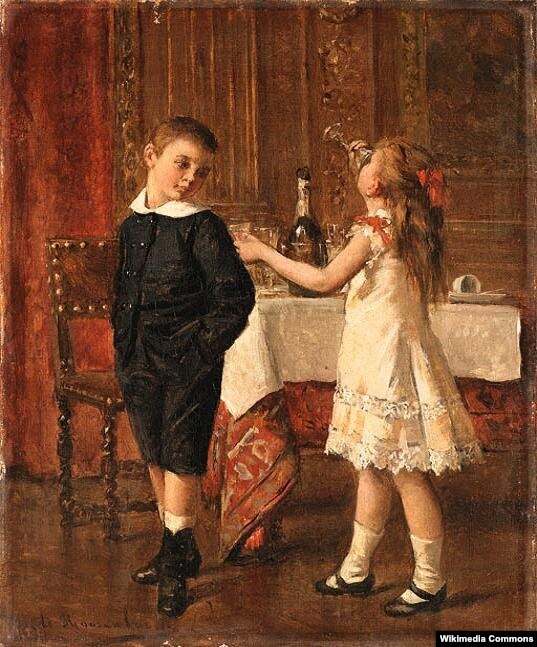
Elena Kolomiychenko and Aly Fedoseeva ** “Music and Writers” recall. Composer and pianist A. S. Griboedov ** “Fashion”. Conversation with a cultural historian, fashion model and psychologist
Excerpts from the program.
Elena Kolomiychenko (journalist): “Even today I love black, web caviar on a white mitch sprinkled with green onions. This is also from childhood sensations. Once Nikita Sergeyevich Khrushchev arrived in Kyiv, and his throat hurt. He invited my grandfather as the main otolaryngologist of the fourth department to consult. They took me with them. How to entertain the child? The child was five years old. He was entertained by a sandwich with caviar. That's what I remember. Grandfather went to Karlovy Vara and brought me shoes on thin skin, Czech boots. And my classmate - now he occupies a high post in the Ukrainian government - there was a birthday. Then everyone danced Charleston, and I wanted everyone to pay attention to these boots and danced for a long time. It was probably funny. "
Alya Fedoseeva (journalist): “We had a cook, like everyone else in China. I had a nanny-Chinese woman. She was with me all the time. I spoke freely in Chinese. I loved the nanny. She had bandaged legs. She barely walked. My first school was English. I lived in the English concession, and the population there was mixed. I loved to be on the street because there was a strict regime in the house. Father believed in strict and serious education. When I went to a Chinese school, there were teachers of English, Russian and mathematics at home. When I went to English, the Chinese and Russian teacher was at home. And, of course, the music by itself. ”
"Writers and Music"
Pianist and composer A. S. Griboedov.
Fashion
“Walking custom, a temporary changeable whim in everyday life, in society, in the cover of clothes and outfits” - this is how Vladimir Dal Moda determines. In English dictionaries, the definition of laconic: "predominant model." It seems that talking about fashion is neglecting or at least downwardly considered a good tone among intelligent people. But you can treat her completely differently. The ancient Indian law threatened the death penalty to those who dared to put on a dress intended for another floor.
We reserved an era of war, uniforms, labor service for women with the broad shoulders of the boxer
And we considered the most cruel reactionaries of the warriors who arranged the raids for the dudes. Modern fashion is often blamed for frivolity, but do not forget that in the Baroque Decollet the Baroque Often opened the female breast completely. The current male suit is modesty itself in comparison with such attributes of former male dresses like a toad, lace, a shameful capsule or shoes with noses in the form of a bird beak. In the book about the history of fashion I came across such a quote - this is the statement of the reformer of the twentieth century Clothing Christian Dior: “We reserved the era of war, uniforms, labor service for women with the broad shoulders of the boxer. I painted women, gently convex shoulders, a rounded chest line, liano -like harp and wide, diverging writings, diverging writings, diverging writings Like a flower, trousers. " That's how subtle, emotionally, poetic can talk about fashion. Let's talk about her.

Roman Timenchik (cultural historian): “As we recall, the era of dendism is the era of dissidents. It is dissidentiality in clothing and in manners, dissidentism as fashion. It all depends on how the society model itself: as a conformist or as a unified non -conformist. Actually, in this era of romantic fashion, the idea of a nation as a person is formed. ”
Lyudmila Romanovskaya (fashion model): “Fashion began, in general, in Russia in the 50s. The 70s were a time of traveling abroad, propaganda trips, because we were part of Soviet propaganda: how wonderful everything is with us, and we, they say, are no worse than others, no worse than the West. How did you accept this work? In general, chaotic. Those who wish came. Every Wednesday was a huge queue of girls, near the all -Union house of models in Kuznetsk. Well, 300 people. And as in the film "Rome at 11 o’clock", they climbed the stairs. There was some advice: three, four, five people. The girl walked along the catwalk and she was either selected: “Yes, maybe you will make a fashion model,” or not. There were no schools, there were no courses. ”
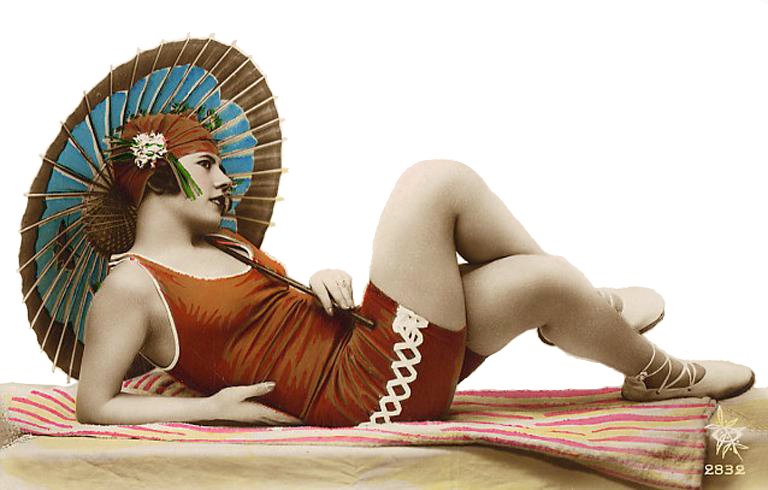
Margarita Zhamkachyan (psychologist): “Fashion is a law. This is a mechanism for updating society. And man. But the unbridled desire to change fashion is contrary to the mechanism of stability, conservation. Unrestrained innovation, which is characteristic of youth and which we approve, is a little ridiculous, ridiculous in fashion for mature people. ”